The Shell Part III: Paradiso
The coiling chains of obsession that began with The Shell now threaten to strangle Detective Reiji Tokisaka in the third and final entry in the trilogy. As old friends and foes rise up for one last confrontation, can anyone break the cycle—and can Reiji's heart ever be set free?
Sync your Steam wishlist to find the lowest game prices instantly. No login required, just paste your Steam profile URL!
⚡ Try Wishlist Radar!
Sync your Steam wishlist to find the lowest game prices instantly. No login required!
⚡ Try Wishlist Radar!
Close

The Shell Part II: Purgatorio on Steam
Quick menu
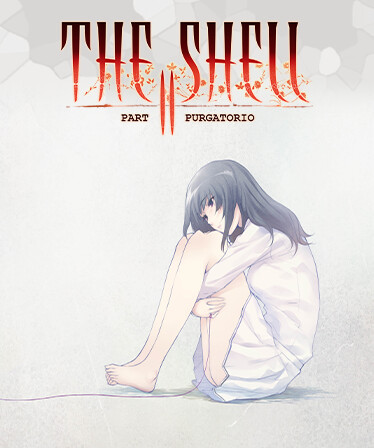
Detective Reiji Tokisaka is back to face down a mystery that spans decades, if not centuries. With the aftermath of his last case weighing on his soul and a long-silent cult resurgent, can he solve the crime—or will it become his curse?
The Shell Part II: Purgatorio is a detective, cult and visual novel game
developed by Innocent Grey
and published by Shiravune.
Released on April 18th 2024 is available on Windows, Steam Deck and Steam Machine
in 4 languages: English, Simplified Chinese and Traditional Chinese.
It has received 604 reviews of which 568 were positive and 36 were negative resulting in a rating of 8.8 out of 10. 😎
The game is currently priced at 24.50€ on Steam, but you can find it for 11.31€ on Eneba.
The Steam community has classified The Shell Part II: Purgatorio into these genres:
Detective
Cult
Visual Novel
Investigation
Romance
Historical
Noir
Anime
Mystery
Cinematic
Atmospheric
Horror
Conspiracy
Text-Based
Hand-drawn
Crime
2D
Simulation
Dark
Adventure
Here is the detailed breakdown of supported languages for The Shell Part II: Purgatorio:
| UI | Subtitle | Audio | |
|---|---|---|---|
| English | |||
| Simplified Chinese | |||
| Traditional Chinese | |||
| Japanese |
Media & Screenshots
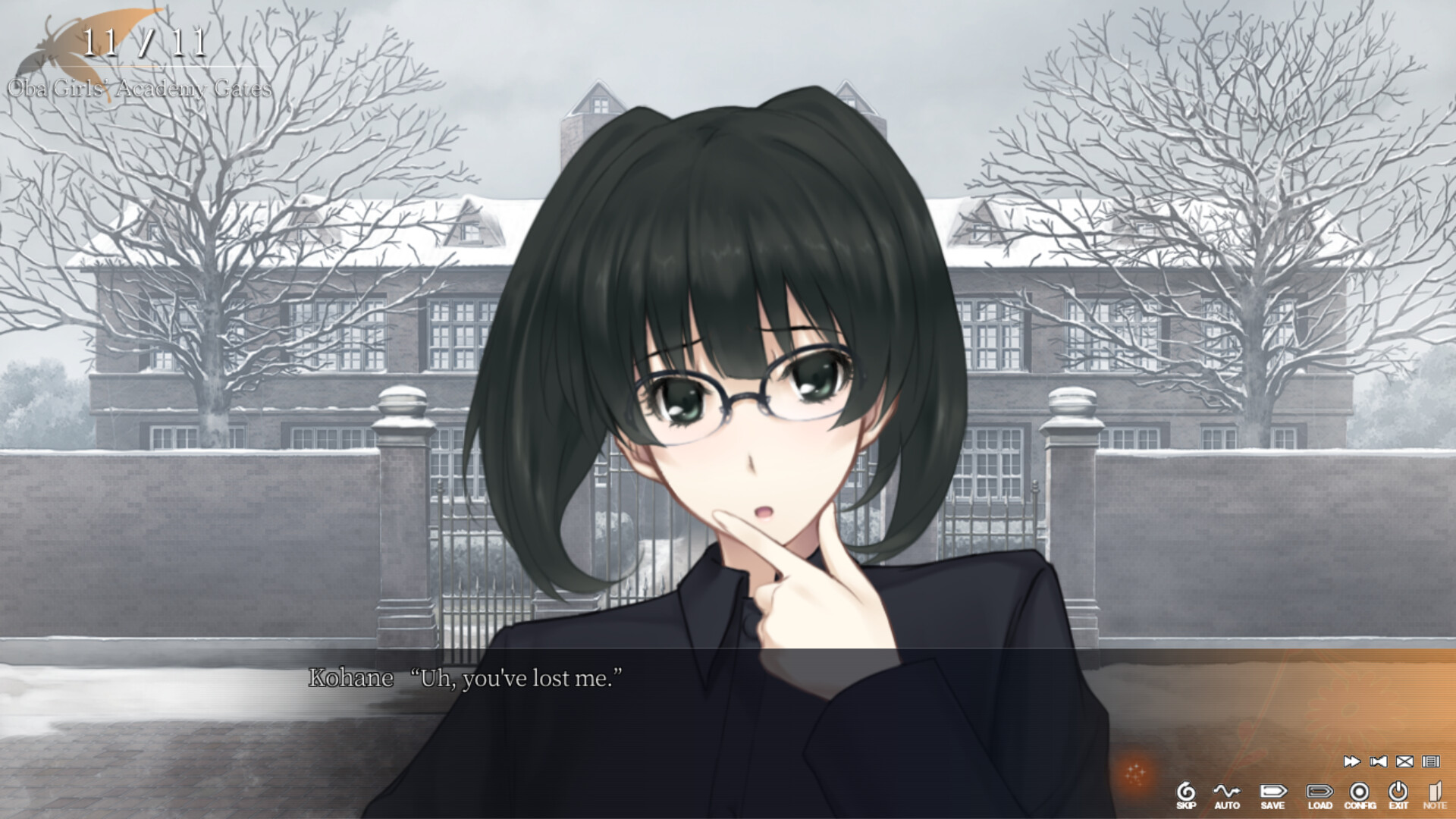
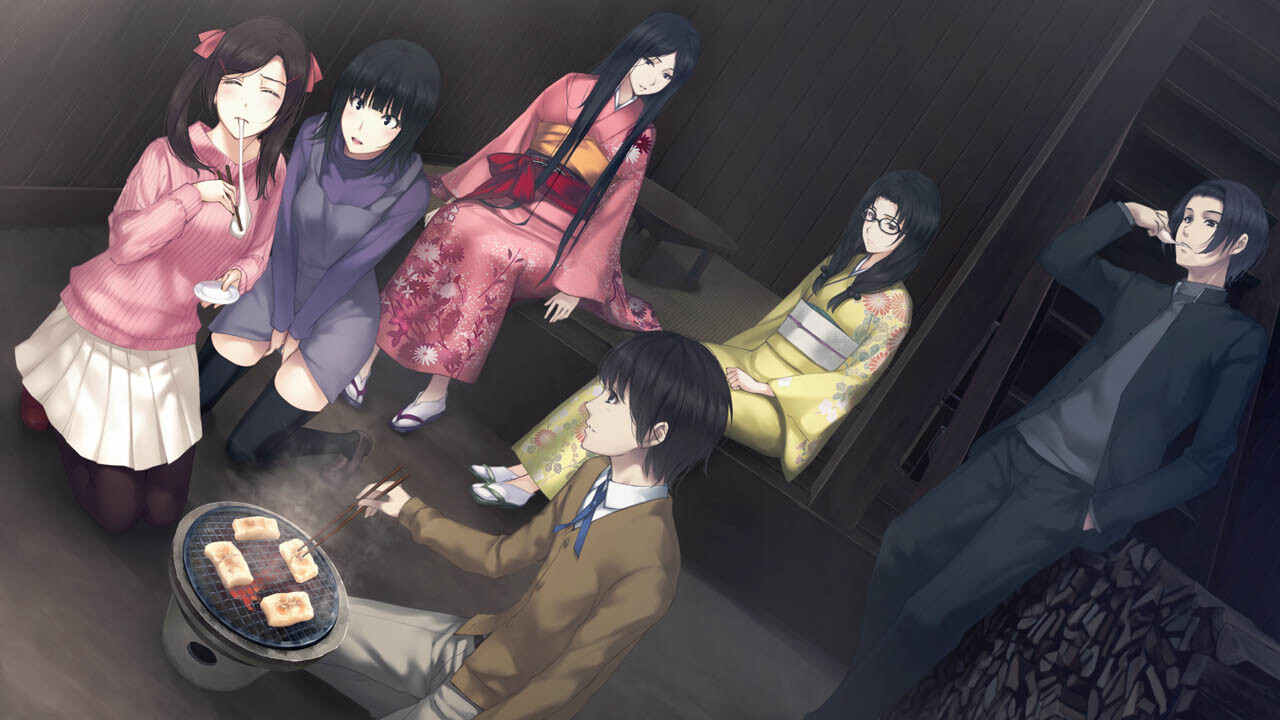
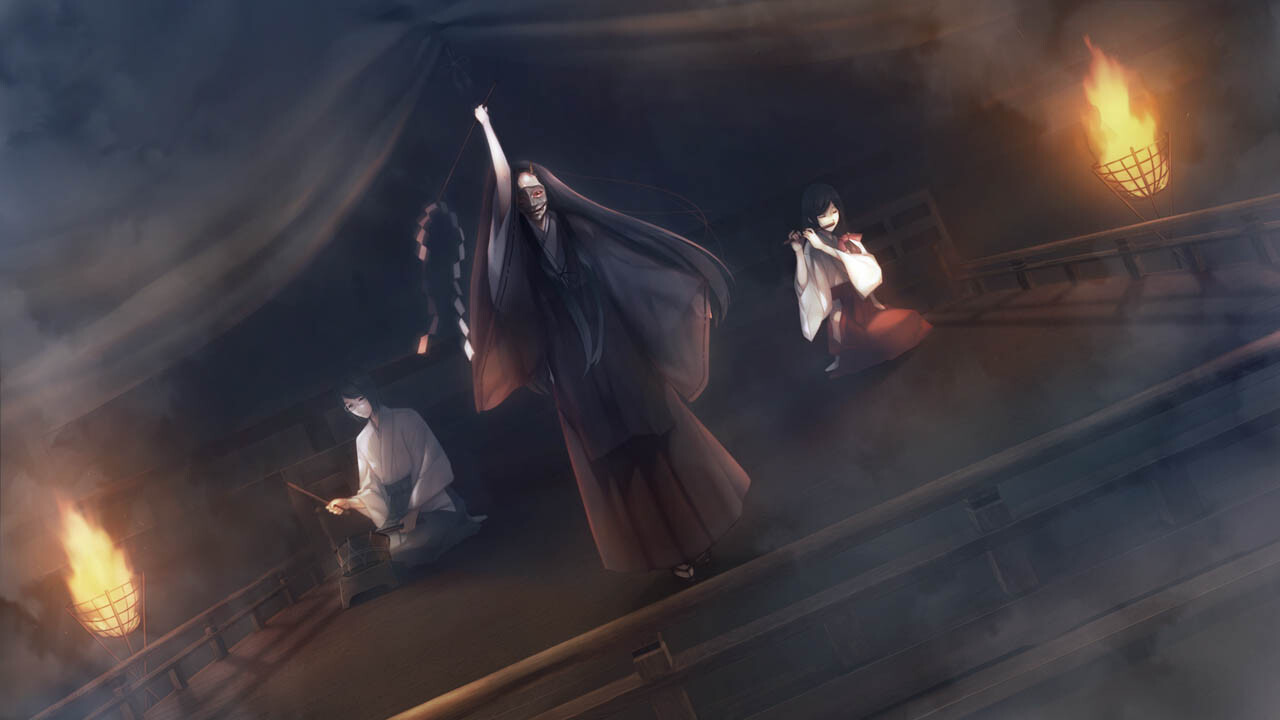
Get an in-depth look at The Shell Part II: Purgatorio through various videos and screenshots.



Load More
System requirements
These are the minimum specifications needed to play the game. For the best experience, we recommend that you verify them.
Windows
- Requires a 64-bit processor and operating system
- OS: Windows 10
- Processor: Intel Core i series
- Memory: 2 GB RAM
- Graphics: Intel HD Graphics
- DirectX: Version 9.0
- Sound Card: PCM (DirectSound support)
Steam Price & Best Deals
User reviews & Ratings
Explore reviews from Steam users sharing their experiences and what they love about the game.
This part doesn't contain spoilers, only minor mentions of successes in the game and my opinion on them, with only one bad point, and even that one is subjective. The rest is, I THINK, flawless. At first, I thought this game, Purgatorio , was a downgrade from the first part, Inferno , but after getting through it, I can confidently say it is an UPGRADE, for it covers a greater magnitude and adds richness. It's a long one, so I feel the need to write rather than explain. The Story and Its Complexity This one is quite the trip, huh? One moment, you're in a foreign town uncovering a new killing, and mere scenes later, you're at a daycare looking out for babies... literally. Personally, I found it quite hard to read. It takes you a lot of time, and it's all over the place. I am very stupid when it comes down to names, so having literal generations' worth of names to remember... I got very confused. Plus, not being japanese and not being acquainted with japanese names doesn't help. There is a LOT to remember. It's not like the first game, where you have to pay attention, but rather that you have to remember a lot. I almost quit during the first time it takes you back in time to the town of Lord Hinna, but that's due to personal reasons. I'm quite averse to meeting new characters and being introduced to a whole town out of nowhere when you've just been shown the current lives of the characters who will develop the story. It's... conflicting, to say the least, at least for me. In spite of this, I decided to push forward and make the run for it. Not gonna lie, I speedran most of the daily life from the first trip back in time, but ♥♥♥♥♥♥♥♥♥, it was worth getting through it and seeing the story develop. After that, I didn't feel the need to skip anything. The story goes through swiftly, and I liked the way the characters from the flashbacks are integrated into the story. Resuming, the story is ♥♥♥♥♥♥♥ great and rewarding, but it is SO HARD and has so many parties involved that it makes you quite confused. SPOILERS AHEAD Regarding the killings themselves, the gore and creativity in this one are quite toned down, as the victims only die in one way, and it's always the same. But it's the story and the reason they die that are the true art of it. I can't ♥♥♥♥♥♥♥ stand Masaki's (Ayato's) weakness, though. Guy's a ♥♥♥♥♥♥♥ dog, like, BRO, JUST DON'T OBEY YOUR FAMILY. The middle part of the game, where you start unveiling everything from the past, is better than the start. Everything actually starts coming into place, and honestly, it's insane the level of insight this series has. Even Yukari reading a name in a book and making it a memorable moment because the book had a spider close by, so she later remembers the name due to the shock of fearing the spider, becomes important. It's honestly crazy. Characters you don't even imagine have a background that becomes relevant. It TRULY lives up to its name of being a tale worthy of generations of mystery, and with each day, even though nothing actually happens, you unveil the covers a bit more and lean towards the truth. Sometimes, it's a simple, yet long, truth. Although I have a ♥♥♥♥♥♥ habit of reading very fast, almost skipping the text, I had a lot of occasions where I was left wondering what the hell just happened or where I didn't understand something, which goes to show how important almost all of the text is in this VN. You have to pay attention and take your time. I really, really liked this VN, and proof of that is that I wish I had taken more time to read better (at autoplay speed) and that I actually want to replay various scenes, even if the game is really long. The True Ending and the Game's Structure Once you get a certain ending and NOT a "Game Over," the game literally evolves. The menu, the intro, and the small bits of content from the game evolve to now add the new information that you acquired. You now have names that you only hear about at the end of the game being thrown at you from the start, and that blew my mind, because that is EXACTLY what this game is: a profound tale of generations and bits that carry over time to make a story greater than what it really seems. The Sex Scenes The sex scenes are turned down a notch, and I think it's very well done. You only get them after a couple of hours into the game, and they really make sense. Plus, for example, Nanako Nawashiro's scene and... well... Saya's... are related to the story. The Ending The (true) ending feels quite unfinished and leaves a lot behind, but it gives you what you want, and you know what it is... To know about her. I guess it's also because this is the second part of a three-part story, so yeah, they need to leave you hanging a bit. They make you crave knowing the rest and keep going so that they can explain everything with the end conclusion.
The Shell Part II: Purgatorio is a deeply atmospheric detective visual novel that combines murder mystery, psychological drama, historical intrigue, and unsettling themes into a carefully constructed continuation of its predecessor. Developed by Innocent Grey and published by Shiravune, the game follows detective Reiji Tokisaka as he becomes involved in another complicated investigation while still carrying the emotional burden of an unresolved disappearance. Its measured pacing and emphasis on character psychology make it especially suited to players who enjoy mysteries that gradually reveal their secrets rather than rushing from one dramatic event to another. The story primarily unfolds in 1957, almost two years after Toko Kuchiki disappeared from her hospital room. Reiji has been unable to abandon his search for her, and the unanswered questions surrounding the case have become an increasingly personal obsession. This gives the protagonist a compelling vulnerability because his investigative decisions are influenced not only by professional responsibility but also by grief, frustration, and lingering hope. His inability to leave the past behind becomes one of the narrative's strongest emotional elements. A new chain of events begins when Reiji's younger sister, Yukari, encounters Tomoyuki Masaki during an extremely troubled moment in his life. His subsequent connection with the Tokisaka Detective Agency gradually leads toward a disturbing mystery surrounding the remote settlement of Hitogata. The village possesses old traditions involving clay dolls, religious customs, and stories of supernatural punishment. A murder committed during a festival decades earlier has become entangled with local beliefs about a curse, leaving Reiji to determine how much of the legend represents superstition and how much may conceal very human wrongdoing. The investigation becomes increasingly complicated as incidents from different periods begin connecting with one another. The narrative reaches into events that occurred before the Second World War, allowing the mystery to span generations rather than concentrating exclusively on contemporary murders. This structure gives the story considerable depth. Family histories, village customs, old relationships, forgotten crimes, and distorted memories all become potential pieces of a larger puzzle. Information that initially seems like background material can eventually become meaningful, rewarding players who pay close attention to names, conversations, and historical details. Another major component is the return of a cult that has remained inactive for years. Its presence expands the investigation beyond a conventional murder case and introduces questions about faith, manipulation, desperation, and the human need to find meaning in tragedy. The game frequently uses supernatural imagery without immediately confirming supernatural explanations. This uncertainty works extremely well because both the characters and the player are encouraged to question whether apparently impossible events are genuinely otherworldly or simply the result of carefully hidden crimes. Reiji remains an effective protagonist precisely because he is not portrayed as an invulnerable detective. His emotional investment creates weaknesses that occasionally complicate his judgment, while his persistence keeps the investigation moving forward. Yukari provides an important contrast to her brother, and characters such as Tomoyuki Masaki and Yukiko Kayahara broaden the emotional dimension of the story. The relationships surrounding the central investigation help prevent the experience from becoming nothing more than an elaborate sequence of clues and revelations. Gameplay remains firmly rooted in the visual novel format. Reading extensive dialogue and narration constitutes most of the experience, while investigative decisions and branching choices provide interaction. Multiple endings encourage careful decision-making and offer reasons to revisit important sections. Players expecting frequent action, exploration, or complex puzzle solving may find the experience mechanically limited. The real challenge comes from understanding the information being presented and recognizing connections between characters, locations, and incidents. The presentation is one of its strongest qualities. Detailed hand-drawn artwork gives characters an elegant appearance that contrasts effectively with the bleak subject matter. Locations capture the distinctive atmosphere of postwar Japan, while the HD presentation provides clean and expressive imagery. Full Japanese voice acting adds emotional weight to important scenes, particularly moments involving grief, confrontation, fear, or revelation. The music and restrained visual direction further reinforce the melancholy tone instead of overwhelming scenes with unnecessary spectacle. Its mature subject matter deserves consideration before playing. Murder, kidnapping, suicide, psychological distress, threatening behavior, violence, and other disturbing circumstances are integral to the narrative. The game does not depend entirely on graphic imagery to create discomfort; much of its darker impact comes from understanding what happened to particular characters and witnessing the emotional consequences. This makes the experience more psychologically unsettling than a straightforward horror story built around constant shocks. Newcomers should strongly consider experiencing the previous installment first. Although this entry introduces a substantial mystery of its own, Reiji's motivations and several important relationships are directly shaped by earlier events. Knowledge of the preceding story gives greater meaning to his continuing search for Toko and makes numerous emotional moments considerably more effective. Treating Purgatorio as a continuation rather than an independent starting point provides the strongest experience. Steam Deck compatibility is somewhat less straightforward than with games specifically optimized for handheld systems. The visual novel format itself is naturally well suited to portable play because it requires relatively modest interaction and does not depend on rapid controls. However, players should not assume that this means every aspect has been officially optimized or verified for Steam Deck. Compatibility can depend on the current Proton environment and configuration, so it is best regarded as potentially playable rather than guaranteed to provide a completely native, officially verified handheld experience. The Shell Part II: Purgatorio ultimately succeeds because it treats mystery as more than the process of discovering a culprit. It explores how unresolved crimes affect survivors, how legends can reshape memories, and how obsession can continue across years and generations. Its patient storytelling will not appeal equally to players wanting immediate action, but readers who appreciate intricate detective fiction, historical settings, psychological tension, and character-driven visual novels will find an impressively layered experience. Rating: 9/10
That was so much better than Kara no Shoujo/The Shell Part 1, the story was much more intricate and everything weaved together so nicely. The start felt slow but it makes way more sense when it jumps back to Reiji's POV, without spoiling anything. Easily one of the best VNs I've read. Also still the darkest VN I've read, so much so it makes it hard to smile at the happy parts yk. You'll need a guide to have any chances at getting all endings, it's as impossible as always
Similar games
View all

The Shell Part I: Inferno
Unravel a string of gruesome murders terrorizing Tokyo in this mystery-thriller visual novel. The secrets of a case from six years prior may just be the key to the current unending cycle of tragedy—and the thing that cracks this woeful world’s shell may be one girl’s smile.

Apollo Justice: Ace Attorney Trilogy
Join rookie attorney Apollo Justice and his mentor, the legendary Phoenix Wright, in this collection of 3 games! This title features 16 episodes (including previously DLC-only episodes) and supports English, French, German, Japanese Korean, and Traditional and Simplified Chinese.
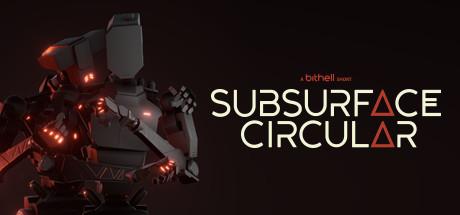
Subsurface Circular
When the truth is buried, go underground. Step into this new take on text-based adventure from the award-winning team behind Thomas Was Alone and Volume. A short story that hands you the fate of the world above, as a detective looking for answers on the Subsurface Circular.
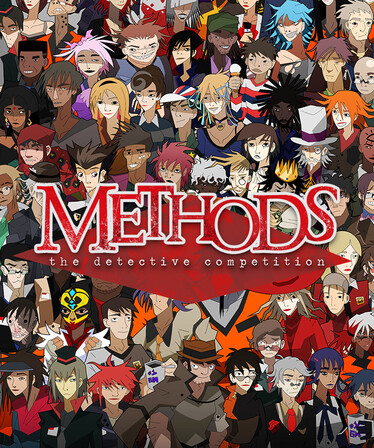
Methods: The Detective Competition
One hundred detectives compete against each other in a crime-solving competition.

Detective Butler: Maiden Voyage Murder
Follow Detective Butler and his sidekick Gilligan as they solve a locked-room murder during a haunted cruise ship's maiden voyage. Can you solve the mystery before Detective Butler reveals the answer?

AI: THE SOMNIUM FILES - nirvanA Initiative
Special Agents Mizuki and Ryuki, along with their AI partners Aiba and Tama, are tasked to solve the bizarre Half Body serial killings in this sequel to the critically acclaimed AI: THE SOMNIUM FILES.
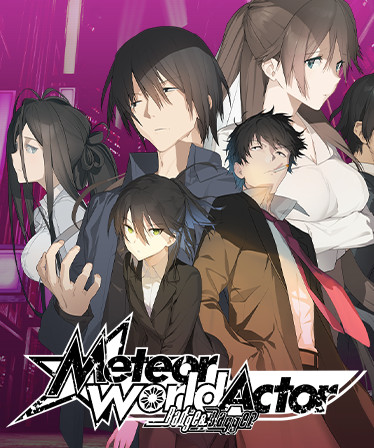
Meteor World Actor: Badge & Dagger
Superpowered detective noir. Maverick detective Ruka Hiryu pursues criminals by day—and ices perps by night...
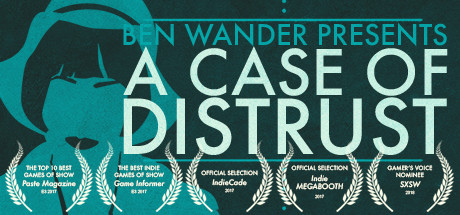
A Case of Distrust
A Case of Distrust is a narrative mystery from 1924 San Francisco. Play as private investigator Phyllis Cadence Malone in this historical 2D adventure game.
Mohism: Battle of Words
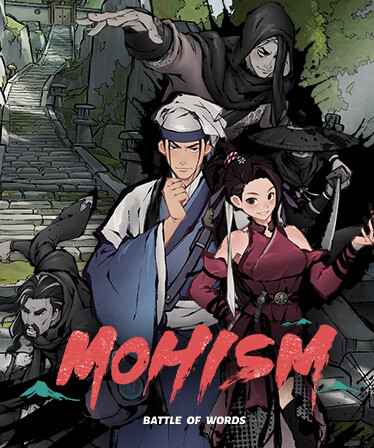
Mohism: Battle of Words is a detective game set in the world of wuxia. The game follows Zhang Xiaochen, investigates unsolved cases and comes into his own as a hero. He must rely on his wits and razor-sharp tongue to best his opponents, find the culprit and ensure justice prevails!

√Letter - Root Letter -
When a letter is delivered 15 years late - you discover an old pen-friend was involved in a murder, before she disappeared. Travelling to her hometown, you must investigate the murder, using her past letters as clues to uncover the disturbing truth.

Roman's Christmas / 罗曼圣诞探案集
Roman, the wolf detective plans to spend his Christmas vacation in his favorite tavern, but murder cases happened in the tavern put him to work again.
Frequently Asked Questions
The Shell Part II: Purgatorio is currently priced at 24.50€ on Steam.
No, The Shell Part II: Purgatorio is currently not on sale. You can purchase it for 24.50€ on Steam.
Yes, The Shell Part II: Purgatorio received 568 positive votes out of a total of 604 achieving a rating of 8.76.
😎
The Shell Part II: Purgatorio was developed by Innocent Grey and published by Shiravune.
Yes, The Shell Part II: Purgatorio is playable and fully supported on Windows.
No, The Shell Part II: Purgatorio is not playable on MacOS.
No, The Shell Part II: Purgatorio is not playable on Linux.
Yes, The Shell Part II: Purgatorio is playable on Steam Deck, though it might require a few minor tweaks. Make sure to check the Steam store page and community feedback on ProtonDB for exact compatibility details.
Yes, The Shell Part II: Purgatorio is playable and fully supported on Steam Machine.
No, The Shell Part II: Purgatorio does not support VR.
The Shell Part II: Purgatorio is a single-player game.
No, The Shell Part II: Purgatorio does not currently offer any DLC.
No, The Shell Part II: Purgatorio does not support mods via Steam Workshop.
No, The Shell Part II: Purgatorio does not support Steam Remote Play.
Yes, The Shell Part II: Purgatorio is enabled for Steam Family Sharing. This means you can share the game with authorized users from your Steam Library, allowing them to play it on their own accounts. For more details on how the feature works, you can read the original Steam Family Sharing announcement or visit the Steam Family Sharing user guide and FAQ page.
You can find solutions or submit a support ticket by visiting the Steam Support page for The Shell Part II: Purgatorio.
Data sources
The information presented on this page is sourced from reliable APIs to ensure accuracy and relevance. We utilize the Steam API to gather data on game details, including titles, descriptions, prices, and user reviews. This allows us to provide you with the most up-to-date information directly from the Steam platform.
Additionally, we incorporate data from the SteamSpy API, which offers insights into game sales and player statistics. This helps us present a comprehensive view of each game's popularity and performance within the gaming community.
Last Updates| Steam data | 22 October 2026 16:48 UTC |
|---|---|
| SteamSpy data | 21 October 2026 23:20 UTC |
| Steam price | 27 October 2026 04:08 UTC |
| Steam reviews | 22 October 2026 16:05 UTC |
If you'd like to dive deeper into the details about The Shell Part II: Purgatorio, we invite you to check out a few dedicated websites that offer extensive information and insights. These platforms provide valuable data, analysis, and user-generated reports to enhance your understanding of the game and its performance.
- SteamDB - A comprehensive database of everything on Steam about The Shell Part II: Purgatorio
- SteamCharts - Analysis of The Shell Part II: Purgatorio concurrent players on Steam
- ProtonDB - Crowdsourced reports on Linux and Steam Deck The Shell Part II: Purgatorio compatibility
 24.50€
Visit Store
24.50€
Visit Store
 🔥 Deal
-54%
24.50€
11.31€
Buy Now
🔥 Deal
-54%
24.50€
11.31€
Buy Now
 -51%
24.50€
12.09€
Visit Store
-51%
24.50€
12.09€
Visit Store
 -42%
24.50€
14.31€
Visit Store
-42%
24.50€
14.31€
Visit Store
Game modes
Features
Online players
6
Developer
Innocent Grey
Publisher
Shiravune
Release
18 Apr 2024
Platforms
Clicking and buying through these links helps us earn a commission to maintain our services.