
Once in Yaissor
Summer, 2020, Ya'issor. Most people have become youtubers, streamers, and other scum, and almost no one wants to be a working bum. Nobody has an opinion of their own. Everyone thinks they are nihilists, atheists, reading intellectuals, and other elites.
Sync your Steam wishlist to find the lowest game prices instantly. No login required, just paste your Steam profile URL!
⚡ Try Wishlist Radar!
Sync your Steam wishlist to find the lowest game prices instantly. No login required!
⚡ Try Wishlist Radar!
Close

The Underground Man on Steam
Quick menu
Moscow: somewhere in the near future. The city and perhaps the Earth's surface has turned into a radioactive ash. Those who decided that they could not exist in such conditions began to live under the ground.
The Underground Man is a indie, story rich and memes game
developed and published by Mehsoft.
Released on September 01st 2016 is available on Windows, MacOS, Steam Deck and Steam Machine
in 2 languages: English and Russian.
It has received 1,302 reviews of which 1,029 were positive and 273 were negative resulting in a rating of 7.6 out of 10. 😊
The game is currently priced at 1.99€ on Steam.
The Steam community has classified The Underground Man into these genres:
Indie
Story Rich
Memes
Post-apocalyptic
Adventure
Atmospheric
RPG
Great Soundtrack
Classic
Singleplayer
2D
Survival
Pixel Graphics
Psychological Horror
Retro
Difficult
Action
Open World
Choices Matter
Comedy
Here is the detailed breakdown of supported languages for The Underground Man:
| UI | Subtitle | Audio | |
|---|---|---|---|
| English | |||
| Russian |
Media & Screenshots
Get an in-depth look at The Underground Man through various videos and screenshots.


System requirements
These are the minimum specifications needed to play the game. For the best experience, we recommend that you verify them.
Windows
- OS: Windows
- Processor: Pentium 4
- Memory: 1024 MB RAM
- Graphics: Intel HD4000
- Storage: 204 MB available space
Steam Price & Best Deals
User reviews & Ratings
Explore reviews from Steam users sharing their experiences and what they love about the game.
Игра создавалась на спор - Мэддисон хотел доказать, что в Steam Greenlight можно протащить любое говно. Спор он выиграл, но совести ему хватило, чтобы выпустить пусть и своеобразную, но полноценную игру, которую реально пройти. Понятно, что с нулевым бюджетом шедевр не сделаешь. Эту игру стоит брать не ради геймплея, а ради абсурдно смешных диалогов - олды и зрители Короля Рунета 2009 точно заценят. Однозначно рекомендовать к покупке не стану, сюжет вполне можно посмотреть и на YouTube. Но если хочется проверить собственные нервы и скилл, то на разок вполне норм.
The Underground Man is one of the strangest and most deliberately unsettling indie games available on Steam, combining post-apocalyptic adventure mechanics, surreal humor, philosophical satire, and intentionally frustrating gameplay into an experience that constantly feels unpredictable. Developed by Mehsoft, the game presents itself as a retro-inspired RPG set in a ruined radioactive world, but it quickly becomes clear that this is not a traditional role-playing game in any normal sense. Instead, it functions more like an interactive psychological experiment filled with bizarre conversations, awkward mechanics, dark comedy, and moments that seem designed specifically to confuse or irritate the player. The story takes place in a devastated future where the surface world has collapsed into radioactive chaos and humanity has fractured into desperate survivor communities. Some people have escaped underground in an attempt to preserve what remains of civilization, while the surface has become a hostile wasteland populated by strange individuals, violent groups, and increasingly absurd situations. Players take control of one of these underground citizens who is sent above ground to search for resources and investigate whether life outside can still continue. What begins as a familiar post-apocalyptic premise slowly transforms into something far stranger as the game introduces surreal dialogue, unstable characters, and increasingly irrational situations. One of the game’s defining strengths is its writing. The dialogue constantly shifts between dark humor, social satire, absurd internet-inspired comedy, and philosophical reflection in ways that make the entire experience feel unstable and unpredictable. Conversations rarely unfold normally. Characters speak in bizarre ways, react irrationally, and often force the player into uncomfortable or nonsensical interactions. At times the game feels genuinely hilarious, while in other moments it becomes unsettling or strangely melancholic. The tone constantly changes without warning, which helps create the feeling that the world itself is mentally collapsing alongside civilization. The title clearly draws inspiration from Dostoevsky’s Notes from Underground, and many of the themes revolve around alienation, irrational behavior, human cruelty, and emotional isolation. Like the literary Underground Man, the protagonist exists as an outsider disconnected from society and forced to navigate a world filled with hostility and absurdity. However, instead of treating these ideas with traditional seriousness, the game filters them through grotesque humor, awkward interactions, and bizarre satire that often borders on parody. Gameplay itself is intentionally rough and often openly hostile toward the player. The Underground Man combines exploration, platforming, combat, puzzles, and dialogue systems into a strange hybrid structure where nearly every mechanic feels designed to create discomfort. One of the most unusual features is the dialogue system, which sometimes requires players to manually type responses instead of selecting standard dialogue options. While initially interesting, this mechanic quickly becomes frustrating because the game often expects extremely specific answers and punishes mistakes harshly. The tutorial immediately establishes the game’s design philosophy by forcing players through intentionally awkward systems and punishing incorrect actions in absurd ways. Certain mistakes can abruptly end the game or completely derail progress, creating an atmosphere where players constantly feel uncertain about what the game expects from them. These moments are clearly intentional and reflect the overall tone of the experience. The Underground Man does not attempt to make players comfortable. Instead, it embraces confusion and irritation as core parts of its identity. Combat and movement mechanics are similarly clumsy. Battles feel stiff and awkward, while platforming sections often punish mistakes severely through imprecise controls and sudden hazards. Some sections almost resemble parody versions of punishing retro games, where the difficulty feels intentionally unfair rather than traditionally challenging. Yet strangely, this awkwardness contributes to the game’s overall atmosphere. The world feels broken, unstable, and hostile, and the gameplay reflects that emotional tone perfectly. What makes the experience fascinating despite its frustrations is how committed it remains to its bizarre artistic vision. Every strange mechanic, uncomfortable interaction, and confusing moment feels deliberate. The Underground Man is not trying to become a polished mainstream RPG. Instead, it functions more like an interactive surrealist nightmare designed to provoke emotional reactions from the player. The constant unpredictability creates a strange sense of curiosity because players never know whether the next moment will be hilarious, disturbing, or completely nonsensical. Visually, the game uses retro pixel-art aesthetics that perfectly reinforce its atmosphere of decay and psychological instability. The environments are ugly in a very intentional way, filled with ruined landscapes, dirty underground areas, and unsettling imagery that make the radioactive world feel exhausting and oppressive. The crude visual style actually enhances the surreal tone because it gives everything a distorted dreamlike quality. The wasteland constantly feels emotionally unpleasant, which aligns perfectly with the themes of social collapse and existential despair running throughout the game. The soundtrack and audio design also deserve praise for how effectively they support the experience. Music shifts unpredictably between eerie ambience, distorted electronic tracks, and strangely emotional melodies that create a constant feeling of unease. Combined with the awkward pacing and unsettling dialogue, the audio design helps transform ordinary exploration into something psychologically uncomfortable. One of the most interesting aspects of The Underground Man is how divisive it is among players. Some view it as brilliant experimental satire and one of the most unique indie experiences on Steam, while others see it as intentionally annoying nonsense built around frustrating mechanics and poor design choices. Both reactions are understandable because the game constantly blurs the line between artistic experimentation and genuine irritation. Whether a player enjoys the experience largely depends on their tolerance for unconventional design and deliberate discomfort. The pacing can also become exhausting during longer sessions. Sudden difficulty spikes, obscure progression requirements, and lengthy surreal conversations demand patience and attention from the player. Those expecting a smooth or traditionally enjoyable RPG adventure may quickly lose interest, while players fascinated by experimental storytelling and bizarre game design may find the unpredictability strangely compelling. Ultimately, The Underground Man succeeds because it fully commits to being strange. It refuses to compromise its identity in order to become more accessible or traditionally entertaining. The result is a deeply unusual experience that feels unlike almost anything else on Steam. It is frustrating, absurd, uncomfortable, and often intentionally irrational, but those same qualities are exactly what make it memorable. For players interested in surreal indie games, experimental storytelling, post-apocalyptic satire, and unconventional adventures that challenge traditional game design expectations, The Underground Man delivers a uniquely bizarre journey that leaves a lasting impression long after it ends. It may not always be enjoyable in a conventional sense, but it is undeniably original and impossible to forget. Rating: 8/10
Similar games
View all

Where the Water Tastes Like Wine
Where the Water Tastes Like Wine is a Narrative-Adventure game about traveling, sharing stories, and surviving manifest destiny.
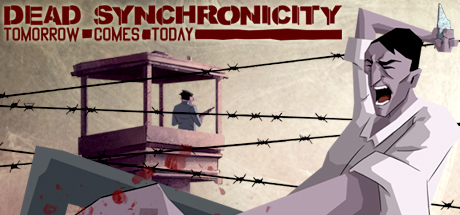
Dead Synchronicity: Tomorrow Comes Today
A dying reality, a universe that’s fading away. A merciless world thatgets sick and vanishes. No past, no present, no future; only the impending moment of “dead synchronicity” ahead. Will you be able to stop it?Because, otherwise... what will you do when Time dissolves itself?

The Mooseman
You are the Mooseman and you have the ability to see all that is hidden to the mortal eye. You are about to visit three layers of this universe - the first one is the Lower World where dead reside…

A Bird Story
An experimental short from the creator of To the Moon & Finding Paradise: A simple & surreal 1-hour interactive animation about a boy and an injured bird, told without dialogues.If you're looking for To the Moon-like experience, I'd suggest playing Finding Paradise first.

Last Day of June
A deep, interactive adventure about love and loss, beautifully depicted and offering an intense cinematic experience. What would you do to save the one you love?

Break the Game
This game is about Kevin, He's been stuck in his gaf̶̨s̨fẃ̵̕ HEY, YOU, STAY AWA̸̧͘Y, IT'S ME KEVIN, THERE'S NO POINT, D҉Ò̷̕N̸̕͏'T-- Follow him in this adventurous and humor-filled story to d̶̢͙̟̦̺̰̫̙̋̊͐̐͑͋̈́̕̕͝ die

Forever Ago
Following a tragic stroke of fate, Alfred embarks on a journey north in search of redemption in this single-player road trip adventure.

The Final Station
Travel by train through a dying world. Look after your passengers, keep your train operational, and make sure you can always reach the next station. Make your way through swarms of infected at each station. Explore mysterious and abandoned stations looking for supplies and survivors.
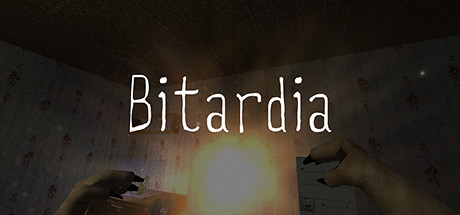

Caligo
Caligo is the darkness everyone descends into one way or another, and to each of us it's something different. For some it's a short but exciting adventure, some will see it as a place to relax. Yet others will be reminded of their worst nightmare, while for a few, it might come as a revelation.

Whispering Willows
Interact with the spirits of the dead, solve the puzzles of the mysterious mansion and help Elena find her missing father in the horror/adventure puzzle game: Whispering Willows.
Frequently Asked Questions
The Underground Man is currently priced at 1.99€ on Steam.
No, The Underground Man is currently not on sale. You can purchase it for 1.99€ on Steam.
Yes, The Underground Man received 1,029 positive votes out of a total of 1,302 achieving a rating of 7.57.
😊
The Underground Man was developed and published by Mehsoft.
Yes, The Underground Man is playable and fully supported on Windows.
Yes, The Underground Man is playable and fully supported on MacOS.
No, The Underground Man is not playable on Linux.
Yes, The Underground Man is playable on Steam Deck, though it might require a few minor tweaks. Make sure to check the Steam store page and community feedback on ProtonDB for exact compatibility details.
Yes, The Underground Man is playable on Steam Machine, though it might require a few minor tweaks. Make sure to check the Steam store page and community feedback on ProtonDB for exact compatibility details.
No, The Underground Man does not support VR.
The Underground Man is a single-player game.
Yes, there is a DLC available for The Underground Man. Explore additional content available for The Underground Man on Steam.
No, The Underground Man does not support mods via Steam Workshop.
No, The Underground Man does not support Steam Remote Play.
Yes, The Underground Man is enabled for Steam Family Sharing. This means you can share the game with authorized users from your Steam Library, allowing them to play it on their own accounts. For more details on how the feature works, you can read the original Steam Family Sharing announcement or visit the Steam Family Sharing user guide and FAQ page.
You can find solutions or submit a support ticket by visiting the Steam Support page for The Underground Man.
Data sources
The information presented on this page is sourced from reliable APIs to ensure accuracy and relevance. We utilize the Steam API to gather data on game details, including titles, descriptions, prices, and user reviews. This allows us to provide you with the most up-to-date information directly from the Steam platform.
Additionally, we incorporate data from the SteamSpy API, which offers insights into game sales and player statistics. This helps us present a comprehensive view of each game's popularity and performance within the gaming community.
Last Updates| Steam data | 24 September 2026 04:32 UTC |
|---|---|
| SteamSpy data | 14 October 2026 06:46 UTC |
| Steam price | 27 October 2026 04:02 UTC |
| Steam reviews | 21 October 2026 15:47 UTC |
If you'd like to dive deeper into the details about The Underground Man, we invite you to check out a few dedicated websites that offer extensive information and insights. These platforms provide valuable data, analysis, and user-generated reports to enhance your understanding of the game and its performance.
- SteamDB - A comprehensive database of everything on Steam about The Underground Man
- SteamCharts - Analysis of The Underground Man concurrent players on Steam
- ProtonDB - Crowdsourced reports on Linux and Steam Deck The Underground Man compatibility

Game modes
Features
Online players
0
Developer
Mehsoft
Publisher
Mehsoft
Release
01 Sep 2016
Platforms