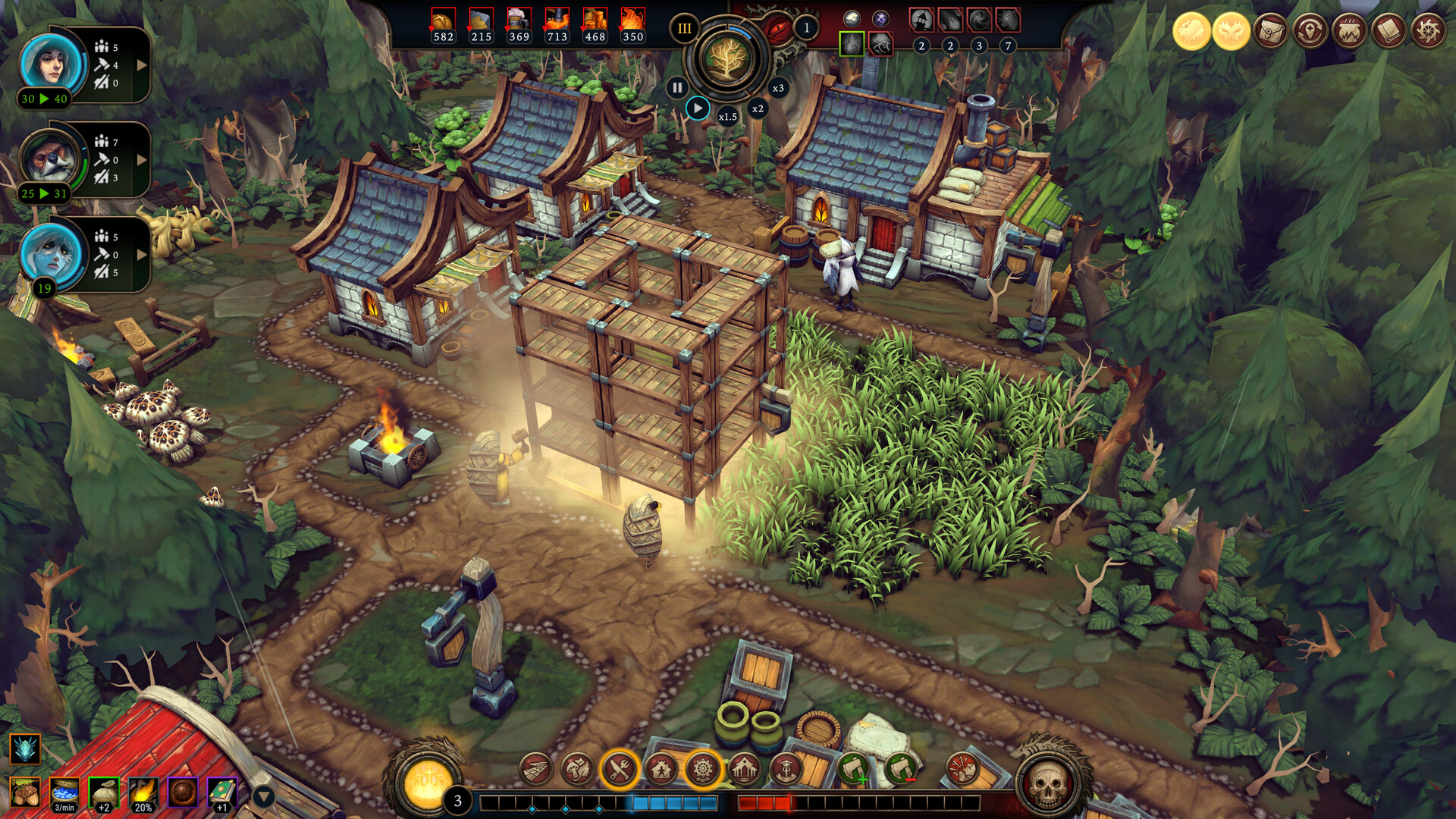
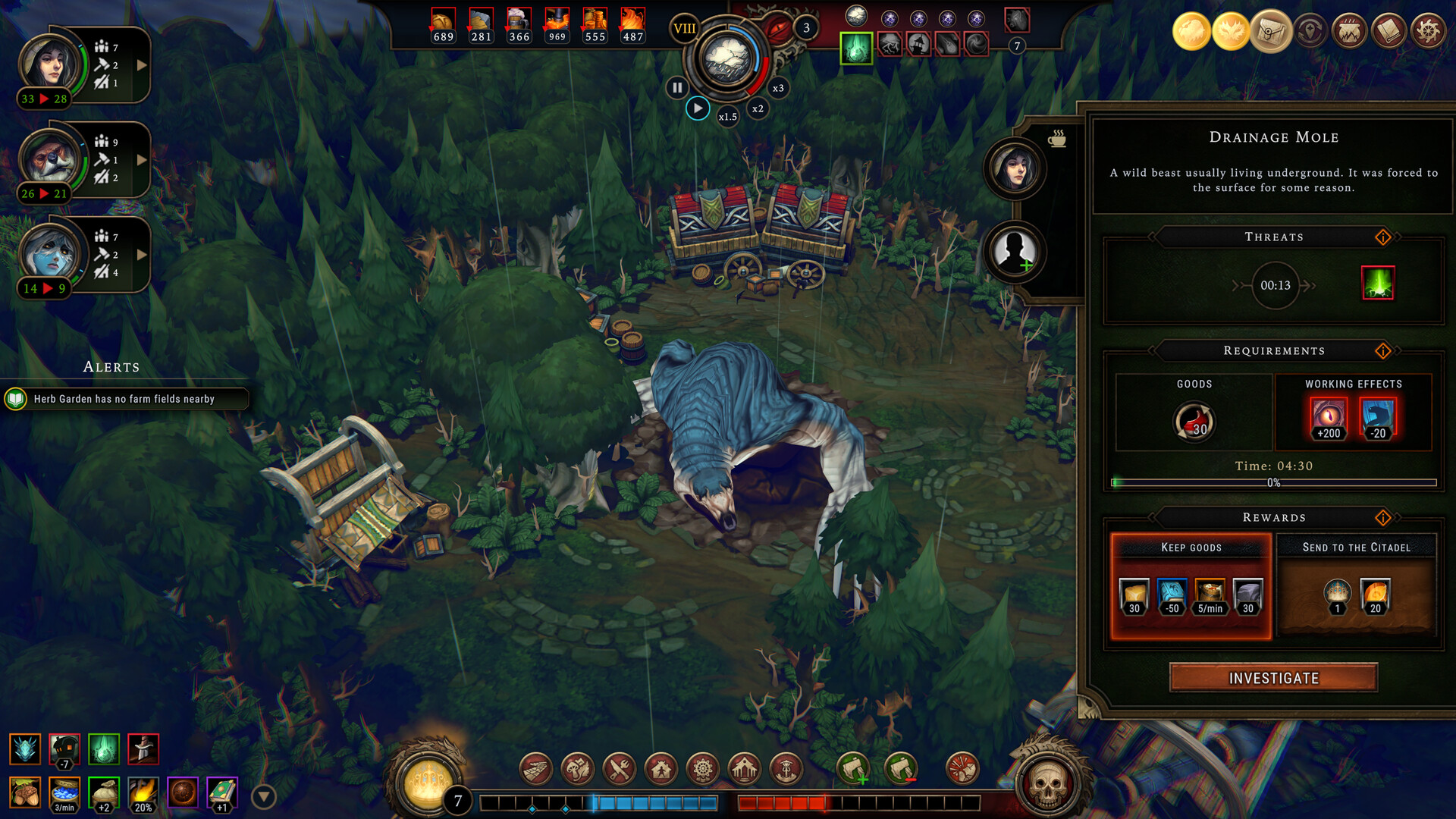
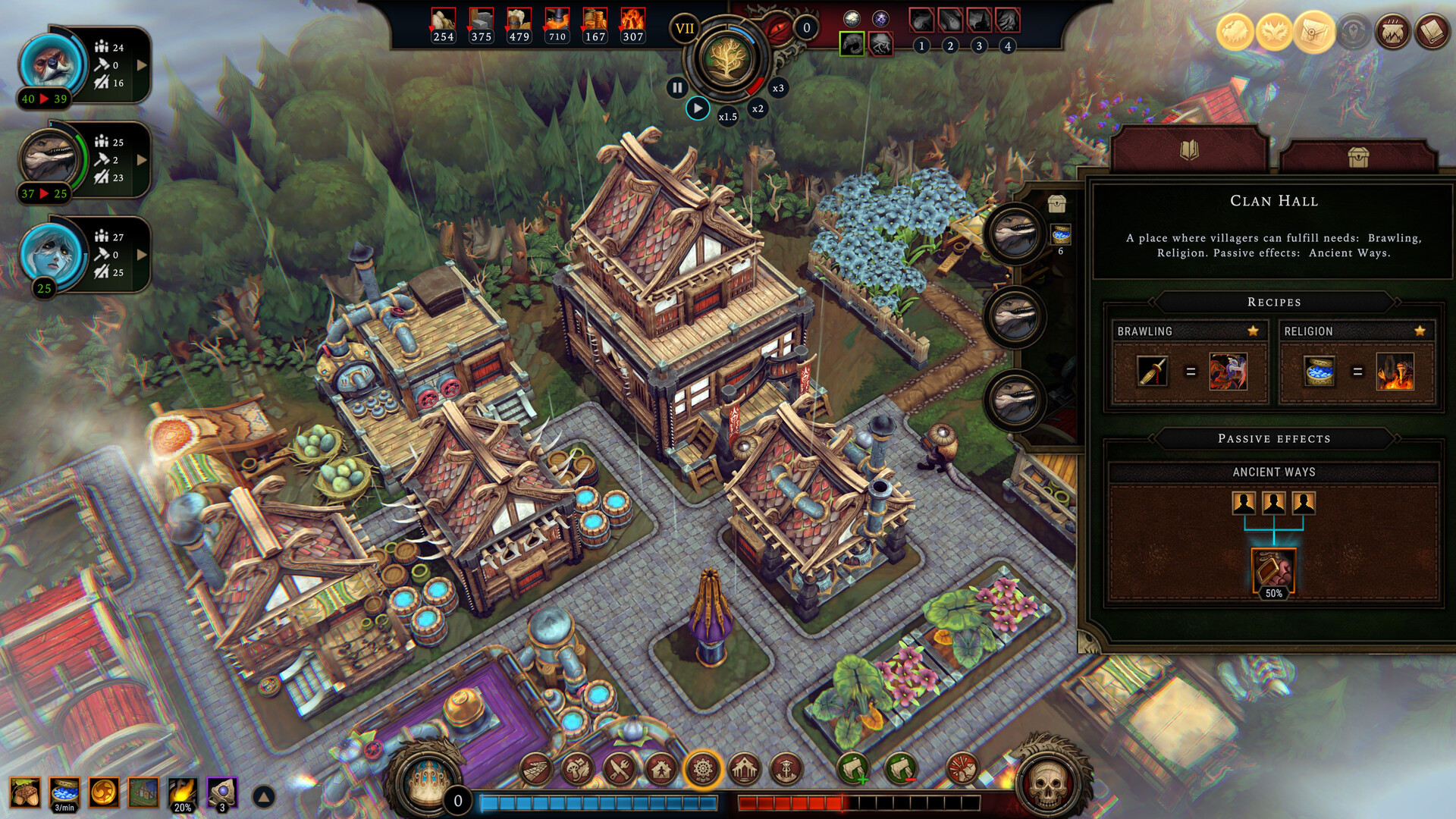
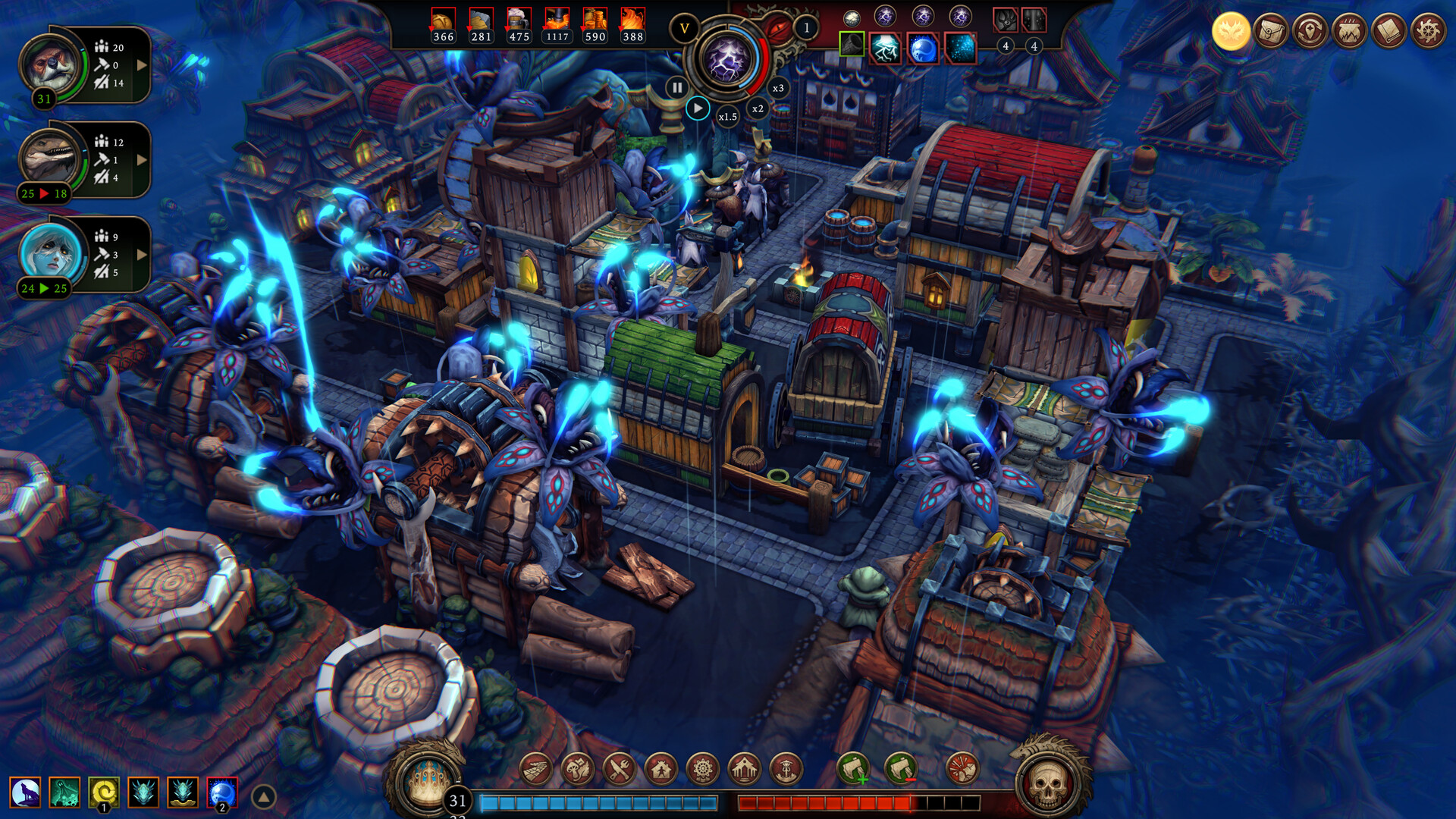
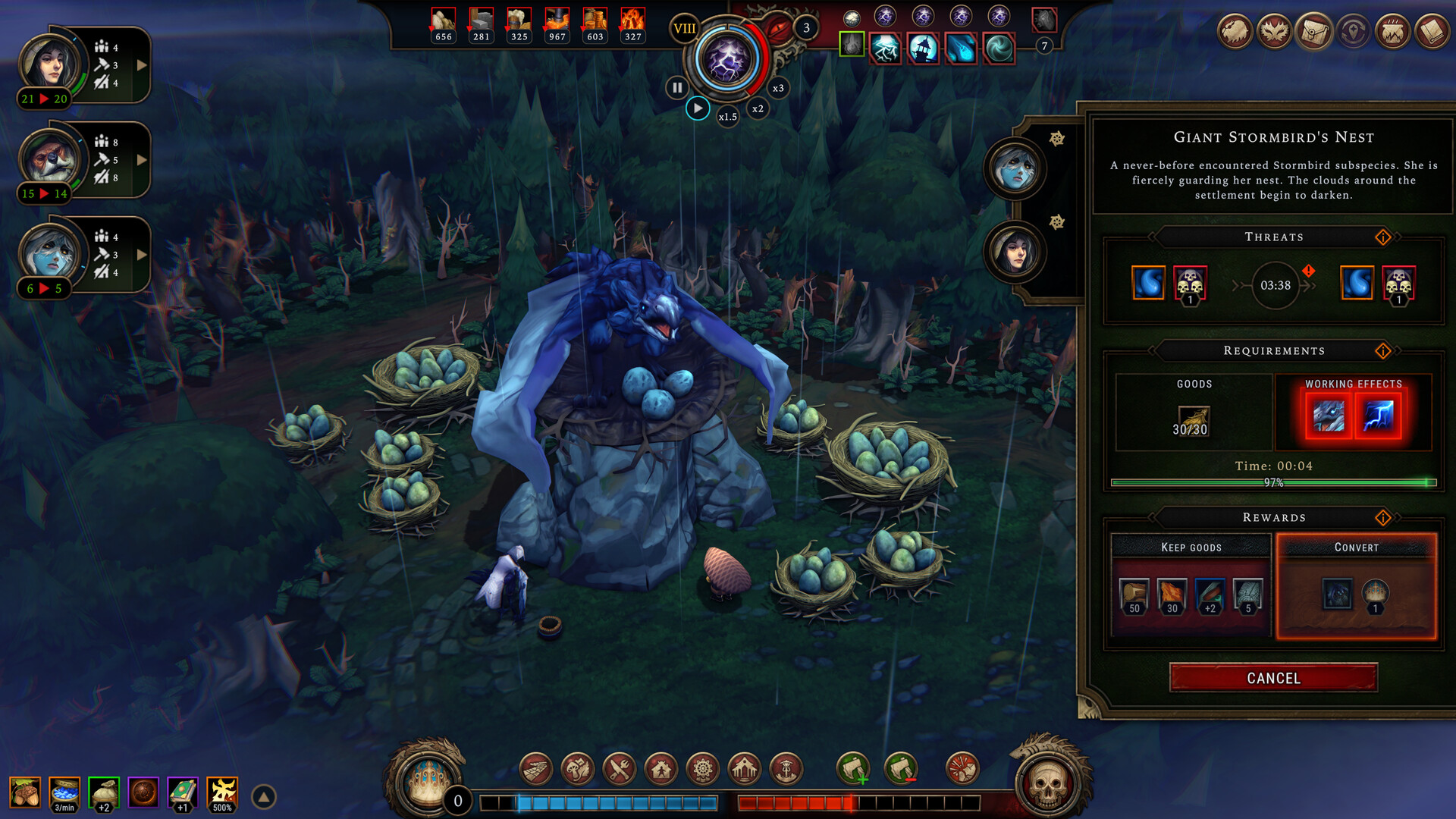
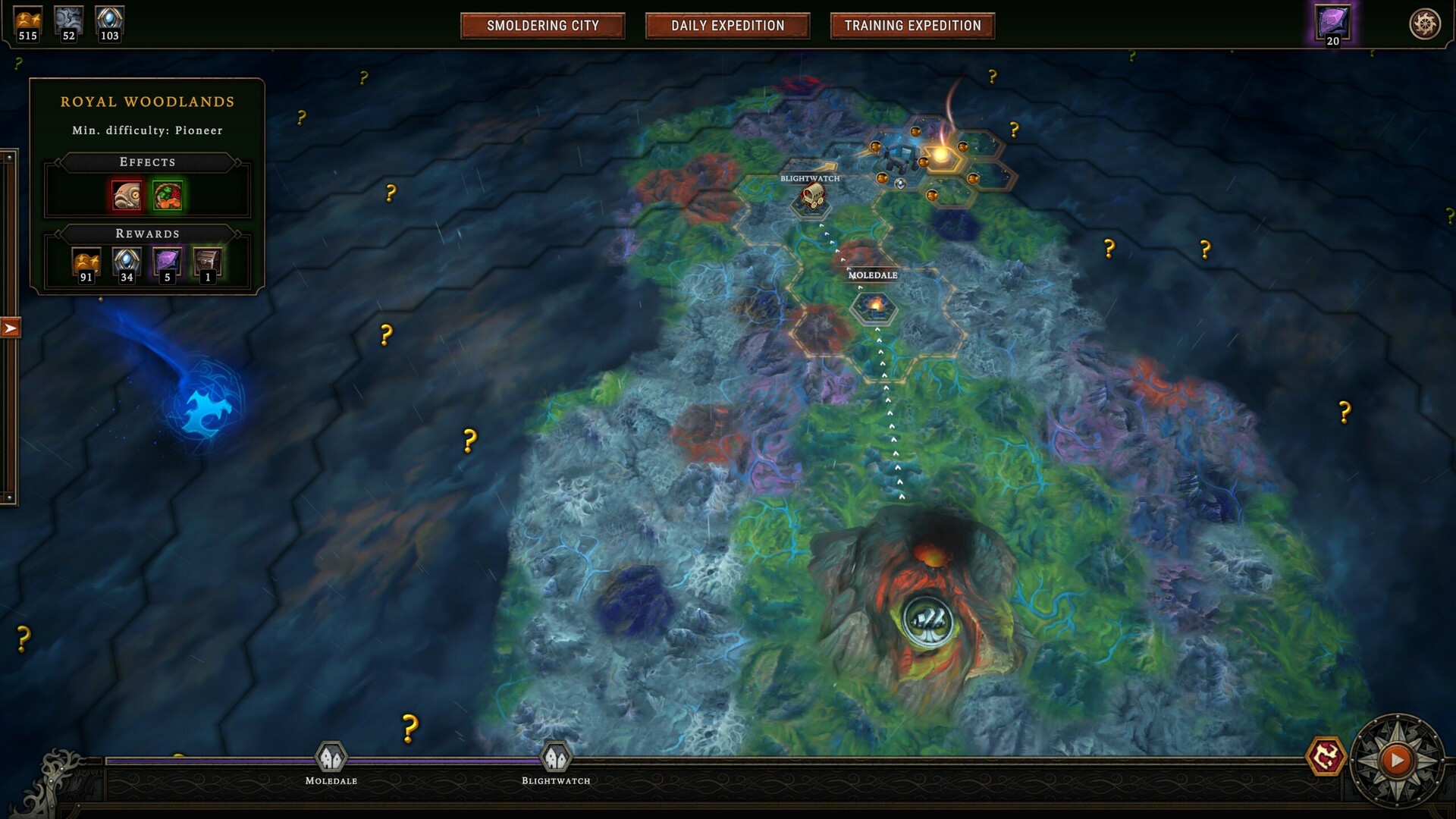
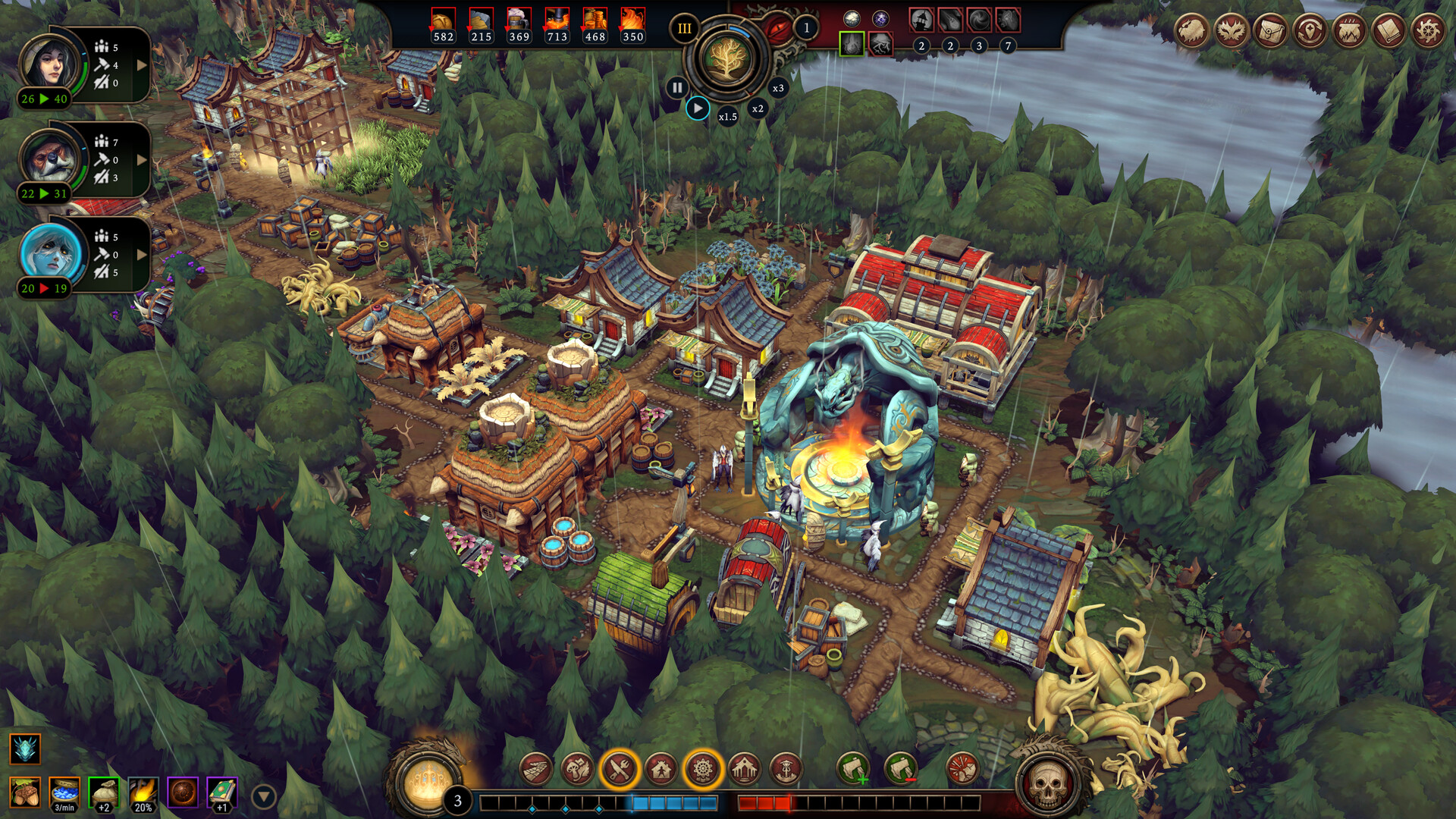
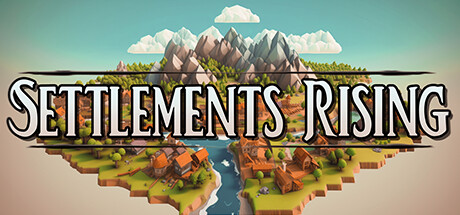
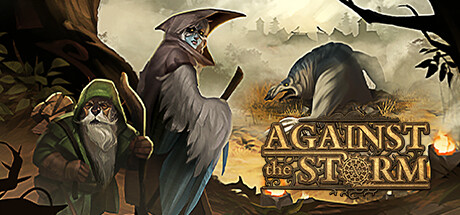
This game is absolutely incredible. I "finished" it a few weeks ago and wanted to make sure I left a review before I forget all my thoughts on it. I've found I can't stop talking about this game to friends, trying to describe a "rougelite citybuilder resource management game" that somehow is engaging by not micromanaging has been tough. I legit could not stop playing this, the gameplay loop of ~1 hour "runs" within a ~10 run "campaign" with upgrades along the way was just perfect, and is great pacing for a work/study break. There's a lot of conflicting mechanics going on but the presentation of all of them is very easy to read, with a steady learning curve so you aren't overwhelmed all at once - although there is a bit of tooltip overload early if you bought all the expansions, I think sprinkling some of those in as you unlock the features might work a bit better. It's hard to describe how well the "resource management" aspects play. It is far less micromanagy than a true automation game like factorio, where you unlock different "factories" and simply assign workers and manage output priority rather than worrying about things like pathing and storage. There is a LOT of QOL baked into the core game that would turn me off from this genre otherwise - you can move (most) buildings by default, and at worse destroy and rebuild them (no net resource cost) so you don't feel punished for needing to change layout as the game progresses. The "vibe" is great, the music is great, there's clearly a lot of love/details put into every aspect of the game (I think I hear what sounds like rain hitting gutters in one of the tracks, perfectly encapsulates the feel of the game). The gameplay variety is fantastic - between always having different species, playing on different maps, and getting different cornerstones and factories each run every game truly feels unique. The way the factories you select overlap resources with different efficiency levels - while having different priorities each run based off available resources and needs - means you can have some preferences of "best" factories, but every choice does end up being different and meaningful as it's not made in a vacuum but is dependent of the state of your current run. While the number of resources and factories can look intimidating, that's where I think the incredible design of this game really shines. The developers clearly put a lot of work into "bucketizing" resources while still making them unique. For example, stone and clay are "interchangeable" in that they both can be used to make bricks, so if you have one, the other is a lower priority. However they are still unique - only clay can be used to make pottery, so having stone lowers the priority of clay but doesn't eliminate it. HOWEVER - pottery is mostly interchangeable with other "container" classes (like barrels or leather pouches) so if you have either of those, the need for clay lessens further. This complex looking web of resources and needs is actually really easy to get your head around once you start playing, and again is the foundation of all the diverse gameplay decisions when linked with different maps (only certain resources available) or different species (prioritizing different needs). After "finishing" the game I did want to capture a few thoughts on possible improvements as well. My initial disappointment was that runs would sometimes end just as I felt I was building up momentum - I'd open a new hard glade, be halfway through progressing an event for a cool reward, then would randomly win due to happiness from my townsfolk. I'll talk a bit more about prestige below, but I basically was hoping increased difficulty would just extend the games rather than remove mechanics and make the early game more punishing. A specific request on that note - the "world events" were really strong and cool in theory (Do X to get a permanent unlock) but these did lead to a pretty unfun situation where I had to intentionally sabotage my town to make sure I didn't accidentally win before completing the mechanic. Similarly, completing the mechanic but losing the bonus because I won one season too late (often because I just sabotaged myself, per above) was a real feel bad moment. I think these should be changed to simply require completing the event before the year cutoff (deliver X material before year 7) rather than requiring winning the game at the same time - you are already "punished" for games going long (as you have fixed years for a campaign) so this just seems like doubling down and hurts the immersion. Another recommendation would be changing some of the default settings. Recipes are set by default to only use the "primary" resource which I think is confusing to new players - it's not immediately clear, using the examples above, that bricks can be made with both stone and clay, they will just not have any bricks and think they "have" to have stone. On the other hand, you don't want the default behavior to be consuming all resources for something you don't care about (turning all your food into trade resources, for example). I was happy to find there are settings for all of this buried in options so was very easy to enable, I found the most intuitive default settings were to enable all recipes by default, but set a limit of about 20 to all resources. This minimizes unintended production stops by allowing all resources and preventing factories from overprioritizing a single output. While everyone's going to have different preferences for actual settings, I think this is a relatively simple change for the default new player settings as it will better balance production while pointing players to those options when bottlenecks occur. One other tweak that might be beneficial is improving how factories prioritize multiple resources. I believe currently factories prioritize in a straight list - if you can use copper or dew bars for a recipe, you will use ALL of one before even touching the other, based off (I think) either default behavior or any override priorities. This can lead you to very quickly draining a resource you might need for other recipes as well. While production caps help with this, I think a further improvement would be to prioritize alternate resources based off "number of crafts". For example if a recipe uses 3 copper bars and you have 12, or 4 dew bars and you have 8, the recipe would prioritize using copper (4 crafts available) over dew (2 crafts available). However after 3 crafts, dew would now have more available and the recipe would switch. Again, all of this could still be overruled (just like it can today) I just think setting as much default logic as possible to reduce bottlenecks or unwanted outputs will further minimize micromanagement gameplay - or more, steer the micromanagement to where it is fun/intended. While there are other great writeups addressing the issues with late-game/prestige fun and I'm approaching the character limit, I'll just note that once you max out the citadel upgrades the game starts to lose what makes rouge-LITEs fun - that even when you lose a run, you still get something out of it so are incentivized to start another. High prestige actually includes the opposite - using resources on the forsaken alter and then losing a campaign actually causes you to LOSE progress which is the antithesis to the appeal of the genre. My mentality in my prestige 20 push was that if I lost the run, I would basically choose to be done with the game regardless as I would feel bad starting over in a worse place - not somewhere you want your players to be. I'll leave further recommendations below but effectively I think there are some relatively simple tweaks to allow infinite citadel upgrades to extend the core gameplay loop and make the forsaken alter use in-run resources to make it less punishing at a macro level. In summary: Fantastic game, room for minor tweaks only, my "sleeper" recommendation for the year.
Expand the review