
Path of Exile 2
Path of Exile 2 is a next generation Action RPG from Grinding Gear Games, featuring co-op for up to six players. Set years after the original Path of Exile, you will return to the dark world of Wraeclast and seek to end the corruption that is spreading.
Sync your Steam wishlist to find the lowest game prices instantly. No login required, just paste your Steam profile URL!
⚡ Try Wishlist Radar!
Sync your Steam wishlist to find the lowest game prices instantly. No login required!
⚡ Try Wishlist Radar!
Close

Alaloth: Champions of The Four Kingdoms on Steam
Quick menu
A hardcore high fantasy isometric action RPG set in a huge sandbox world ruled by magic and monsters. Master deep skill-based combat, forge powerful builds, explore unforgiving lands and dungeons, face brutal boss fights, uncover ancient secrets, and save Plamen from its inevitable doom!
Alaloth: Champions of The Four Kingdoms is a action rpg, isometric and souls-like game
developed by Gamera Interactive
and published by Gamera Interactive and Ancient Scroll.
Released on November 21st 2024 is available on Windows, Steam Deck and Steam Machine
in 10 languages: English, French, Italian, German, Spanish - Spain, Portuguese - Brazil, Polish, Turkish, Simplified Chinese and Russian.
It has received 1,569 reviews of which 1,130 were positive and 439 were negative resulting in a rating of 7.0 out of 10. 😐
The game is currently priced at 34.99€ on Steam.
The Steam community has classified Alaloth: Champions of The Four Kingdoms into these genres:
Action RPG
Isometric
Souls-like
Hack and Slash
Fantasy
Dungeon Crawler
Sandbox
Dark Fantasy
Singleplayer
RPG
Open World
CRPG
Lore-Rich
Top-Down
Story Rich
Nonlinear
Exploration
Magic
Swordplay
Action
Here is the detailed breakdown of supported languages for Alaloth: Champions of The Four Kingdoms:
| UI | Subtitle | Audio | |
|---|---|---|---|
| English | |||
| German | |||
| French | |||
| Italian | |||
| Spanish - Spain | |||
| Simplified Chinese | |||
| Russian | |||
| Polish | |||
| Turkish | |||
| Portuguese - Brazil |
Media & Screenshots
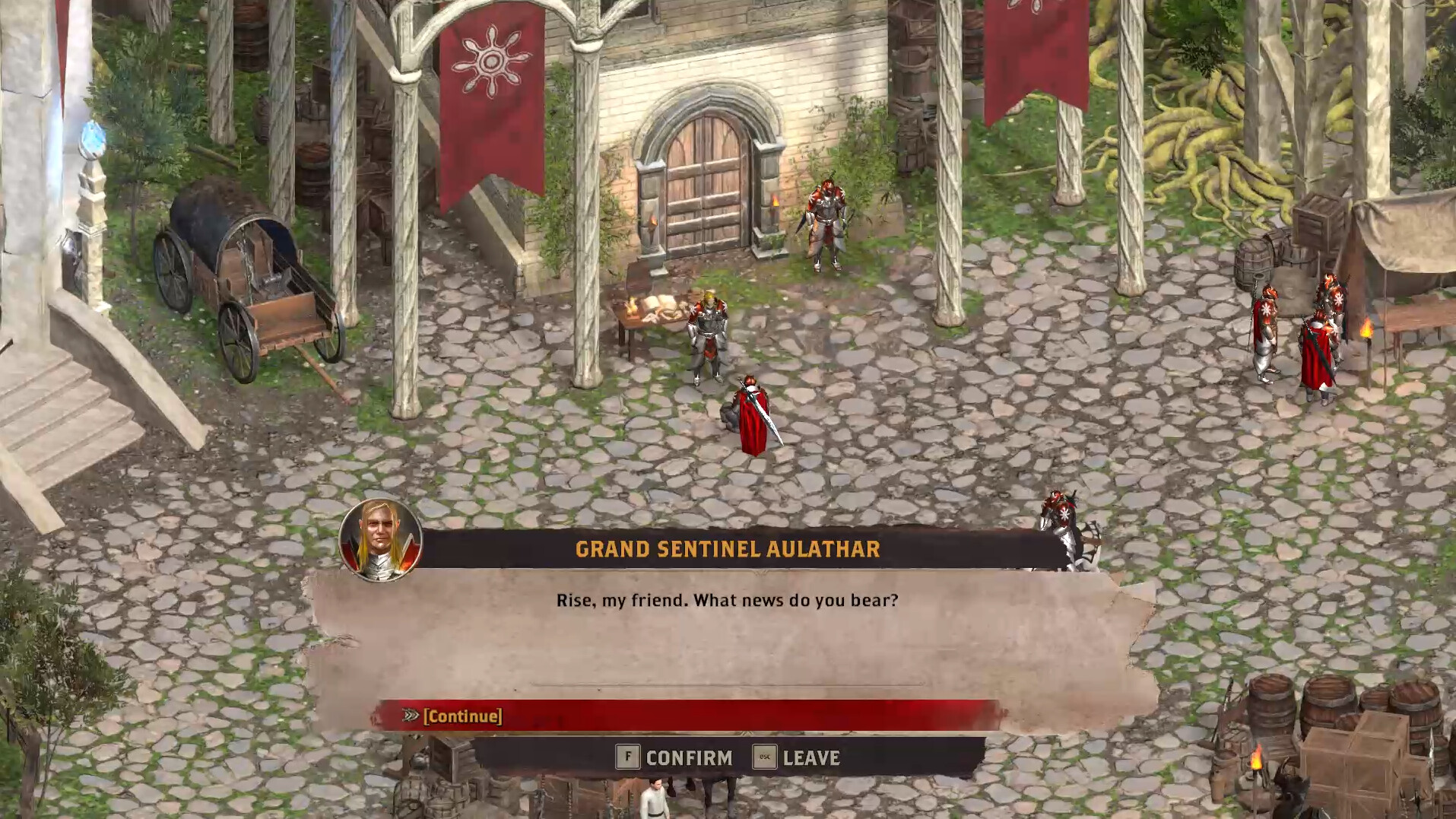
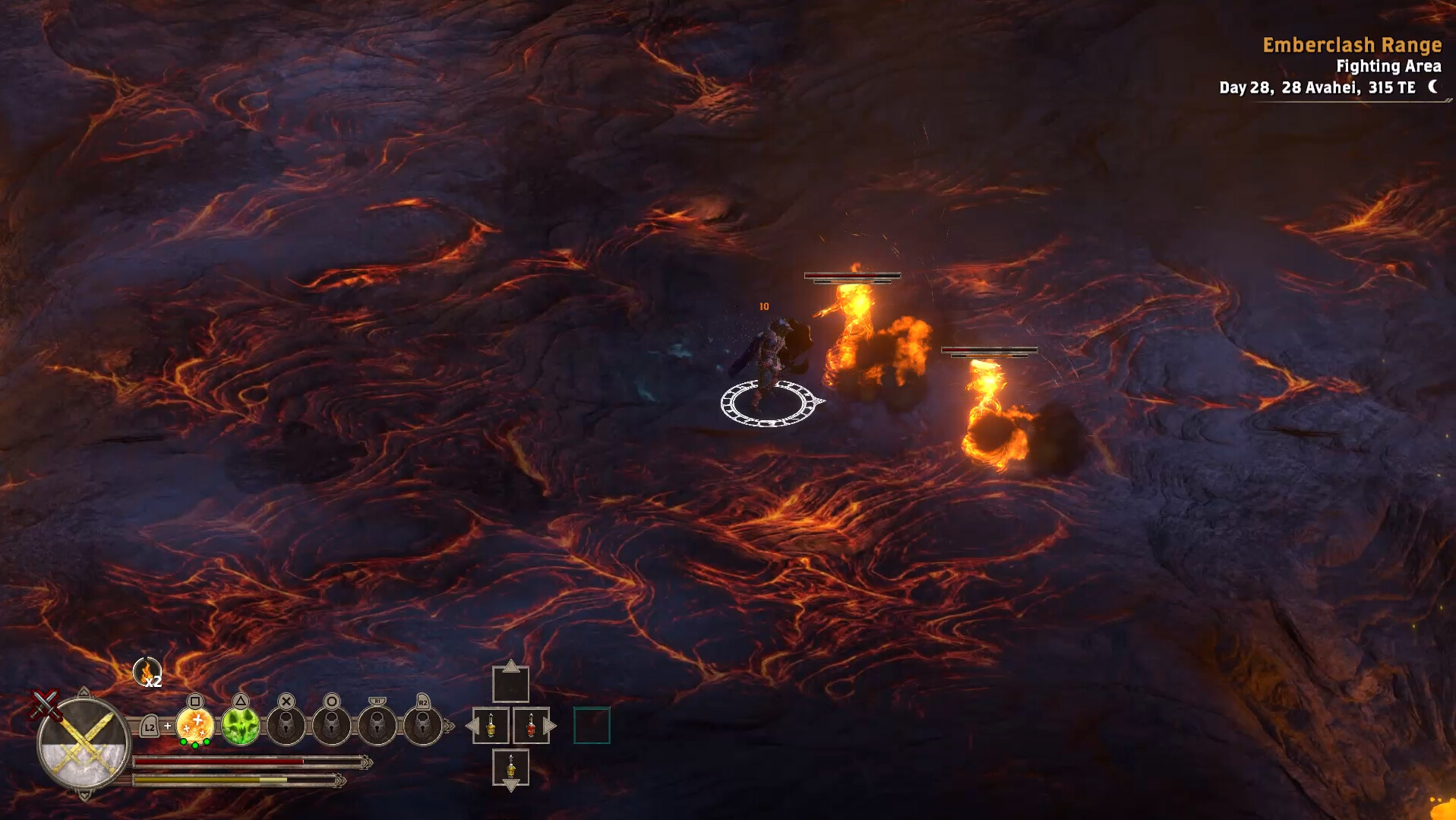
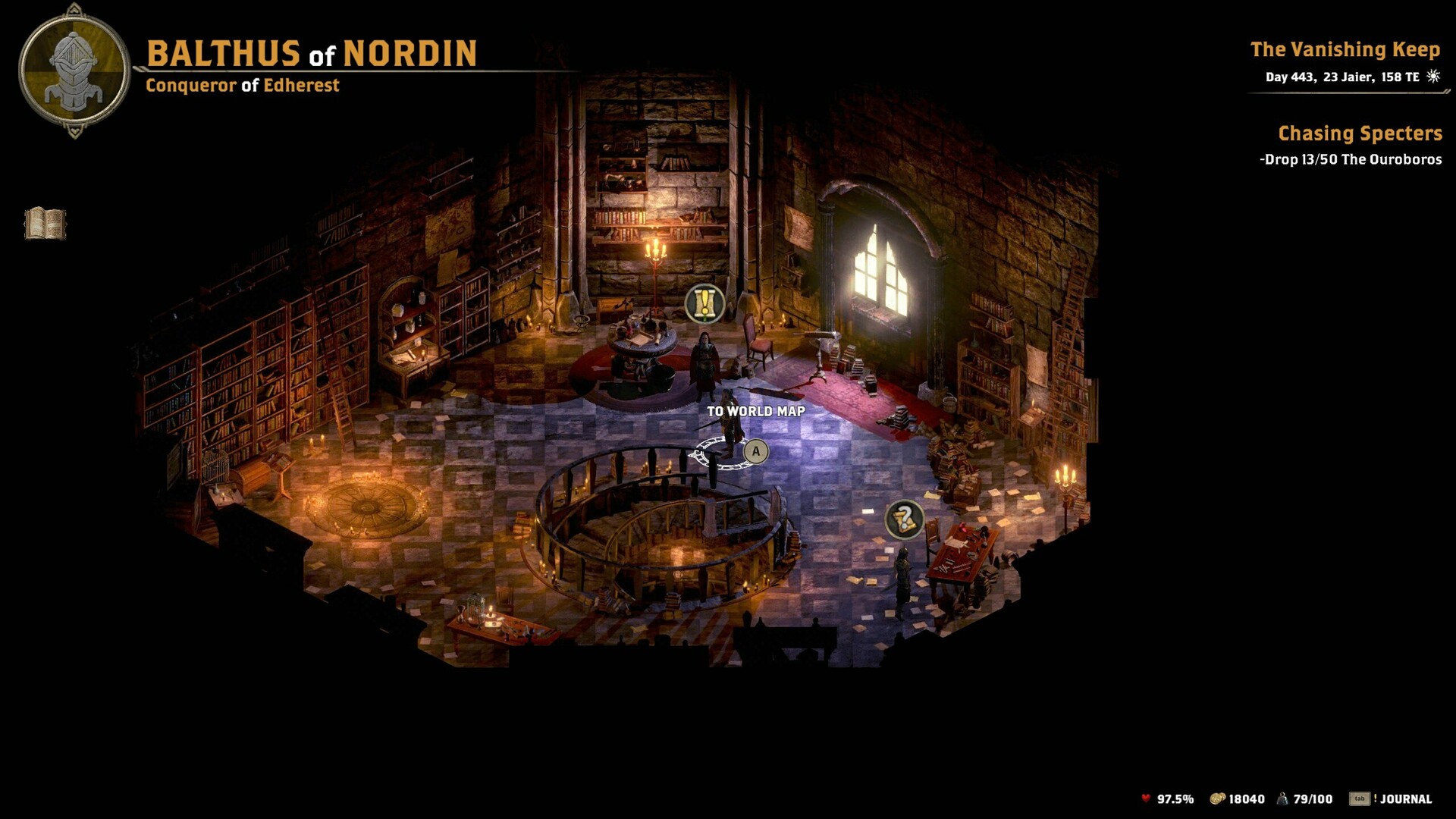
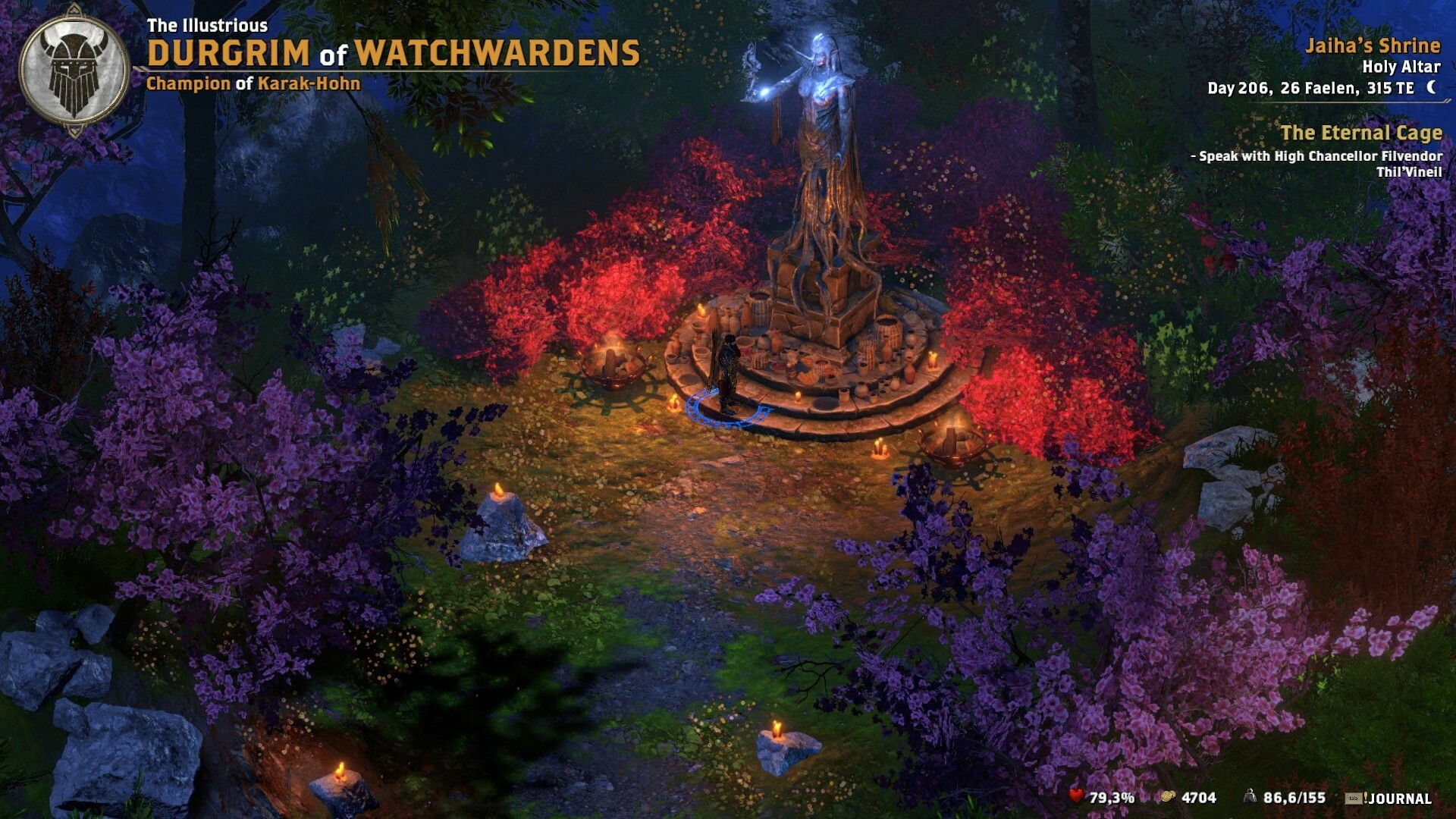
Get an in-depth look at Alaloth: Champions of The Four Kingdoms through various videos and screenshots.




Load More





System requirements
These are the minimum specifications needed to play the game. For the best experience, we recommend that you verify them.
Windows
- Requires a 64-bit processor and operating system
- OS *: Windows 7
- Processor: Core i3 2100 / AMD Phenom X2 550
- Memory: 2 GB RAM
- Graphics: NVIDIA GTX 770 / AMD Radeon 7970
- DirectX: Version 11
- Storage: 20 GB available space
Steam Price & Best Deals
User reviews & Ratings
Explore reviews from Steam users sharing their experiences and what they love about the game.
*Disclaimer* - To start off, PLEASE ignore all the trolls playing the game for less than an hour and giving the game a negative review. This is a MASSIVE game and it's very difficult, so I hope you prefer the opinion of someone who has put enough time in to leave a valid review. ------------ Alaloth: Champions of The Four Kingdoms is a wonderful yet imperfect gem. Underneath an incredibly difficult first few hours, a strange yet intriguing leveling system and some overall questionable design choices is a very really special amalgamation of RPG genres that oozes passion and is unlike anything else I've played before. Plamen is a beautifully realized high-fantasy landscape with a touch of Italian influence. I can't help but connect the games world to that of a Simon toy from the mid 90's: Each race (Dwarves, Orcs, Elves and Humans) holds a quarter piece of the pie, with a central area held by that of Alaloth, the evil demon hellbent on taking over Plamen for his own. A lot of the usual fantasy tropes are present and the main story is very narrow in it's delivery, yet the atmosphere and art direction really helps sell a world of waring factions fighting to stave off the oncoming threat. Each area is breathtaking to look at: from a towering castle at mountains edge, to a forest town haunted by the ghosts of its slaughtered denizens, every single location stuns. The player will interact with townsfolk, guards, Lords and Kings whilst picking up dozens upon dozens of quests. These can include anything from picking up a certain amount of plants, to killing a particular number of enemies, or tracking down NPC's to deliver items. It's a bit archaic in design, but it helps to funnel you towards the end goal: Destroy Alaloth. Lore drops are also found throughout all locations and can be completely ignored if you don't want to delve too deep. I do have to mention that there are quite a few grammatical and spelling errors, though they're not intrusive enough to ruin immersion. The developers are consistently hearing feedback and updating any reported issues with the writing. Gameplay consists of traveling around a large map, that almost resembles playing a board game, visiting stunningly rendered yet static cities, towns and dungeons, also known as Fighting Areas (FA). Thankfully, FA's are distinguishable via difficulty skulls placed under the names. These skulls go from 1 to 4, with boss arenas being accentuated with horned-skulls. You can enter any FA at any time, but the enemy numbers and their strength multiply with each additional skull. Enemy types consist of ghosts, bandits, demons, goblins, giants, elementals, and various wild animals and each enemy follows different attack patterns which helps to keep the combat feeling interesting and fresh. It's very rare that the player will be fighting just a single enemy and, for a game that has implemented souls-like combat, this doesn't always work. The targeting system can be very finnicky, so when you're surrounded by multiple enemies, frustration can ensue. I discovered you can mitigate this issue by making sure your first Talent Point, the games skills, is invested into an area of effect attack or minion summon. Otherwise, it seems kiting enemies around while you slowly pick off one at a time is really the only solution early on. And those early hours can be very daunting, as you will be constantly overwhelmed by groups of 2-4 enemies at a time while you wait for your 1 or 2 skills to ready. Luckily, your character will grow stronger as you complete FA's and obtain more points to invest into Stats, Skills and Proficiencies. Before long you'll be thrashing through multiple enemies without breaking much of a sweat. Speaking of skills, the build variety is staggering. There are millions of potential combinations from 5 different skill trees that include The Way of Arms, Nature, Gods, Elements and Arcane. Each tree can be accessed from the start and build variety is welcome. In order to level up whichever skill you grab all it takes is usage of the skill and having the necessary stat points (Strength, Constitution, Dexterity, Intelligence and Wisdom). Overall, it's a very simplistic system and respecing only requires a Shrine (an Anhk symbol) and an Orb of Chaos. I have noticed that Intelligence skills seem prominantly more powerful than the others, not only because ranged combat seems superior, but because there are far more skills that compliment killing multiple enemies at once. Some skills also seem mostly useless, such as undead focused abilites, since those enemies might only appear in particular places on the map or in a handful of dungeons. I'd love to see these skills adjusted to do moderate damage to everything, but excessive damage to undead. Melee combat plays much like a souls-like. You can target a single enemy while strafing, dodging and parrying. The latter will stun the enemy and leave them open to attack. The parry can also hit multiple enemies at once, so positioning is key. Combat overall feels very crunchy with a good variety of fantasy staples like axes, greatswords, staves, and spears plus an entire tree dedicated to melee playstyles, such as Warrior, Rogue and Archer. Once again, it's unfortunate the developers couldn't find a way to balance this combat style versus more than 2 enemies at a time. Once 3 or 4 enemies surround you it becomes a chore to jump between them whilst also watching your cooldowns, health, and stamina. After reading multiple reviews, it seems to be the primary reason most people give up on the game. Perhaps an early quest that leads you to one of many companions would be a welcome addition to mitigate this frustration. At the end of each FA players will find a large chest. These simultanously end the dungeon and reward you with loot. While the game doesn't shower you with endless amounts of gear and items, it does consistently drip feed you with upgrades to your current build (or other builds if you choose to respec). It does a great job of keeping you hooked and looking for that next epic weapon or piece of armor at the end of a quest line or higher level dungeon. I'm not entirely sure if there is a lot of randomization to drops in dungeons, but what you get at the end of a quest is set in stone. This means, if you can remember where you got something, on later playthroughs you can build entirely around a specific weapon or piece of armor. The games score is a bit of a mixed bag. Some of the tunes feel bombastic and overly loud, repeating far too often. Others are whimsical and relaxing, transporting you to the fantastic place of their origin. Thankfully, they all fit the location they're in. The Orcish lands of Baga, desolate and without life, carry sounds of hollowed horns and beating drums, while the Elvish forests of Larastir offers gentle whispers of the harp and flutes. It's honestly well done, if inconsistent. What's most impressive, though, is how each area, whether town or dungeon, has it's own song; Nothing repeats. Also, I have to mention the games jingle that plays each time you rest, as it grows on you the more you hear it: simplicity at it's finest. Overall, I love this game. Is it perfect? Far from it. In fact, it has a lot of imperfections, conflicting systems and frustrations, especially early on. But I can't help but appreciate the massive amount of dedication and risks a small studio took to bring this entrancing world to life. A DLC is on the horizon and I cannot wait to jump back in with a new build and explore Plamen all over again. Honestly, far more people should be playing this, and all who aren't are missing out on something truly special. 8/10
When I saw the store page pass by my steam queue, It gotten me curious. I purchased it during the steamsales and let's say.. I was not disappointed. It's an atypical rpg with a ton of lore! Most of this is discovered by reading a lot of dialogues, books you find on the ground, a world codex with a lot of additional information about the world, monsters, important npcs's, etc... (unfortunately most has no voice-over) The combat system isn't overly complex, the enemy ai is pretty straightforward and the boss mechanics are quite easy to figure out. I've reset a few times in order to get all the grandmaster achievements and I discovered to have the most fun with playing several playstyles (ranged, full tank, dps melee, mage, summoner, ...). It only costs 1 specific item to reset which you can easily grind or buy. Money in the beginning might feel a struggle but you quickly overcome this. There isn't enough of a money sink in this game so you get rich rather quickly. I felt that there was a big item arsenal at your disposal but that I didn't really "need" any of it.. from the moment I got my first few legendary items from quests.. I almost never had to replace them anymore. So 99% of my loot-goblin OCD was getting all the uniques and stash em away in my chest!! They did crafting right in the sense that you could use the items stored in your stash rather than "on your hand".. which reduced a lot of micro-management, the only thing that bothered me a little.. not enough QOL features to manage the inventory better.. it was A LOT OF runs to my chest to "dump" my stuff there. (perhaps after every fight, a button to "send to stash" for reagents and materials would be a game changer (i know it's a bit immersion breaking but shrugs). The filter system felt very oldschool, which has a charm on it's own. The quests are pretty straight forward. "go to A, bring/kill B, deliver to C". But that summarizes most RPGS in a nutshell ^^ Overall it was a good game and I enjoyed it fully. Definitely in my "hidden gem" list. I recommend it!
This is a really nifty sandbox action RPG. At first, it is stupidly hard to wrap your head around the combat, so I would recommend people to just go into their first, easiest Fight Area (FA) expecting to die. Don't use potions or anything until you can kill a room of mobs without taking damage, and when you get to that point, commit to the FA run. But once you get it, which might take like 20 minutes of trying, it should really click. There's no way to completely ignore it by playing a mage either because you cannot start out as a mage. One thing I will say is that as soon as you get the hang of things, the game becomes pretty weird. Like you're an absolute god for like the first few levels, but then when you do 4 skull FAs, it feels like bosses have at least 10 times more health than they should unless you grind the hell out of an FA that can drop good loot for you, or just happen to get lucky. So that's another piece of advice, your build is almost certainly not the problem, it's just a lack of gear because you cannot mess it up before you're like level 8 or higher due to how few skill points and so on you are even given in this game, so you can't really fail their allocation until you're high level. One BIG negative for me is that the world is so insanely derivative that if you're a fan of a lot of different fantasy settings, you'll very, very quickly see references and basically plagiarised lore everywhere you look. They've basically just taken what they like from a lot of fantasy settings and just put it into their world wholesale. This is how an amateur Dungeon Master creates a world for whatever tabletop RPG they run, not how a professional game studio should create a world for their game. Warhammer fantasy and age of sigmar really stuck out to me as major... inspiration, I guess They took a lot of aesthetic design from those, naming conventions and so on. A song of ice and fire is another big source of inspiration and while it is a freebie, Lord of the Rings is of course there too, but that seems to be limited to pretty minor references here and there. Also, the pantheon is very uninspiring to behold. So as a result of the setting being so derivative, I just stopped reading any and all lore entries, which is a shame because they probably spent a thousand hours writing those. As I said before, it's a good sandbox game, with a lot of stuff to do, pretty fun combat system and what more do you actually need from a small indie studio? I hope the game does well so the team could maybe expand and create a very impressive sequel. Maybe hire more people to work on world building and writing so they can just rework all of their lore to be at least somewhat unique for whatever their next game is. I wish them nothing but success, and this is a very, very good first showing. Edit: Now that I'm basically done with the game and joined the rank of 3.7% of the playerbase that has actually killed the final boss, I will say that Alaloth himself was probably designed before being a pure mage was an actual playstyle in the game because it feels like he is designed entirely around the idea of you being a melee fighter. He's an absolute let down of a final boss with honestly just stupid moveset that's aggravating rather than challenging, he is immune to status effects that mages rely on and he keeps moving around so he rarely stands in your ongoing damage spells. I cannot emphasise this enough, he is not a hard boss to kill, just annoying and designed in a way where he simply counters mage playstyle. I killed him on my second attempt, despite his entire design working against my specific character build. A build which you cannot change once you enter the maelstrom, by the way. Yes, the goddess who lets you respec at her shrines is standing RIGHT THERE, but simply does not let you respec. So if you've got some sort of a weird build that works everywhere else in normal gameplay, but is just absolutely incapable of beating him, such as for example, a summoner build, you're basically soft locked because Alaloth does not have a manual save function. Which is odd because I can't really think of any point in the game where I would have ever even considered save scumming. Like the game just isn't designed in a way where anyone would spend any time reloading saves unless they would like to, for example, load a save before going to the final boss area and getting stuck there. Aside from that, I did enjoy my time with the game, but I have some issues that may or may not be a result of bugs. For example, I've beaten all the dragons, and even got the legendary armour for it, which promptly sat in my chest because mages are extremely heavily penalised for wearing that stuff, but there's one more dragon in an area of the map that I simply could not access, and couldn't figure out how to access. The guy in front of the teleported just kept telling me that the dragon hunter faction controls it, and won't let me teleport to the last dragon unless I have their permission. Mind you, that entire faction worships the very ground I tread upon after I killed five dragons for them, and I don't see any quests there, and after scouring through my extremely bloated quest log, I never found anything to do with entering said area. Nothing came up on google because the game is quite niche so I just didn't get to kill the sixth dragon boss on that island. Which was a bit of a bummer. This game has map markers, vast majority of quests have them, but sometimes it decides to play coy about letting you just play through the content. Surprising amount of content in the game is like that. There's a big banner going like, ''Here's a new questline you can do! It's somewhere over there, go do it.'' and then you look at the website, it says the same thing again, then you go there in game and the fighting area just doesn't let you enter, and none of the NPCs seem to have anything to say about them. Then the quest that allows you to do the new content is in some random town that you never have any reason to visit because there's nothing there, aside from some dude who begins the quest that allows you to go kill some demon boss. And no doubt some people will call me a little baby who needs their hands hold and tell me that I'm the reason why Skyrim is the way it is, but let me stop you right there, I prefer Morrowind, but Morrowind tells you exactly where to go, with excruciating details, just without map markers. Also, this game is basically a dungeon crawler, just without randomised dungeons. If I had to guess, I'd assume the developer played Daggerfall at some point and it's been a lifelong inspiration, but even daggerfall tells you where to go, and allows you to enter basically any zone you want without talking to some sort of an NPC to be allowed entrance. So while I complain about the lack of direction, it's not because I don't know what I'd like to do as a player, it's because the game just won't let me enter a boss Fighting Area without some Faction or NPC giving me permission to go there, and sometimes that faction has nothing to even say about the subject until you've done some other quest for some completely different NPC somewhere else. I'm only complaining about the lack of transparency on what boxes you have to tick in this regard, and I hope that hypethetical next game made by Gamera either makes it so you can go anywhere you want at any time, kill any boss and so on, or they at least tell you where to go and what to do in order to be allowed to kill said boss. It's a dungeon crawler and boss killing game, so you may as well just let me do that. And as I've said several times, it is a good dungeon crawler and boss killing game, last boss notwithstanding, but it does have some problems that I hope will be solved either with patches, or with Alaloth 2, so even after editing a bunch of complaints in here, I still recommend the game.
It's an interesting blend of CRPGs and Dark Souls. I've never played anything quite like it. The game is a bit rough around the edges, some mechanics didn't work together, starting out the game was overwhelming and a little confusing. But like 2 days later I realized couldn't put it down - the gameplay loop and combat mechanics kept me hooked until the end. I think developers went too big for their budget, but it seems like a genuine passion project and they're still adding free content patches to this day, so big respect to them for sticking to their vision. Pros: -Great isometric visuals -Solid combat -Dynamic skill tree that doesn't keep you locked to a specific class. You build your character as you learn the game. I originally started out as a warrior and by the end of the game ended up being a tank/archer combo which was very fun and effective -Rewarding gameplay loop Cons: -UI was very confusing and unintuitive at parts -VO for the books sounded really odd, I'm not sure if it was text to speech or what... I honestly would've prefered a developer just using their headset mic to voice the books -Crafting seemed completely useless, I never felt like I had to craft anything except for the final armor set -Most of the quests are fetch quests, and they bloat up your quest log real fast. Some of the quests are timed. If you're a completionist it gets VERY tedious. At one point I just gave up because I maxed out my character long before I finished the side quests.
Only con is that we don't get to explore that much of the beautiful level design of the cities and such (only a specific spot of it). Other than that is FANTASTIC. If you played isometric rpgs back in the day, you'll love it. - Edit after spending way more hours on it. Got to say it's pretty fun. It's not perfect but it has a lot to offer, don't listen to the people complaining about quest markers and whatnot, if you actually read the few lines of dialog and sometimes the codex you can understand where you should go pretty easily. Same for difficulty scaling, in single player it actually becomes too easy after a while, so there's a way for anyone to enjoy it at their own pace. Got to admit the writing isn't amazing, there are few typos (found 2 for now), and there's a lot of running, but the level design is so damn cool that it's not so annoying to run through it a few times to complete quests. I'll add that the little cutscenes that happen sometimes give me Monty Python vibes lol
Similar games
View all

Anima : The Reign of Darkness
Explore a dark fantasy world, descend into the darkest depths and fight hordes of demons in this fast paced Action RPG. Fully customize your character, loot hunderd of unique items and destroy the evil that is corrupting the world once again!

Grim Dawn
Enter an apocalyptic fantasy world where humanity is on the brink of extinction, iron is valued above gold and trust is hard earned. This ARPG features complex character development, hundreds of unique items, crafting and quests with choice & consequence.

Torchlight
Adventure awaits in the award-winning Action RPG debut from Runic Games! Explore the randomized depths of this boom town, collect loot, and level up to save Torchlight - and possibly the world.
Sands of Aura
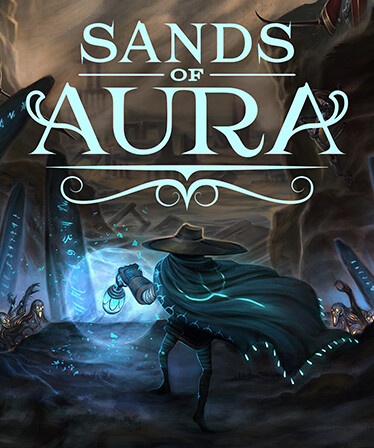
Sands of Aura is an open-world action adventure with a fantasy setting of a realm in its twilight--a world buried beneath a sea of sand. Sail across the sandseas to return life to a dying world in an unforgettable experience that is equal parts engaging story and unrelenting, souls-like combat.

Baldur's Gate: Dark Alliance II
An old-school hack-and-slash action RPG awaits! Pick one of five heroes, defeat monstrous enemies with weapons and spells, loot treasure and level up in this classic D&D fantasy adventure.

Shadows: Awakening
Shadows: Awakening is a unique, isometric single-player RPG with real-time tactical combat. You embark on an epic adventure with challenging gameplay, a gripping storyline and enchanting graphics.
Divine Divinity
Divine Divinity is an epic role-playing game with hack-and-slash action, offering a huge world to explore and thousands of items to investigate, trade and use.


Book of Demons
Book of Demons is a Hack & Slash in which YOU decide the length of quests. Wield magic cards instead of weapons and slay the armies of darkness in the dungeons below the Old Cathedral. Save the terror-stricken Paperverse from the clutches of the Archdemon himself!

Baldur's Gate: Dark Alliance
A new legacy begins...

Eldest Souls
Fast-paced and brutally challenging, Eldest Souls is a unique Soulslike experience. In a final act of vengeance, the Old Gods have unleashed a great Desolation upon the world. Mankind's only hope lies with a lone warrior… and his greatsword of pure Obsydian.
Frequently Asked Questions
Alaloth: Champions of The Four Kingdoms is currently priced at 34.99€ on Steam.
No, Alaloth: Champions of The Four Kingdoms is currently not on sale. You can purchase it for 34.99€ on Steam.
Yes, Alaloth: Champions of The Four Kingdoms received 1,130 positive votes out of a total of 1,569 achieving a rating of 6.96.
😐
Alaloth: Champions of The Four Kingdoms was developed by Gamera Interactive and published by Gamera Interactive and Ancient Scroll.
Yes, Alaloth: Champions of The Four Kingdoms is playable and fully supported on Windows.
No, Alaloth: Champions of The Four Kingdoms is not playable on MacOS.
No, Alaloth: Champions of The Four Kingdoms is not playable on Linux.
Yes, Alaloth: Champions of The Four Kingdoms is playable and fully supported on Steam Deck.
Yes, Alaloth: Champions of The Four Kingdoms is playable and fully supported on Steam Machine.
No, Alaloth: Champions of The Four Kingdoms does not support VR.
Alaloth: Champions of The Four Kingdoms offers both single-player and multi-player modes.
Alaloth: Champions of The Four Kingdoms includes Co-op mode where you can team up with friends.
Yes, there are 12 DLCs available for Alaloth: Champions of The Four Kingdoms. Explore additional content available for Alaloth: Champions of The Four Kingdoms on Steam.
No, Alaloth: Champions of The Four Kingdoms does not support mods via Steam Workshop.
Yes, Alaloth: Champions of The Four Kingdoms supports Remote Play Together. Discover more about Steam Remote Play.
Yes, Alaloth: Champions of The Four Kingdoms is enabled for Steam Family Sharing. This means you can share the game with authorized users from your Steam Library, allowing them to play it on their own accounts. For more details on how the feature works, you can read the original Steam Family Sharing announcement or visit the Steam Family Sharing user guide and FAQ page.
You can find solutions or submit a support ticket by visiting the Steam Support page for Alaloth: Champions of The Four Kingdoms.
Data sources
The information presented on this page is sourced from reliable APIs to ensure accuracy and relevance. We utilize the Steam API to gather data on game details, including titles, descriptions, prices, and user reviews. This allows us to provide you with the most up-to-date information directly from the Steam platform.
Additionally, we incorporate data from the SteamSpy API, which offers insights into game sales and player statistics. This helps us present a comprehensive view of each game's popularity and performance within the gaming community.
Last Updates| Steam data | 16 October 2026 07:00 UTC |
|---|---|
| SteamSpy data | 16 October 2026 09:37 UTC |
| Steam price | 27 October 2026 15:11 UTC |
| Steam reviews | 18 October 2026 08:04 UTC |
If you'd like to dive deeper into the details about Alaloth: Champions of The Four Kingdoms, we invite you to check out a few dedicated websites that offer extensive information and insights. These platforms provide valuable data, analysis, and user-generated reports to enhance your understanding of the game and its performance.
- SteamDB - A comprehensive database of everything on Steam about Alaloth: Champions of The Four Kingdoms
- SteamCharts - Analysis of Alaloth: Champions of The Four Kingdoms concurrent players on Steam
- ProtonDB - Crowdsourced reports on Linux and Steam Deck Alaloth: Champions of The Four Kingdoms compatibility
Game modes
Multiplayer
Features
Online players
4
Developer
Gamera Interactive
Publisher
Gamera Interactive,
Ancient Scroll
Release
21 Nov 2024
Platforms
Remote Play