

Sovereign Syndicate
A Victorian steampunk RPG with tarot cards instead of dice. Investigate the disappearance of society’s most vulnerable to uncover a mysterious cult. Play as three characters, each with their own skills and motivations. Customize your characters with narrative choices to unlock new tarot cards.
Sync your Steam wishlist to find the lowest game prices instantly. No login required, just paste your Steam profile URL!
⚡ Try Wishlist Radar!
Sync your Steam wishlist to find the lowest game prices instantly. No login required!
⚡ Try Wishlist Radar!
Close

Arcanum: Of Steamworks and Magick Obscura on Steam
Quick menu
Imagine a place of wonder, where magick and technology coexist in an uneasy balance, and an adventurer might just as easily wield a flintlock pistol as a flaming sword. Welcome to the land of Arcanum.
Arcanum: Of Steamworks and Magick Obscura is a rpg, steampunk and story rich game
developed by Troika Games
and published by Activision.
Released on August 29th 2016 is available only on Windows.
It has received 1,804 reviews of which 1,609 were positive and 195 were negative resulting in a rating of 8.5 out of 10. 😎
The game is currently priced at 5.99€ on Steam.
The Steam community has classified Arcanum: Of Steamworks and Magick Obscura into these genres:
Media & Screenshots
Get an in-depth look at Arcanum: Of Steamworks and Magick Obscura through various videos and screenshots.


System requirements
These are the minimum specifications needed to play the game. For the best experience, we recommend that you verify them.
Windows
- OS *: Windows XP / Vista / 7 / 8
- Processor: 1.0 GHz
- Memory: 256 MB RAM
- Graphics: DirectX 7 Compatible 3D Card
- DirectX: Version 7.0
- Storage: 1200 MB available space
- Sound Card: DirectX Compatible
Steam Price & Best Deals
User reviews & Ratings
Explore reviews from Steam users sharing their experiences and what they love about the game.
Best 18.3 hours of my life. Incredibly immersive and the worldbuilding/writing is reminiscent of some French art gallery where you can only get in if you have like a million dollars or something. I was a mage my first playthrough and now I'm going to do a gunslinger build. I would eat this game for breakfast lunch and dinner for the rest of my sorry life.
I enjoyed my time overall, but its hard to recommend Arcanum. I needed to download 2 different patches to get it running properly, and even then it would still crash or freeze sometimes. The start is also extremely rough and its very hard to find resources to figure out a functional build. Even if you do, the beginning is not intuitive and its very hard to know what to do or where to go, so its not surprising that most people just give up in the beginning. I would not recommend this game to anyone who isn't comfortable with installing mods and/or hasn't played other similarly old and complex CRPGs like Baldur's gate, Icewind Dale, Fallout 1-2 or Planescape torment. If this hasn't scared you off, use the steam guide to download and install the unofficial patch and look up "Arcanum Beginners guide" to get you out of the terrible game start. As much as I've said so many negative things, the game itself is extremely unique, big and interesting if you can actually get into the proper game. 7.5/10
Saying Planescape: Torment has the greatest story ever told in an RPG is like saying water is wet. It's almost annoying to read at this point because it has been declared ad nauseam, but truly I can not go a week without thinking about the game narratively and thematically. The same thing for me applies to Arcanum here as well. It lead me to think about Role-Playing Games in regard to narrative itself. The recent gold-standard champion for so many being Baldur's Gate 3. I don't think Baldur's Gate 3's throughline narrative is ... well, I don't think it's amazing. It's fine. I think for most people, it serves as a backdrop to experience the real rich storytelling that comes through with your party. The insane production values combined with all the differing stories of each party member is where most of the ballyhoo comes from. Now admittedly, I'm not 'as' nuts over the characters and their stories as some are and have yacked about how I actually think Dragon Age: Origins (the BG3 of its era) character stories are more compelling to me personally, but where BG3 really hit for me was its mix of gameplay where its foundation is basically an isometric immersive sim crossed with classic RPG mechanics as well. That was dope. The actual narrative itself though? It's merely 'fine'. Thinking about this had me kind of evaluating what I value the most in the genre and it's certainly the big narrative and its themes and its world. Games like Arcanum or Planescape: Torment are loaded with a lot of parroting criticism over its mechanics/gameplay being awful, which I think is overblown. I don't think each games gameplay is amazing mind you, but I do think they're mostly 'fine'. It gets the job done. The plot/narrative and their themes and world though? Very few games contend to me. This applies entirely to Morrowind as well. Most fantasy RPG games tend to be written/built around 'preservation'. You know the classic ♥♥♥♥ of old ass kingdoms needing a hero to restore them to their former glory; the sacred traditions preserved and protected all formed around you defeating an evil dark lord and such. A genre where history is in decline: The old world was greater, its people more unified and spiritually more cohesive. The hero is here to save what remains of this world before evil conquers and it disappears forever. Arcanum is not that game. In fact, Arcanum is almost a near opposite of this often-imitated idea. In Arcanum, its world is not falling into ruin/collapse but accelerating drastically into 'modernity'. You have factories spread across its landscapes which were once happily dominated by forests or temples. Railroads connect cities/nations replacing what magic ever did. Industrial capital reshapes the political power at hand. Entire races become economically obsolete in this modern world. The core central theme is not that civilization is ending, but that civilization is transforming and evolving so rapidly that its people do not fully understand what is being lost in the process. Essentially it's the general tension between progress and the spiritual erosion that basically defines nearly every aspect of the games narrative / world. Coming into the game for the first time, any given player at first glance might see the game as a strange/unusual fusion of fantasy and steampunk (and it is as well): You have elves that exist alongside steam engines, dwarves live in their mountains or in cities but build firearms, magic users move about by streets lit with electricity etc etc. You soon understand the core idea in that magic and technology are fundamentally incompatible systems. Tech people become so rationally aligned with physical law that magical forces cease to function, while the spiritual and magically inclined folk disrupt machines simply by being even near them. Magic represents intuition, mysticism, spirituality and tradition; we have technology on the other end representing industrialization, rationalism, capitalism and mass production. A lesser game would make it clear which side is better, Arcanum will not fully romanticize either end of the spectrum and it is so much better for it. The magically inclined societies of this world are not some simple enlightened utopias. Elven culture is often depicted as aristocratic, stagnant and extremely hierarchical. As in the real world we live in now, tradition 'can' preserve wisdom, but without caution, can also preserve injustice as well. Meanwhile, industrial civilization can lead to some ♥♥♥♥♥♥♥ extraordinary innovation, yet it simultaneously creates exploitation and dehumanization. Arcanum understands industrial progress as a morally double-edged sword: Technological innovation improves lives while also reducing people into economic functions. Who would have ♥♥♥♥♥♥♥ thought lmao. All of this sorta coalesces into the treatment of different races and labor. The games cities are filled with displaced workers and impoverished people, and nonhuman races marginalized and pushed to the side by modernization. You get shredded by Half-Ogre bandits aboard the zeppelin and crash killing everybody on board. Everybody but you. How in the world did these machines exist? From there, you follow a trail and investigation into hidden histories, lost civilizations and manipulated truths (it's crazy this and Morrowind came out only a few months apart lol). The deeper you dig into it all, the more unstable official history becomes. All these ancient myths contradict all the archaeological evidence you uncover. Political narratives fall apart; collapse under the weight of scrutiny. Religious truths reveal themselves as falsehoods, incomplete or distorted. It reinforces that history is often not objective memory but constructed or even fabricated mythology. All of this comes to a real head with the main narrative drive of the game: Nasrudin / Arronax / Kerghan. Kerghan is banished to the Void for defying the councils rule and before him, the same for Arronax as well. Nasrudin is then remembered and worshiped as the lands greatest hero. This narrative slowly unravels as you uncover that Arronax isn't as he seems, nor is Nasrudin and moreso that Kerghan is not your conventional fantasy villain bent on conquest or domination. Instead, he is almost a philosopher driven by profound despair about the nature of existence itself. Kerghan in many ways is the equal of sorts to Cain's previous games lead antagonist: The Master. Kerghan's view of the world comes about from witnessing the endless cycles of suffering throughout its history. A world where people repeatedly create war, exploitation, inequality and death. Progress for the sake of progress leading into suffering instead of eliminating it itself. From his perspective, existence is fundamentally cruel, and death becomes the only universal solution. His plan to extinguish life mirrors the same understood reasoning as what The Masters ideals were in Fallout. Naturally both are so fundamentally flawed, but both exist in a way that the player can sympathize with their problematic train of thought. Neither is cartoonishly evil. Kerghan, alongside The Master and The Transcendent One, manages to be a wholly more compelling antagonist than 'most' role-playing game antagonists ever manage. He does not merely appose the player on the grounds of being a simple evil bad guy, he challenges the moral foundations underlying civilization itself. The final confrontation is less Good vs Evil or Evil vs Evil, instead its more akin to debating nihilism. (Or contributing toward it lol). Steam is garbage and won't let me post my entire write-up so i'll leave the whole thing from my Backloggd here: https://backloggd.com/u/Joltzz/review/4676971/
My favorite game of all times and probably the only one that I replay every damn year (there are hundreds of hours I spent playing it throughout my life). Bought it on steam just to respect it by having in my library. Now, I admit there is a significant nostalgia factor, but still - this game is a cult classic ama lemme tell you why. It has a good, intricate story, exquisite dialogues (they are very rarely voiced but the quality of voice acting is top notch), interesting characters to meet and (arguably) fun character creation/development process. But the best things about it is the world/setting itself and the freedom of choice game grants you. As you may already know, it's steampunk game with the main motif of technology vs magic confrontation, but there there are still nothing quite like it to this day, it's a masterpiece execution. Also, the soundtrack is truly God-like. On the bad side, most people would say graphics are outdated (even I though I myself never thought that way), vanilla game is still full of unpleasant bugs, companions are not as charismatic as they are in, let's say, BG2. Also, game's combat is probably one of its most questionable areas. To me it's fun but for modern gamers it may look extremely clunky and counter-intuitive. To any RPG lovers I highly recommend at least to give this game a try. Trust me, it is cult classic for a good reason.
Similar games
View all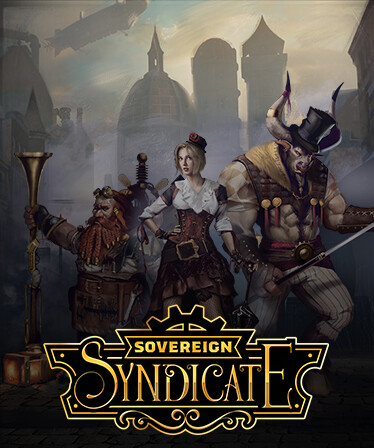
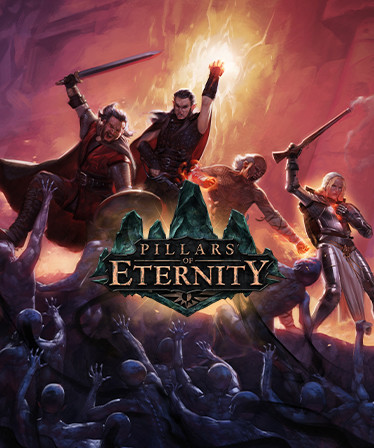
Pillars of Eternity
Prepare to be enchanted by a world where the choices you make and the paths you choose shape your destiny. Obsidian Entertainment, the developer of Fallout: New Vegas™ and South Park: The Stick of Truth™, together with Paradox Interactive is proud to present Pillars of Eternity.

Planescape: Torment: Enhanced Edition
Uncover secrets of past lives in this story-rich, tactical roleplaying game set in Sigil, a dark fantasy city at the heart of the Dungeons & Dragons multiverse. Explore the planes, survive combat alongside a party of bizarre companions, and solve puzzles unlike any ever seen in the genre.
Divine Divinity
Divine Divinity is an epic role-playing game with hack-and-slash action, offering a huge world to explore and thousands of items to investigate, trade and use.
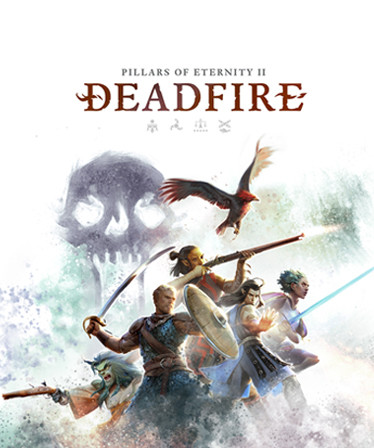
Pillars of Eternity II: Deadfire
Patch 5.0 - Turn-based mode and The Ultimate challenge out now! Pursue a rogue god over land and sea in the sequel to the multi-award-winning RPG Pillars of Eternity. Captain your ship on a dangerous voyage of discovery across the vast unexplored archipelago region of the Deadfire.

Fallout 2: A Post Nuclear Role Playing Game
Fallout® 2 is the sequel to the critically acclaimed game that took RPG'ing out of the dungeons and into a dynamic, apocalyptic retro-future. It's been 80 long years since your ancestors trod across the wastelands.
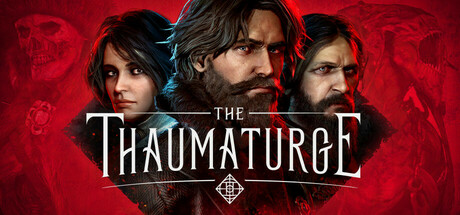
The Thaumaturge
The Thaumaturge is a character-driven RPG with a rich story, morally ambiguous choices, and turn-based combat. In a city on the brink of change, use your mystical powers to read emotions, uncover motives, and command folklore-inspired demons — while resisting the temptation of your own pride.
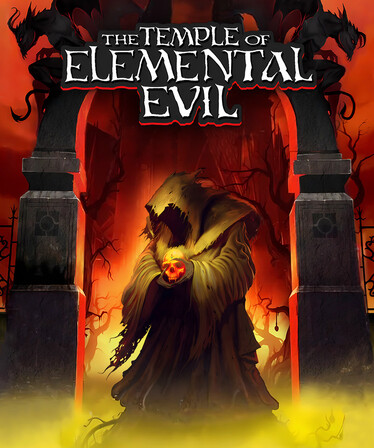
The Temple of Elemental Evil
Years ago a demoness’s elemental cult ruled from a temple near Nulb until the Circle of Eight razed it. Now bandits stalk Hommlet and dark forces gather at the ruins. In this classic party‑based D&D RPG, unmask their true purpose and confront the reborn evil before chaos engulfs the land.
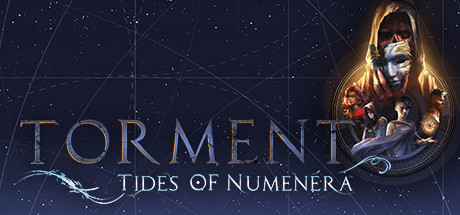
Torment: Tides of Numenera
Torment: Tides of Numenera is the thematic successor to Planescape: Torment, one of the most critically acclaimed role-playing games of all time. Immerse yourself in a single-player, isometric, story-driven RPG set in Monte Cook’s Numenera universe. What does one life matter? Find your answer.
Gothic II: Gold Edition
Gothic II: Gold Edition brings together the excitement of Gothic II and the add-on Night of the Raven to your fingertips!
Baldur's Gate: Enhanced Edition
The classic returns! Baldur’s Gate: Enhanced Edition restores the full original adventure and Tales of the Sword Coast, now polished with quality‑of‑life upgrades for a smoother timeless Dungeons & Dragons journey.
Frequently Asked Questions
Arcanum: Of Steamworks and Magick Obscura is currently priced at 5.99€ on Steam.
No, Arcanum: Of Steamworks and Magick Obscura is currently not on sale. You can purchase it for 5.99€ on Steam.
Yes, Arcanum: Of Steamworks and Magick Obscura received 1,609 positive votes out of a total of 1,804 achieving a rating of 8.51.
😎
Arcanum: Of Steamworks and Magick Obscura was developed by Troika Games and published by Activision.
Yes, Arcanum: Of Steamworks and Magick Obscura is playable and fully supported on Windows.
No, Arcanum: Of Steamworks and Magick Obscura is not playable on MacOS.
No, Arcanum: Of Steamworks and Magick Obscura is not playable on Linux.
This information about Arcanum: Of Steamworks and Magick Obscura is not available yet.
This information about Arcanum: Of Steamworks and Magick Obscura is not available yet.
No, Arcanum: Of Steamworks and Magick Obscura does not support VR.
Arcanum: Of Steamworks and Magick Obscura is a single-player game.
No, Arcanum: Of Steamworks and Magick Obscura does not currently offer any DLC.
No, Arcanum: Of Steamworks and Magick Obscura does not support mods via Steam Workshop.
No, Arcanum: Of Steamworks and Magick Obscura does not support Steam Remote Play.
Yes, Arcanum: Of Steamworks and Magick Obscura is enabled for Steam Family Sharing. This means you can share the game with authorized users from your Steam Library, allowing them to play it on their own accounts. For more details on how the feature works, you can read the original Steam Family Sharing announcement or visit the Steam Family Sharing user guide and FAQ page.
You can find solutions or submit a support ticket by visiting the Steam Support page for Arcanum: Of Steamworks and Magick Obscura.
Data sources
The information presented on this page is sourced from reliable APIs to ensure accuracy and relevance. We utilize the Steam API to gather data on game details, including titles, descriptions, prices, and user reviews. This allows us to provide you with the most up-to-date information directly from the Steam platform.
Additionally, we incorporate data from the SteamSpy API, which offers insights into game sales and player statistics. This helps us present a comprehensive view of each game's popularity and performance within the gaming community.
Last Updates| Steam data | 19 September 2026 18:10 UTC |
|---|---|
| SteamSpy data | 27 October 2026 15:37 UTC |
| Steam price | 27 October 2026 15:03 UTC |
| Steam reviews | 21 October 2026 16:04 UTC |
If you'd like to dive deeper into the details about Arcanum: Of Steamworks and Magick Obscura, we invite you to check out a few dedicated websites that offer extensive information and insights. These platforms provide valuable data, analysis, and user-generated reports to enhance your understanding of the game and its performance.
- SteamDB - A comprehensive database of everything on Steam about Arcanum: Of Steamworks and Magick Obscura
- SteamCharts - Analysis of Arcanum: Of Steamworks and Magick Obscura concurrent players on Steam
- ProtonDB - Crowdsourced reports on Linux and Steam Deck Arcanum: Of Steamworks and Magick Obscura compatibility
Game modes
Features
Online players
16
Developer
Troika Games
Publisher
Activision
Release
29 Aug 2016
Platforms
Clicking and buying through these links helps us earn a commission to maintain our services.