

Baldur's Gate: Enhanced Edition
The classic returns! Baldur’s Gate: Enhanced Edition restores the full original adventure and Tales of the Sword Coast, now polished with quality‑of‑life upgrades for a smoother timeless Dungeons & Dragons journey.
Sync your Steam wishlist to find the lowest game prices instantly. No login required, just paste your Steam profile URL!
⚡ Try Wishlist Radar!
Sync your Steam wishlist to find the lowest game prices instantly. No login required!
⚡ Try Wishlist Radar!
Close

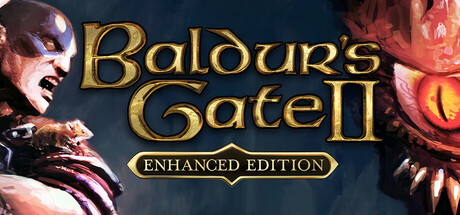
Baldur's Gate II: Enhanced Edition on Steam
Quick menu
Return to a timeless RPG masterpiece. Baldur’s Gate II: Enhanced Edition brings the classic 2000 adventure back to life with thoughtful modern refinements, letting you gather your party and dive once more into a rich, choice‑driven fantasy epic.
Baldur's Gate II: Enhanced Edition is a rpg, story rich and crpg game
developed and published by Beamdog.
Released on November 15th 2013 is available on Windows, MacOS and Linux.
It has received 10,040 reviews of which 9,243 were positive and 797 were negative resulting in a rating of 8.9 out of 10. 😎
The game is currently priced at 19.50€ on Steam, but you can find it for 2.64€ on G2A.
The Steam community has classified Baldur's Gate II: Enhanced Edition into these genres:
Media & Screenshots
Get an in-depth look at Baldur's Gate II: Enhanced Edition through various videos and screenshots.


Load More


System requirements
These are the minimum specifications needed to play the game. For the best experience, we recommend that you verify them.
Windows
- OS *: Windows 7, 8.1, 10, 11 64 bit
- Processor: Dual Core Processor
- Memory: 1 GB RAM
- Graphics: OpenGL 2.0 compatible
- Storage: 4 GB available space
MacOS
- OS: OS X 10.15
- Processor: Dual Core Apple Silicon or Intel Processor
- Memory: 1 GB RAM
- Graphics: OpenGL 2.0 compatible
- Storage: 4 GB available space
Linux
- OS: Ubuntu 18.04 or equivalent
- Processor: Dual Core Processor
- Memory: 1 GB RAM
- Graphics: OpenGL 2.0 compatible
- Storage: 4 GB available space
Steam Price & Best Deals
User reviews & Ratings
Explore reviews from Steam users sharing their experiences and what they love about the game.
tl;dr: This is the game that made me fall in love with RPGs, D&D and tabletop gaming, and it holds up to this day. Higher level cap, more spells, far more banter (with fewer companions) and a much more epic story that wraps up the original Bhaalspawn saga. In Baldurs Gate, a sheltered orphan forced out of Candlekeep's library reluctantly becomes the Hero of Baldur's Gate. Baldur's Gate II & Throne of Bhaal take that same character all the way to *godhood*. It also takes you further afield than almost any other Forgotten Realms game (until perhaps Neverwinter Nights 2 Storms of Zehir). The pacing sags, combat balance suffers a bit, and Throne of Bhaal stretches power fantasy to breaking point, but the journey is always worth it. My playthrough: I first played this decades ago but had never beaten Throne of Bhaal's final battle without resorting to console cheats. This time I wanted to do it properly, so I rolled a foolproof build: a Gnome Fighter/Illusionist gish, imported from my Baldur's Gate & Siege of Dragonspear run. Single-player only, Black Pits II skipped, played on Linux with no technical issues I can recall. I can't say much about what's changed from the original non-Enhanced Edition beyond modern resolution, quick loot and new companions. If you import a character, equipment and gold don't carry over (learned spells & tome stats increases do), but you'll be well above the level of a fresh Baldurs Gate 2 character, and finishing Siege of Dragonspear adds two more levels. The opening chapters can feel undertuned as a result. The story: You're the Hero of Baldur's Gate who stopped the Iron Throne conspiracy, and you've been banished from the city you saved for reasons that were addressed in Siege of Dragonspear. The sequel assumes you travelled with Jaheira, Minsc and your foster sister Imoen (plus Khalid and Dynaheir, who don't survive the opening). Then the main antagonist, Jon Irenicus, captures you. Irenicus isn't another Bhaalspawn chasing the God of Murder's prophecy like Sarevok. He wants to reclaim the soul he lost, replace it with a divine one, and take revenge on the people who stripped it from him. You're exactly the sort of soul he needs. It infuriates him that you don't embrace your birthright: he spent centuries earning his power, while you were handed a god's at birth and treat it as a curse. David Warner plays him as grandiose, arrogant and dangerously intelligent. First Two Chapters: The prologue and Chapter 1 are brisk. Chapter 2 is where the game opens up, and it can easily outlast every other chapter combined. Your goal is to raise 20,000 gold (later reduced to 15,000) to fund Imoen's rescue, and Amn is packed with quests and ways to make money. Most of the sidequests, every companion quest and your class stronghold all can start and finish here. You can rush through and go straight after Imoen, or spend in-game months getting distracted by other people's problems. You tell every companion your goal is to save your sister, then hike into the middle of nowhere to deliver acorns to some forest nymphs without knowing whether there's a reward. That freedom is why people remember Chapter 2 as one of the greatest RPG sandboxes ever. It's also the game's bigg pacing flaw. Open(ish) World: The original was travelling through wilderness, clearing areas and stumbling across quests. You could walk into a patch of forest and find a bear, a bandit camp, a wizard's tower, or absolutely ♥♥♥♥-all. BG2 trades some of that wandering for quest density and environmental variety. Almost every major location is a set piece: planar spheres, underground temple to a dead god, the Underdark, a pirate town, an underwater civilisation. The cost is that quests feel less organic. You walk into a new area and a new quest is shoved in your face, one more item in your ♥♥♥♥-to-do-instead-of-saving-Imoen inbox. I think it's a worthwhile trade, but the two games feel very different. Companions: Baldurs Gate 2 cuts the companion pool considerably and vastly increases the depth of each. In the first game they felt thin once recruited, and they were disposable by design: swapping out a dead companion was cheaper than paying for a resurrection. Here they're proper party members with personal quests, arguments, moral objections, rivalries and romances. Love or hate the BioWare-stlyed romances, Baldurs Gate 2 was largely the progenitor. I didn't care much for the companions the Enhanced Editions added, with the exception of Baeloth, who isn't even here. Combat: This is where the higher starting level pays off. In my Baldurs' Gate review I described early combat as fragile and slow: one missle can end your level 2 wizard's story, and fights often mean kiting a wolf around a circle while Imoen plinks arrows at it. Here fights against high-level wizards, liches and dragons become spellcasting duels. You strip away layers of protection (Stoneskin, Spell Turning, Invisibility, etc) with Breach, Secret Word and Ruby Ray of Reversal before attacks can land. Then the same progression pushes the system too far. By Throne of Bhaal your characters are approaching level 40 with ridiculous gear, and only a handful of the huge spell catalogue is still useful. Enemy health and numbers baloon, and some fights feel less like balanced AD&D and more like seeing whose abilities erase the other side first. To some extent that's the point, since you're a demigod, but the tactical play suffers. The Good: The Enhanced Edition changes are small quality-of-life improvements that add up. The quest log, while a bit buggy, separates things into individual tasks instead of one endless list. Modern resolutions are built in, and the spellbook automatically groups learned spells, which I liked. The Bad (and the Ugly): The game assumes you care about rescuing Imoen, which works for a good-aligned or moderately heroic protagonist. If you're playing an evil or self-centred arsehole, it's hard to see why you'd spend 20,000 gold on her. It's also more reactive than the first, but unevenly: it responds to your party and some good/evil choices, yet rarely to who your character is, and few dialogue options depend on your stats. Many quests are delivered via a courier. Transversed and exited a map before he could reach you, and you potentially have a questline stuck in limbo. Cue the console. I found myself doing this plenty in other Infinity Engine games. The character sprites and some UI art are also noticeably worse than in Baldur's Gate: smaller, blurrier and noisier. I don't understand why they were redesigned, or why Beamdog didn't fix it for the EE. One of the most popular mods restores the Baldur's Gate sprites, so I'm not alone. Verdict: Baldur's Gate is a low-level, open-ended adventure about exploring a stretch of the Sword Coast. Baldurs Gate 2 is a grand fantasy epic about how far that adventure can go, right up to deciding whether to become a god. It trades wandering for quest density, deeper companions and a more ambitious story, and pays for it with wandering pacing and a Throne of Bhaal that turns AD&D into outright power fantasy. Still recommended. Some Tips For New Players: >Turn on autopause for enemies and traps detected. Not sure why these aren't the defaults. >Panning is painfully slow, so push the mouse scroll speed to maximum. >Extremely cheesy, but pick a Thief you won't otherwise use as a dedicated pickpocket. I used Hexxat to rob shopkeepers blind on shopping sprees between quests. >Balduran's Shield is almost a must when fighting Beholders. Buy it from the vendor in the Adventurer Mart in Waukeen's Promenade. >Bring a mage who can dispel enemy protection spells. >Some quests will be too hard early on. Come back when you're better levelled and kitted out. >Dual-wielding Gnome Fighter/Illusionist is hard to mess up. Max stregnth intelligence, consitution and dexterity. >Vary your weapon types, since many enemies resist certain damage types.
what can I say about the game that made me fall in love with the gaming world? I used to watch my big brother play it when i was a little girl, drawn towards the beautiful art and soundtrack - which even today, after more than 20 years still gives me chills. Such nostalgia. A dark, personal opening that set it apart as a timeless masterpiece, and maybe the greatest RPG ever.
Still the GOAT. Best crpg of all time. And my personal favorite game of all time. I will forever be salty that Baldur's Gate 3 ignores this game and goes with some stupid "canon" arbitralily decided by WotC at some point. I know this is me being an old f*** being grumpy and complaining about the new fangled stuff the youth uses, but I feel it should be forbidden to play Baldur's Gate 3 without playing the original beforehand :P If you own the first one too, I'd advise to use the EET mod that puts all the parets together into the engine of the second game and makes for one continues experience. You absolutely should play the first game before the second, otherwise you will miss out on a great story and the story of the second game will have some holes in it. Throne of Bhaal, the conclusion of the trilogy (Baldur's Gate 3 should absolutely have been it's own thing :( ) is a bit devisive. It's goes into epic levels, with massively overtuned enemies to compensate your party having levels never meant to exist in AD&D, so it can be quite frustrating, but it is also the weakest story wise, so you won't miss out so much if you decide to quit when encountering a brick wall when trying it.
This game is best played on IPAD, on Ipad the touch screen controls are a perfect match for the game. It is so relaxing playing a baldurs gate game in bed with a light weight ipad. For me it has replaced reading at night for better or worse. Great brain teaser and relaxation tool. I call my Ipad my baldurs gate machine now ha!
Similar games
View all
Icewind Dale: Enhanced Edition
The frozen classic returns. Icewind Dale: Enhanced Edition preserves the spirit of the original adventure while refining it for modern players, letting you build a party of Dungeons & Dragons heroes and brave the harsh, haunting beauty of the Spine of the World.
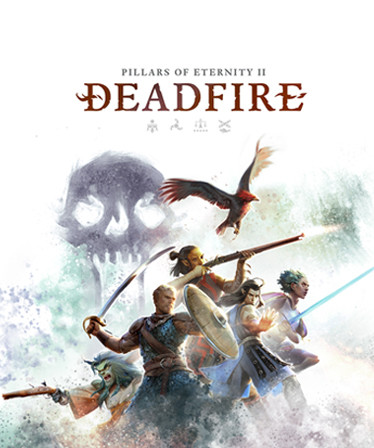
Pillars of Eternity II: Deadfire
Patch 5.0 - Turn-based mode and The Ultimate challenge out now! Pursue a rogue god over land and sea in the sequel to the multi-award-winning RPG Pillars of Eternity. Captain your ship on a dangerous voyage of discovery across the vast unexplored archipelago region of the Deadfire.
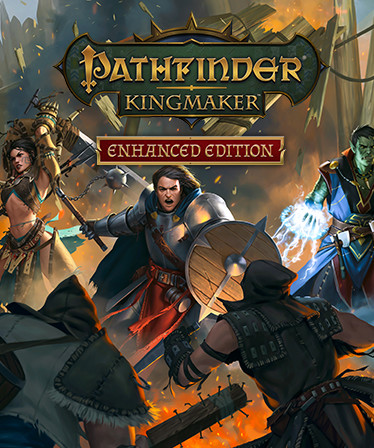
Pathfinder: Kingmaker Enhanced Plus Edition
Pathfinder: Kingmaker - Enhanced Plus Edition is the first isometric party-based cRPG set in the Pathfinder fantasy universe. Enjoy a classic RPG experience inspired by games like Baldur's Gate, Fallout 1 and 2 and Arcanum. Explore and conquer the Stolen Lands and make them your kingdom!

Baldur's Gate 3
Baldur’s Gate 3 is a story-rich, party-based RPG set in the universe of Dungeons & Dragons, where your choices shape a tale of fellowship and betrayal, survival and sacrifice, and the lure of absolute power.
Neverwinter Nights: Enhanced Edition
Return to the Forgotten Realms in this bestselling Dungeons & Dragons roleplaying game. Combines all the content of Neverwinter Nights Diamond Edition with all-new enhanced features. Includes 100+ hours of award-winning adventures and the tools to create your own!

Planescape: Torment: Enhanced Edition
Uncover secrets of past lives in this story-rich, tactical roleplaying game set in Sigil, a dark fantasy city at the heart of the Dungeons & Dragons multiverse. Explore the planes, survive combat alongside a party of bizarre companions, and solve puzzles unlike any ever seen in the genre.
Pillars of Eternity
Prepare to be enchanted by a world where the choices you make and the paths you choose shape your destiny. Obsidian Entertainment, the developer of Fallout: New Vegas™ and South Park: The Stick of Truth™, together with Paradox Interactive is proud to present Pillars of Eternity.
Black Geyser: Couriers of Darkness
Black Geyser is an isometric, party-based fantasy RPG inspired by genre classics. Recruit characters with unique personalities and explore a land ravaged by civil war and a mysterious curse of greed. Your choices, good or evil, will decide the fate of the Kingdom of Isilmerald.
Dragon Age: Origins - Ultimate Edition
Explore a stunning world, make complex moral choices, and engage in bone-crushing combat against massive and terrifying creatures. The Ultimate Edition includes Dragon Age: Origins, Dragon Age: Origins - Awakening and all nine content packs.
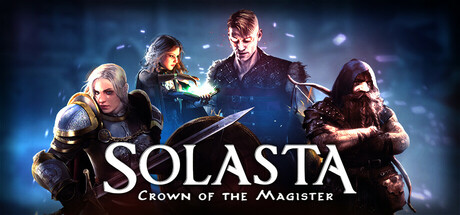
Solasta: Crown of the Magister
Roll for initiative, take attacks of opportunity, manage player location and the verticality of the battle field in this Turn-Based Tactical RPG based on the SRD 5.1 Ruleset. In Solasta, you make the choices, dice decide your destiny.
Frequently Asked Questions
Baldur's Gate II: Enhanced Edition is currently priced at 19.50€ on Steam.
No, Baldur's Gate II: Enhanced Edition is currently not on sale. You can purchase it for 19.50€ on Steam.
Yes, Baldur's Gate II: Enhanced Edition received 9,243 positive votes out of a total of 10,040 achieving a rating of 8.94.
😎
Baldur's Gate II: Enhanced Edition was developed and published by Beamdog.
Yes, Baldur's Gate II: Enhanced Edition is playable and fully supported on Windows.
Yes, Baldur's Gate II: Enhanced Edition is playable and fully supported on MacOS.
Yes, Baldur's Gate II: Enhanced Edition is playable and fully supported on Linux.
This information about Baldur's Gate II: Enhanced Edition is not available yet.
This information about Baldur's Gate II: Enhanced Edition is not available yet.
No, Baldur's Gate II: Enhanced Edition does not support VR.
Baldur's Gate II: Enhanced Edition offers both single-player and multi-player modes.
Baldur's Gate II: Enhanced Edition includes Co-op mode where you can team up with friends.
Yes, there are 2 DLCs available for Baldur's Gate II: Enhanced Edition. Explore additional content available for Baldur's Gate II: Enhanced Edition on Steam.
No, Baldur's Gate II: Enhanced Edition does not support mods via Steam Workshop.
No, Baldur's Gate II: Enhanced Edition does not support Steam Remote Play.
Yes, Baldur's Gate II: Enhanced Edition is enabled for Steam Family Sharing. This means you can share the game with authorized users from your Steam Library, allowing them to play it on their own accounts. For more details on how the feature works, you can read the original Steam Family Sharing announcement or visit the Steam Family Sharing user guide and FAQ page.
You can find solutions or submit a support ticket by visiting the Steam Support page for Baldur's Gate II: Enhanced Edition.
Data sources
The information presented on this page is sourced from reliable APIs to ensure accuracy and relevance. We utilize the Steam API to gather data on game details, including titles, descriptions, prices, and user reviews. This allows us to provide you with the most up-to-date information directly from the Steam platform.
Additionally, we incorporate data from the SteamSpy API, which offers insights into game sales and player statistics. This helps us present a comprehensive view of each game's popularity and performance within the gaming community.
Last Updates| Steam data | 19 September 2026 18:08 UTC |
|---|---|
| SteamSpy data | 26 October 2026 16:03 UTC |
| Steam price | 30 October 2026 20:02 UTC |
| Steam reviews | 21 October 2026 05:50 UTC |
If you'd like to dive deeper into the details about Baldur's Gate II: Enhanced Edition, we invite you to check out a few dedicated websites that offer extensive information and insights. These platforms provide valuable data, analysis, and user-generated reports to enhance your understanding of the game and its performance.
- SteamDB - A comprehensive database of everything on Steam about Baldur's Gate II: Enhanced Edition
- SteamCharts - Analysis of Baldur's Gate II: Enhanced Edition concurrent players on Steam
- ProtonDB - Crowdsourced reports on Linux and Steam Deck Baldur's Gate II: Enhanced Edition compatibility
Game modes
Multiplayer
Features
Online players
353
Developer
Beamdog
Publisher
Beamdog
Release
15 Nov 2013
Platforms
Clicking and buying through these links helps us earn a commission to maintain our services.