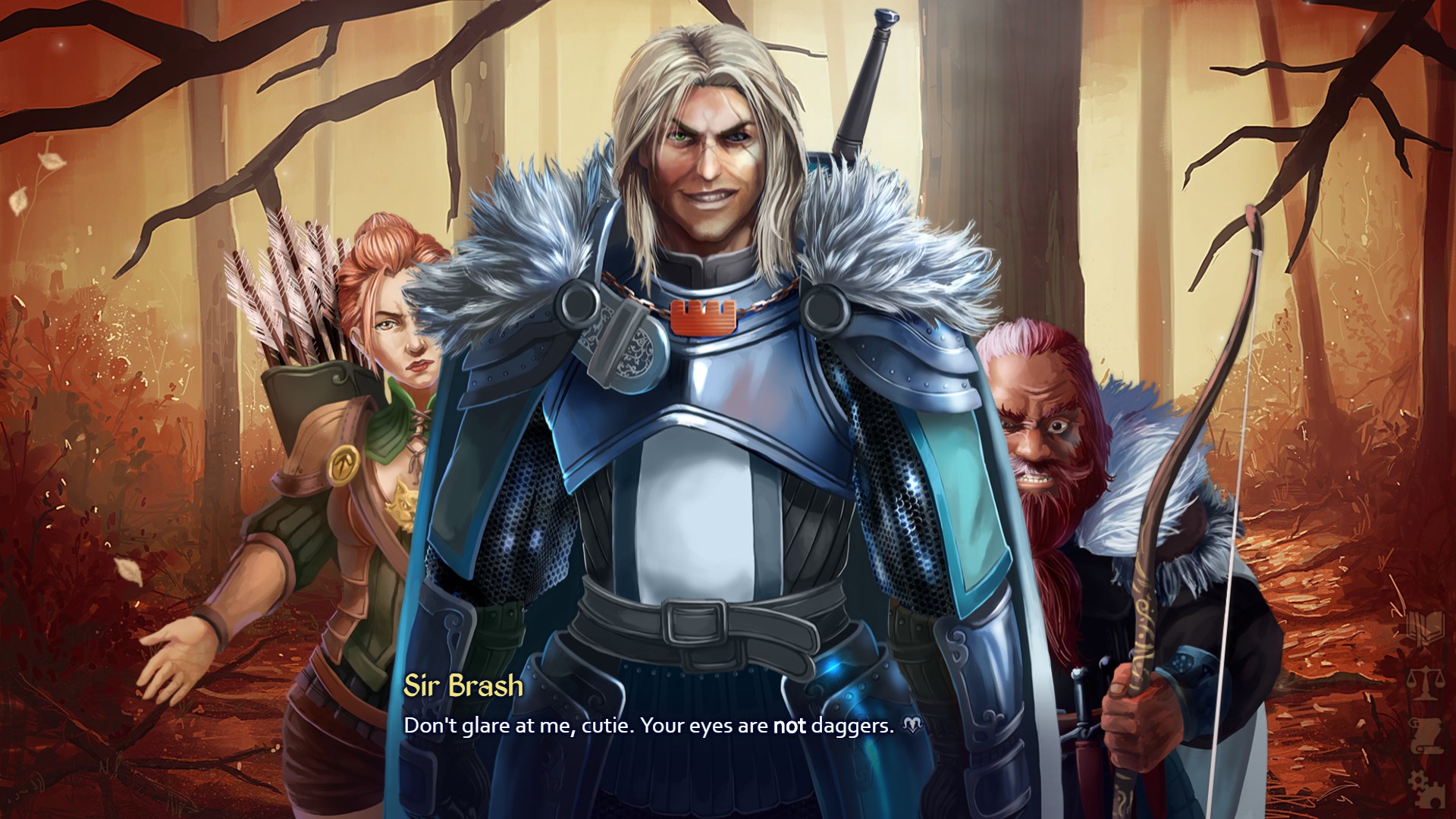
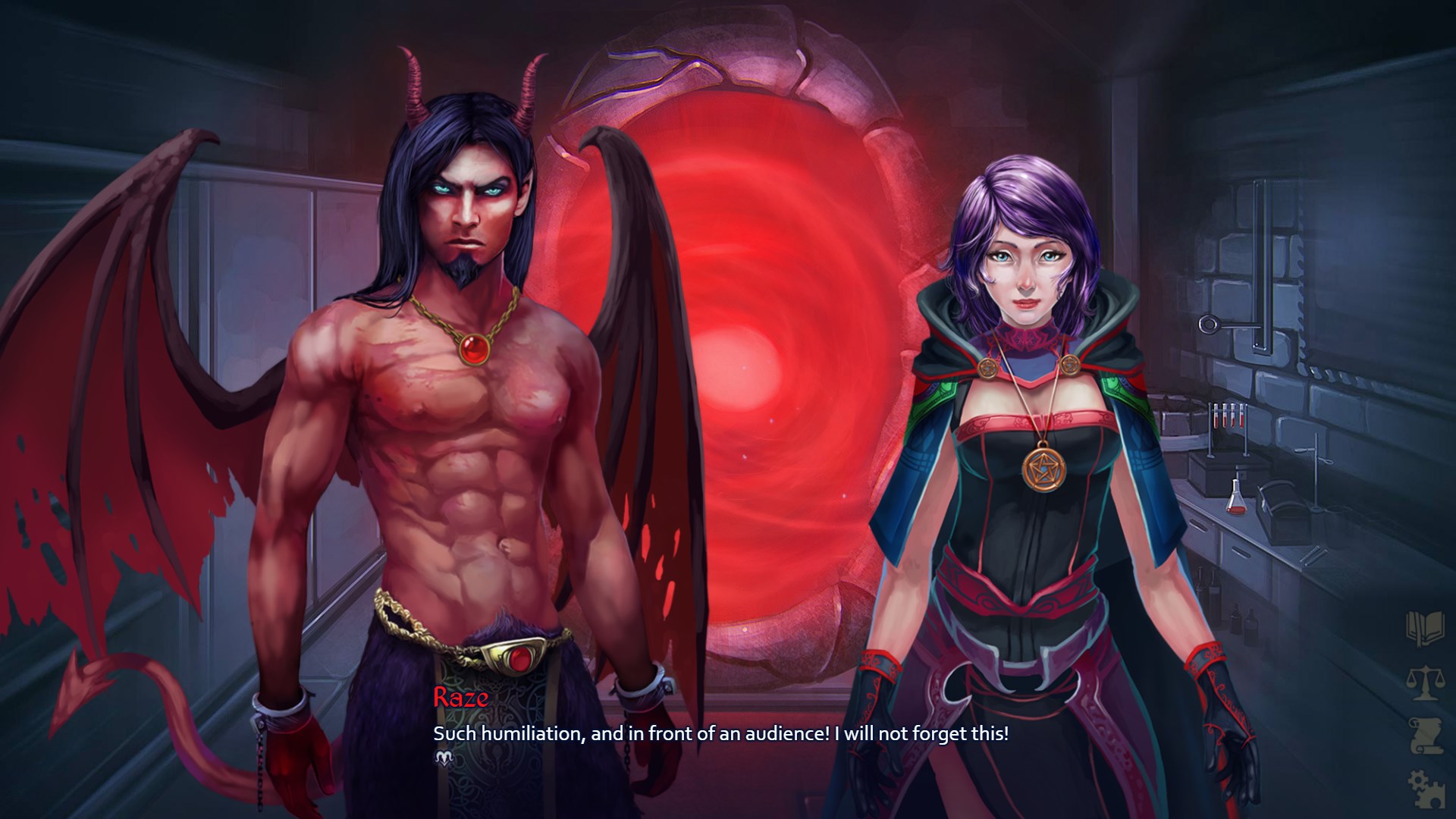
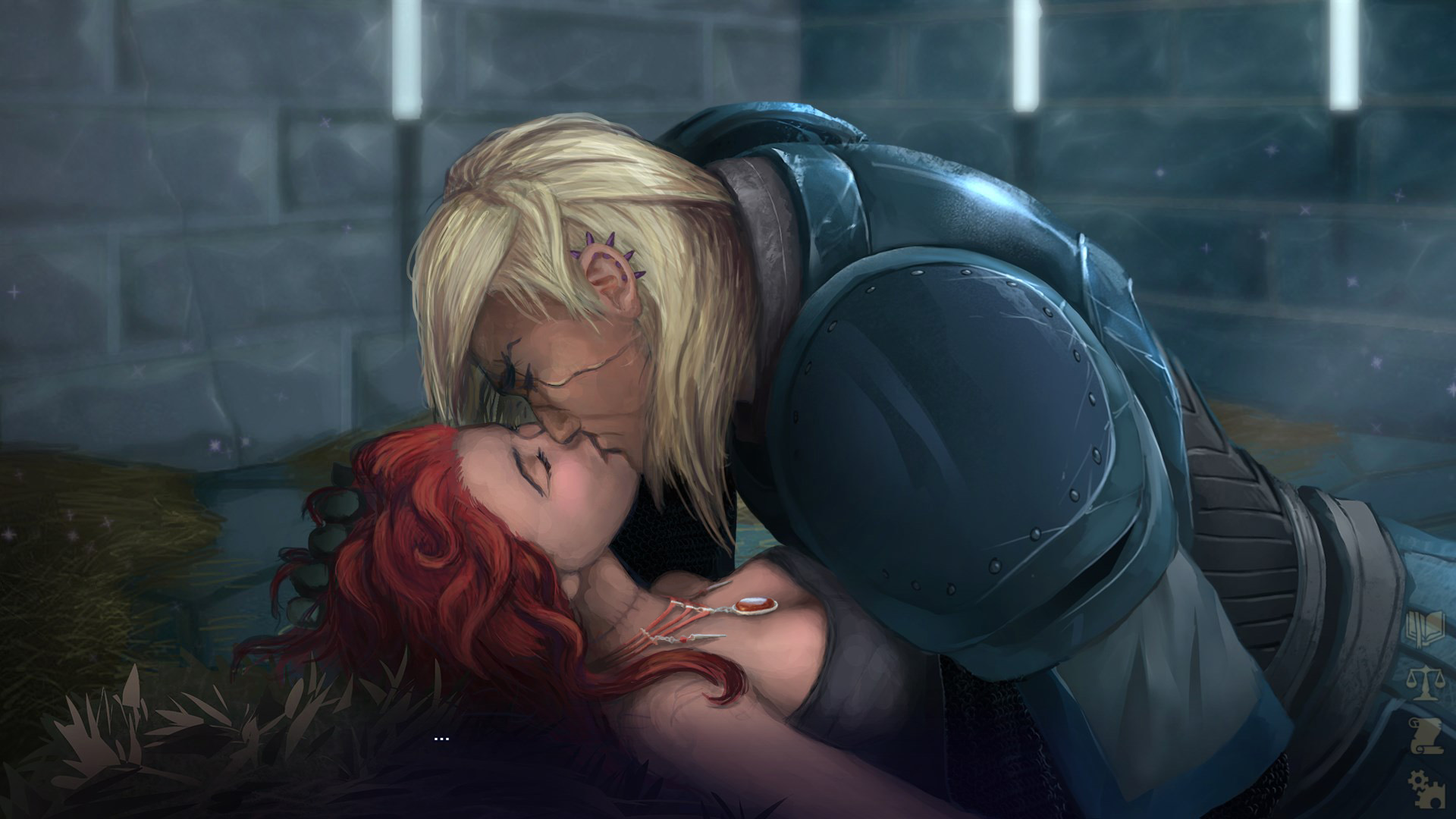
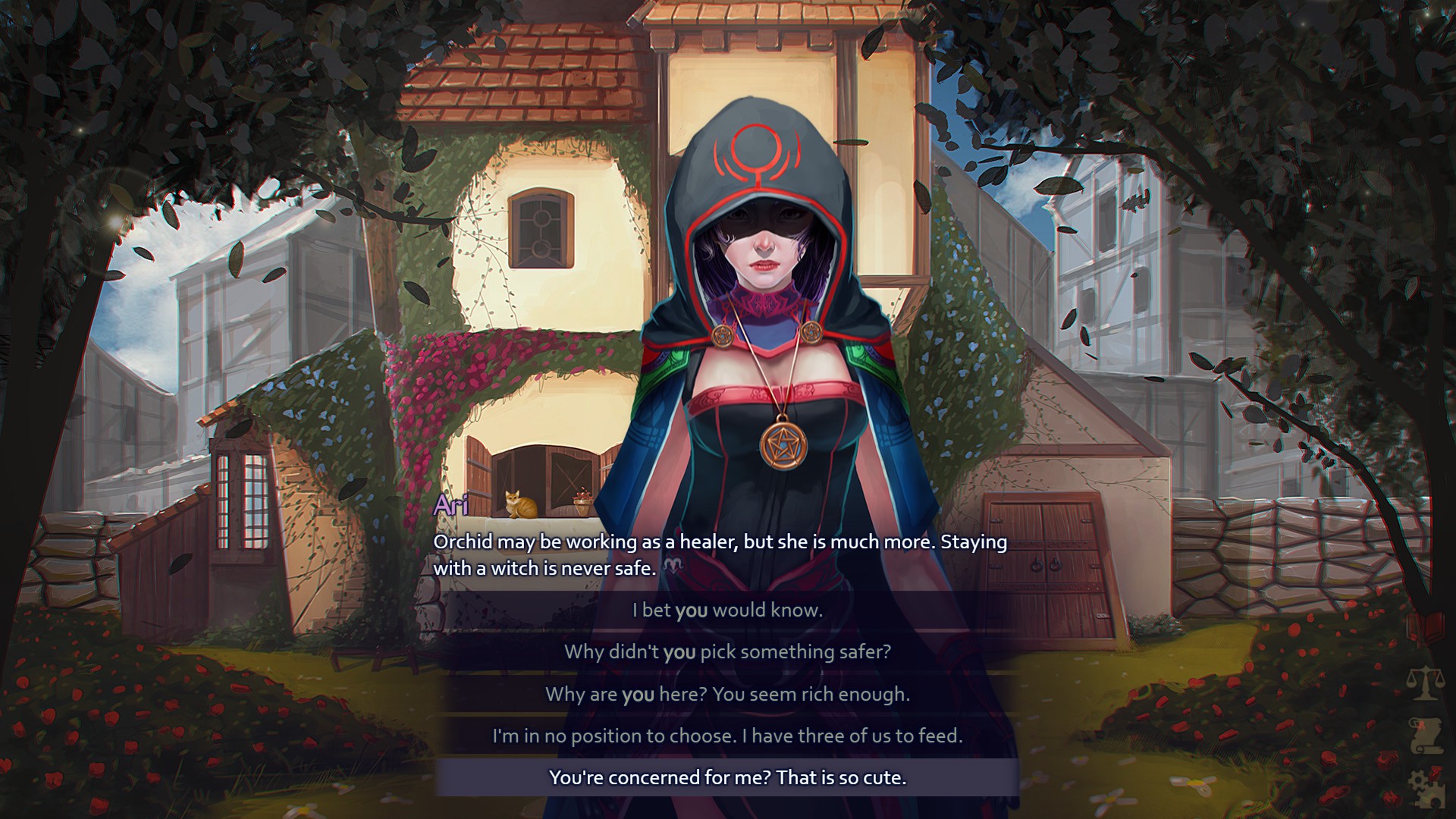
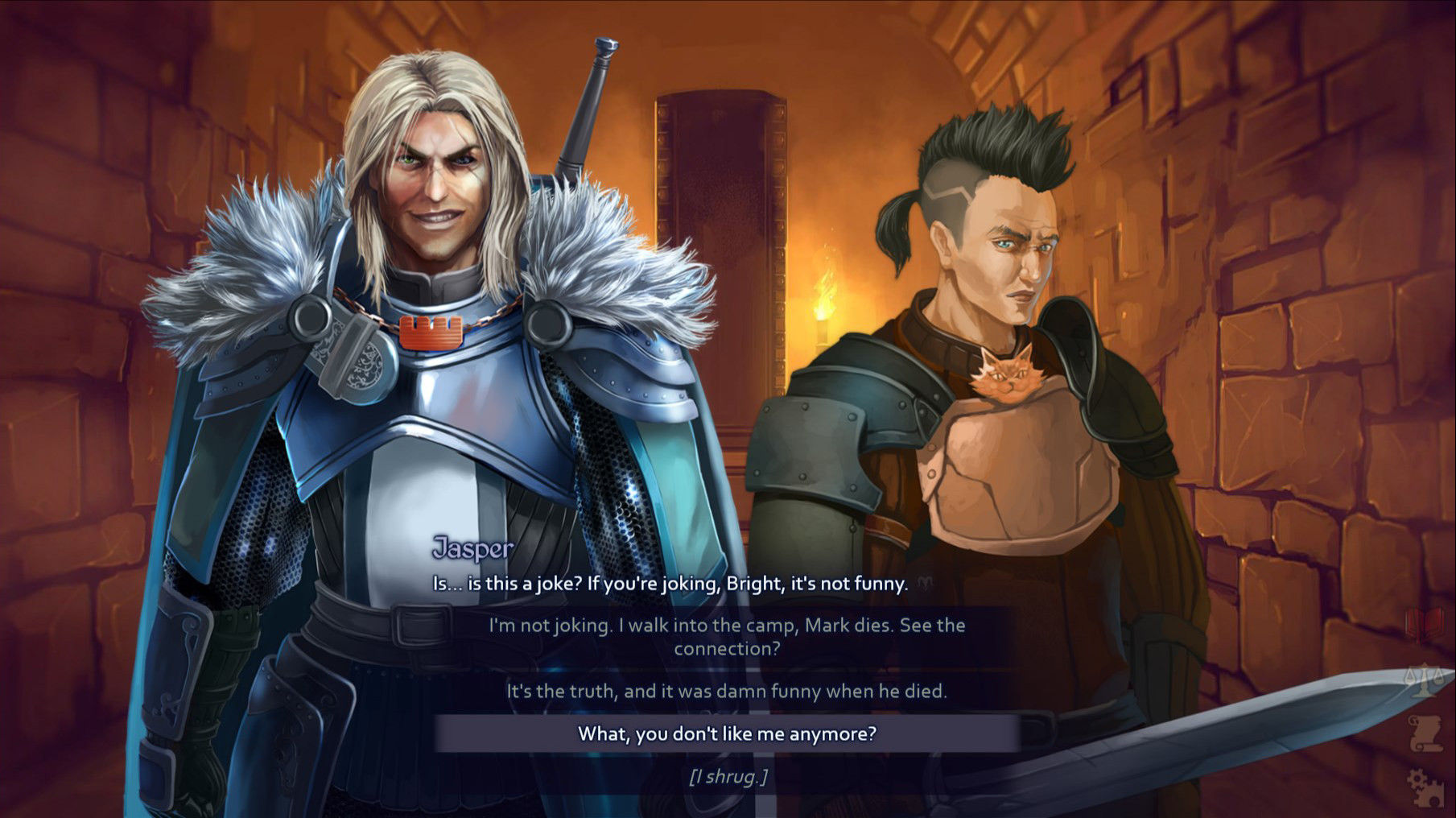
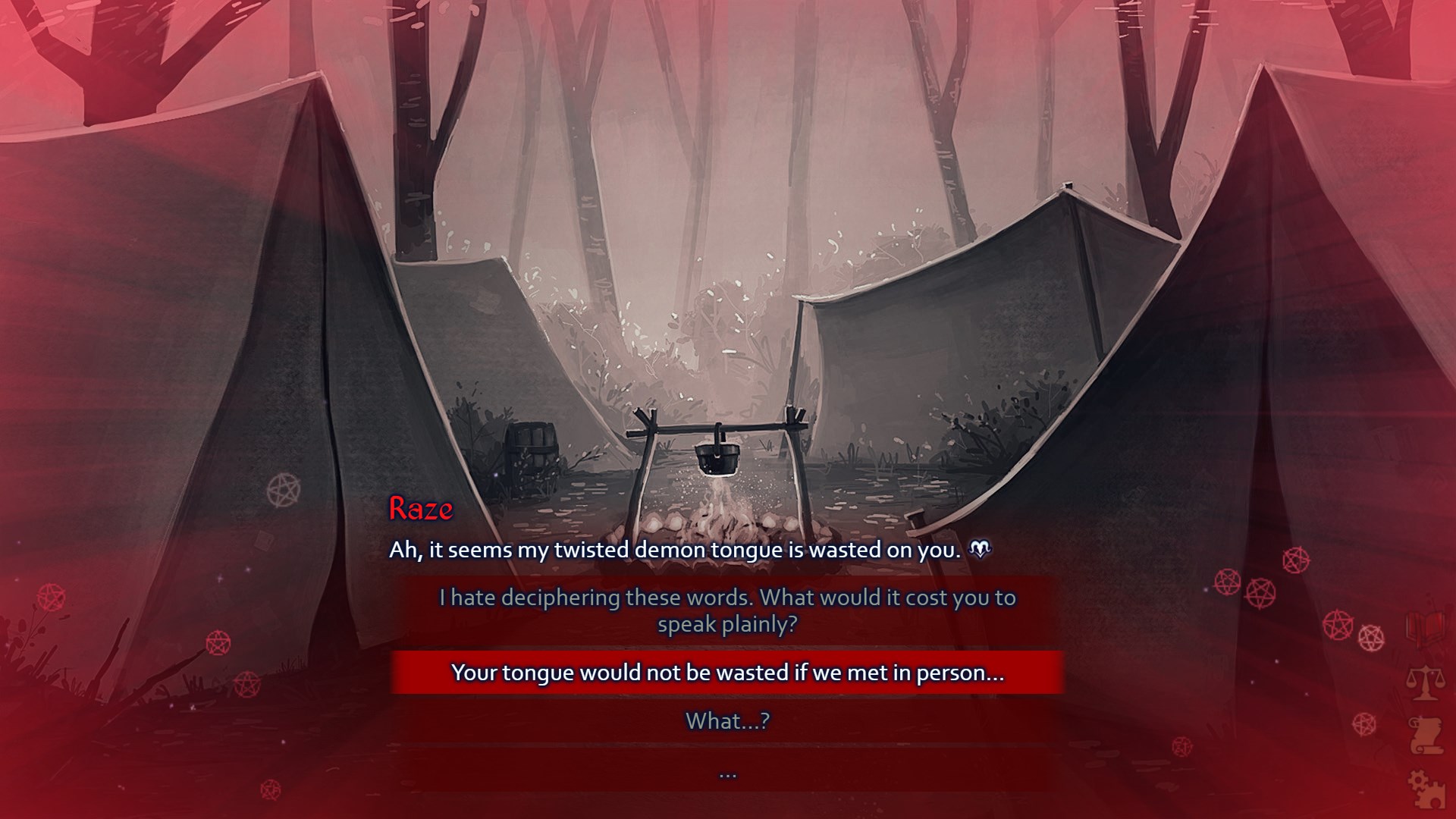
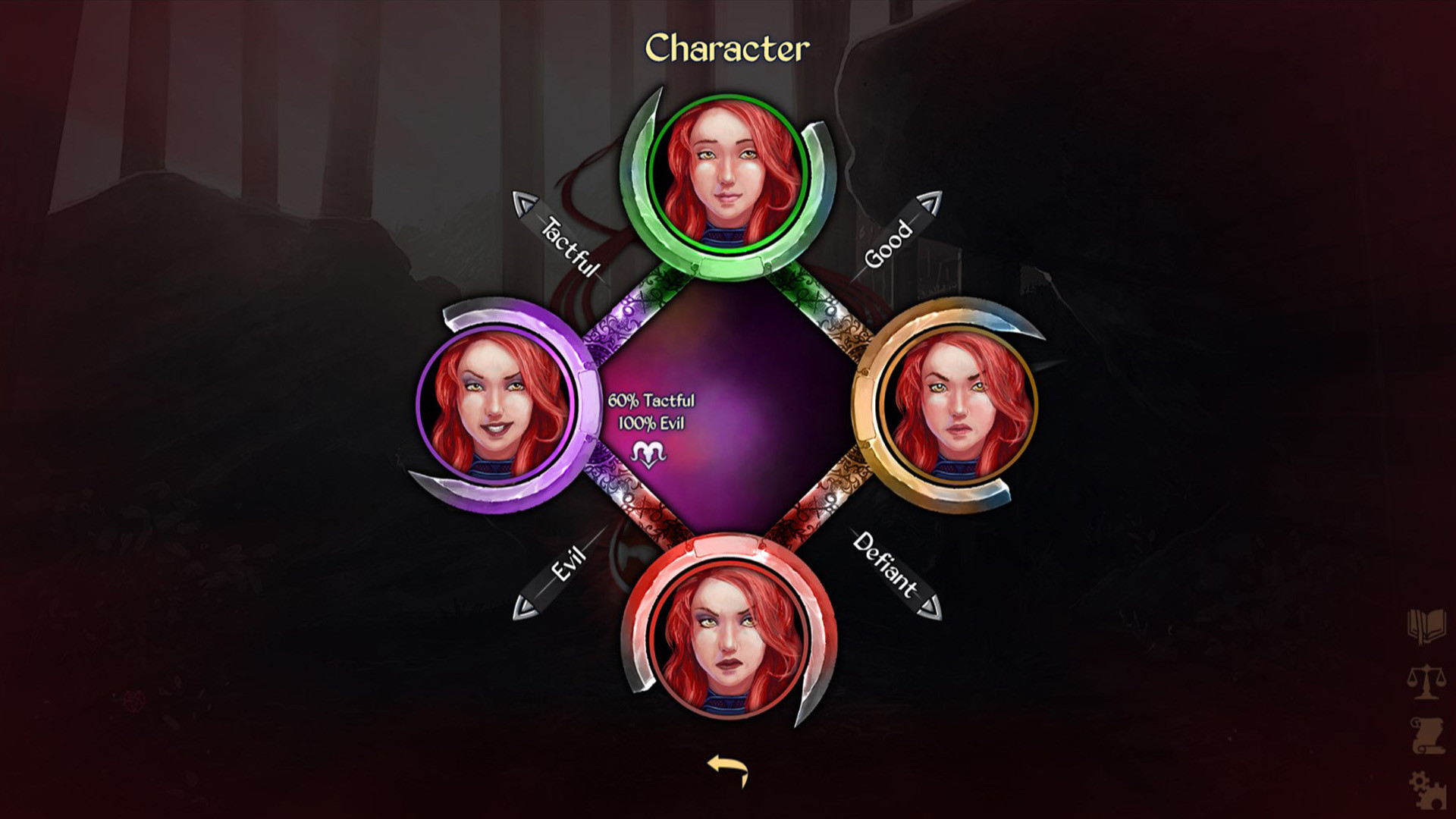
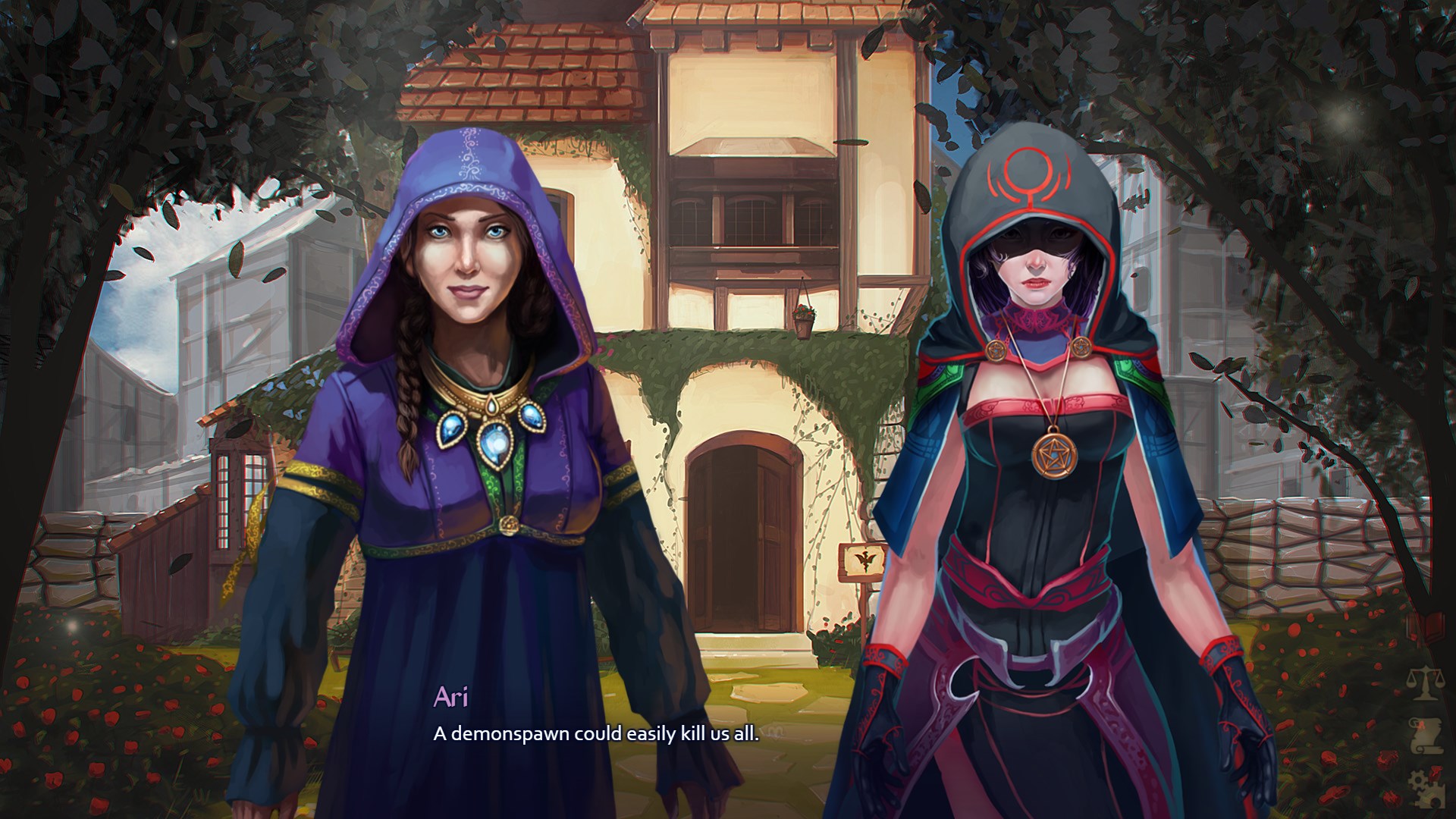
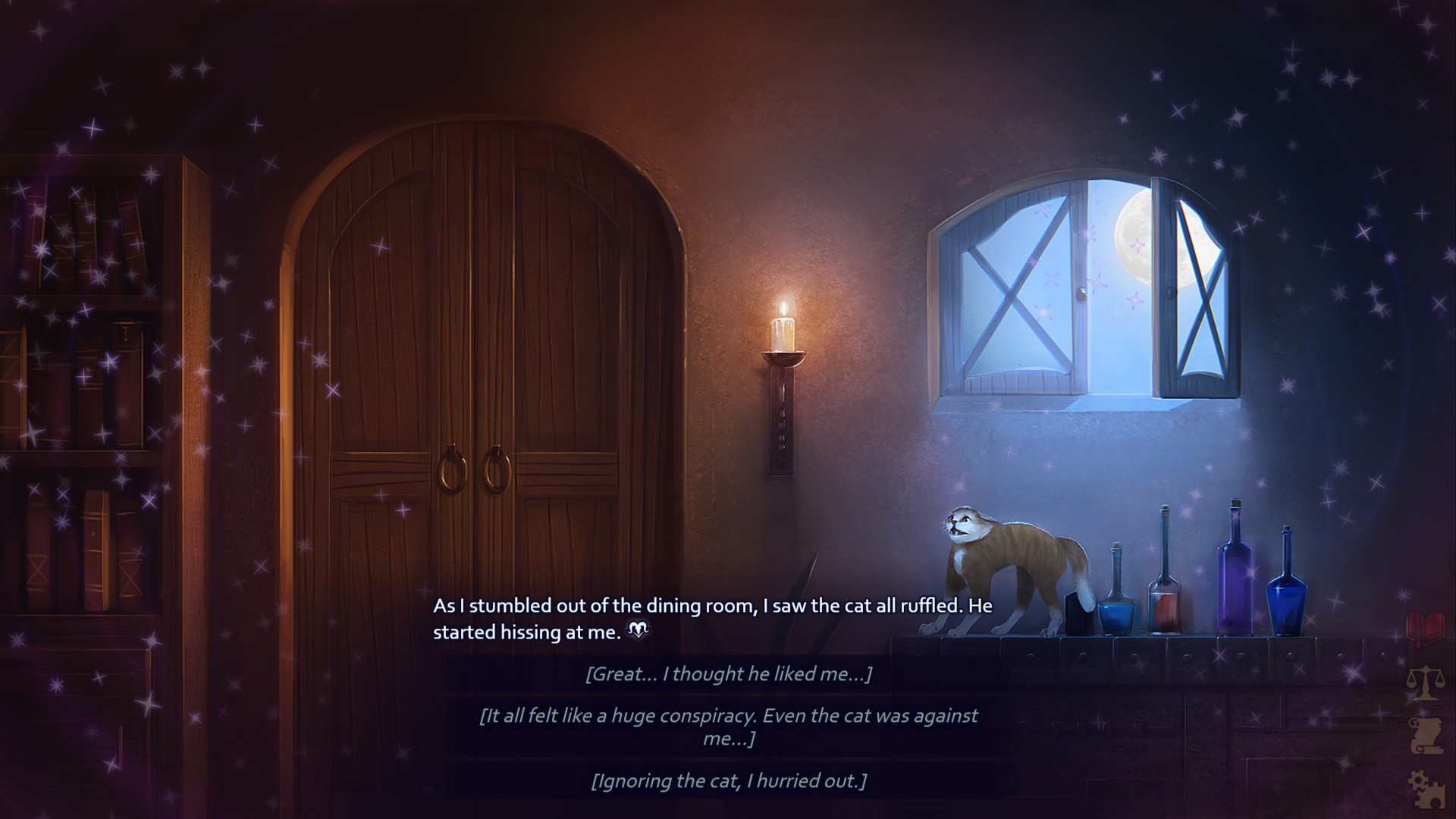
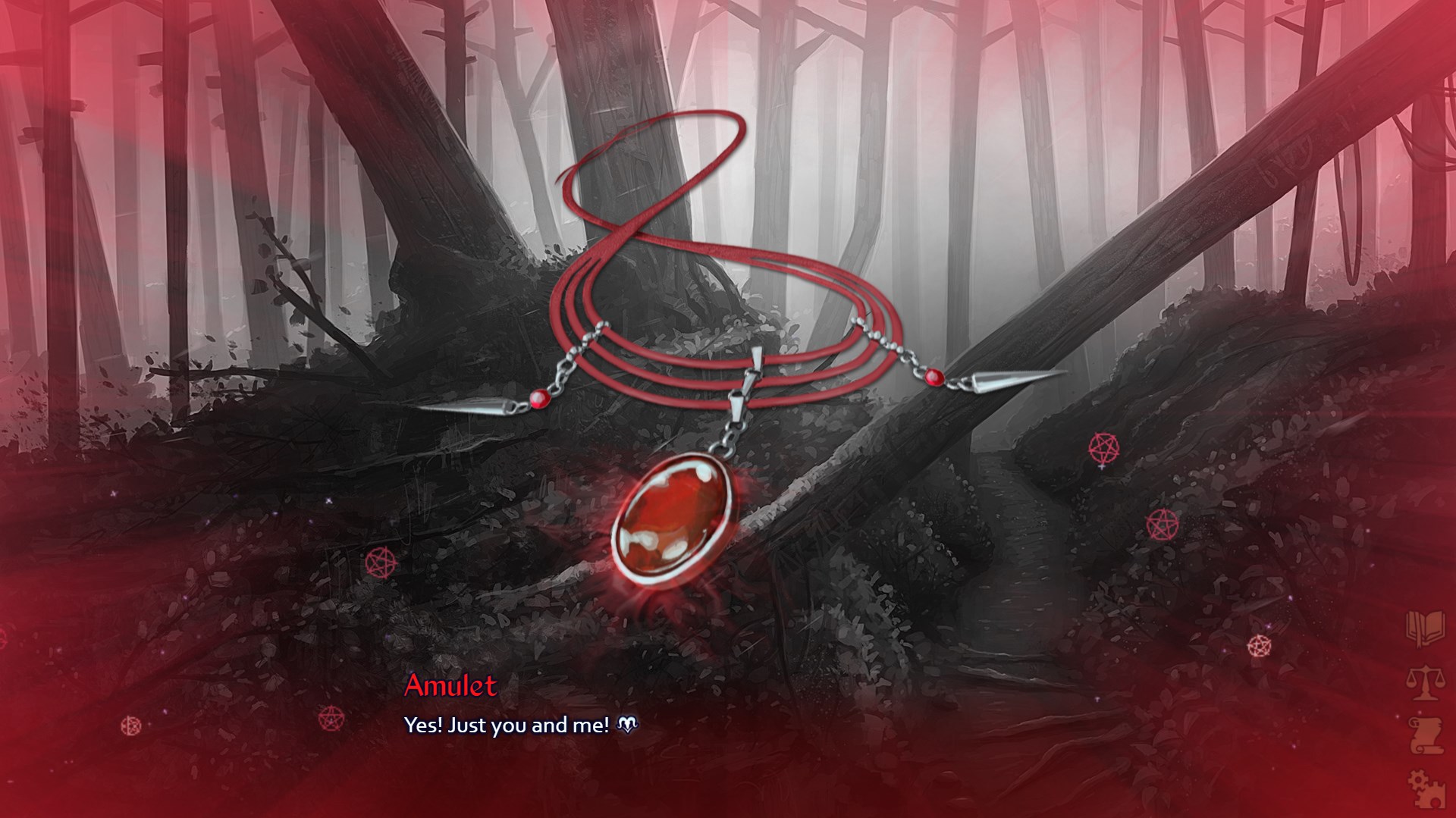
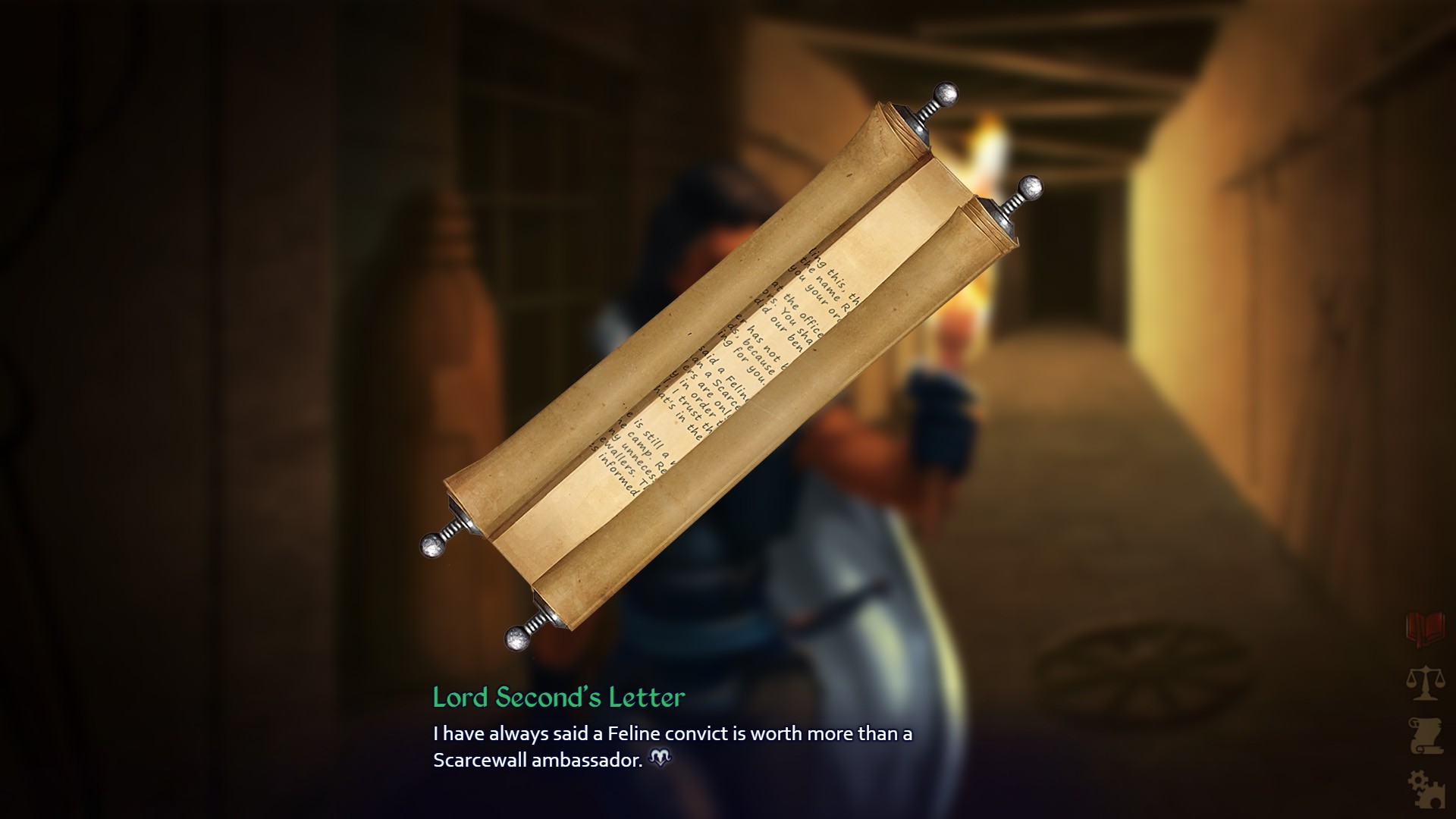
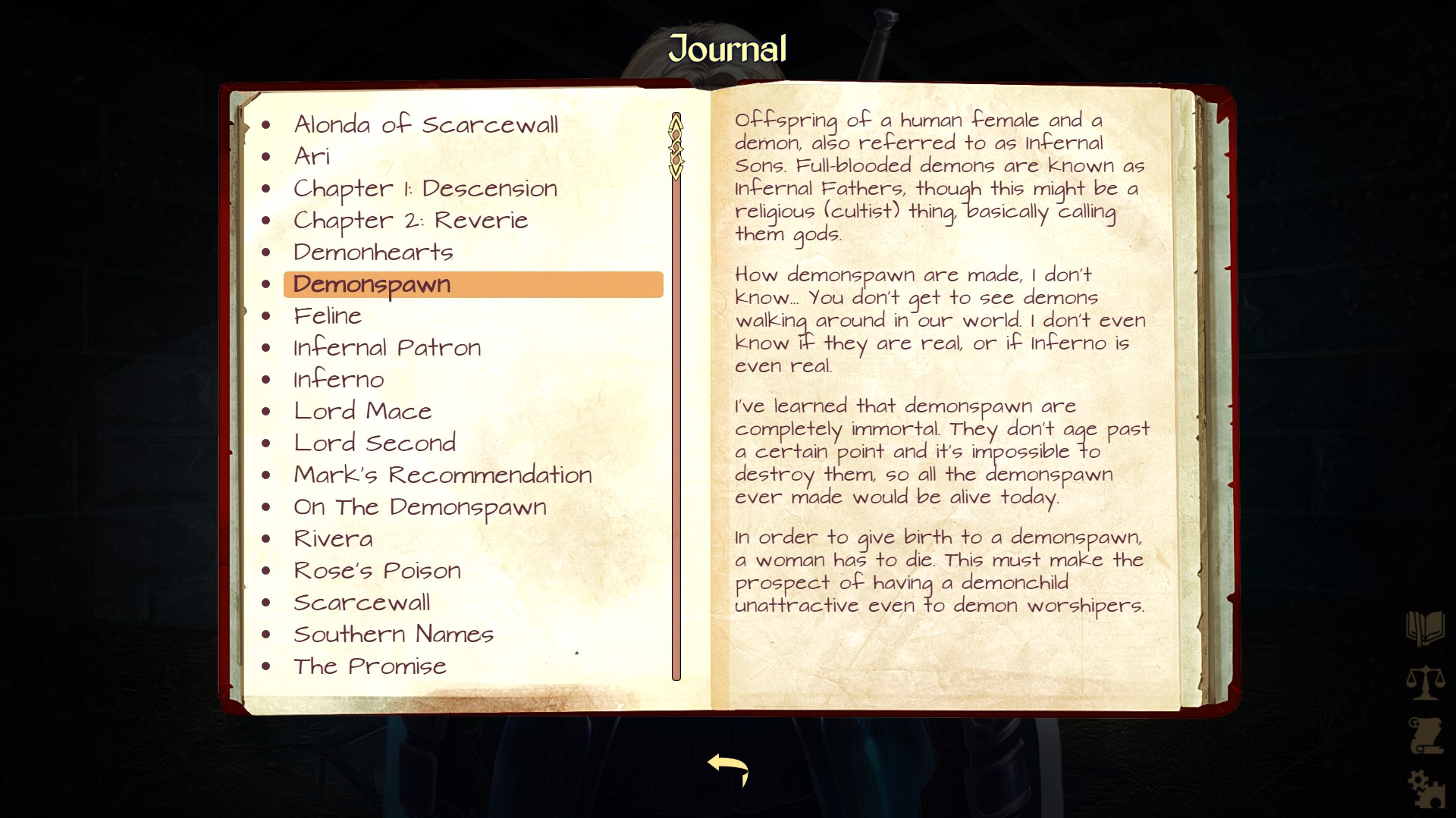
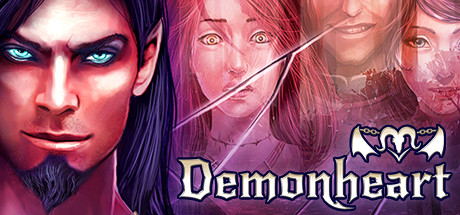
Demonheart is a dark fantasy visual novel created by Rolling Crown that places storytelling and character interaction at the center of its experience. Released on Steam in 2017, the game belongs to the interactive fiction and otome-inspired visual novel genre, though it distinguishes itself through a much darker tone than many romance-focused titles. Instead of offering traditional gameplay systems like combat or exploration, Demonheart relies on a choice-driven narrative where the player shapes the personality, morality, and relationships of its protagonist. The result is an experience that feels less like a conventional game and more like a complex fantasy novel in which the player guides the emotional and ethical path of the main character. The story revolves around a young woman named Bright, who begins the game living an ordinary life in a small town. Her situation quickly changes after she becomes associated with Orchid, a respected healer-witch known for her calm demeanor and powerful abilities. At first glance, Orchid appears to be a generous and protective mentor who offers Bright support during a difficult time. However, as the story unfolds, it becomes increasingly clear that Orchid’s intentions and the world around her are far more complicated than they initially appear. The narrative gradually reveals a web of secrets involving witchcraft, political manipulation, supernatural entities, and hidden motives that slowly pull Bright deeper into a dangerous and morally ambiguous world. A particularly unique element of the narrative is the presence of a demon that speaks directly into Bright’s mind. This entity accompanies the protagonist throughout much of the story, commenting on events and encouraging certain choices. Sometimes the demon’s suggestions are manipulative or cruel, urging Bright to act selfishly or ruthlessly in pursuit of power or survival. At other times, its observations offer cynical insight into the motives of other characters. This constant mental presence creates a fascinating tension within the narrative, as players must decide whether to resist the demon’s influence or embrace the darker impulses it represents. The demon essentially acts as both a narrative companion and a reflection of the protagonist’s internal conflict. The game’s decision system is built around shaping Bright’s personality through dialogue choices. Nearly every conversation allows the player to determine how she responds to the people around her. These choices influence two core personality axes: morality and attitude. Bright can lean toward kindness and compassion or toward cruelty and selfishness, while also choosing whether to behave diplomatically or openly confrontationally. These traits affect how other characters perceive her and can unlock different interactions, events, and endings. Because the personality system allows for many variations of the protagonist, players can experiment with different role-playing approaches and witness dramatically different outcomes across multiple playthroughs. Relationships with other characters play a significant role in the story’s progression. Several potential romantic partners are introduced throughout the narrative, each with their own complex motivations and emotional baggage. Unlike the idealized romances often found in lighter visual novels, Demonheart portrays relationships in a more complicated and sometimes unsettling way. Characters may lie, manipulate, or pursue their own hidden agendas, and the player’s choices determine whether bonds of trust, attraction, or hostility develop. Some romantic paths lead to genuine emotional connections, while others spiral into darker territory marked by obsession, betrayal, or rivalry. This layered portrayal of relationships adds depth to the story and reinforces the morally gray nature of the world. The writing is one of the game’s most notable strengths. Demonheart contains a large amount of dialogue and narrative text, allowing the story to unfold gradually and explore the motivations of its characters in detail. Conversations often include subtle hints about political tensions, magical traditions, and personal histories that shape the setting. The protagonist also maintains a journal that fills with information as the story progresses, helping players keep track of the people and events influencing the narrative. This journal system adds an extra layer of world-building, providing context for the mysterious forces operating behind the scenes. Visually, Demonheart features hand-drawn character portraits and backgrounds that emphasize atmosphere over spectacle. The art style leans toward a gothic fantasy aesthetic, with expressive characters and moody environments that reflect the story’s darker themes. Background scenes depict medieval towns, secluded houses, and shadowy interiors that reinforce the sense of intrigue surrounding the narrative. While the presentation remains relatively simple compared to larger visual novel productions, the artwork successfully conveys emotion and tone. Occasional voice clips also appear during certain scenes, giving key moments additional personality. The soundtrack and sound design further support the game’s somber atmosphere. Soft ambient music and subtle melodic themes accompany much of the dialogue, creating a contemplative mood that suits the narrative’s pacing. Rather than overwhelming the player with dramatic orchestration, the music maintains a restrained tone that allows the dialogue and character interactions to remain the focus. Sound effects are minimal but effective, reinforcing important story moments without distracting from the text-driven nature of the experience. Demonheart also stands out for its willingness to explore mature and morally complex themes. Many characters behave in ways that challenge traditional notions of heroism or virtue. The story regularly places players in situations where there is no clearly correct decision, forcing them to choose between competing interests or personal loyalties. Because of this, Bright’s transformation over the course of the narrative can vary widely depending on the player’s actions. She might emerge as a compassionate individual struggling to maintain her principles, or she may embrace the darker forces influencing her and pursue power at any cost. Of course, the game’s heavy emphasis on reading means that it may not appeal to players looking for traditional gameplay mechanics. Demonheart offers little in the way of puzzles, exploration, or combat systems. Instead, its primary focus is the unfolding narrative and the emotional consequences of player decisions. For fans of visual novels and interactive storytelling, this approach allows the game’s characters and themes to shine. However, players expecting a more action-oriented fantasy experience may find the pacing slow. In the end, Demonheart succeeds as a richly written visual novel that prioritizes character development, moral ambiguity, and branching narrative possibilities. Its combination of supernatural intrigue, romance, and psychological tension creates a story that feels personal and reactive to the player’s choices. By allowing the protagonist to evolve in multiple directions and by presenting a cast of flawed, unpredictable characters, the game offers a narrative experience that encourages experimentation and replayability. For players who enjoy dark fantasy storytelling and complex interactive fiction, Demonheart provides a memorable journey through a world where trust is uncertain, motives are hidden, and every decision carries weight. Rating: 8/10
Expand the review