

Keep in Mind: Remastered
Keep in Mind follows Jonas, a man haunted by alcoholism, depression, and grief. One night, he awakens to a shadowy mirror world where beasts lurk and stars don't shine. Lost and scared, Jonas must face the twisted beasts if he ever wishes to return home and learn the truth about his darkness.
Sync your Steam wishlist to find the lowest game prices instantly. No login required, just paste your Steam profile URL!
⚡ Try Wishlist Radar!
Sync your Steam wishlist to find the lowest game prices instantly. No login required!
⚡ Try Wishlist Radar!
Close

Evil God Korone on Steam
Quick menu
An unexpected collaboration from Tsugunohi, the game where horror invades daily life, and VTuber Inugami Korone, from VTuber group hololive. Inugami Korone, who has been live streaming many horror game, has become an evil goddess and taken over Tsugunohi. Now, chop your finger and give it to her.
Evil God Korone is a adventure, horror and dark game
developed by ImCyan
and published by Vaka Game Magazine.
Released on November 07th 2021 is available only on Windows.
It has received 486 reviews of which 461 were positive and 25 were negative resulting in a rating of 8.8 out of 10. 😎
The game is currently priced at 1.99€ on Steam with a 60% discount.
The Steam community has classified Evil God Korone into these genres:
Media & Screenshots
Get an in-depth look at Evil God Korone through various videos and screenshots.


Load More

System requirements
These are the minimum specifications needed to play the game. For the best experience, we recommend that you verify them.
Windows
- OS: Windows 10
- Processor: Intel Core2 Duo or higher
- Memory: 2 GB RAM
- Graphics: Open GL compliant video card
- Storage: 1 GB available space
Steam Price & Best Deals
User reviews & Ratings
Explore reviews from Steam users sharing their experiences and what they love about the game.
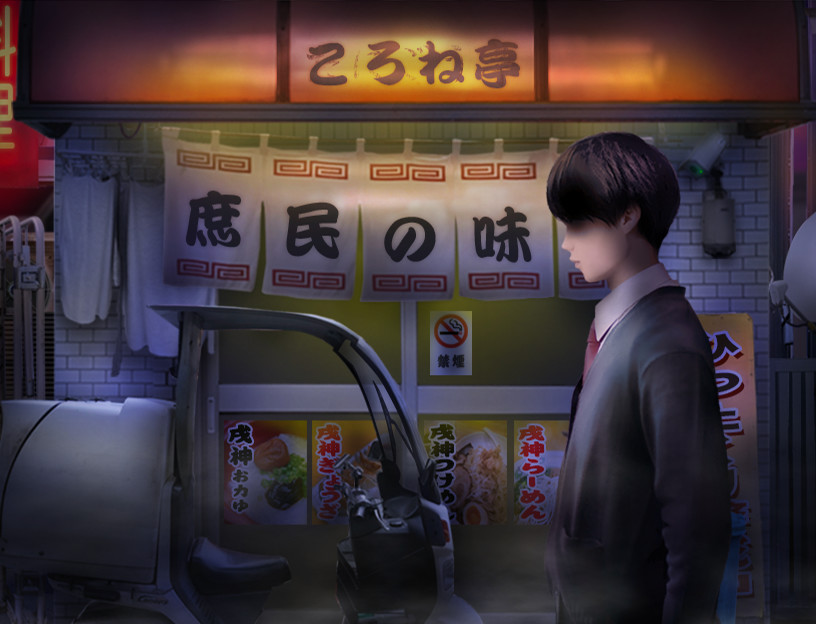
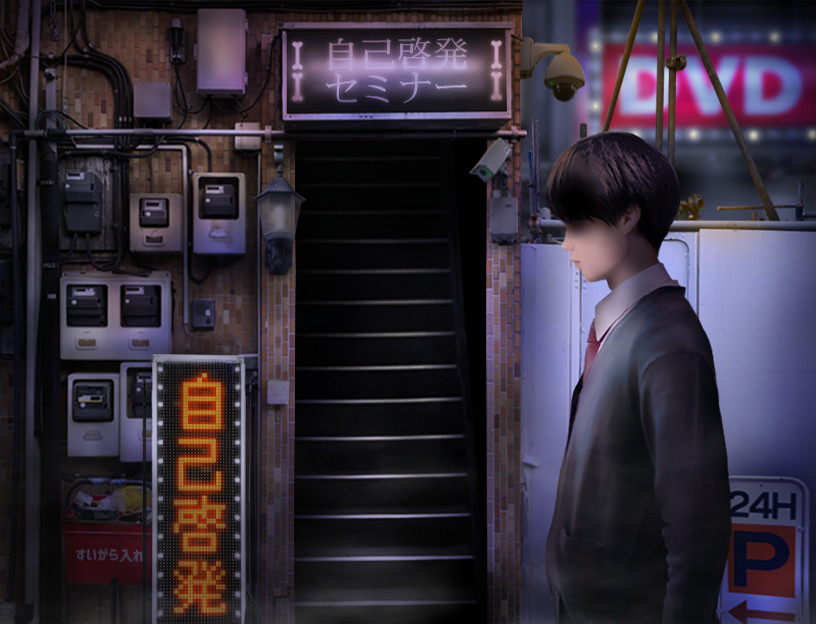
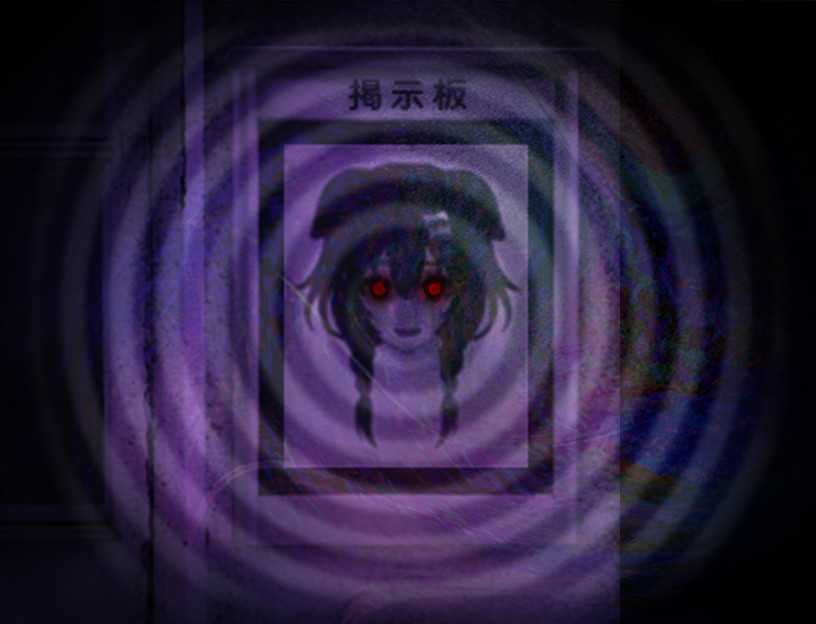
Evil God Korone is a short psychological horror experience that takes a deliberately ordinary routine and gradually twists it into something disturbing, surreal, and occasionally darkly amusing. Created by Vaka Game Magazine and ImCyan and published by Vaka Game Magazine, it belongs to the Tsugunohi style of horror, where complicated controls and traditional action mechanics are pushed aside in favor of repetition, environmental changes, and mounting dread. The collaboration with Hololive VTuber Inugami Korone gives the concept an especially unusual personality, transforming a recognizable entertainer into the supernatural force behind an increasingly corrupted world. The story begins with a male student making his routine journey home from school. Nothing initially suggests that his life is about to become a nightmare, but an encounter involving Korone soon changes the situation. After the protagonist says something in front of her sign, strange events begin invading his daily life. Korone's presence develops into that of an evil goddess, and what was once a familiar trip home becomes progressively more unsettling. The narrative does not depend on lengthy conversations or elaborate exposition. Instead, much of the story is communicated through what the player sees changing around the protagonist. Gameplay is intentionally straightforward. Most of the experience revolves around moving in one direction and watching the environment carefully. This sounds extremely limited compared with conventional horror games, but that restriction is fundamental to the design. The player repeatedly travels through familiar locations while subtle and eventually dramatic abnormalities appear. Something that seemed completely harmless during one passage might look different during the next, encouraging players to examine backgrounds, characters, objects, and shadows rather than simply rushing forward. Repetition becomes one of the game's strongest horror devices. Returning to similar scenery creates a sense of familiarity, and that familiarity makes every alteration more noticeable. The player knows that the environment is deteriorating but rarely knows exactly where the next disturbing change will appear. Since there is little ability to resist what is happening, the protagonist feels increasingly trapped inside an unavoidable routine. The result is a different kind of tension from survival horror. Instead of worrying about ammunition, enemies, or health, the anxiety comes from being forced to continue toward whatever disturbing sight is waiting ahead. The visual direction makes excellent use of this structure. The relatively normal appearance of the opening environments provides a baseline that can later be corrupted. As the supernatural influence grows stronger, ordinary scenery becomes increasingly unnatural, expressions become more disturbing, and grotesque imagery begins replacing the mundane atmosphere. The side-view presentation is particularly effective because the limited field of vision means the player never knows exactly what will enter the screen next. Korone's inclusion is much more than a decorative cameo. Her identity is incorporated directly into the horror, with recognizable characteristics and community references being reinterpreted through a sinister lens. The game's fixation on fingers is an obvious example, turning a familiar Korone-related joke into something considerably more macabre. Fans will naturally recognize more of these details, but familiarity with Hololive is not necessary to understand the central premise. Someone encountering Korone for the first time can still appreciate the increasingly bizarre supernatural scenario. Audio also contributes significantly to the tension. Because the player performs relatively few actions, environmental sounds, moments of silence, sudden effects, and changes in atmosphere become especially noticeable. The restrained presentation allows anticipation to develop naturally. Rather than filling every moment with noise or constant scares, the game often gives the player enough quiet time to become suspicious of what might happen next. When combined with the slowly changing visuals, this creates an effectively uncomfortable rhythm. The greatest weakness is also inseparable from the game's identity: mechanical depth is extremely limited. Players looking for puzzles, combat, extensive exploration, inventory systems, or meaningful character customization will not find them here. Progress is mostly linear, and the player's primary responsibility is to continue moving and observe the escalating horror. Anyone expecting a traditional adventure could therefore find the experience repetitive or overly passive. It is better viewed as an interactive horror story built around observation and atmosphere. Its compact nature also means that this is not designed to provide dozens of hours of content. The experience prioritizes a concentrated concept over length, which works well considering how heavily it depends on repeating and transforming the same basic routine. Additional material associated with replaying the experience provides some incentive to return after reaching the ending, making another run more worthwhile than simply seeing an identical sequence again. Steam Deck compatibility is officially listed as Unsupported. Players primarily interested in experiencing it on Valve's handheld should keep this limitation in mind rather than assuming that the simple controls automatically guarantee full compatibility. Its design may appear ideal for portable play, but the official Deck classification does not currently provide that assurance. Evil God Korone ultimately works best for players who enjoy unconventional horror where atmosphere matters more than mechanical complexity. Its repetitive movement, environmental corruption, unsettling imagery, and unusual use of Korone create an experience that is simultaneously strange, creepy, and knowingly playful. It will be too mechanically sparse for some players, but within its deliberately narrow design, it successfully turns an ordinary walk home into an increasingly uncomfortable nightmare. Rating: 8/10
Similar games
View all

Hollow Cocoon
"Trapped in a cocoon, the silkworm weaves her final dream." Hollow Cocoon is a first-person horror adventure game set in 1980s Japan. Immerse yourself in meticulously recreated environments as you venture into the depths of unspeakable horrors that await you.

The Cat Lady
The Cat Lady follows Susan Ashworth, a lonely 40-year old on the verge of suicide. She has no family, no friends and no hope for a better future. One day she discovers that five strangers will come along and change everything...

Prognostic
An orphan returns to the house of the deceased fortune-teller to uncover the secret of his family's death. He must accept his legacy and become a prognostic before supernatural madness engulfs people of his town.

Silence of the Sleep
You play as a man called Jacob Reeves. A man who has lost his reason to live. He throws himself into a blackness to end his misery, but instead of it being the end he wakes up without a memory of his life before.
Sally Face - Episode One
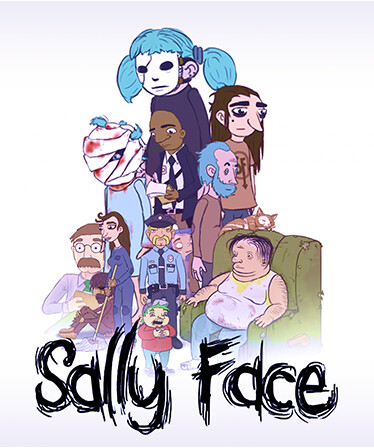
An unsettling adventure following a boy with a prosthetic face. After a string of mysterious murders, Sal and his three friends discover something truly sinister casting shadows over their small town.

Dead Secret
Dead Secret is a first-person horror mystery set in rural Kansas in 1965. A reclusive professor is dead and it’s up to you to crack the case before you become the next victim. Investigate the murder and explore the story Time Magazine called “captivating” and “deeply creepy” .


Alice's World
Alice's World is a story-driven 2D adventure puzzle game. Amidst desolate ruins and deserted cities in a world filled with death, the young girl Alice hears "your" voice from in front of the screen. You must guide her forward, solve the mysteries, and reach the top of the tower.

Pamali: Indonesian Folklore Horror
A narrative horror game set in the daily lives of Indonesian society. Interact with various mystical objects as you explore haunted places, unravel their lingering mysteries, and experience how Indonesian myth, taboo and culture, combined with your choices, shape the course of your nights.

The Final Take
Relive dark footage recorded from the perspective of multiple characters in this unique first person horror.

My Big Sister
My name is Luzia...and this story isn't about me, it’s about my sister. Do you still wish to hear it?
Frequently Asked Questions
Evil God Korone is currently priced at 1.99€ on Steam.
Yes, Evil God Korone is currently available at a 60% discount. You can purchase it for 1.99€ on Steam.
Yes, Evil God Korone received 461 positive votes out of a total of 486 achieving a rating of 8.79.
😎
Evil God Korone was developed by ImCyan and published by Vaka Game Magazine.
Yes, Evil God Korone is playable and fully supported on Windows.
No, Evil God Korone is not playable on MacOS.
No, Evil God Korone is not playable on Linux.
This information about Evil God Korone is not available yet.
This information about Evil God Korone is not available yet.
No, Evil God Korone does not support VR.
Evil God Korone is a single-player game.
No, Evil God Korone does not currently offer any DLC.
No, Evil God Korone does not support mods via Steam Workshop.
No, Evil God Korone does not support Steam Remote Play.
Yes, Evil God Korone is enabled for Steam Family Sharing. This means you can share the game with authorized users from your Steam Library, allowing them to play it on their own accounts. For more details on how the feature works, you can read the original Steam Family Sharing announcement or visit the Steam Family Sharing user guide and FAQ page.
You can find solutions or submit a support ticket by visiting the Steam Support page for Evil God Korone.
Data sources
The information presented on this page is sourced from reliable APIs to ensure accuracy and relevance. We utilize the Steam API to gather data on game details, including titles, descriptions, prices, and user reviews. This allows us to provide you with the most up-to-date information directly from the Steam platform.
Additionally, we incorporate data from the SteamSpy API, which offers insights into game sales and player statistics. This helps us present a comprehensive view of each game's popularity and performance within the gaming community.
Last Updates| Steam data | 18 September 2026 18:11 UTC |
|---|---|
| SteamSpy data | 20 October 2026 02:08 UTC |
| Steam price | 27 October 2026 19:29 UTC |
| Steam reviews | 18 October 2026 22:06 UTC |
If you'd like to dive deeper into the details about Evil God Korone, we invite you to check out a few dedicated websites that offer extensive information and insights. These platforms provide valuable data, analysis, and user-generated reports to enhance your understanding of the game and its performance.
- SteamDB - A comprehensive database of everything on Steam about Evil God Korone
- SteamCharts - Analysis of Evil God Korone concurrent players on Steam
- ProtonDB - Crowdsourced reports on Linux and Steam Deck Evil God Korone compatibility

Game modes
Features
Online players
0
Developer
ImCyan
Publisher
Vaka Game Magazine
Release
07 Nov 2021
Platforms
Clicking and buying through these links helps us earn a commission to maintain our services.