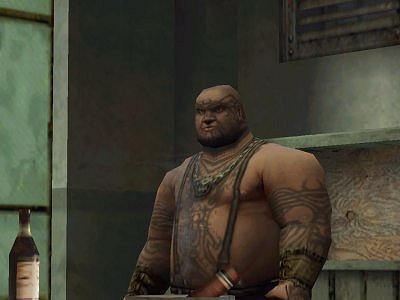
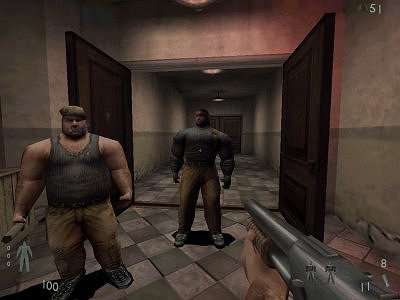
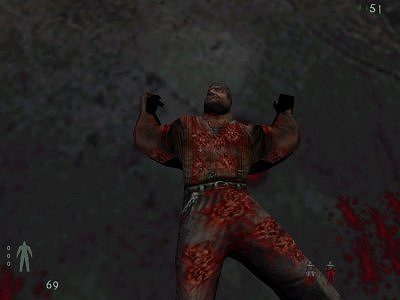
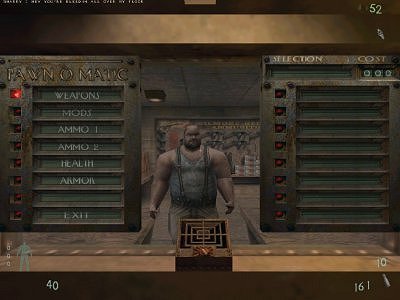
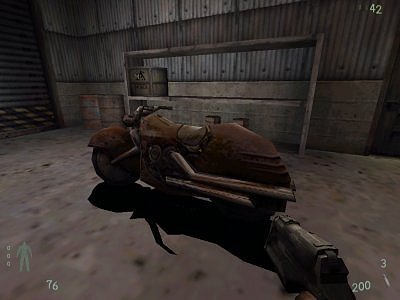
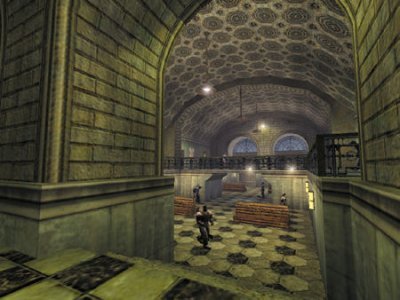
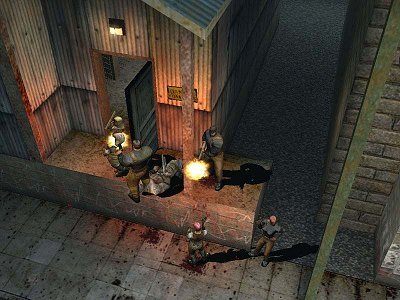
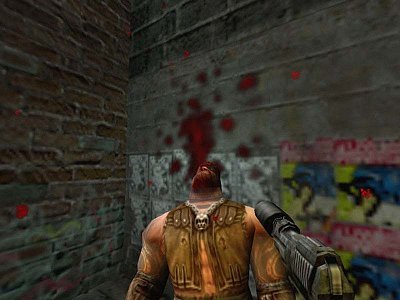
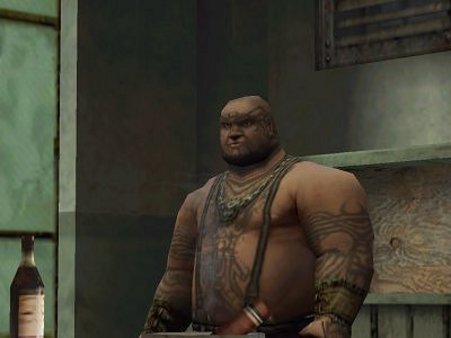
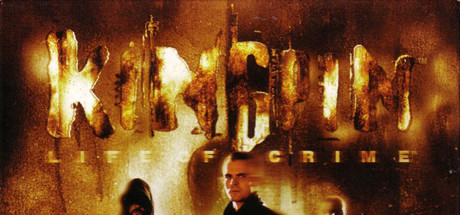
Kingpin: The Life of Crime is a first person shooter/”Tarantino Dialogue” simulator developed by Xatrix Entertainment, a studio whose previous work included the first person sci-fi action game series Cyberia alongside the first person shooter series Redneck Rampage and the Quake II expansion pack “Quake II: The Reckoning”. The reputation for their previous games would come out to mixed reception generally, though the Redneck Rampage series (which includes a hunting simulation spin-off and a racing game by another developer) would go on to have a decent amount of a cult following in the many years to come. As for the development of Kingpin, I haven’t really been able to find too much in terms of actual stories other than the obvious with rap group Cypress Hill’s involvement with the game’s sound design and an apparent tie-in with clothing maker Diesel at the time. However the actual story surrounding this game was the post Columbine era, an era which was marked down in infamy due to a violent and tragic school shooting. Outraged at the horrific nature of this senseless tragedy, parents and lawmakers would try to find any and all forms of excuses that could lead to such a thing: curse words, metal music, gangster rap and the topic here being video games. The likes of DOOM, Grand Theft Auto, Postal and more would be listed in various congressional hearings to be sure, as was Kingpin due to its level of violence and consistent use of profanity. Despite numerous calls for cancellation by members of Congress, the game would stand tall, all in spite of stores deciding not to stock it due to the controversy. With this in mind, how did I even hear about this game as a young, impressionable teenager at the time? Kingpin: The Life of Crime was one of those games in my library where I was unsure of where I don’t truly remember where I “learned” about it per se, just that I’ve known about it’s existence since before High School at least. I of course used to watch ScrewAttack Top 10 lists to learn about games though it’s possible that it could’ve been anywhere else. What I do remember about this game was just how electric it felt. A violent and edgy first person shooter where you play as a gangster trying to take over a dieselpunk criminal underworld, quoting Quentin Tarantino (whom I loved as a youth and still have a liking for his movies despite him being an IDF jester now) and soundtracked by the likes of Cypress Hill? What wasn’t to love as a youth and even now as an adult? It looked like a great time and having wanted to play it to fulfill my gaming “gangster” fantasies, I would purchase it on April 25th 2017 in a bundle with Quake II alongside Blood & Bacon before kind of playing it on and off for the next several years due to getting quite frankly stuck in terms of where I was supposed to go. I would eventually finish the game in February of 2021 having streamed it for some buddies, and now it’s one of the games that I just wanna go back through and talk about because I know at some point I’ll pick up the awful remaster because I’m stupid as hell. Still, before I talk about a horrible port, let’s talk about why you should play the original game first! For most of review: https://backloggd.com/u/gamemast15r/review/4254632/ Now it breaks down to the gameplay: how does it hold up compared to other first person shooters? Is there anything that differentiates it from others? Well yes, other than the first person shooting as expected for a game of this type on the old Quake engine, the game portrays itself as more of a “hub” based shooter with NPCs to talk to. You have a main objective for sure, but there are side quests you can do for money, weapons and health and using the aforementioned money to hire bodyguards and modify your weapons/buy ammo. I think this aspect is cool, and while it sucks I can’t hire more than two bodyguards, I do appreciate the idea of hiring goons to help me fight other mooks on the crusty streets as a part of a sort of gang war. You can mainly hire these guys at the local dive bar, though you’re not allowed to shoot anyone inside so expect to holster your guns until you get back out. These guys can carry anything from pipes to machine guns later on and it feels pretty damn good, and I valued currency alone just to get these guys and some good weapon mods, which luckily you can get money through looting dead bodies in case you’re in need of some extra dough. I like the idea of a little hub like this, it makes the game feel more RPG-like even if it’s technically not, and it’s even cooler that some of these guys have different roles (i.e. “safecracker” for example). That being said, I should really get into the actual meat of the gameplay: shooting, A.I. tracking, level design. Starting with the aforementioned A.I. movements, I feel that it’s both good and kind of bad in the sense that everyone can jump around and climb the environments the same way you can, which is rare in a time period where games just wouldn’t let NPCs move around in the same way. Having your goons climb up ladders to follow you around and jump on ledges to keep up with you and it’s genuinely a fascinating feat to witness, especially when I learned that the guy who programmed the A.I. also programmed the “EraserBot” for Quake II? Holy Hell. That being said, there are limits such as when they’re stupid enough to block your way every now and then (resulting in me getting stuck to where I had to shoot/kill them sometimes or reload a previous save in certain areas) or when they don’t come with you to another area due to loading screens unless they’re right next to you which is frustrating. Also the shooting is satisfying in some ways due to the weapon mods and bodyguard action alongside the admittedly great weapon sounds, you can kind of tell that it gets a bit spongey if you don’t keep up with your stuff and they can whittle you down REALLY quickly. On top of that there isn’t a full body armor system as much as there is a limb based armor system for your head, chest and legs, which is cool as a concept when you’re blowing away dude’s limbs but got really annoying quickly from what I remembered? Nothing was as frustrating as the level design, which I had mixed feelings for in a lot of ways. I’m not sure if it was just me or not, but I remember getting lost several times trying to figure out where I was going and what I was supposed to do and would look up Youtube playthroughs to get a sense of any direction at all. That being said though, I do feel like Kingpin is a fun time once you get in the groove of things as shooting bad guys and rummaging through corpses with your hired goons is a feeling that not a lot of games can give you. It’s just a bit janky and spongey, though before I finish this section off I’ll give some advice: stick to the shotgun, Tommy Gun and Heavy Assault Rifle if you can, and avoid the melee weapons and definitely the flamethrower. The Melee Weapons are okay if you have no ammo in anything but it’s still spongey and the flamethrower is hit or miss with it’s frames ironically enough, to the point where I got more burnt than anything. Links: https://web.archive.org/web/20011111115759/http://www.gmistudios.com/Friends.htm https://web.archive.org/web/20020205103557/http://www.gmistudios.com/Story.htm https://en.wikipedia.org/wiki/Kingpin:_Life_of_Crime https://tcrf.net/Kingpin:_Life_of_Crime https://www.gamespot.com/articles/kingpin-returning-to-a-life-of-crime/1100-6093647/ https://tvtropes.org/pmwiki/pmwiki.php/VideoGame/KingpinLifeOfCrime https://en.wikipedia.org/wiki/Gray_Matter_Studios https://www.youtube.com/watch?v=_93Rux9-pvU (Trailer) https://www.youtube.com/watch?v=ttL62YRUfvs https://downloads.khinsider.com/game-soundtracks/album/kingpin-life-of-crime-original-soundtrack-1999 https://www.youtube.com/watch?v=pN4UqwN3iSw https://www.imdb.com/title/tt0301511/ https://www.ign.com/articles/2004/04/16/new-kingpin-coming
Expand the review