

Vertical Slice: A Game Dev Story
From nobody to famous game producer in 3 years: that’s the journey you will live! Experience the trials and tribulations of game development in this life simulation game: live through the process of founding a small team and learning how to work together to develop a successful game.
Sync your Steam wishlist to find the lowest game prices instantly. No login required, just paste your Steam profile URL!
⚡ Try Wishlist Radar!
Sync your Steam wishlist to find the lowest game prices instantly. No login required!
⚡ Try Wishlist Radar!
Close

Office Life on Steam
Quick menu
Dive into a massive 2-million-word immersive life sim. Use card-based strategies to survive office politics, rise from a rookie intern to a business tycoon, and find true love. Career, Romance, Wealth—why choose when you can have it all?
Office Life is a story rich, life sim and dating sim game
developed by LeiYun Games
and published by 2P Games.
Released on December 17th 2024 is available on Windows, MacOS, Steam Deck and Steam Machine
in 2 languages: Simplified Chinese and Traditional Chinese.
It has received 1,731 reviews of which 1,506 were positive and 225 were negative resulting in a rating of 8.3 out of 10. 😎
The game is currently priced at 19.50€ on Steam, but you can find it for 9.50€ on Eneba.
The Steam community has classified Office Life into these genres:
Story Rich
Life Sim
Dating Sim
Cute
Cinematic
Time Management
RPG
Deckbuilding
Choices Matter
Simulation
Strategy
Comic Book
2D
Lore-Rich
Relaxing
Realistic
Psychological Horror
Funny
Multiple Endings
Card Battler
Here is the detailed breakdown of supported languages for Office Life:
| UI | Subtitle | Audio | |
|---|---|---|---|
| Simplified Chinese | |||
| Traditional Chinese |
Media & Screenshots
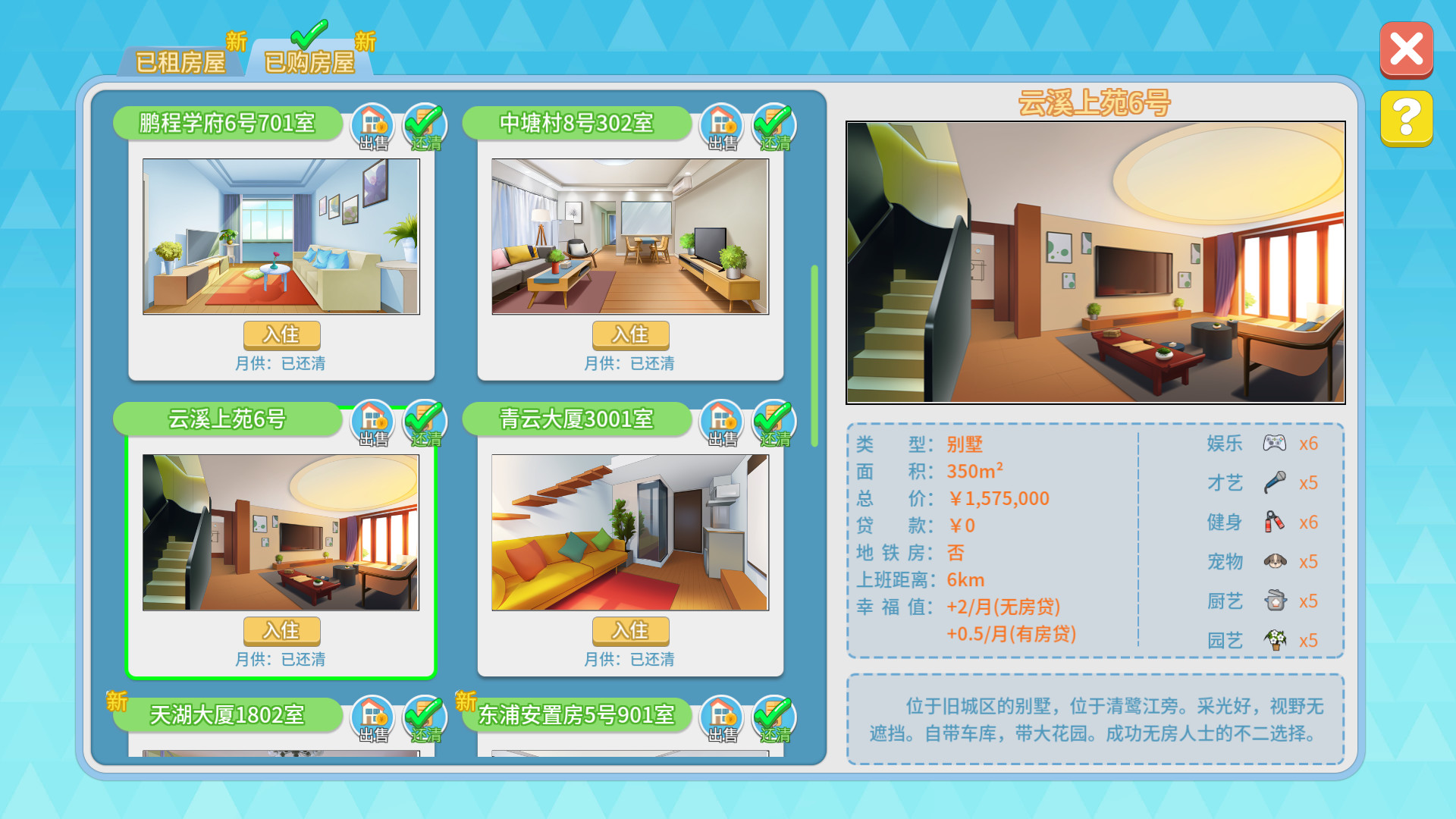
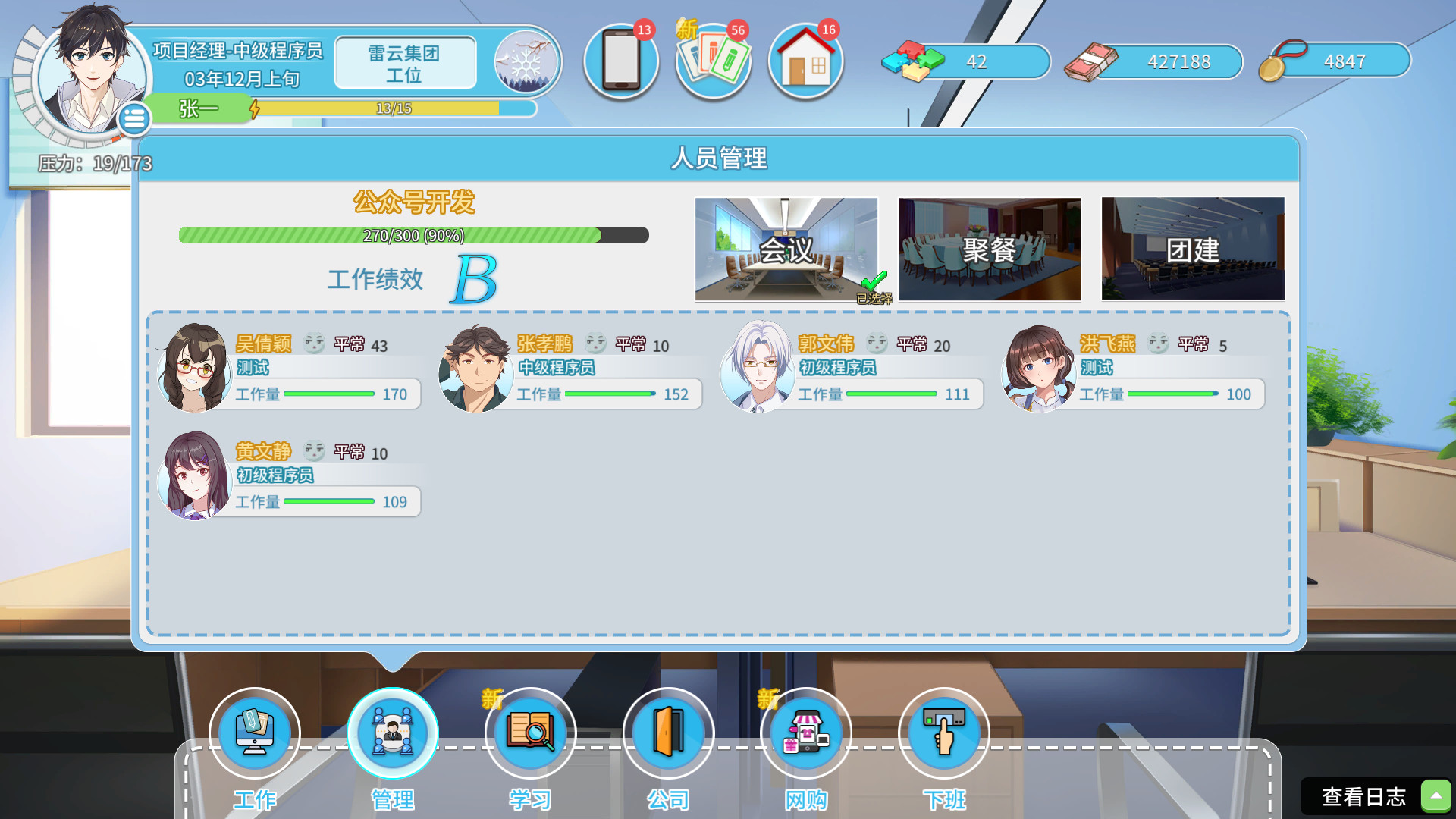
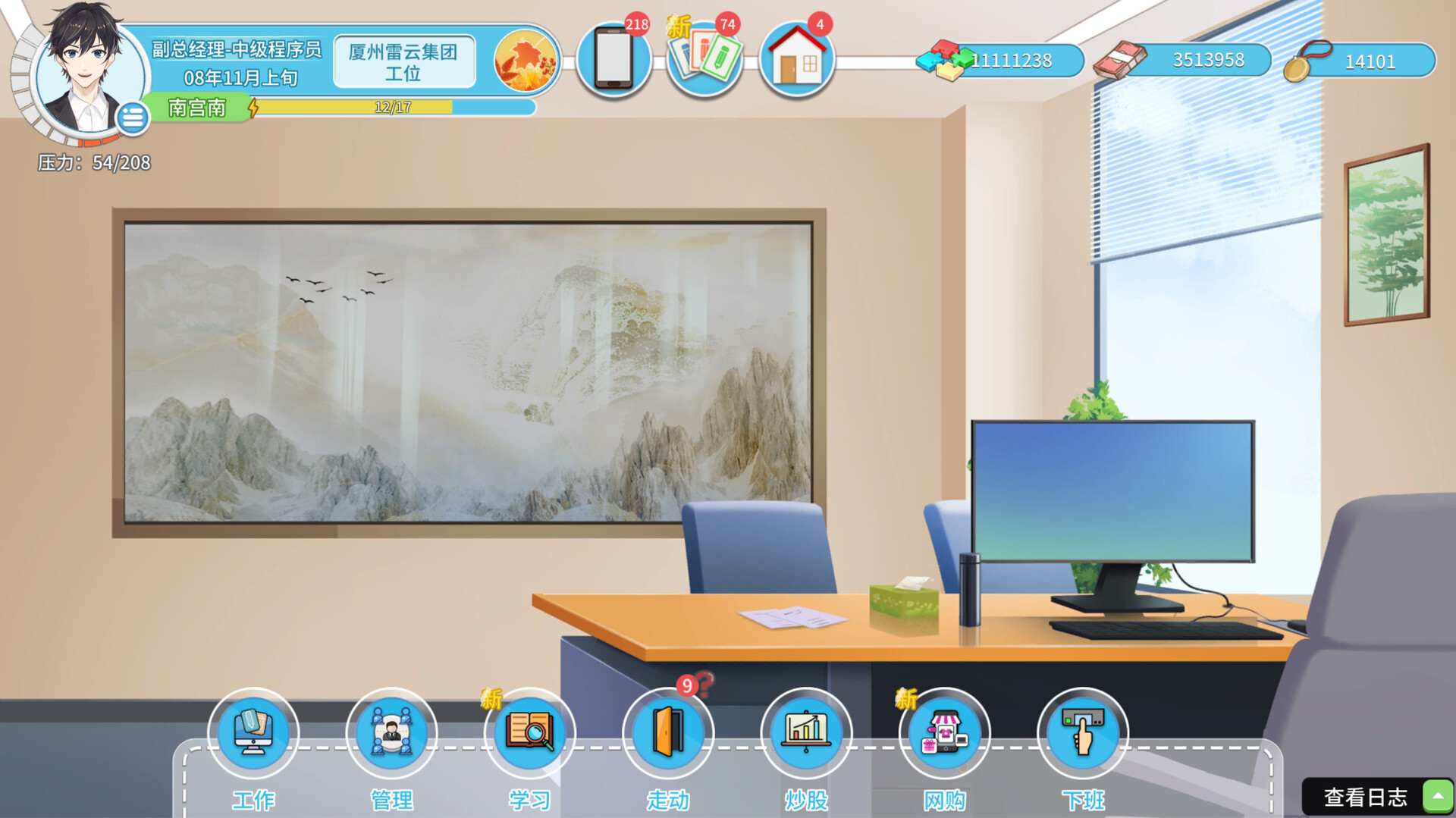
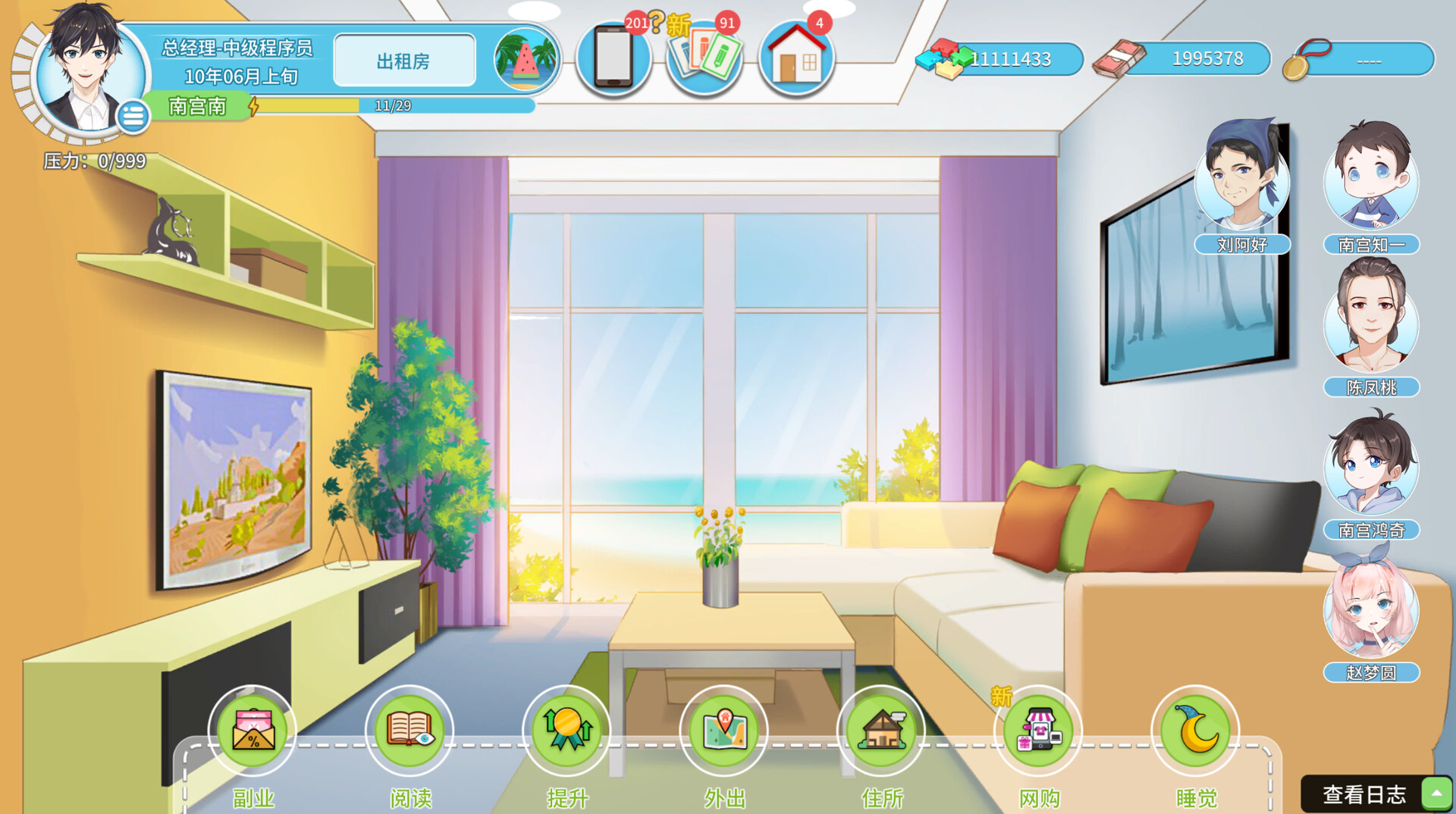
Get an in-depth look at Office Life through various videos and screenshots.


Load More


System requirements
These are the minimum specifications needed to play the game. For the best experience, we recommend that you verify them.
Windows
- Requires a 64-bit processor and operating system
- OS: Windows10
- Processor: 1.8 GHz Intel Core i5 or equivalent
- Memory: 4 GB RAM
- Graphics: Intel(R) HD Graphics 630 or equivalent
- DirectX: Version 11
- Storage: 3 GB available space
- Sound Card: N/A
MacOS
- OS: Mac OS X 10.11 or higher
- Processor: Intel Core i5-3210M (2 * 2500)
- Memory: 4 GB RAM
- Graphics: Intel HD Graphics 530
- Storage: 3 GB available space
Steam Price & Best Deals
User reviews & Ratings
Explore reviews from Steam users sharing their experiences and what they love about the game.
Office Life presents adulthood as a sprawling combination of career ambition, personal relationships, financial management, and strategic decision-making. Developed by LeiYun Games and published by 2P Games, it goes considerably further than the typical workplace simulator by following a fresh graduate through years of professional and personal development. Instead of simply earning promotions and watching numbers increase, the experience asks players to determine what success actually means for their character. Wealth, romance, entrepreneurship, family, professional influence, and personal freedom are all viable priorities, giving the simulation a surprisingly broad sense of progression. The workplace is where many of its most interesting ideas come together. Corporate life is portrayed as a mixture of cooperation, competition, politics, difficult clients, demanding bosses, project battles, and occasionally questionable behavior from colleagues. Hundreds of NPCs can become useful allies, friends, rivals, or enemies depending on how situations are handled. This helps the office feel more like a social ecosystem than a simple collection of missions. Choosing whom to support and deciding when to cooperate or protect your own interests can influence the direction of a career, making interpersonal relationships almost as important as professional competence. Its most distinctive mechanic is the card-based approach to workplace conflicts. More than 500 cards represent different actions and behaviors, including working overtime, slacking off, reporting problems, and other tactics associated with surviving corporate life. Building a deck essentially becomes a representation of the protagonist's developing professional abilities. Encounters with troublesome clients, colleagues, and bosses consequently involve actual strategic decisions rather than being resolved entirely through dialogue. It is an unconventional concept, but one that gives otherwise mundane office situations a playful RPG-like structure. Career development extends well beyond earning a better job title. Players can rise through an industry or eventually establish their own company and compete in commercial battles. Financial progression is similarly flexible, with stocks and real estate providing alternatives to relying exclusively on a salary. This creates a satisfying long-term transformation from an inexperienced graduate with limited resources into someone capable of accumulating considerable wealth and influence. The zero-to-hero structure works particularly well because professional, financial, and social advancement develop alongside one another rather than existing as completely separate systems. There is also plenty to do outside the office. Side activities include writing web novels, streaming, and delivering food, while leisure pursuits allow the protagonist to exercise, travel, and gradually afford increasingly luxurious possessions. Cars and expensive homes become visible signs of progress, but players are not forced to define success exclusively through material wealth. Balancing work against recreation becomes another part of shaping the character's lifestyle, and the variety of available activities helps prevent the corporate theme from dominating every aspect of the experience. Relationships provide another major branch of the simulation. Across a ten-year in-game timeline, several women can be encountered and pursued through individual events and storylines. Romantic decisions can eventually lead to marriage, children, and family life, while alternative choices allow for considerably more complicated relationships. Because these developments occur alongside careers and finances, romance feels connected to the protagonist's broader journey rather than functioning as an isolated dating minigame. Choices made during one stage of life can therefore contribute to a very different situation several years later. The enormous branching narrative is one of the game's defining strengths. With the developers describing more than two million words of narrative material, there is a substantial amount of dialogue, character interaction, and alternate storytelling to discover. Multiple approaches to employment, business, romance, wealth, and relationships provide strong replay potential. The downside is that this is necessarily a text-heavy experience. Players who prefer constant action may find its slower rhythm demanding, while those who enjoy lengthy simulations and choice-driven storytelling are much more likely to appreciate the amount of material available. Language accessibility is particularly important. English is not currently supported according to the Steam store information, while Simplified Chinese and Traditional Chinese are supported for the interface and subtitles. Considering how heavily the experience depends on understanding conversations, cards, decisions, and narrative events, this represents a substantial barrier for players who cannot comfortably read either supported language. The developers also disclose the use of AI-assisted artwork based on their own visual style for a small number of characters appearing toward the later stages of the game, which may be worth knowing for players who consider AI-generated content when purchasing games. Steam Deck compatibility is less straightforward. The Steam page does not currently display an official Valve Steam Deck compatibility rating, so it should be considered unverified rather than confidently described as Verified or Playable. The game's largely interface-driven, card-based, and narrative-focused design could conceptually suit portable play, but actual controller behavior, text readability, input requirements, and overall SteamOS reliability may vary. Anyone buying specifically for Steam Deck should therefore expect that adjustments or experimentation could be necessary rather than assuming complete handheld compatibility. Ultimately, this is an impressively ambitious life simulation that turns an ordinary premise into a surprisingly elaborate journey through adulthood. Its combination of deckbuilding, corporate politics, investment, entrepreneurship, romance, family development, side hustles, and lifestyle management gives players numerous ways to construct their own version of success. Not every individual system can achieve the complexity of a game devoted entirely to that mechanic, but their interconnected nature is what makes the overall experience interesting. For players comfortable with its supported languages and extensive reading, the mixture of strategic workplace gameplay and long-term life simulation provides something genuinely distinctive. Rating: 8/10
Similar games
View all

Magical Princess
Raise your daughter while she attends a magical academy. Choose which classes she attends, jobs she does, training she undergoes, and more in a character raising sim packed full of story and over 50 endings to reach. How she grows up to be the world's cutest princess depends on you!

I Was a Teenage Exocolonist
Spend your teenage years on an alien planet in this narrative RPG with card-based battles. Explore, grow up, and fall in love. The choices you make and skills you master over ten years will determine the course of your life and the survival of your colony.

Volcano Princess
Prepare the next monarch by finding her hobbies, training her for battle, and befriending the citizens she'll one day protect. Dive into an all-new parenting-simulator-RPG adventure, where every decision you make will not only affect the future of your daughter but that of an entire empire!

Wishful Journey:Love Across Time
Xu yuan, who was a loser in real life traveled to an ancient palace. By transforming into the male protagonist, players will be in love with many beauties with different personalities, such as the unruly princess, the cold female assassin, embark on a love adventure that spans time and space.

High School Odyssey
A campus simulation game full of tons of surprising interactive gameplay elements along the way.

Little Sim World
Welcome to Little London! Little Sim World is a cosy 2D life sim set in the heart of a little city full of charm, dreams, and surprises. Design your perfect home, meet quirky locals, build your routine, and live life at your own pace. A gentle world, a fresh start, and a story only you can write!

小白兔电商~Bunny e-Shop
Experience a hilarious and adorable e-commerce game in a magical world where humans and monsters are at war. Help a humble rabbit fairy expand her online store selling homegrown carrots. Uncover hidden secrets while growing the business and becoming a successful entrepreneur.

Growing Up
This is the story of your life. Experience the entire journey from toddler to adulthood. Go to schools, learn new things, meet new friends, and have wild adventures! Every choice you make will influence your future career, and decide who your romantic partner will be. Who will you become?

Tales of Seikyu
A peaceful farming life sim set on the island of Seikyu. Grow your farm, restore your ancestral home, form heartfelt bonds with villagers, and shapeshift into different spirit forms to explore a world that moves gently with the seasons.

Motesolo : No Girlfriend Since Birth
On a late afternoon in Seoul, you discover two people talking at a local cafe, and you spy on their conversation.

Boyfriend Dungeon
Date your weapons! Romance swords, daggers, and polearms to level them up in this “shack-and-slash” dungeon crawling adventure.
Frequently Asked Questions
Office Life is currently priced at 19.50€ on Steam.
No, Office Life is currently not on sale. You can purchase it for 19.50€ on Steam.
Yes, Office Life received 1,506 positive votes out of a total of 1,731 achieving a rating of 8.31.
😎
Office Life was developed by LeiYun Games and published by 2P Games.
Yes, Office Life is playable and fully supported on Windows.
Yes, Office Life is playable and fully supported on MacOS.
No, Office Life is not playable on Linux.
Yes, Office Life is playable on Steam Deck, though it might require a few minor tweaks. Make sure to check the Steam store page and community feedback on ProtonDB for exact compatibility details.
Yes, Office Life is playable on Steam Machine, though it might require a few minor tweaks. Make sure to check the Steam store page and community feedback on ProtonDB for exact compatibility details.
No, Office Life does not support VR.
Office Life is a single-player game.
No, Office Life does not currently offer any DLC.
Yes, Office Life is fully integrated with Steam Workshop. Visit Steam Workshop.
No, Office Life does not support Steam Remote Play.
Yes, Office Life is enabled for Steam Family Sharing. This means you can share the game with authorized users from your Steam Library, allowing them to play it on their own accounts. For more details on how the feature works, you can read the original Steam Family Sharing announcement or visit the Steam Family Sharing user guide and FAQ page.
You can find solutions or submit a support ticket by visiting the Steam Support page for Office Life.
Data sources
The information presented on this page is sourced from reliable APIs to ensure accuracy and relevance. We utilize the Steam API to gather data on game details, including titles, descriptions, prices, and user reviews. This allows us to provide you with the most up-to-date information directly from the Steam platform.
Additionally, we incorporate data from the SteamSpy API, which offers insights into game sales and player statistics. This helps us present a comprehensive view of each game's popularity and performance within the gaming community.
Last Updates| Steam data | 13 October 2026 05:09 UTC |
|---|---|
| SteamSpy data | 16 October 2026 10:12 UTC |
| Steam price | 26 October 2026 20:07 UTC |
| Steam reviews | 22 October 2026 17:53 UTC |
If you'd like to dive deeper into the details about Office Life, we invite you to check out a few dedicated websites that offer extensive information and insights. These platforms provide valuable data, analysis, and user-generated reports to enhance your understanding of the game and its performance.
- SteamDB - A comprehensive database of everything on Steam about Office Life
- SteamCharts - Analysis of Office Life concurrent players on Steam
- ProtonDB - Crowdsourced reports on Linux and Steam Deck Office Life compatibility

Game modes
Features
Online players
36
Developer
LeiYun Games
Publisher
2P Games
Release
17 Dec 2024
Platforms
Clicking and buying through these links helps us earn a commission to maintain our services.