


RetroSpace
Immersive, disco-punk, space horror where you can be a sneaky chap or a mutant action hero as you try to survive on a space station swallowed by a black hole. A mind-bending ride with weird creatures, immersive features, time jumps, and '70s mustaches!
Sync your Steam wishlist to find the lowest game prices instantly. No login required, just paste your Steam profile URL!
⚡ Try Wishlist Radar!
Sync your Steam wishlist to find the lowest game prices instantly. No login required!
⚡ Try Wishlist Radar!
Close

Prey on Steam
Quick menu
In Prey, you awaken aboard Talos I, a space station orbiting the moon in the year 2032. You are the key subject of an experiment meant to alter humanity forever – but things have gone terribly wrong. The space station has been overrun by hostile aliens and you are now being hunted.
Prey is a sci-fi, immersive sim and space game
developed by Arkane Studios
and published by Bethesda Softworks.
Released on May 04th 2017 is available only on Windows.
It has received 51,033 reviews of which 46,381 were positive and 4,652 were negative resulting in a rating of 8.9 out of 10. 😎
The game is currently priced at 5.99€ on Steam with a 80% discount, but you can find it for 3.40€ on K4G.
The Steam community has classified Prey into these genres:
Media & Screenshots
Get an in-depth look at Prey through various videos and screenshots.


Load More


System requirements
These are the minimum specifications needed to play the game. For the best experience, we recommend that you verify them.
Windows
- Requires a 64-bit processor and operating system
- OS *: Windows 7/8/10 (64-bit versions)
- Processor: Intel i5-2400, AMD FX-8320
- Memory: 8 GB RAM
- Graphics: GTX 660 2GB, AMD Radeon 7850 2GB
- Storage: 20 GB available space
Steam Price & Best Deals
User reviews & Ratings
Explore reviews from Steam users sharing their experiences and what they love about the game.
This is a long one, so I’m putting TL;DR at the start ;) TL;DR: Prey is a game I almost completely misjudged in its opening hours. My first impressions weren’t particularly good, and yet, I’m putting it among my all-time Top 10 games. Talos I is one of the best environments I’ve ever explored, packed with secrets, interconnected spaces and some of the best environmental storytelling I’ve encountered. Prey rewards curiosity and trusts you to figure things out yourself. It isn’t flawless, but what it does well scratches so many of the exact itches I look for that anything less than 10/10 would feel wrong. I went into Prey almost completely blind. I knew it took place on a space station, and that was pretty much it. Very early on, exploring it reminded me of Resident Evil 2, one of my favorite games from my favorite franchise. Not because the games are particularly similar, but because they scratch the same itch. You find locked doors, inaccessible rooms, computers you can’t hack and objects you can’t move. You make a mental note and continue. Hours later you find something new and think, “Wait. There was that room…” Except comparing Talos I to the RPD eventually becomes ridiculous because Talos I is huge. The more I explored, the more areas I discovered, yet the station remained remarkably interconnected. I never knew exactly where everything was, but I started recognizing routes and remembering important places. What makes exploring it even better is that the obvious solution is frequently just one solution. You might find a keycard for a room you’ve already looted because hours earlier you found another way inside. Finding those keycards afterwards became strangely satisfying. “Oh. So THAT’S how normal people were supposed to get in.” Prey rewards curiosity constantly. One of my favorite secrets involved information I encountered early in the game that seemed unimportant. Hours later I found another piece elsewhere, made the connection myself, returned to a place I’d visited long before and tried something. It worked. A hidden compartment opened with valuable items and additional lore. That perfectly summarizes what Prey does so well. There was no objective telling me where to go or character explaining the clue. The game gave me information and trusted me to remember it. I made the connection. That feels completely different from simply following a highlighted solution. That attention to detail extends to the people who lived aboard Talos I. The environmental storytelling is easily among the best I’ve encountered. I read everything: emails, notes, computers, audio logs. Eventually there was so much interconnected information that I wondered whether I should have started taking notes several hours earlier. These aren’t just exposition dumps. You find relationships, arguments, friendships, hobbies and personal problems. You can follow little stories across the station and recognize names you’ve encountered before. There are people playing games together, coworkers discussing each other and relationships that have nothing to do with the main story. Even seemingly insignificant mechanics made sense in ways I didn’t expect. I spent hours wondering why the game allowed me to lock doors after unlocking them. Why would I ever do that? Eventually I learned why in the worst possible way. I won’t spoil the circumstances, but let’s just say the world doesn’t stop functioning because Morgan isn’t in the room. I was very annoyed. I also thought it was awesome. That became a recurring feeling. Occasionally something inconvenienced me, only for me to discover a logical reason for it within the world. A gameplay restriction I initially found frustrating had an in-universe explanation while also preventing me from exploiting a progression system too early. Instead of arbitrary, it became another piece of Talos I’s story. The progression systems took some time to click. Early on, I wondered whether Prey had too many: neuromods, recycling, fabrication, upgrades, scanning, human and alien abilities, tools and grenades. That concern disappeared as I learned how everything fit together. Junk becomes material through recycling, materials feed fabrication, neuromods form the core of progression, scanning opens new possibilities and tougher enemies make those hoarded tools useful. Each system found its place. Prey gives you a toolbox and lets you decide how to use it. Unfortunately, even my new all-time Top 10 game needed something I could complain about: combat. I didn’t particularly enjoy fighting things. The smallest enemies were especially annoying because they’re fast, difficult to hit on a controller and seemingly designed specifically to irritate me. Better weapons and upgrades helped, and learning enemy weaknesses convinced me to use all those grenades and gadgets I’d been hoarding, but combat mostly became easier rather than better. Thankfully, the story gave me plenty of reasons to keep going. I’ll keep this vague, but my understanding of the characters and their motivations changed repeatedly. People I distrusted started making sense. Things I thought I understood became more complicated. New information made me reconsider earlier events. The ending continued that philosophy. It answered enough while leaving me plenty to think about. I finished with questions, but they were questions I wanted to think about rather than things the writers had forgotten to explain. The side content plays a huge role too, frequently adding context to people and events discovered elsewhere. The achievements made it obvious I missed a lot. There are people I didn’t save, secrets I didn’t discover and apparently entire approaches I barely touched. For a game this dense, Prey is remarkably thoughtful about keeping you oriented. The objectives menu separates the stories you’re following, summarizes what you’ve discovered and reminds you what to do next. If you’ve discovered a necessary code, the game surfaces it when needed rather than expecting you to remember a random number from an email three hours earlier. Small feature, huge difference. Visually, Prey still looks great. It isn’t chasing photorealism, and it doesn’t need to. Talos I has a strong identity and individual areas feel distinct. Some of my favorite moments came from navigating outside the station in zero gravity. Seeing Talos I, the Sun and planets around you while moving through space is gorgeous. The sound design deserves praise too, with small details like weapons behaving differently acoustically outside the station. There are a few things I’d improve. Loading screens between major sections became noticeable, even if understandable for a game of its age. Controller aiming desperately needed better assistance, particularly against small enemies. And the amount of lore can become difficult to track, although “there was so much interesting information I wanted to remember all of it” isn’t exactly harsh criticism. And that’s the strange thing about Prey. It’s not a 10 because every component is perfect. It clearly isn’t. It’s a 10 because the things it does exceptionally well are some of the things I value most: exploration, environmental storytelling, lore, interconnected level design, player agency and systems that feel like they belong in the world. Most importantly, Prey trusts you. To explore. To experiment. To remember something you read hours earlier. To find your own way through a locked door instead of waiting for the key. Sometimes that curiosity reveals a secret. Sometimes it connects pieces of a story you didn’t realize were related. And sometimes because you didn’t think there was any reason to lock the doors. Oops.
The single most underrated game I've ever played. Went completely under the radar and didn't deserve to. Incredible soundtrack, great gameplay, loads of creative weapons, tons of powers, multiple endings, multiple routes to objectives etc. Just incredible. "Alex's Theme" will haunt your dreams.
Similar games
View all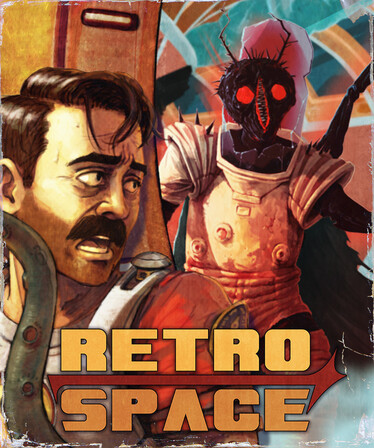

Spirits of Xanadu
At the farthest edge of the explored universe, the research ship Xanadu slumbers in orbit around a mysterious planet. Her systems remain active but there has been no message from her crew for months. Now a lone operative has been sent to wake the Xanadu and bring her home to Earth.
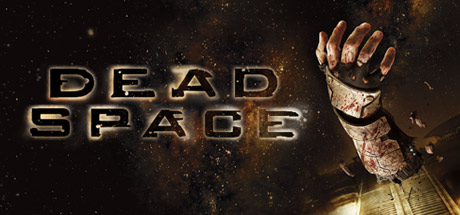
Dead Space (2008)
You are Isaac Clarke, an engineer on the spacecraft USG Ishimura. You're not a warrior. You're not a soldier. You are, however, the last line of defense for the remaining living crew.
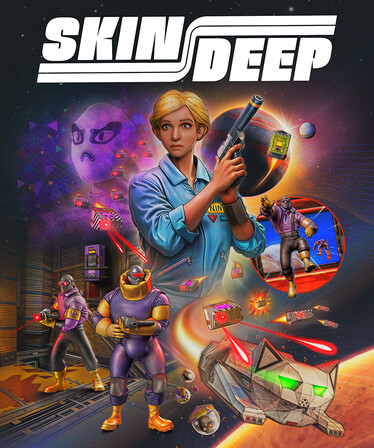
Skin Deep
Skin Deep is an immersive first-person shooter. We got sneezing. We got things getting stuck in your feet. Stalk through a vast non-linear starship and sneak, subvert, and sabotage to survive in this stellar sandbox. You're outnumbered, outgunned, and have no shoes. Welcome to Skin Deep!

BioShock 2 Remastered
In BioShock 2, you step into the boots of the most iconic denizen of Rapture, the Big Daddy, as you explore through the decrepit and beautiful fallen city, chasing an unseen foe in search of answers and your own survival.
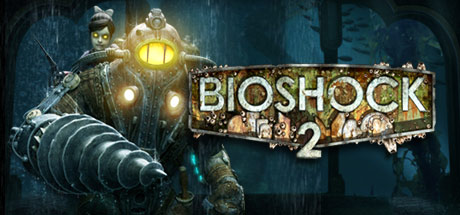
BioShock 2
Set approximately 10 years after the events of the original BioShock, the halls of Rapture once again echo with sins of the past. Along the Atlantic coastline, a monster has been snatching little girls and bringing them back to the undersea city of Rapture.

System Shock 2: 25th Anniversary Remaster
System Shock® 2: 25th Anniversary Remaster is a genre defining experience that established innovative game-play mechanics that are a staple of the FPS and RPG genre today. Survive the wretched corridors of the Von Braun. Your training has prepared you for this.

BioShock Remastered
BioShock is a shooter unlike any other, loaded with unique weapons and tactics. Complete with an arsenal of revolvers, shotguns, and grenade launchers, players will be forced to genetically modify their DNA to become an even deadlier weapon.

ΔV: Rings of Saturn
A physics-based mining sim, set in the thickest debris field in Sol. Every action has a reaction, lasers are invisible without a medium, and your thrust is a potent weapon. Find trade, adapt your equipment to your playstyle, hire a crew to help. Unravel the mysteries of the rings, or just get rich.
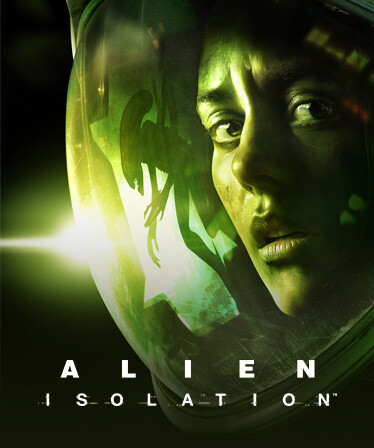
Alien: Isolation
Discover the true meaning of fear in Alien: Isolation, a survival horror set in an atmosphere of constant dread and mortal danger.

Singularity
FIGHT THE PAST TO SAVE THE FUTURE. STOP THE SINGULARITY. Learn the truth behind a massive cover-up of the catastrophic SINGULARITY, an event that fractured time and threatens the world as we know it. Armed with powerful, advanced weaponry and the experimental Time Manipulation Device, fight enemies from the past, the present, and...

Metal Garden
Travel through an overgrown megastructure, and discover what lies beyond it. Metal Garden is a short, atmospheric singleplayer FPS game.
Frequently Asked Questions
Prey is currently priced at 5.99€ on Steam.
Yes, Prey is currently available at a 80% discount. You can purchase it for 5.99€ on Steam.
Yes, Prey received 46,381 positive votes out of a total of 51,033 achieving a rating of 8.93.
😎
Prey was developed by Arkane Studios and published by Bethesda Softworks.
Yes, Prey is playable and fully supported on Windows.
No, Prey is not playable on MacOS.
No, Prey is not playable on Linux.
This information about Prey is not available yet.
This information about Prey is not available yet.
No, Prey does not support VR.
Prey is a single-player game.
Yes, there are 2 DLCs available for Prey. Explore additional content available for Prey on Steam.
No, Prey does not support mods via Steam Workshop.
Yes, Prey supports Remote Play on TV. Discover more about Steam Remote Play.
Yes, Prey is enabled for Steam Family Sharing. This means you can share the game with authorized users from your Steam Library, allowing them to play it on their own accounts. For more details on how the feature works, you can read the original Steam Family Sharing announcement or visit the Steam Family Sharing user guide and FAQ page.
You can find solutions or submit a support ticket by visiting the Steam Support page for Prey.
Data sources
The information presented on this page is sourced from reliable APIs to ensure accuracy and relevance. We utilize the Steam API to gather data on game details, including titles, descriptions, prices, and user reviews. This allows us to provide you with the most up-to-date information directly from the Steam platform.
Additionally, we incorporate data from the SteamSpy API, which offers insights into game sales and player statistics. This helps us present a comprehensive view of each game's popularity and performance within the gaming community.
Last Updates| Steam data | 27 September 2026 02:01 UTC |
|---|---|
| SteamSpy data | 13 October 2026 04:00 UTC |
| Steam price | 26 October 2026 20:03 UTC |
| Steam reviews | 21 October 2026 16:09 UTC |
If you'd like to dive deeper into the details about Prey, we invite you to check out a few dedicated websites that offer extensive information and insights. These platforms provide valuable data, analysis, and user-generated reports to enhance your understanding of the game and its performance.
- SteamDB - A comprehensive database of everything on Steam about Prey
- SteamCharts - Analysis of Prey concurrent players on Steam
- ProtonDB - Crowdsourced reports on Linux and Steam Deck Prey compatibility


Game modes
Features
Online players
263
Developer
Arkane Studios
Publisher
Bethesda Softworks
Release
04 May 2017
Platforms
Remote Play
Clicking and buying through these links helps us earn a commission to maintain our services.