
Mouthwashing
The five crew members of the Tulpar are stranded in the empty reaches of space, shrouded in perpetual sunset. God is not watching.
Sync your Steam wishlist to track the lowest game prices instantly. No login required, just paste your Steam profile URL!
⚡ Try Wishlist Radar!
Sync your Steam wishlist to track the lowest game prices instantly. No login required!
⚡ Try Wishlist Radar!
Close

Revenge Of The Colon on Steam - User reviews, Price & Information
Quick menu
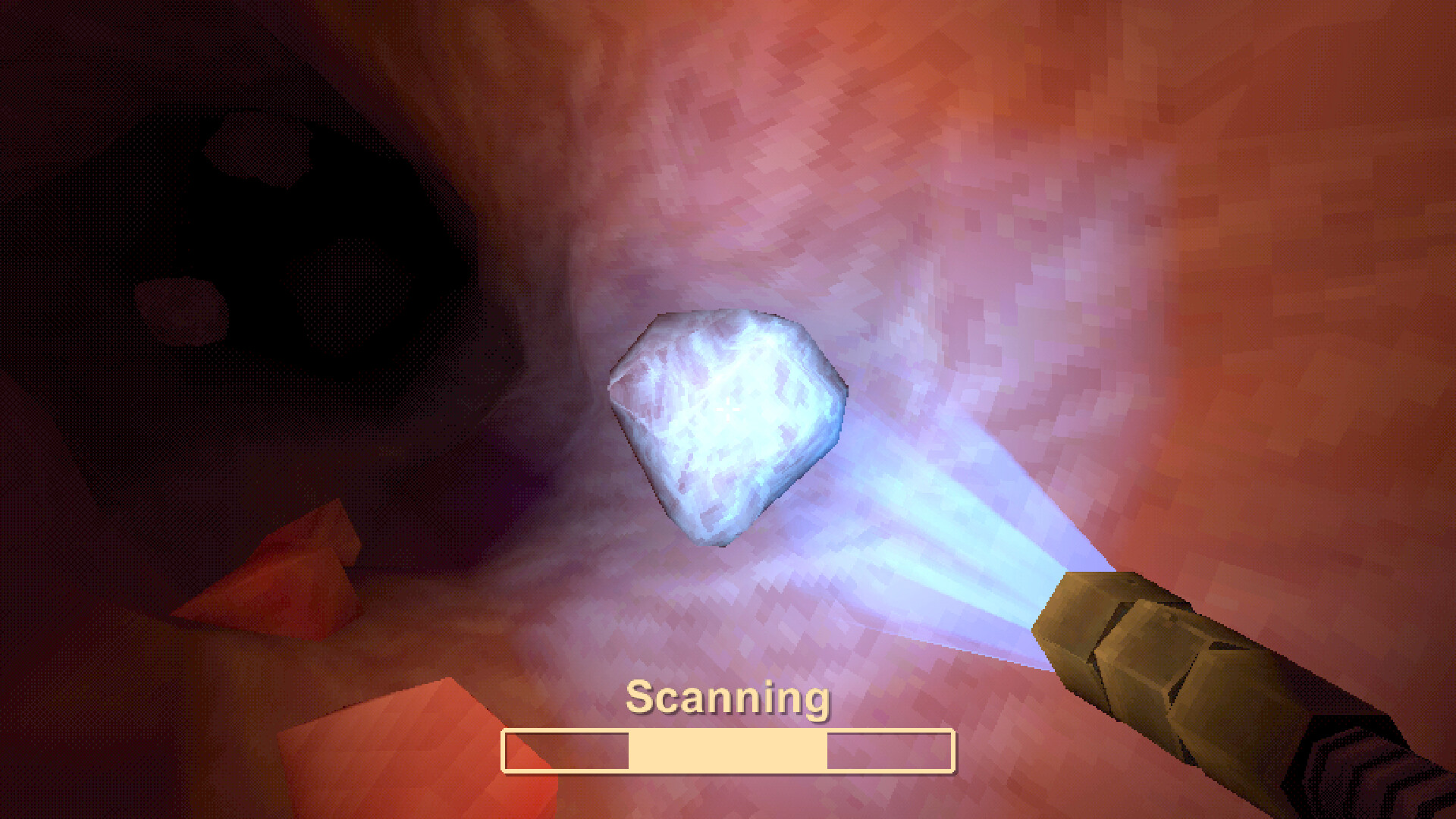
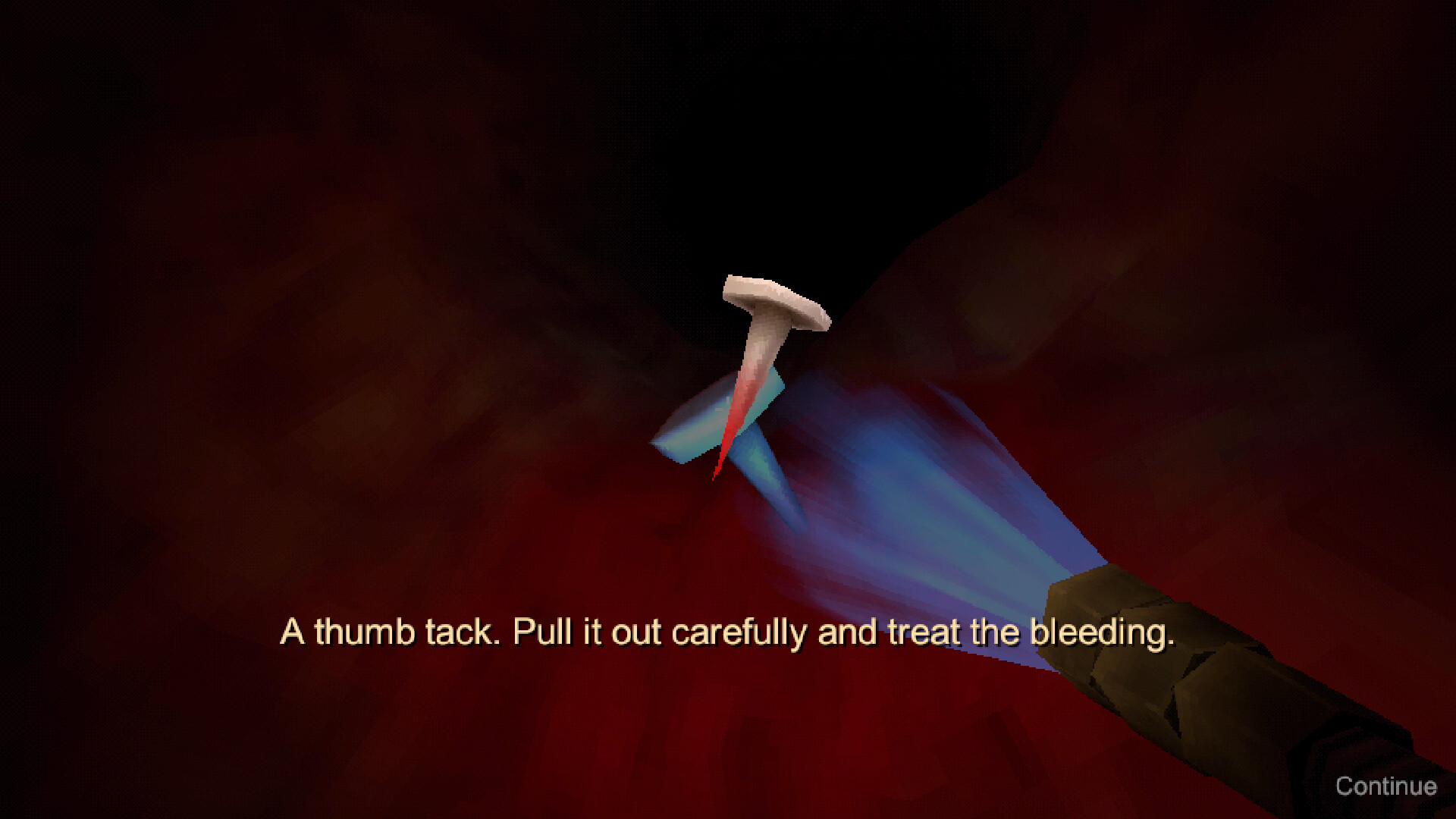
Revenge of the colon is a story driven, single-player, atmospheric, body horror game with multiple endings. Perform colonoscopies on five patients and discover the horrors concealed deep within them. PS1 horror style!
Revenge Of The Colon is a horror, atmospheric and surreal game
developed and published by Lilou Studio.
Released on December 22nd 2023 is available on Windows, Steam Deck and Steam Machine
in 29 languages: English, French, German, Spanish - Spain, Japanese, Korean, Polish, Portuguese - Brazil, Russian, Simplified Chinese, Traditional Chinese, Turkish, Italian, Bulgarian, Czech, Danish, Dutch, Finnish, Greek, Hungarian, Indonesian, Norwegian, Portuguese - Portugal, Romanian, Spanish - Latin America, Swedish, Thai, Ukrainian and Vietnamese.
It has received 344 reviews of which 298 were positive and 46 were negative resulting in a rating of 8.0 out of 10. 😎
The game is currently priced at 13.49€ on Steam.
The Steam community has classified Revenge Of The Colon into these genres:
Media & Screenshots
Get an in-depth look at Revenge Of The Colon through various videos and screenshots.



System requirements
These are the minimum specifications needed to play the game. For the best experience, we recommend that you verify them.
Windows
- Requires a 64-bit processor and operating system
- OS *: Windows 7 (SP1+), Windows 10 and Windows 11
- Processor: Any 64bit processor from the last 10 years or so
- Memory: 4 GB RAM
- Graphics: Any
- Storage: 200 MB available space
- Sound Card: Any
- Additional Notes: There is a high chance it works on your computer.
Steam Price & Best Deals
User reviews & Ratings
Explore reviews from Steam users sharing their experiences and what they love about the game.
Подумывал учиться на врача! После этой игры я передумал и теперь я остерегаюсь больници и клоунов с цирками! Спасибо большое! На любителя! I was thinking about studying to be a doctor! After this game, I changed my mind and now I'm wary of hospitals, clowns, and circuses! Thank you very much! It's an acquired taste!
Revenge Of The Colon is an unconventional indie horror experience that turns a medical procedure into the foundation for a surprisingly unsettling adventure. Developed and published by Lilou Studio, the game casts you as an experienced gastroenterologist facing a particularly strange final week at work. Instead of relying on haunted buildings, supernatural forests, or familiar survival-horror locations, it finds its source of fear inside the human body. The concept sounds deliberately absurd, but the game commits to it seriously enough to create genuine discomfort, curiosity, and tension. The campaign revolves around five patients, with each case functioning as its own chapter. Your responsibility is to perform colonoscopies, investigate suspicious abnormalities, and use appropriate medical tools when treatment is required. These procedures initially provide something resembling a professional routine, but normal medical expectations quickly begin falling apart. Every new patient pushes the premise further into disturbing territory, creating the constant feeling that the next discovery could be considerably worse than the last. Exploration is simple but effective because of the unusual environment. Moving through narrow internal passages naturally creates a claustrophobic atmosphere, particularly when visibility is limited and the player cannot immediately identify what lies ahead. Progress encourages careful observation rather than fast movement. Discovering something abnormal can generate a peculiar mixture of curiosity and dread because investigation is both your responsibility and the reason you must continue toward increasingly unpleasant sights. The medical tools give the game more substance than a purely narrative walking simulator. You are expected to interact with problems discovered during examinations instead of merely observing them. The mechanics are not designed to reproduce every technical detail of real gastroenterology, however. They serve the horror experience first, providing believable enough context for the increasingly surreal events surrounding each patient. Anyone approaching the game expecting a serious medical simulator should therefore adjust those expectations. Its body horror is easily the most distinctive element. Blood, medical imagery, disturbing abnormalities, and grotesque organic environments are fundamental parts of the presentation. The game also touches on uncomfortable subject matter involving abnormal consumption of non-food objects. These elements are not simply decorative gore placed between conventional scares. They are integrated directly into the patient's condition and the player's responsibilities, making the disturbing imagery difficult to separate from the gameplay itself. The retro visual direction complements this approach remarkably well. Its low-poly, PS1-inspired graphics deliberately sacrifice modern realism for rough shapes, distorted surfaces, and an unsettling sense of ambiguity. Organic environments can become more disturbing because they are not represented with clinical photorealism. The player's imagination has room to interpret unclear shapes and textures, and that uncertainty frequently works in the game's favor. Character models and environments similarly reinforce the strange atmosphere without requiring technically advanced graphics. Narratively, the five-patient format provides enough variety to keep the central concept interesting. Each case can introduce a different problem while contributing to the escalating mystery surrounding the protagonist's final week. There is a noticeable progression from unusual medical situations toward increasingly surreal horror, and the compact chapter structure prevents individual scenarios from becoming unnecessarily prolonged. Multiple endings add an important layer of replayability. Decisions and performance can influence how particular cases conclude, while the overall adventure can also reach different outcomes. This makes completing a procedure feel more consequential because success is not necessarily limited to reaching the end of a predetermined sequence. Players interested in discovering every possibility have an incentive to revisit earlier cases and approach certain situations differently. The game is nevertheless deliberately focused in scope. There is no enormous open world, elaborate combat system, extensive character-building framework, or endless collection of side activities. Most of its appeal comes from atmosphere, unusual interactions, narrative escalation, and the anticipation surrounding each examination. Players who prefer lengthy horror campaigns filled with combat may find the experience mechanically modest. Those who appreciate experimental indie horror are more likely to consider its concentrated structure an advantage. Steam Deck compatibility is a notable advantage. The game is officially Steam Deck Verified, with its core functionality working through the handheld's controls and its interface remaining usable on the smaller display. Controller prompts and general navigation are appropriately supported, while the game can run using settings suitable for the device. Its viewpoint and methodical pacing also translate naturally to portable play, although demanding visual settings can still make sensible performance adjustments worthwhile for players prioritizing battery life or consistent performance. Sound and visual presentation work together to strengthen the uncomfortable atmosphere. The medical environment creates an expectation of safety and professionalism that contrasts effectively with the bizarre situations encountered during examinations. Rather than constantly overwhelming the player with conventional jump scares, much of the tension comes from wondering what will appear farther along the procedure. That slower anticipation suits the game's strange premise better than relentless action would. Its biggest limitation is also connected to its greatest strength. The entire experience is built around an extremely specific form of medical body horror, so players who dislike internal anatomy, surgical imagery, blood, or grotesque physical abnormalities may find it difficult to enjoy regardless of its other qualities. The mechanics are also intentionally uncomplicated, meaning the novelty of the setting carries a significant portion of the experience. Fortunately, the variety between patients and alternative outcomes helps keep that novelty alive. Revenge Of The Colon ultimately succeeds because it fully embraces a concept that could easily have been reduced to a crude joke. It transforms colonoscopy into an eerie form of exploration while combining medical interactions, retro graphics, disturbing imagery, branching outcomes, and surreal storytelling. It is compact, bizarre, occasionally grotesque, and unquestionably aimed at a particular audience, but it possesses a creative identity that many larger horror games struggle to establish. For players comfortable with its subject matter and interested in unusual PS1-style indie horror, this is a memorable descent into one of gaming's least conventional environments. Rating: 8/10
Fascinating, disturbing, weird (and somehow benthic?) medical/walking simulator borrowing gameplay mechanics from mining games and visual novels which finds itself RIGHT up my alley (pun intended). Deeply intriguing, arse-penetrating horror that i'm totally here for. I thought it would be a mediocre gimmick game with a few cheap thrills but instead i found a rather well executed indie surreal horror game. One explores cavernous, fleshy corridors that twist and pulse with organic unease, using familiar mechanics like resource scanning, careful navigation through hazardous “tunnels,” that reveal layers of body horror and psychological dread. What begins as a gimmicky concept quickly evolves into something far more ambitious. The surreal atmosphere is thick with tension, dripping with grotesquely organic. Every dripping aberration and throbbing surface feels deliberate, turning what could have been cheap shock value into genuine, arse-penetrating horror that leaves an impression.
Really great atmosphere and pretty relaxing and interesting game over all. It doesn't overstay it's welcome and isn't too hard to get all the achievements. I was able to finish the game twice, get both endings, and all four achievements in a little less than 4 hours. Not a bad way to waste some time.
You are a doctor that makes colonoscopies for some of the most delusional and freaky patients (they remind me of the ones in the show "My Strange Addiction"). Every patient you treat can change their outcome depending on how you clean and get rid of foreign aliments inside their intestines. You can act as a caring and professional gastroenterologist, or be the worst non-licensed doctor that consults Wikipedia for every single medical condition. One thing that genuinely impressed me in this game is the story. Every dialogue between the doctor and the patients is well written in my opinion. You may find the gameplay a bit slow, a bit repetitive, absolutely revolting, but Revenge of the Colon will live in your mind for a long time.
Similar games
View all

Pathologic 3
In this psychological horror game, you are a doctor with only 12 days to save a town from a mysterious plague. Make ruthless decisions and diagnose with precision. Shape the town's future and rewrite the past. Hold yourself together while it all falls apart.

Static Dread: The Submarine
Descend into Lovecraftian horror aboard a claustrophobic military submarine. Assign tasks as a captain’s right hand, analyze sonar signals, make hard decisions, and keep the crew from madness. Dark horrors lurk both within… and beyond the hull.

DISTRAINT 2
You are Price, a man who sold his humanity to get a partnership from a leading company: McDade, Bruton & Moore. DISTRAINT 2 follows on from the events of the first game. It's a sinister tale about restoring hope and finding your purpose.


Cat Named Mojave
Stranded in the desert, your only hope of escaping rests in a strange Catman. His one request: hunt down surreal creatures, skin them, and chop them up so he can keep them as trophies.


How Fish Is Made
Are sardines trustworthy? Are you? Do you want to be? How Fish is Made is a janky little jaunt through the world of surrealist storytelling. Now featuring a Katamari-like DLC!

Layers of Fear 2 (2019)
A first‑person psychological horror game set on a haunted ocean liner. As an actor summoned by an unorthodox director, you’ll confront twisted memories from your past and learn the price of achieving the perfect performance.

Layers of Fear (2016)
A first-person psychological horror with a strong emphasis on atmosphere and storytelling. Explore an ever-shifting Victorian mansion as a painter seeking to complete his masterpiece, even at the cost of his own sanity.

Lost in Vivo
A horror game about claustrophobia. During a storm your service dog is forced down a broken sewer drain. You find the nearest sewer entrance and run in after it. Along the way you will meet others that are also stricken by abnormal or psychological fear.

Fears to Fathom - Norwood Hitchhike
Holly Gardner, a 19 year old on an interstate drive experiences unusual happenings that leads to an unplanned stay at a motel, little did she know what was transpiring down in Norwood Valley.
Frequently Asked Questions
Revenge Of The Colon is currently priced at 13.49€ on Steam.
No, Revenge Of The Colon is currently not on sale. You can purchase it for 13.49€ on Steam.
Yes, Revenge Of The Colon received 298 positive votes out of a total of 344 achieving a rating of 8.03.
😎
Revenge Of The Colon was developed and published by Lilou Studio.
Yes, Revenge Of The Colon is playable and fully supported on Windows.
No, Revenge Of The Colon is not playable on MacOS.
No, Revenge Of The Colon is not playable on Linux.
Yes, Revenge Of The Colon is playable and fully supported on Steam Deck.
Yes, Revenge Of The Colon is playable and fully supported on Steam Machine.
No, Revenge Of The Colon does not support VR.
Revenge Of The Colon is a single-player game.
No, Revenge Of The Colon does not currently offer any DLC.
No, Revenge Of The Colon does not support mods via Steam Workshop.
No, Revenge Of The Colon does not support Steam Remote Play.
Yes, Revenge Of The Colon is enabled for Steam Family Sharing. This means you can share the game with authorized users from your Steam Library, allowing them to play it on their own accounts. For more details on how the feature works, you can read the original Steam Family Sharing announcement or visit the Steam Family Sharing user guide and FAQ page.
You can find solutions or submit a support ticket by visiting the Steam Support page for Revenge Of The Colon.
Data sources
The information presented on this page is sourced from reliable APIs to ensure accuracy and relevance. We utilize the Steam API to gather data on game details, including titles, descriptions, prices, and user reviews. This allows us to provide you with the most up-to-date information directly from the Steam platform.
Additionally, we incorporate data from the SteamSpy API, which offers insights into game sales and player statistics. This helps us present a comprehensive view of each game's popularity and performance within the gaming community.
Last Updates| Steam data | 07 September 2026 09:15 UTC |
|---|---|
| SteamSpy data | 05 September 2026 10:06 UTC |
| Steam price | 12 September 2026 18:20 UTC |
| Steam reviews | 11 September 2026 11:48 UTC |
If you'd like to dive deeper into the details about Revenge Of The Colon, we invite you to check out a few dedicated websites that offer extensive information and insights. These platforms provide valuable data, analysis, and user-generated reports to enhance your understanding of the game and its performance.
- SteamDB - A comprehensive database of everything on Steam about Revenge Of The Colon
- SteamCharts - Analysis of Revenge Of The Colon concurrent players on Steam
- ProtonDB - Crowdsourced reports on Linux and Steam Deck Revenge Of The Colon compatibility

Game modes
Features
Online players
2
Developer
Lilou Studio
Publisher
Lilou Studio
Release
22 Dec 2023
Platforms