
Silent Hunter : Wolves of the Pacific
Hunt, hide and kill as you take command of U.S. submarines and crews and navigate the treacherous waters of the Pacific during WWII. Silent Hunter, the industry-leading naval warfare simulation franchise for over a decade, returns to its roots with next-generation graphical realism, immersive gameplay, innovative crew evolution and more...
Sync your Steam wishlist to find the lowest game prices instantly. No login required, just paste your Steam profile URL!
⚡ Try Wishlist Radar!
Sync your Steam wishlist to find the lowest game prices instantly. No login required!
⚡ Try Wishlist Radar!
Close

Silent Hunter® III on Steam
Quick menu
The king of submarine simulations returns with an all-new 3D engine, new crew command features, and more realistic WWII naval action than ever before. The movie-like graphics and simple, tension-filled gameplay make this the perfect game for the realism fanatic and the casual gamer.
Silent Hunter® III is a naval combat, simulation and submarine game
developed and published by Ubisoft.
Released on June 13th 2008 is available only on Windows.
It has received 2,442 reviews of which 2,145 were positive and 297 were negative resulting in a rating of 8.4 out of 10. 😎
The game is currently priced at 4.99€ on Steam.
The Steam community has classified Silent Hunter® III into these genres:
Media & Screenshots
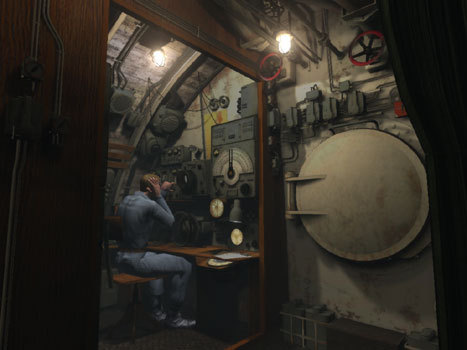
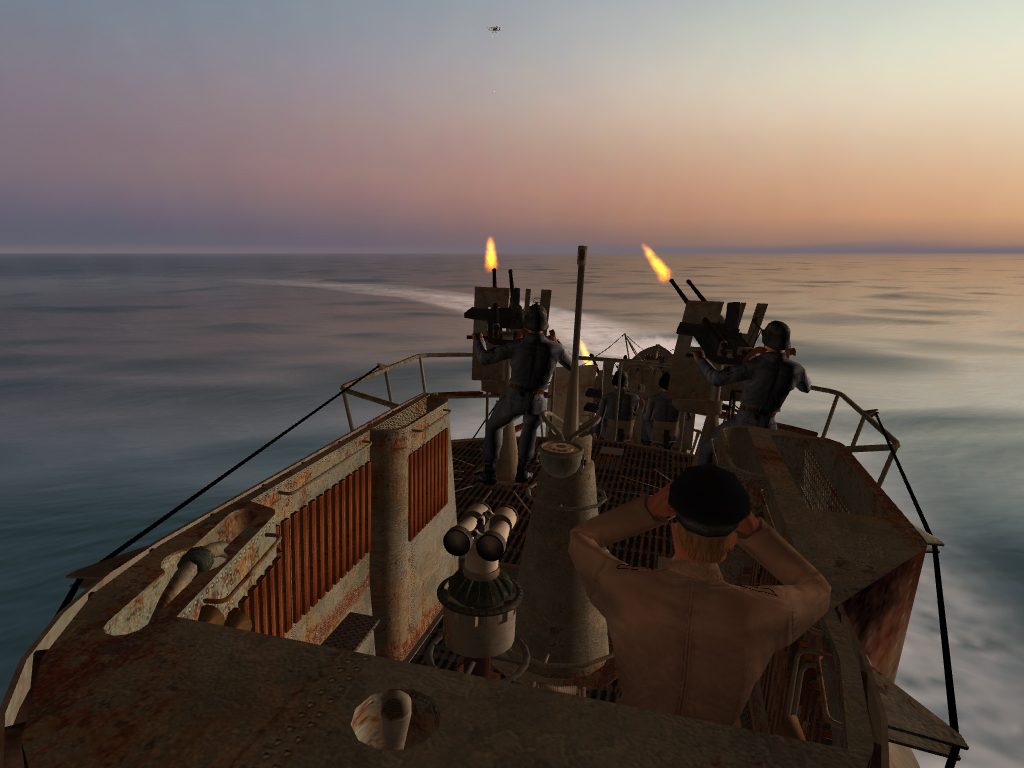
Get an in-depth look at Silent Hunter® III through various videos and screenshots.




System requirements
These are the minimum specifications needed to play the game. For the best experience, we recommend that you verify them.
Windows
- OS *: Windows 2000 / XP(only)
- Processor: Pentium® III 1.4 GHz or AMD Athlon™ 1.4 GHz (Pentium 4 2.0 GHz or AMD Athlon 2.0 GHz recommended)
- Memory: 512 MB
- Graphics: 64 MB (128 MB video card recommended)(see supported list*)
- DirectX Version: DirectX 9.0
- Sound: Direct X 9.0 compliant PCI card
- Hard Drive: 1.5 GB
- *Supported Video Cards at Time of Release Nvidia® GeForce™ 3/4/FX series (GeForce 4 MX NOT supported)ATI® Radeon® 8500/9000 families or newer
Laptop versions of these chipsets may work but are not supported. These chipsets are currently the only ones that will run this game.
Steam Price & Best Deals
User reviews & Ratings
Explore reviews from Steam users sharing their experiences and what they love about the game.
Do not play this game unless you play with the GWX Knight's Cross Edition megamod, which makes the game playable on modern systems and widescreen monitors. I've owned this game since its original release back in 2005, before steam existed. So let's just say Steam's estimate on my hours played is woefully inaccurate. I also play with the aforementioned (free) megamod and SH3 Commander which makes it playable outside of the Steam Client. My real playtime must run into a few thousand hours. When SH3 first game out in 2005 it was a fairly mediocre U-boat sim upgraded from its predecessor. But the vanilla game felt like an empty world, with empty ports, and although more immersive than its earlier renditions, it needed a lot of work. Then from the Subsim modding community came the Grey Wolves Expansion (GWX) which turned the game into far and away the best submarine simulator game ever made, if you don't mind playing the German side in the Battle of the Atlantic during WW2. SH4 shifted focus to the American side in the Pacific War, which just wasn't as interesting, and then SH5 went back to its roots giving us much better graphics, but a much crappier game that was more or less abandoned by the developers as soon as it was released. Even with megamods such as The Wolves of Steel (TWOS) keeping SH5 alive, it just wasn't the same. Never mind, we still had SH3 and the GWX expansion, right? But as time went on, computer systems got better, operating systems changed, monitors went widescreen, and SH3 even with GWX began to get old and not as functional on modern computers without an awful lot of work. For quite a few years it had slipped by the wayside and became all but a distant memory of how good things had once been. Fast forward to 2026 and thanks to the Subsim modding community's passion and dedication, the full glory of SH3 with GWX is perfectly playable again, and fully upgraded to widescreen monitors with the GWX Knight's Cross Edition megamod. SH3 is back on top! Do not play this game without it.
Without a doubt, this game is the best entry in the Silent Hunter series. In my humble opinion, no other installment captures the atmosphere of the third one. It’s a perfect blend of music, ambient sounds, crew voices, and the constant pressure from destroyers — a combination that keeps me coming back again and again. Like fine wine, this game only gets better with age. It reminds me of the days when Ubisoft still knew how to make truly great games. Thanks for my childhood — the best subsim ever!
Silent Hunter III is a highly detailed World War II submarine simulation developed and published by Ubisoft, with development led by Ubisoft Romania. Released in 2005 for PC, the game quickly became one of the most respected entries in the long-running Silent Hunter franchise and remains widely regarded as one of the most immersive submarine simulations ever created. Unlike many action-focused war games, Silent Hunter III emphasizes authenticity, patience, and tactical thinking. Players are placed in the role of a German U-boat commander during the Battle of the Atlantic, experiencing firsthand the challenges of underwater warfare in one of the most dangerous and strategically important theaters of World War II. The game begins with the player assuming command of a German submarine in the Kriegsmarine, the naval arm of Nazi Germany. The campaign typically starts in the early stages of the war, when German submarines were highly effective against Allied shipping. From the outset, the player is responsible for leading their submarine and crew through multiple patrol missions across the Atlantic Ocean. Rather than presenting a rigid set of scripted missions, the game uses a dynamic campaign system that simulates naval activity across the entire Atlantic theater. Convoys travel between ports, naval escorts patrol shipping lanes, and the war progresses according to historical timelines. This system creates a living battlefield where every patrol can unfold differently depending on the player’s actions and the unpredictable movement of enemy ships. During each patrol, players are assigned a designated grid sector of the Atlantic to monitor. Once there, they are free to operate independently within that region, searching for enemy merchant vessels and convoys transporting supplies to Allied nations. Much of the gameplay revolves around locating targets using hydrophones, visual observation, and careful navigation. Because the ocean is vast and ships may travel for long periods without encountering anything, players must remain patient while scanning the horizon or listening for distant engine noises through sonar equipment. These long stretches of quiet tension are interrupted by moments of intense action when a convoy is finally located. Combat in Silent Hunter III focuses primarily on torpedo warfare. Successfully attacking enemy ships requires careful planning and accurate calculations. Players must determine the speed, distance, and direction of enemy vessels in order to calculate the correct torpedo firing angle. The game offers varying levels of realism that allow players to either automate these calculations or perform them manually using traditional naval targeting methods. At the highest realism settings, the process becomes a complex and rewarding simulation where every torpedo fired is the result of deliberate calculations and precise positioning. Approaching a convoy safely is often the most challenging part of an engagement. Merchant ships are typically protected by escort vessels such as destroyers and corvettes, which are equipped with sonar and depth charges designed to hunt submarines. Players must maneuver carefully beneath the ocean’s surface or approach at night while surfaced to remain undetected. Once torpedoes are launched, escort ships will immediately begin searching for the submarine responsible for the attack. Depth charges may be dropped in rapid succession, creating powerful underwater explosions that can damage or destroy the submarine if it fails to escape. These moments of desperate evasion are some of the most intense sequences in the game, as players dive deeper into the ocean and attempt to move silently while avoiding detection. The game also places a strong emphasis on crew management. Each submarine is staffed with a crew responsible for operating various stations such as navigation, sonar detection, torpedo loading, and engine maintenance. Crew members gain experience over time, improving their efficiency and reaction speed during missions. As the campaign progresses, players can assign crew members to specific tasks and promote them based on their performance. This progression system adds a personal dimension to the campaign, as players become invested in the survival and success of their crew over multiple patrols. One of the most immersive features of Silent Hunter III is its fully modeled submarine interior. Players can move between several compartments of the vessel, including the control room, torpedo room, and radio station. Watching crew members operate equipment while alarms sound and orders are shouted during combat helps create the feeling of commanding a living submarine rather than simply controlling a vehicle. This design choice greatly enhances the sense of immersion, particularly during high-stress moments such as depth charge attacks or emergency repairs. The visual presentation of the game was highly impressive at the time of its release. The ocean environment is vast and atmospheric, with dynamic weather conditions and realistic day-night cycles affecting visibility during patrols. Stormy seas can conceal submarines from enemy detection, while clear skies and calm waters may expose them to aircraft patrols or escort ships. The ship models themselves are carefully detailed, representing various types of Allied vessels that players may encounter during the campaign. Sound design plays an equally important role in creating tension. Submarine warfare often depends on subtle audio cues, and the game captures this aspect effectively. The creaking of the submarine hull, the hum of diesel engines, and the distant sounds of propellers moving through water all contribute to the atmosphere. When destroyers begin searching for the submarine, the unmistakable ping of enemy sonar echoes through the water, signaling that danger is close. The thunderous blasts of depth charges exploding nearby are among the most nerve-wracking moments in the entire game. Enemy encounters vary greatly depending on the situation. Players may attack isolated cargo ships transporting supplies across the Atlantic, or they may attempt more dangerous assaults against heavily defended convoys. Each target requires different tactics, and deciding whether to engage or avoid combat becomes an important strategic decision. Attacking a convoy can yield significant rewards but also carries a much higher risk of detection and destruction. Despite its many strengths, the game’s depth and realism can make it challenging for newcomers. The interface includes numerous instruments, charts, and systems that players must learn to interpret correctly. Navigating the submarine, calculating torpedo solutions, and coordinating the crew requires time and practice. Additionally, the slower pacing of submarine patrols may feel unusual for players who are accustomed to faster-paced combat games. However, these elements are also what make the experience so compelling for simulation enthusiasts. The long stretches of quiet patrol build suspense, making the moment when a convoy finally appears on the horizon incredibly satisfying. Executing a perfectly timed torpedo attack after hours of searching creates a sense of accomplishment rarely found in other games. Overall, Silent Hunter III remains one of the most influential submarine simulation games ever produced. Its dynamic campaign system, detailed simulation mechanics, and immersive atmosphere combine to create a uniquely authentic depiction of World War II naval warfare. Although its complexity and deliberate pacing may not appeal to every player, those who appreciate historical simulations and tactical strategy will find it to be an exceptionally rewarding experience. Even years after its release, the game continues to be celebrated as one of the definitive submarine warfare simulations in gaming history. Rating: 8/10
Similar games
View all

Silent Hunter : Wolves of the Pacific U-Boat Missions
Experience the thrill of the hunt! Prowl the waters as the captain of a German submarine in a never-before-seen theatre of operations the Indian Ocean. Take part in the war against British supply lines off the coast of North Africa and support the Japanese war against the U.S. Navy.
Wolfpack
A crew of players experience the tense atmosphere of a WW2 U-boat, manning the stations in this realistic co-op simulation game. Several crews may play together in a wolfpack, completing missions based on iconic events during the different stages of German U-boat warfare. Solo play included.
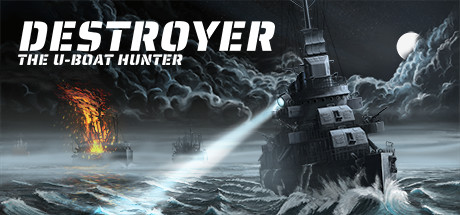
Destroyer: The U-Boat Hunter
Destroyer: The U-Boat Hunter brings you an authentic and historically accurate destroyer simulation along with gripping anti-submarine warfare set in the turmoils of the Atlantic Ocean during World War II.

Cold Waters
Spiritual Successor to the Microprose Classic “Red Storm Rising”.

IronWolf VR
IronWolf VR is a roomscale submarine game playable either singleplayer or online co-op with motion controls. Built from the ground up for VR, each part of the submarine has been crafted for an optimal VR experience.

Dangerous Waters
S.C.S. - Dangerous Waters allows you total control over multiple air, surface, and submarine platforms in a modern-day naval environment. Take direct control of individual crew stations and also plan and execute combined arms naval strategies from a top-down 'Commanders Eye' perspective.

Carrier Deck
Carrier Deck is a fast paced time management game where you play as the Air Boss on board the CVN-76 in the midst of active war.
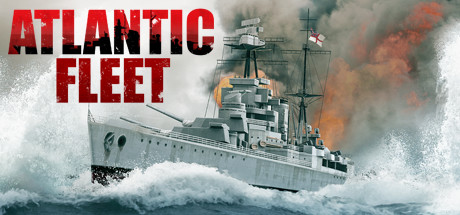
Atlantic Fleet
Turn based tactical and strategic naval combat. Atlantic Fleet puts you in command of the Allies or Kriegsmarine (German Navy) in the longest military campaign of WWII, The Battle of the Atlantic.Take command of surface ships, submarines as well as carrier and land based aircraft in the deadly struggle for control of Atlantic shipping...

Victory At Sea
Engage in epic RTS warfare across 3 huge campaigns as well as other battle modes. Create your own fleet of ships, pick your side and enter into World War II naval combat on a global scale.
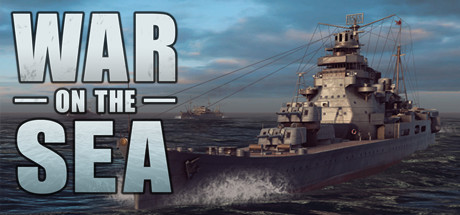
War on the Sea
Command ships, submarines and aircraft in the South Pacific during WWII.
Frequently Asked Questions
Silent Hunter® III is currently priced at 4.99€ on Steam.
No, Silent Hunter® III is currently not on sale. You can purchase it for 4.99€ on Steam.
Yes, Silent Hunter® III received 2,145 positive votes out of a total of 2,442 achieving a rating of 8.42.
😎
Silent Hunter® III was developed and published by Ubisoft.
Yes, Silent Hunter® III is playable and fully supported on Windows.
No, Silent Hunter® III is not playable on MacOS.
No, Silent Hunter® III is not playable on Linux.
This information about Silent Hunter® III is not available yet.
This information about Silent Hunter® III is not available yet.
No, Silent Hunter® III does not support VR.
Silent Hunter® III offers both single-player and multi-player modes.
Silent Hunter® III includes Co-op mode where you can team up with friends.
No, Silent Hunter® III does not currently offer any DLC.
No, Silent Hunter® III does not support mods via Steam Workshop.
No, Silent Hunter® III does not support Steam Remote Play.
Yes, Silent Hunter® III is enabled for Steam Family Sharing. This means you can share the game with authorized users from your Steam Library, allowing them to play it on their own accounts. For more details on how the feature works, you can read the original Steam Family Sharing announcement or visit the Steam Family Sharing user guide and FAQ page.
You can find solutions or submit a support ticket by visiting the Steam Support page for Silent Hunter® III.
Data sources
The information presented on this page is sourced from reliable APIs to ensure accuracy and relevance. We utilize the Steam API to gather data on game details, including titles, descriptions, prices, and user reviews. This allows us to provide you with the most up-to-date information directly from the Steam platform.
Additionally, we incorporate data from the SteamSpy API, which offers insights into game sales and player statistics. This helps us present a comprehensive view of each game's popularity and performance within the gaming community.
Last Updates| Steam data | 18 September 2026 22:23 UTC |
|---|---|
| SteamSpy data | 14 October 2026 16:11 UTC |
| Steam price | 27 October 2026 15:05 UTC |
| Steam reviews | 21 October 2026 21:57 UTC |
If you'd like to dive deeper into the details about Silent Hunter® III, we invite you to check out a few dedicated websites that offer extensive information and insights. These platforms provide valuable data, analysis, and user-generated reports to enhance your understanding of the game and its performance.
- SteamDB - A comprehensive database of everything on Steam about Silent Hunter® III
- SteamCharts - Analysis of Silent Hunter® III concurrent players on Steam
- ProtonDB - Crowdsourced reports on Linux and Steam Deck Silent Hunter® III compatibility


Game modes
Multiplayer
Features
Online players
42
Developer
Ubisoft
Publisher
Ubisoft
Release
13 Jun 2008
Platforms