
Wolf & Rabbit
Our hero, an injured wolf boy, encountered a rabbit in red picking up flowers on his way escaping from a forest. The kind rabbit girl invited the wolf boy to her grandma's house for a treatment, yet... Standing in front of the house, the wolf boy felt... somehow, uneasy.
Sync your Steam wishlist to find the lowest game prices instantly. No login required, just paste your Steam profile URL!
⚡ Try Wishlist Radar!
Sync your Steam wishlist to find the lowest game prices instantly. No login required!
⚡ Try Wishlist Radar!
Close

Hotel Anatolia on Steam
Quick menu
What would you do if the hotel you checked in for the night turned into a death trap? Hotel Anatolia is a short, terrifying horror game which is about a man trying to run away from his past.
Hotel Anatolia is a indie, adventure and rpg game
developed and published by Elven Workshop.
Released on March 20th 2017 is available on Windows, Steam Deck and Steam Machine.
It has received 390 reviews of which 274 were positive and 116 were negative resulting in a rating of 6.7 out of 10. 😐
The game is currently priced at 0.49€ on Steam with a 51% discount.
The Steam community has classified Hotel Anatolia into these genres:
Media & Screenshots
Get an in-depth look at Hotel Anatolia through various videos and screenshots.


Load More


System requirements
These are the minimum specifications needed to play the game. For the best experience, we recommend that you verify them.
Windows
- OS *: Windows 98/XP/Vista/7/8/10
- Processor: Intel Pentium III 800 Mhz
- Memory: 512 MB RAM
- Storage: 500 MB available space
Steam Price & Best Deals
User reviews & Ratings
Explore reviews from Steam users sharing their experiences and what they love about the game.
Hotel Anatolia is a short psychological horror adventure built around isolation, mystery, disturbing imagery, and choices that can shape the direction of the story. Developed and published by Elven Workshop, the game follows Aras, a traveler who arrives at Hotel Anatolia with his wife after a tiring journey. What initially appears to be an ordinary overnight stay quickly collapses into a nightmare when Aras awakens to discover that the hotel has changed dramatically. Its previously normal surroundings have become ruined and bloodstained, hostile creatures roam the building, and his wife is nowhere to be found. From that point forward, finding her and discovering what happened become the driving forces behind the adventure. The hotel itself is one of the game's strongest elements. Rather than relying on a sprawling world, the experience uses confined rooms and corridors to establish a feeling of being trapped somewhere that has suddenly become unfamiliar. Exploration gradually exposes more disturbing details, while the transformation of an everyday location into a hostile environment gives the horror a surreal quality. There is a psychological dimension beneath the immediate threat as well, with Aras's experiences increasingly connected to personal history and uncomfortable revelations. The resulting mystery encourages players to continue even though the overall adventure is relatively brief. Gameplay is deliberately straightforward and places greater importance on exploration, conversations, decisions, and narrative progression than complicated RPG mechanics. Hotel Anatolia may visually resemble a traditional role-playing game, but players expecting extensive character development, equipment management, tactical combat, or a lengthy progression system should temper those expectations. It functions much more effectively as a narrative horror adventure presented through an old-school RPG framework. The simplicity helps maintain a steady pace, although players looking for mechanically demanding gameplay could find the experience rather limited. Choices provide additional substance to the otherwise compact structure. Conversations occasionally require the player to decide how Aras should respond, and decisions can influence later developments. The possibility of reaching different endings gives these interactions greater significance than ordinary dialogue selections. It also introduces replay value, since another playthrough allows players to make alternative decisions and investigate outcomes they did not encounter previously. Because completing the story does not require an enormous time investment, replaying it is considerably more practical than repeating a lengthy role-playing adventure. Its presentation relies heavily on pixel-art graphics and an isometric viewpoint. The visual style is intentionally modest rather than technically ambitious, but it works reasonably well with the unsettling atmosphere. Dark interiors, damaged surroundings, blood, strange creatures, and other disturbing sights help communicate that something has gone catastrophically wrong inside the hotel. The retro appearance also gives the game some personality, particularly for players who enjoy horror projects created with the visual language of classic independent RPG adventures. At the same time, the limited animation and environmental detail make its small production scale readily apparent. Atmosphere ultimately matters more than spectacle. Hotel Anatolia attempts to create tension through uncertainty, disturbing discoveries, environmental changes, and the player's limited understanding of what is happening. The experience is consequently more likely to appeal to players who enjoy slowly uncovering a strange story than those searching for constant scares or action. Its horror is frequently connected to anticipation and narrative context rather than elaborate set pieces. This restrained approach can be effective, although the short runtime means some concepts and revelations do not receive as much development as they could have. The narrative contains interesting psychological themes, but its pacing can occasionally feel compressed. Characters, revelations, and emotional developments sometimes move faster than expected, leaving certain ideas without enough room to reach their full potential. A longer campaign could have strengthened the relationship between Aras, his missing wife, the hotel's mysteries, and the protagonist's personal circumstances. On the other hand, the concise structure prevents the relatively simple gameplay loop from becoming excessively repetitive. It is an experience designed to deliver its mystery quickly rather than occupy dozens of hours. Replayability is strengthened by multiple endings, decision-making, and Steam achievements. Players interested in seeing every possible outcome will receive more value than those who simply complete the story once. The game also supports Steam Trading Cards, captions, and Family Sharing. These are secondary additions, but achievements work particularly well with the branching narrative because they provide additional motivation to revisit the adventure. On Steam Deck, Hotel Anatolia is rated Playable rather than Verified. The default controller configuration can access its functionality, the interface text is readable, and the default graphical settings perform properly on the handheld. Some interface elements may display keyboard, mouse, or non-Steam-Deck controller prompts, preventing the experience from receiving a completely seamless compatibility rating. Using an external controller may also require manually changing the active controller through the Steam Deck interface. These inconveniences are relatively minor, and the game's lightweight presentation and straightforward controls make portable play a practical option. Hotel Anatolia succeeds most when treated as a compact indie horror story rather than a deep role-playing game. Its mysterious setting, unsettling transformation of an ordinary hotel, branching decisions, retro visual presentation, and multiple conclusions provide enough personality to make the journey interesting. Its limitations are equally noticeable, particularly the basic mechanics, modest production values, and narrative ideas that occasionally feel underdeveloped because of the short length. Players who appreciate inexpensive, bite-sized psychological horror experiences and RPG-style presentation are the audience most likely to enjoy what it offers. Rating: 7/10
Hotel Anatolia is a simple indie horror game created with RPGMaker. It is a short, but well thought game based mostly on it's storyline and less focused on it's gameplay. It's 2D pixelated graphics and gameplay are very simple yet enjoyable. The game is tremendously similar to another indie game, The Deed. SO similar in fact, that the characters and graphics are directly imported over! Ignoring that, I still found the game able to pull off being eerie and fun at all times. Will last you a good hour or slightly more. Do enjoy, as I am recommending it to indie gamers alike.
Similar games
View all

Ara Fell: Enhanced Edition
Explore a breathtaking world floating above the clouds in this classic fantasy RPG. Battle an ancient vampire menace, forge powerful bonds with your companions, and experience the definitive Enhanced Edition packed with new content and improvements.

HorrorVale
HorrorVale: A grand Spooktacular adventure about a girl, her dog, and her long journey to save him in a strange and horrifying Underworld.
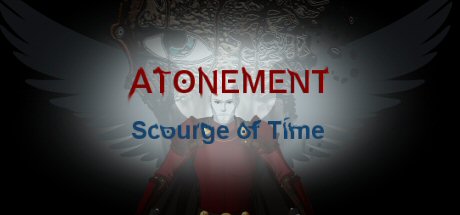
Atonement: Scourge of Time
The last king was killed over 400 years ago and the global rule of the land ceased to exist. The Vindicator is coming. ~a decadent, dark fantasy world with a new take on the concepts of Angels and Demons!
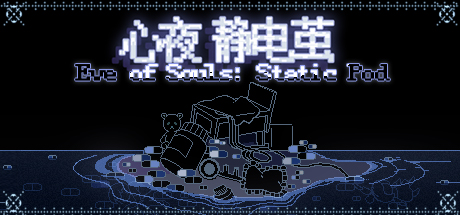
Eve of Souls: Static Pod
[The pod will break soon. Will she survive the nightmare or find the truth?]


The Albino Hunter (Original)
Kalymn Nox is the Albino Hunter; even his pretentious and slightly racist title can keep him from waking up broke after a night of drinking.

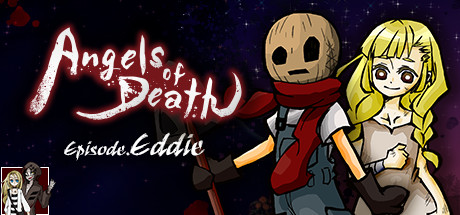
Angels of Death Episode.Eddie
"The boy made up his mind to face a cruel world." The new special edition of the psychological horror-adventure game "Angels of Death", which has also been made into an anime. The past of B4 floor master Eddie is revealed...

Noel the Mortal Fate Complete Edition
This is a tale of revenge — of a demon, a girl, and their companions. After seven years of development, the popular dark suspense adventure "Noel the Mortal Fate" finally arrives as a complete edition with all 13 seasons included, fully upgraded and with no extra charges.

Memories of a Vagabond
You play as a young mercenary and travel from soul to soul to avenge your fiance and her family. While finding a way to change the flow of past events, you will encounter many obstacles and meet new allies. Will you be brave enough?

The Sand Man
“I’ll tell you a scary story. It’s so scary you might not be able to take it. It’s the story of the Sand Man...” This is the second title in the Strange Man series, developed by Uri Games. Unable to sleep and exhausted, Sophie wanders into a town where everything sleeps. That is where the terror begins...
Frequently Asked Questions
Hotel Anatolia is currently priced at 0.49€ on Steam.
Yes, Hotel Anatolia is currently available at a 51% discount. You can purchase it for 0.49€ on Steam.
Yes, Hotel Anatolia received 274 positive votes out of a total of 390 achieving a rating of 6.69.
😐
Hotel Anatolia was developed and published by Elven Workshop.
Yes, Hotel Anatolia is playable and fully supported on Windows.
No, Hotel Anatolia is not playable on MacOS.
No, Hotel Anatolia is not playable on Linux.
Yes, Hotel Anatolia is playable on Steam Deck, though it might require a few minor tweaks. Make sure to check the Steam store page and community feedback on ProtonDB for exact compatibility details.
Yes, Hotel Anatolia is playable on Steam Machine, though it might require a few minor tweaks. Make sure to check the Steam store page and community feedback on ProtonDB for exact compatibility details.
No, Hotel Anatolia does not support VR.
Hotel Anatolia is a single-player game.
No, Hotel Anatolia does not currently offer any DLC.
No, Hotel Anatolia does not support mods via Steam Workshop.
No, Hotel Anatolia does not support Steam Remote Play.
Yes, Hotel Anatolia is enabled for Steam Family Sharing. This means you can share the game with authorized users from your Steam Library, allowing them to play it on their own accounts. For more details on how the feature works, you can read the original Steam Family Sharing announcement or visit the Steam Family Sharing user guide and FAQ page.
You can find solutions or submit a support ticket by visiting the Steam Support page for Hotel Anatolia.
Data sources
The information presented on this page is sourced from reliable APIs to ensure accuracy and relevance. We utilize the Steam API to gather data on game details, including titles, descriptions, prices, and user reviews. This allows us to provide you with the most up-to-date information directly from the Steam platform.
Additionally, we incorporate data from the SteamSpy API, which offers insights into game sales and player statistics. This helps us present a comprehensive view of each game's popularity and performance within the gaming community.
Last Updates| Steam data | 18 September 2026 21:14 UTC |
|---|---|
| SteamSpy data | 23 October 2026 00:54 UTC |
| Steam price | 26 October 2026 19:58 UTC |
| Steam reviews | 20 October 2026 09:58 UTC |
If you'd like to dive deeper into the details about Hotel Anatolia, we invite you to check out a few dedicated websites that offer extensive information and insights. These platforms provide valuable data, analysis, and user-generated reports to enhance your understanding of the game and its performance.
- SteamDB - A comprehensive database of everything on Steam about Hotel Anatolia
- SteamCharts - Analysis of Hotel Anatolia concurrent players on Steam
- ProtonDB - Crowdsourced reports on Linux and Steam Deck Hotel Anatolia compatibility

Game modes
Features
Online players
0
Developer
Elven Workshop
Publisher
Elven Workshop
Release
20 Mar 2017
Platforms