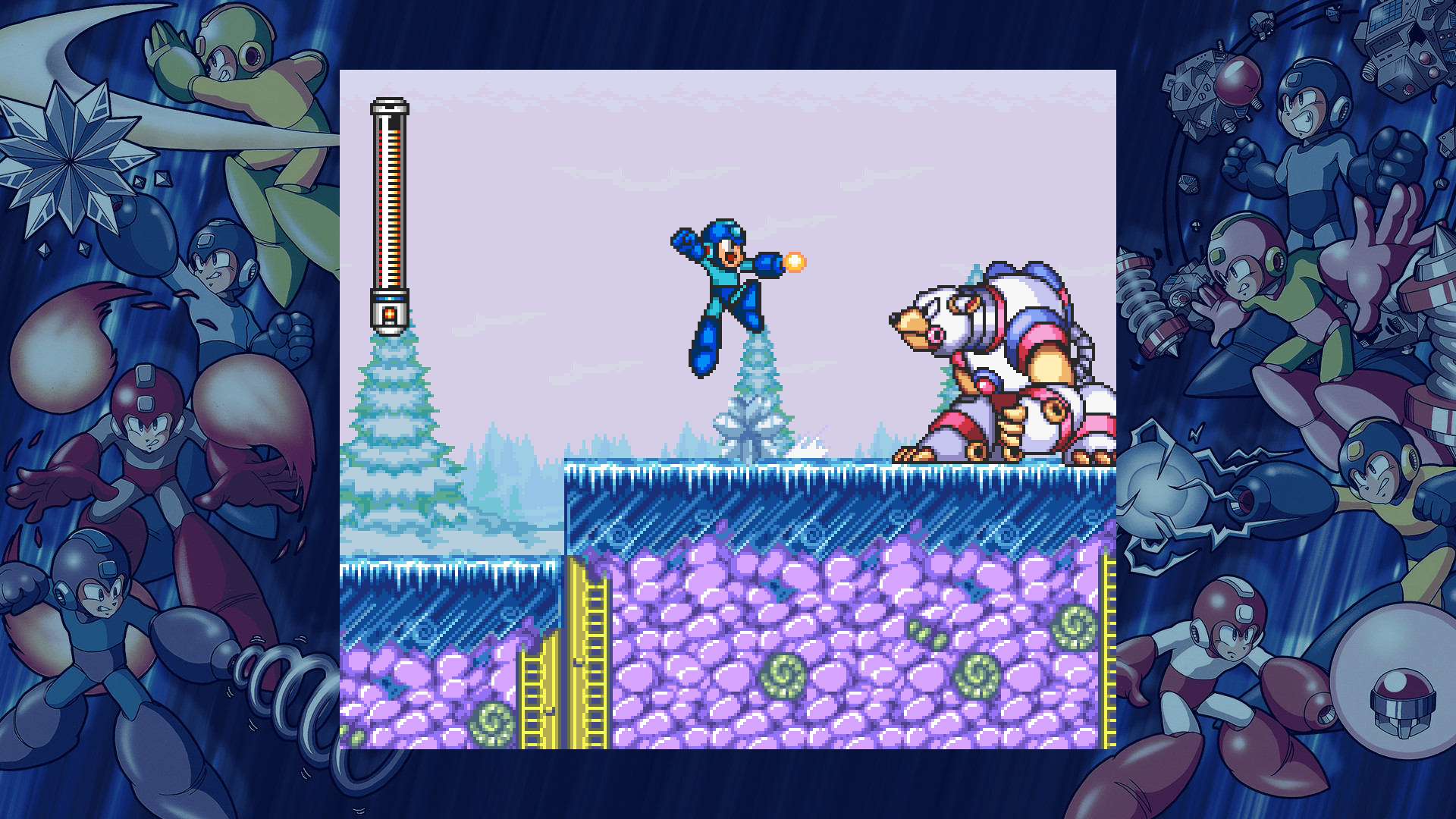
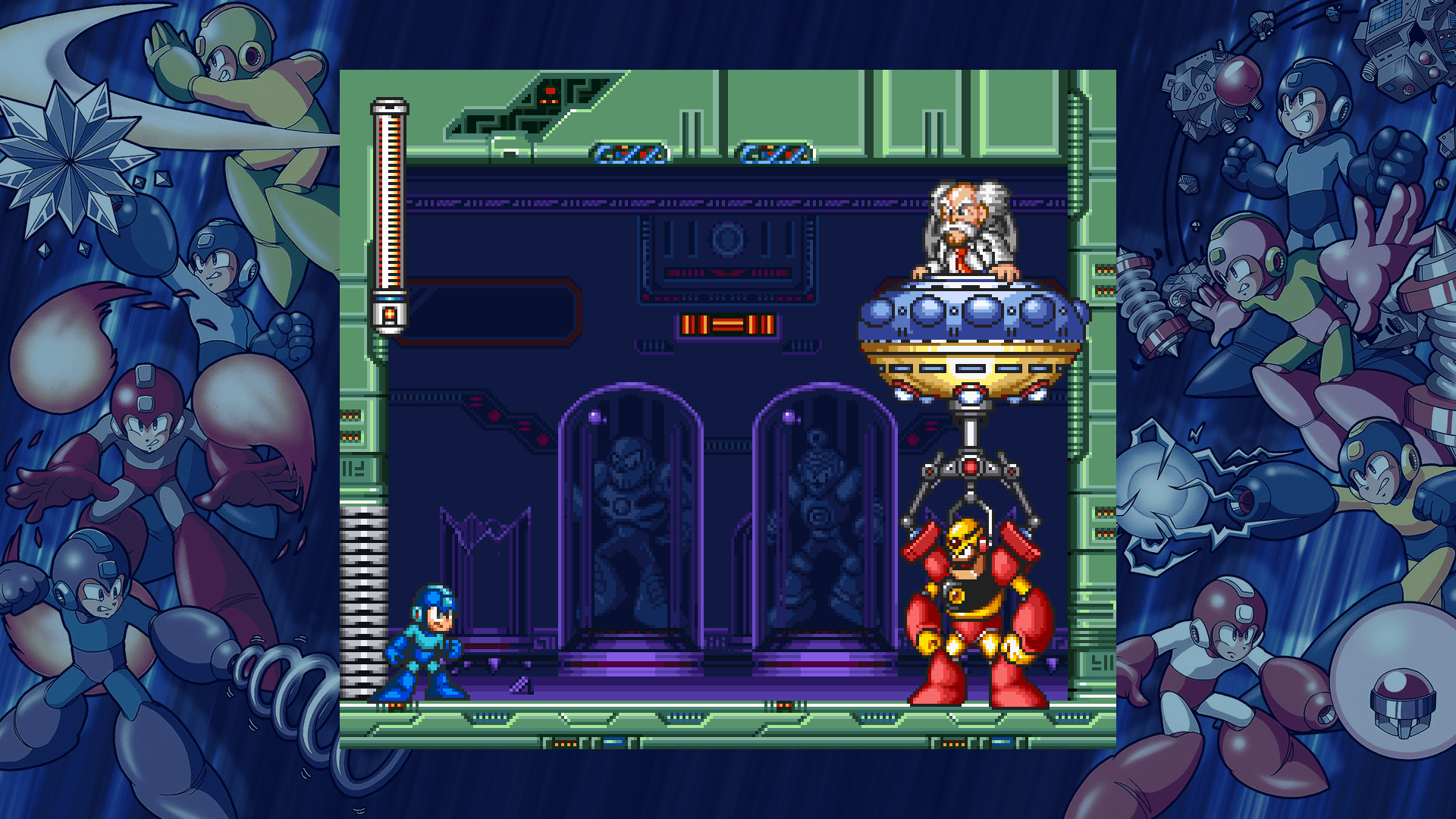
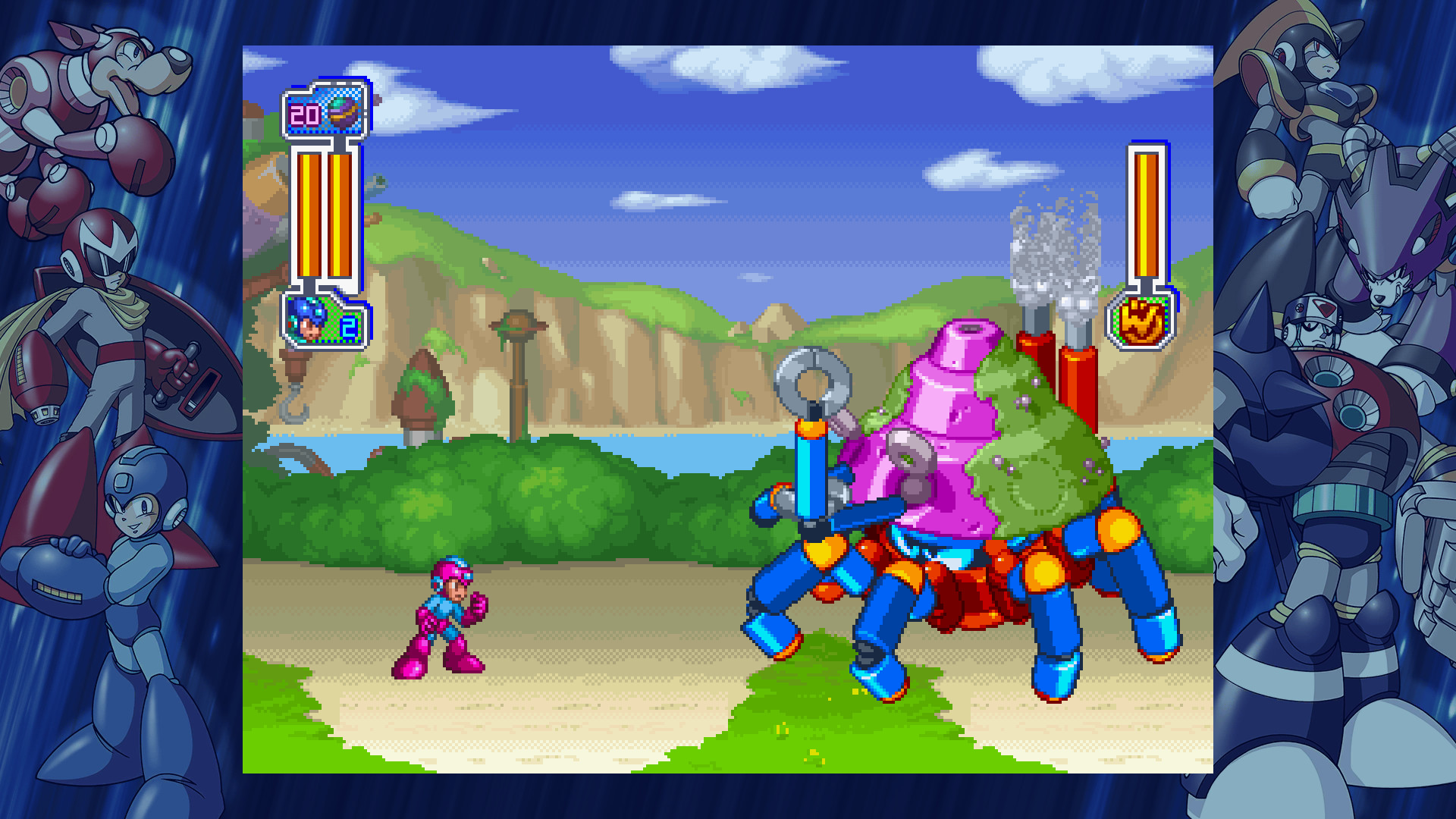
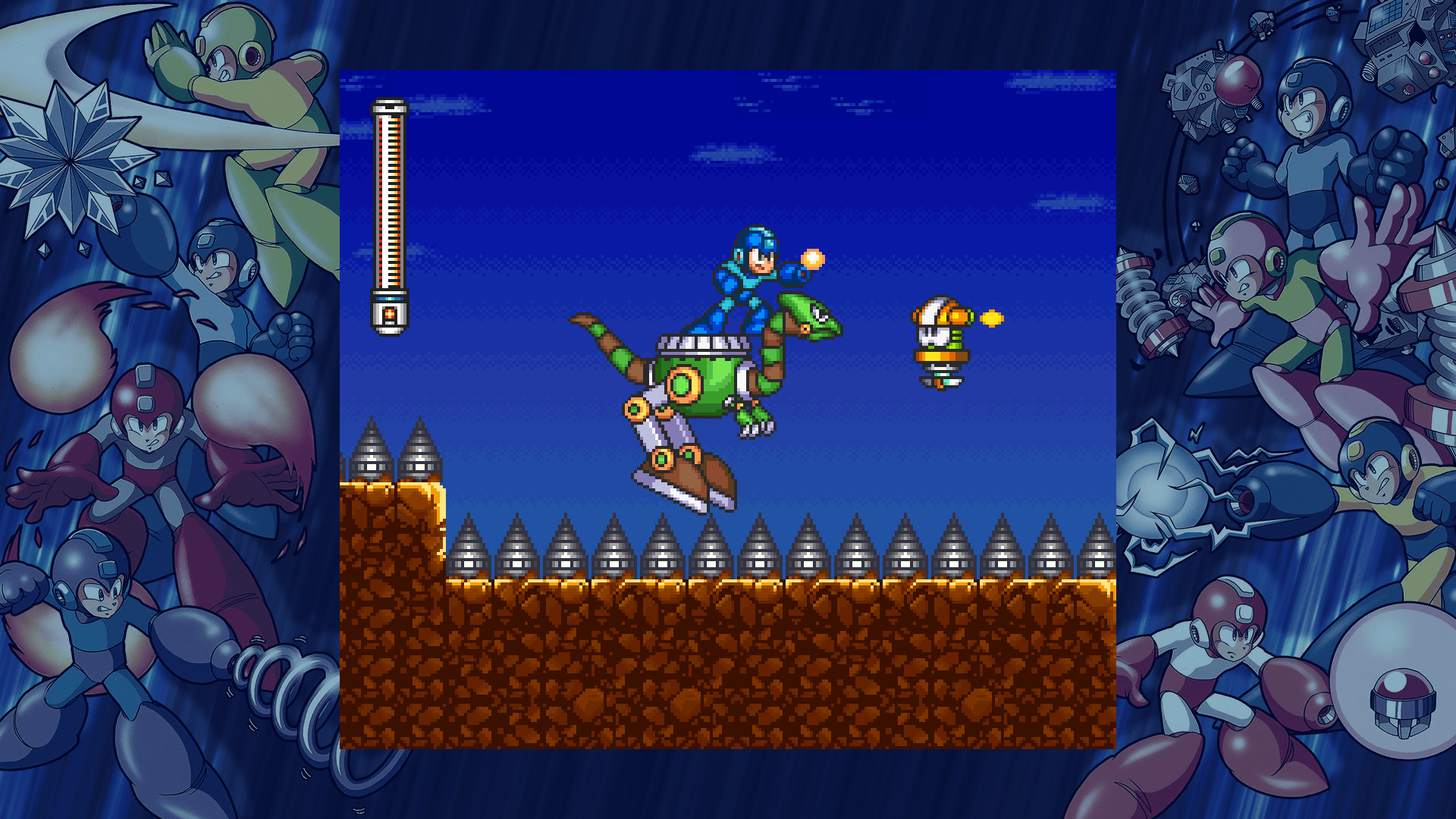
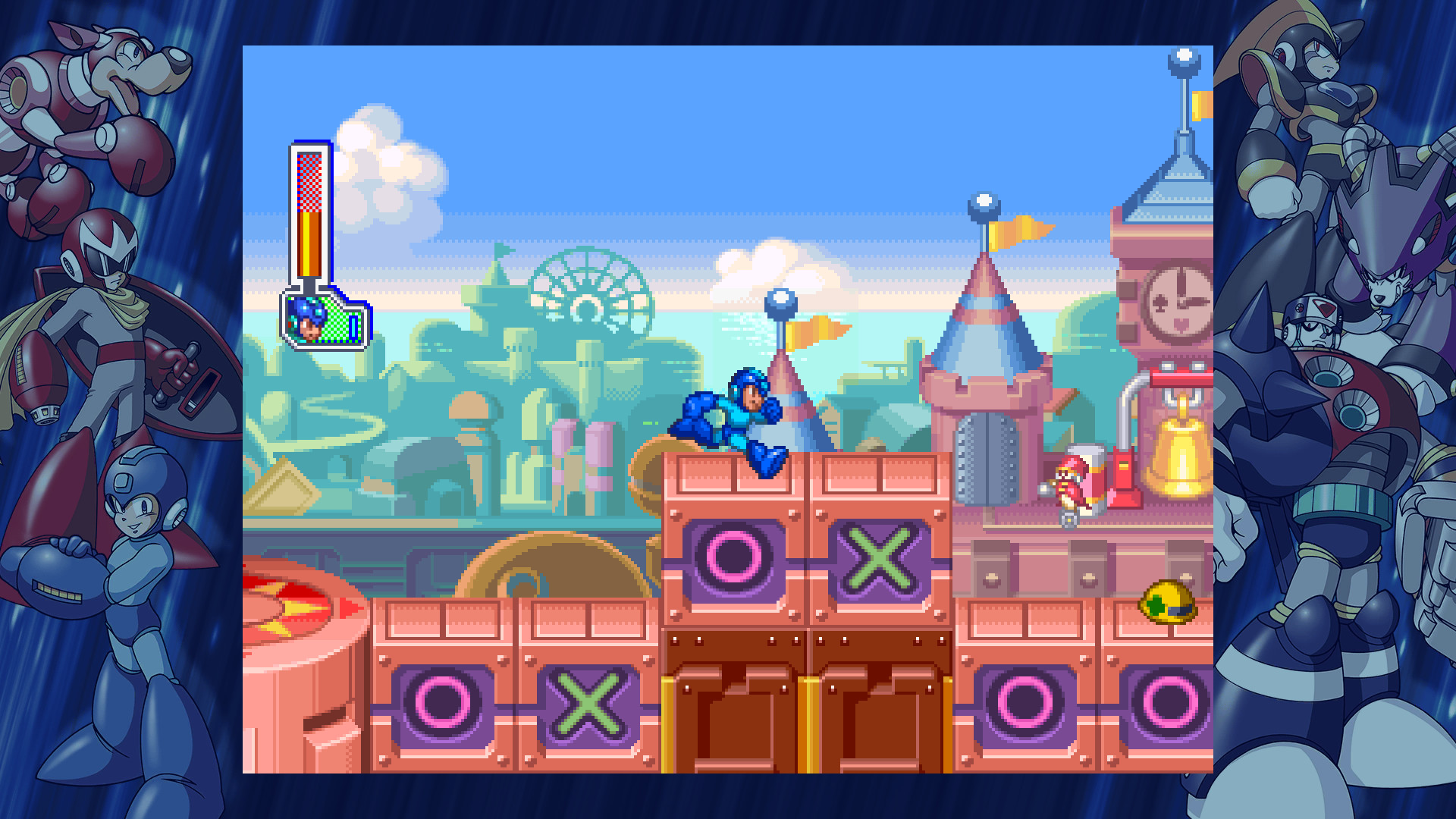
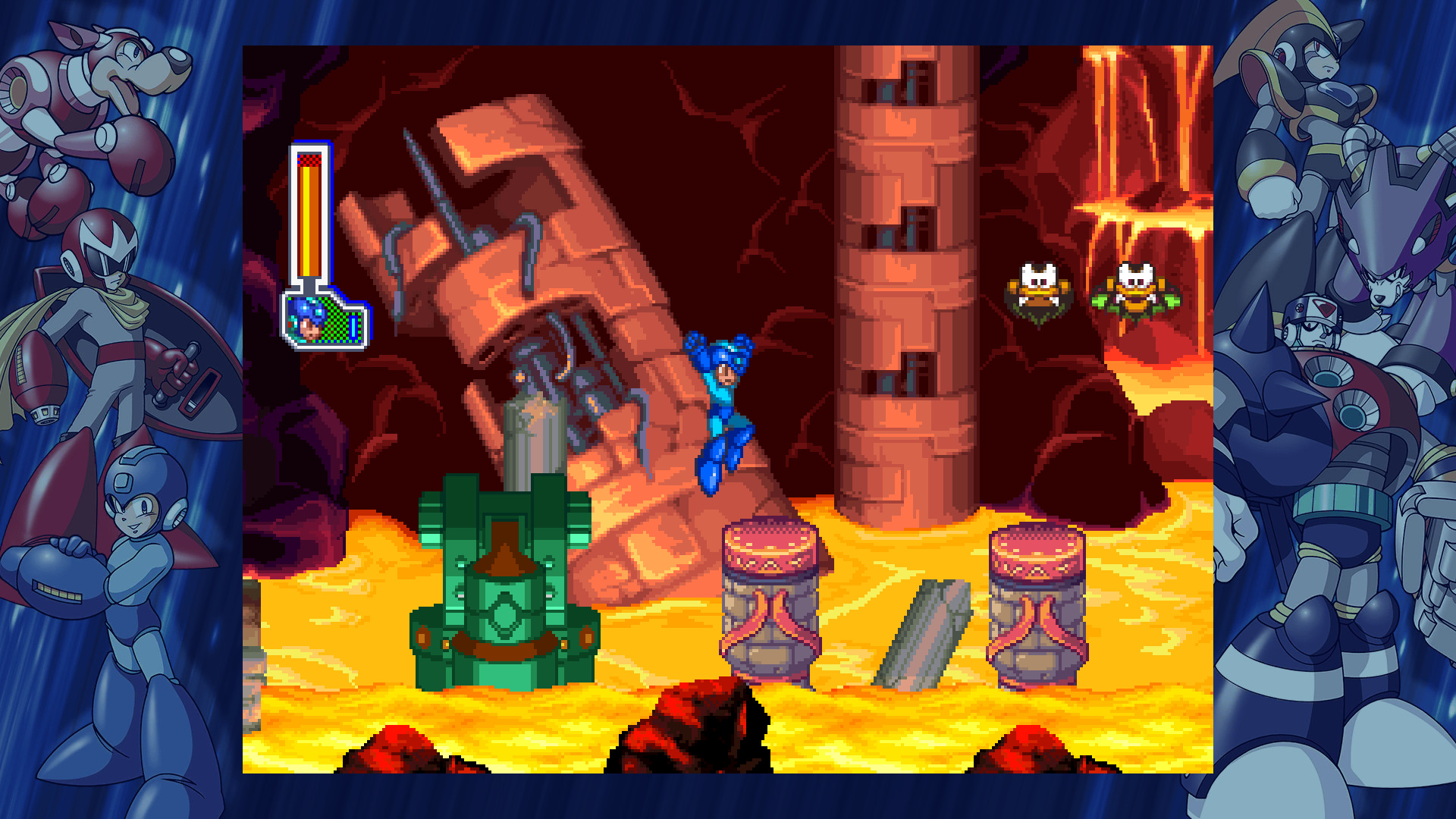
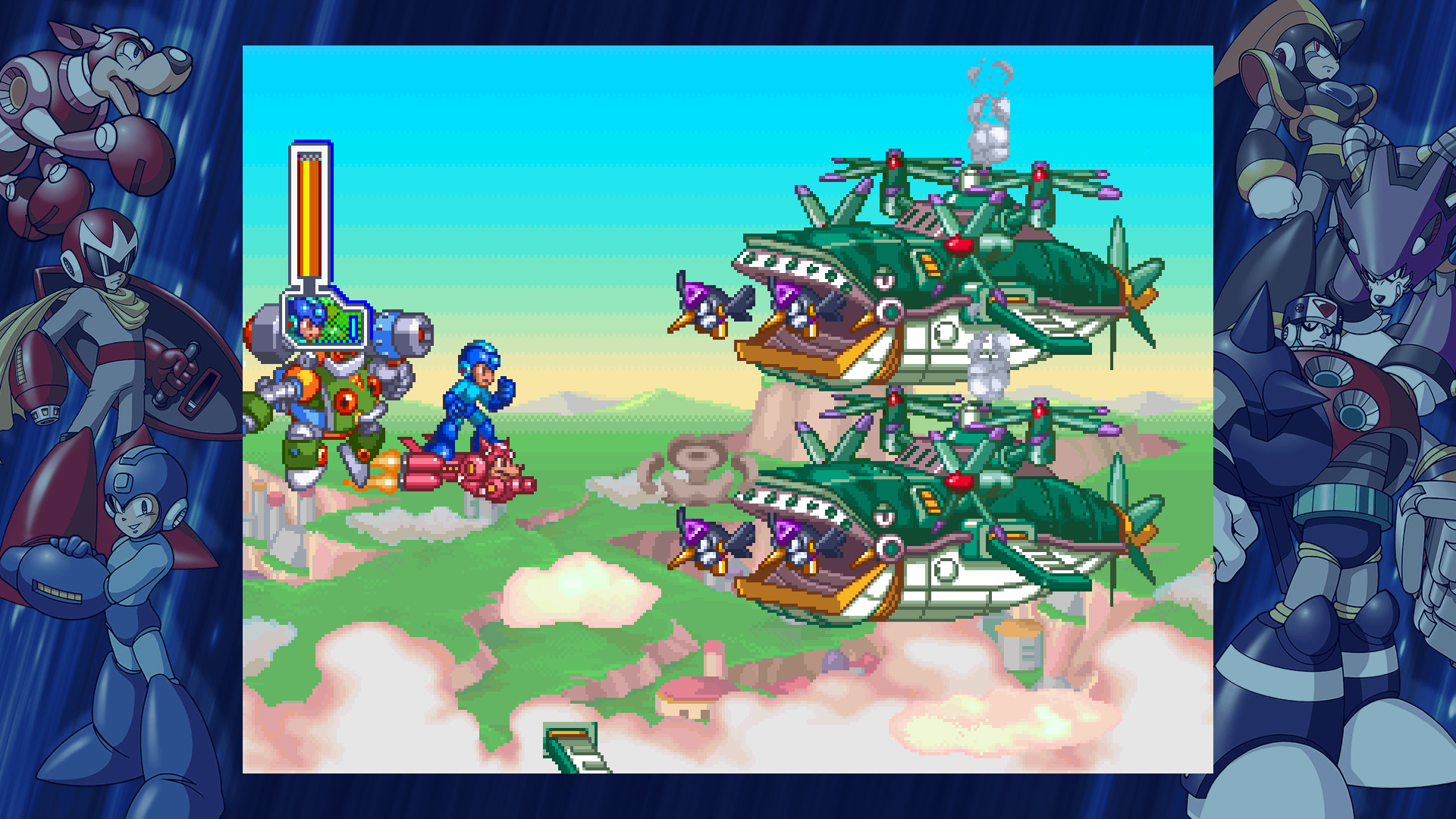
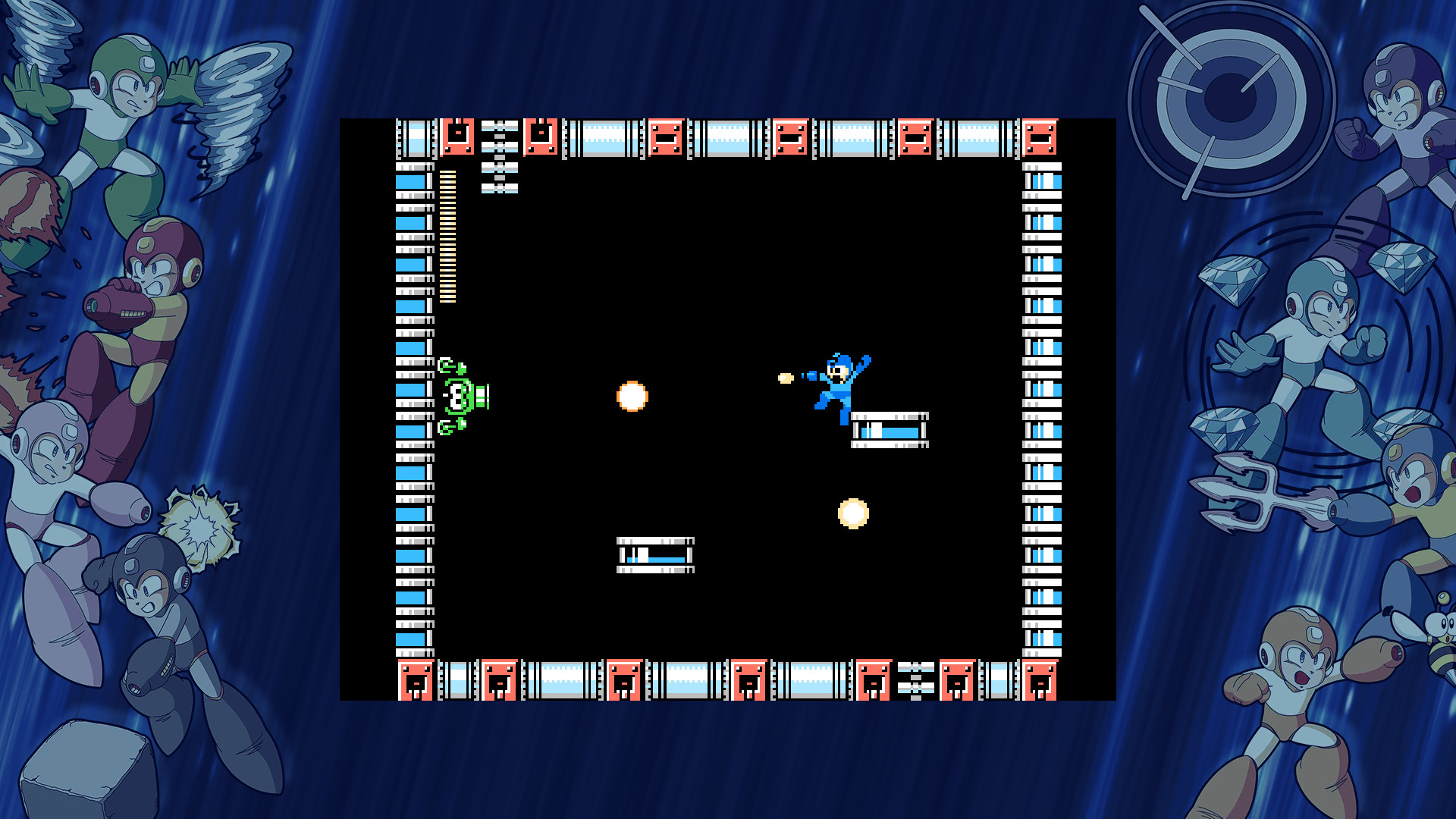
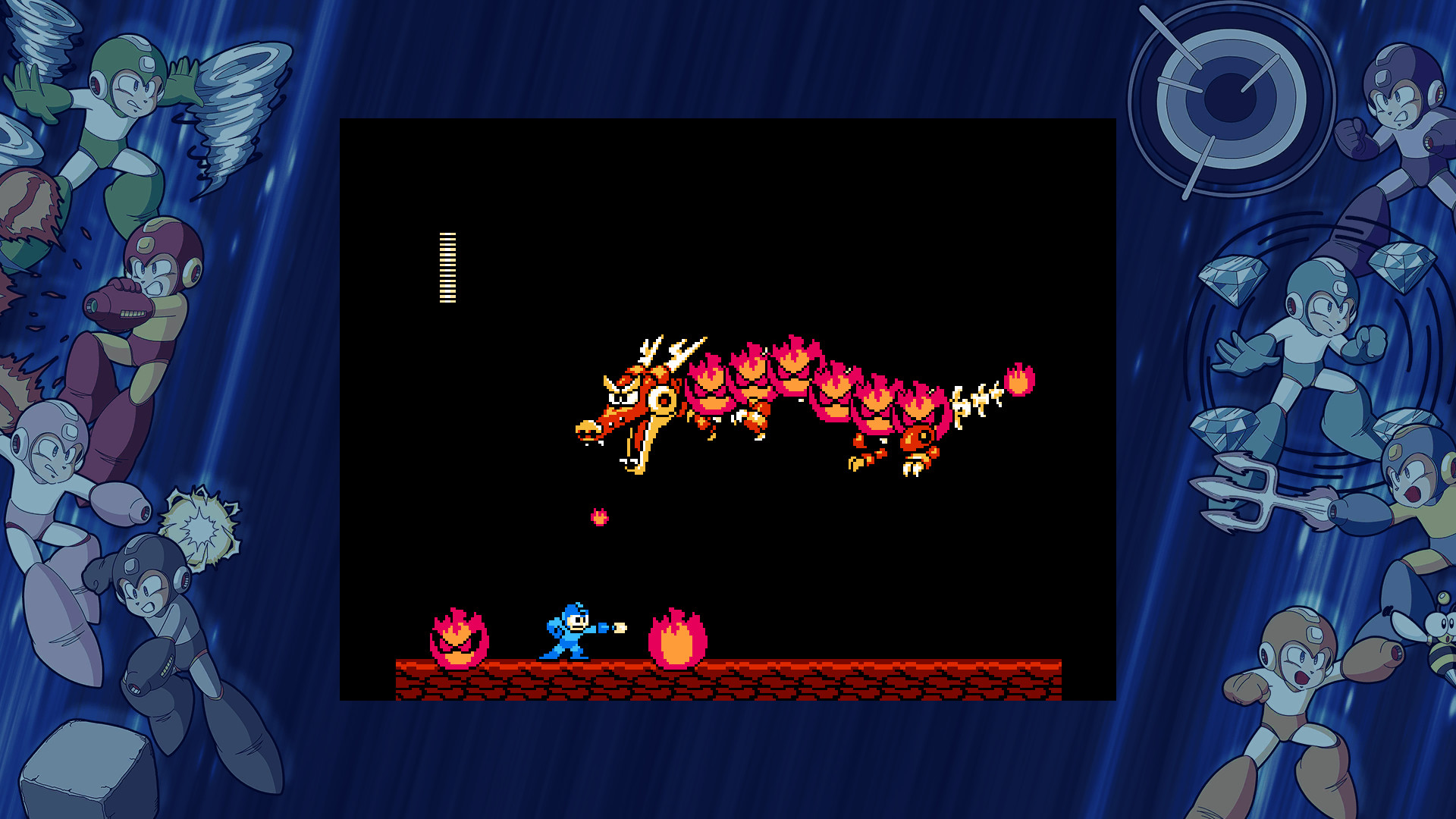
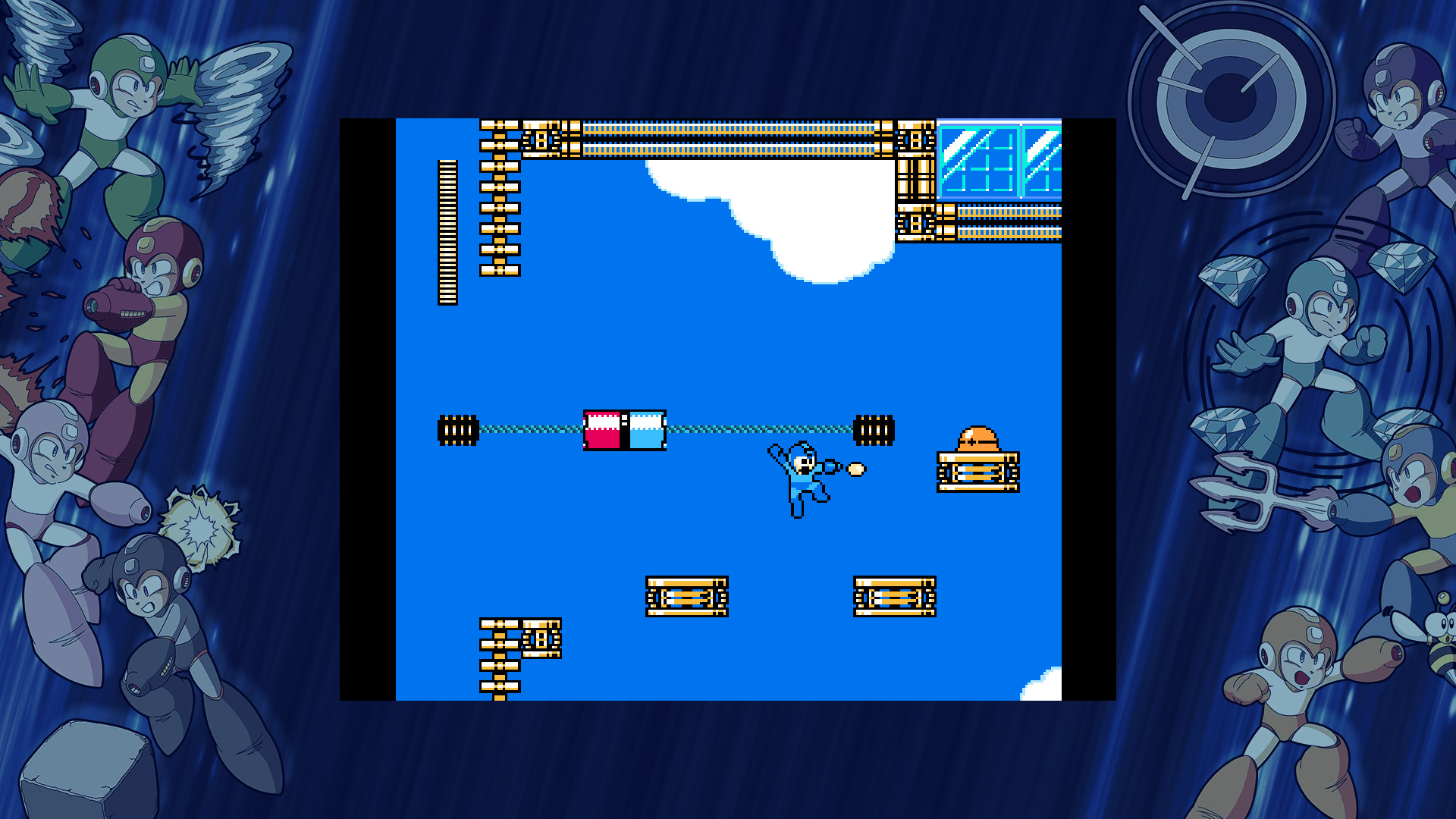
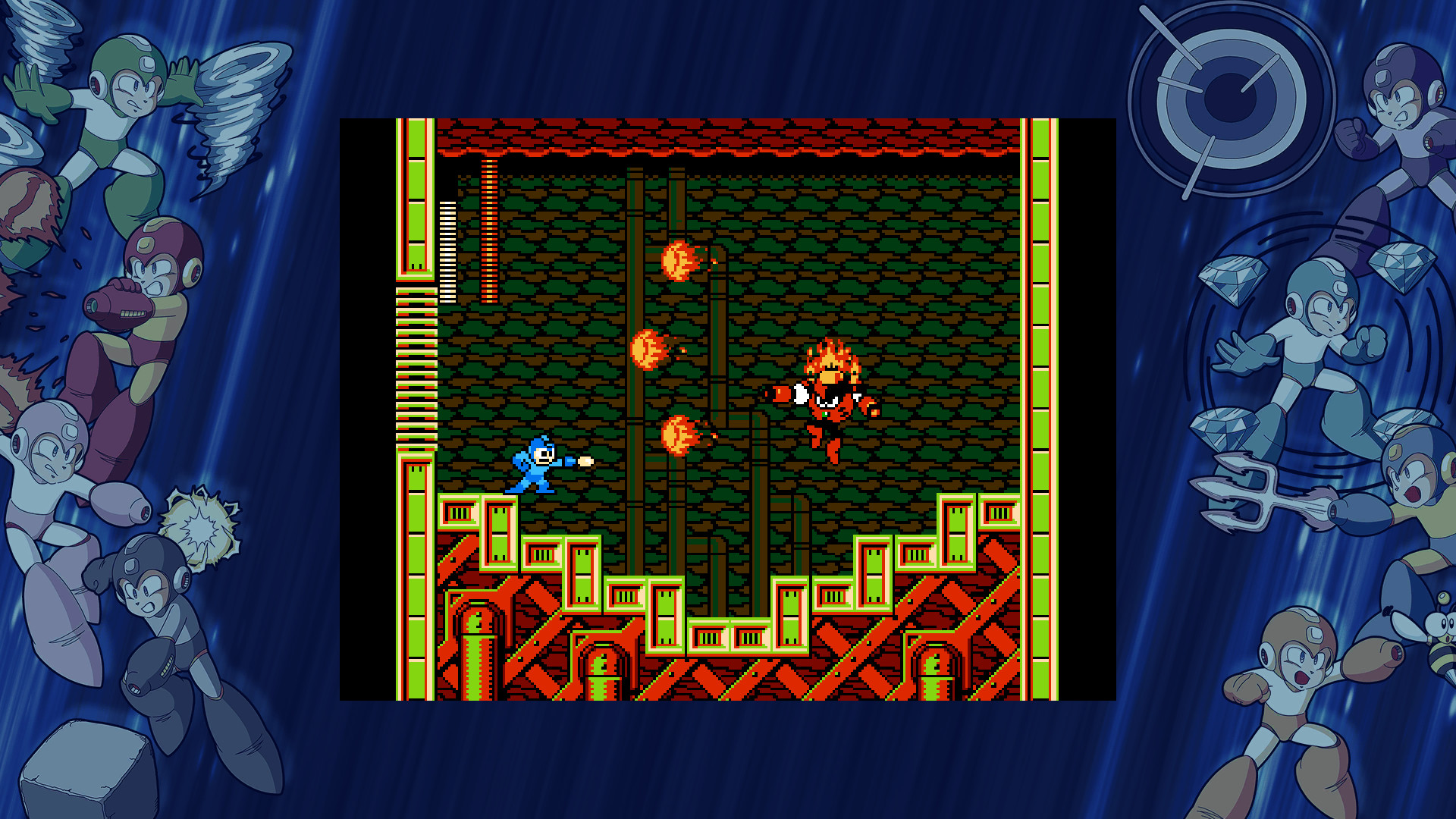
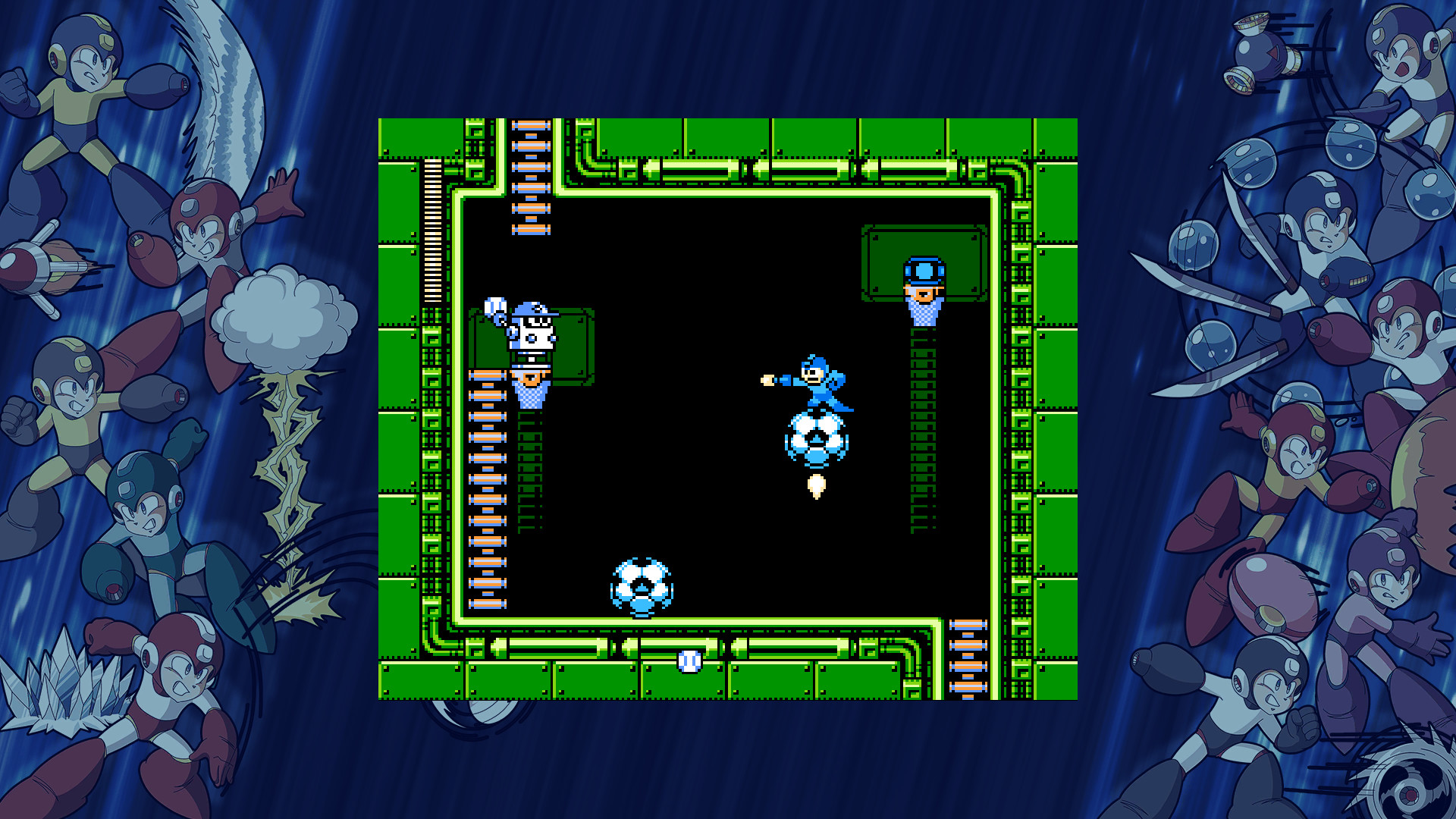
Mega Man 7 The first game in the collection. MM7 is a REALLY good game and a fantastic debut in the 16-bit era. I made the mistake back in the day to keep comparing it to Mega Man X "there's no dash," "this game feels slow," "not as cool without Zero in it," etc, but in reality, MM7 is a 16-bit game that plays just like an 8-bit NES game, and it does that perfectly. Once you understand that, you'll start to appreciate the game for what it is. I was a bit surprised by the amount of secrets the game has, so there's definitely opportunities to replay levels—and maybe you'll find a super cool easter egg. That said, if upgrade hunting isn't your thing, the shop is back and offers the possibility to buy energy tanks, weapon refills, lives, and some of the upgrades, though not all of them. In my opinion, the only thing bad about MM7 is the intro cutscene, and that's it. You're forced to watch a 2-minute cutscene every time you start a new playthrough, but it also sets a cheerful tone and welcomes you to the 16bit era graphics. The rest of the game is freaking fantastic—literally a love letter to everything cool about the classic series: beautiful sprites, enjoyable level design, good music, and Bass's debut. The Robot Master designs are a highlight on their own; they are all quite good. Also, MM7 is where we first see Robot Masters weaknesses really shuts them down in the classic series, they literally get stunlocked and/or stuck in a single pattern. They definitely took a page from Mega Man X but dialed it up to 11 (no pun intended). Be warned though, MM7 showcases the hardest final boss in the whole classic series —words directly from the devs, so blame Inafune. Oh, and Proto Man is back, kinda psycho, telling you about burning down forests or something. Huh. Once I beat the game, I read around to see what the general consensus about the game was, and apparently some people had problems with Mega Man's sprite size. I actually never noticed, I just thought it was part of the art style, but it's something you'll get used to anyway, and it doesn't affect gameplay at all. There is also a retro TV filter that makes the game look goddamn beautiful with sharper pixels. Mega Man 8 MM8 felt like a grand welcome to the 32-bit era. The graphical leap was obvious, with plenty of experimental stuff too and visual flavor in every single stage—though I'd argue the visual clutter sometimes was a bit too much. It's something you just get used to. Overall, the game is packed with little details that enhance the experience: either the presentation, sprite animations, stages variety, the exposition with anime cutscenes, or the art direction in general (something MM8 really excels at). It all comes together in a charming package full of personality, especially with the Robot Masters and their banter dialogues. I thought the soundtrack was something straight out of Marvel vs. Capcom, but apparently MM8 came first, maybe such compositions were part of that Capcom era. Speaking of which, this was the time of Capcom's cringy dialogue and weird voice acting (looking at you, Resident Evil), and honestly, I love it. Their games had that charm in their attempt to push the experience forward, and inadvertently set an industry standard, for better or worse. One extra tip: the first power you get in the tutorial is the the Mega Ball. The game never tells you that you can bounce off it and used it to reach high places (it works a lot like Rush Coil, which isn't in this game), or even use it to jump repeatedly mid air without apparent limit besides the weapon's ammo. Although this requires practice and a small sense of timing, it's absolutely worth learning. That might have been explained in the game's manual, but there's no such thing in the digital version. After finishing MM8, I came to the realization this game has a reputation of being the black sheep of the classic series—some people don't like the art style, others the way Mega Man controls, or any nitpicks in between. This was my first playthrough, and in my experience, that reputation is completely undeserved. Props to Capcom for trying new stuff, like the new types of Mega Buster for example. Some mechanics might work while others are left behind (swimming or the limited bolts currency in this case), but creativity is what this game excelled at, and without it, there is no innovation. I admit Mega Man felt slightly slow at first, but then again the sentiment faded the more I played. One culpript might be the default slide, which by the way you can upgrade in the shop to reach longer distances and make the gameplay much better. As a last note, MM8 is a game full of charm. The difficulty is more in favor of the player, so you can have a good time even if you are not that fond of the challenge level in the classic series. There is one exception with the inclusion of a couple of sidescroller segments that require some precise timing, but fortunately the checkpoints let you retry immediately. Lastly, the voice acting was a product of its time and is one of those things that can be remembered with nostalgia and make you laugh. Mega Man 9 Personally, this was the tittle I was more excited about when I first started playing the collection—a curious return to the classic NES style. First things first, if you like Mega Man 2, you are going to absolutely love this game. At least I know I did. You might as well call it Mega Man 2-2; the overall feeling is extremely similar to the second entry of the franchise. The graphics might seem "old," but it was a deliberate choice to make the game look and feel exactly like the early games in the series. In fact, since it was a choice instead of a product of hardware limitations, the game has some nuances that are not present in the NES games. No slowdowns whatsoever, super tight controls, vibrant colors, and tons of details in every level that enhance the visual experience—whether it's backgrounds, basic enemies, or mid-bosses. Pretty impressive for a "NES game" Immediately starting the game, you see the beautiful sprite artwork and some of Capcom's classic quirkiness while they explain the plot. Unlike Mega Man 7 and 8, there is no intro stage this time—you go straigth to the stage select screen. The shop is back too, with a solid amount of helpful items and what you'd expect. But it all boils down to whether you love or hate the gameplay. Like I said, MM9 is a throwback to the NES titles, especially MM2. Simply put, Mega Man can not slide or charge his Mega buster, and as surprising as that sounds, I really don't think it's deal breaker—especially since the game was designed around this style of gameplay. Although we are back to the simple "jump and shoot" formula, the levels feel tight and compact. Pretty much every screen has something going on, which helps keep the fast pace of the game. The challenges are creative and fun—like jumping portals, platforms that roll and unroll like snails, or swinging platforms that play with physics. Traps are fair; they don't feel brutal or punishing, just more like "pay attention" moments. Even if you die, you are never too far from the action thanks to how easily the stages flow. However, If I remember correctly, there are about 2 or 3 precision jumps in the whole game—two involving those swinging platforms and maybe one more in the endgame. There are two playable characters: Mega Man and Proto Man. Coincidentaly, Proto Man can slide and charge his Proto Buster. There's a caveat, though: Proto Man receives double damage and is only playable after beating the game, or you can use a code to unlock him right away. Just note that there's no separate story if you play as him. The game difficulty felt a bit harder than the rest of the classic games—not punishing, but just hard enough to be considered an enjoyable challenge to veterans of the franchise. And lastly the music—a perfect return to the catchy songs that we all love.
Expand the review