
Jusant
Enjoy meditative vibes in Jusant, an action-puzzle climbing game. Scale an immeasurably tall tower and ascend to new heights alongside your watery companion. Master your climbing tools, find your way up through diverse biomes, and piece together the tower’s past.
Sync your Steam wishlist to track the lowest game prices instantly. No login required, just paste your Steam profile URL!
⚡ Try Wishlist Radar!
Sync your Steam wishlist to track the lowest game prices instantly. No login required!
⚡ Try Wishlist Radar!
Close

MOTORSLICE on Steam - User reviews, Price & Information
Quick menu
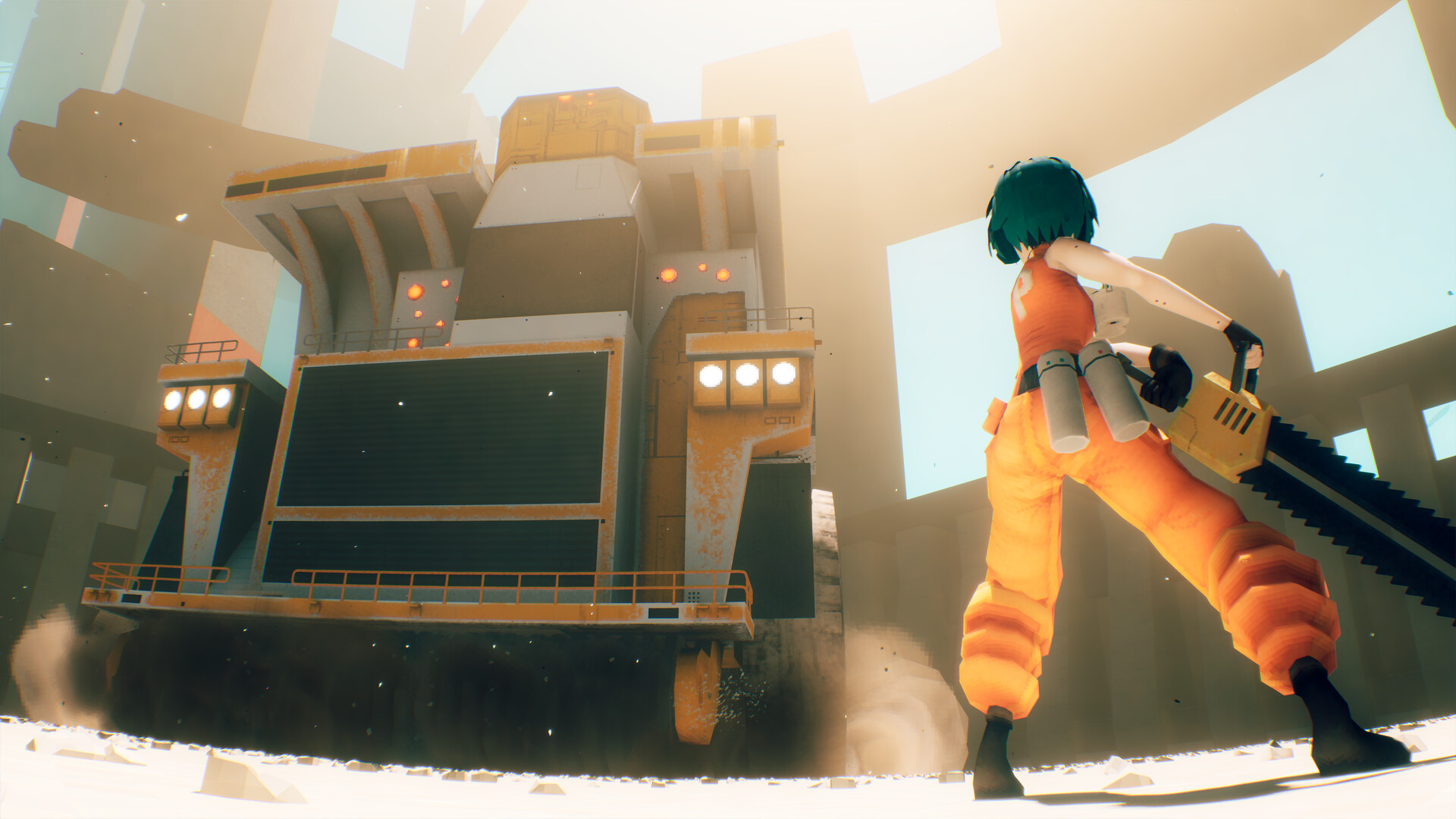
Parkour through the ruins of a megastructure, climb massive bosses, and hunt down every construction equipment in this slice of life action-adventure with immaculate vibes.
MOTORSLICE is a parkour, female protagonist and atmospheric game
developed by Regular Studio
and published by Top Hat Studios and Inc..
Released on May 05th 2026 is available on Windows, Steam Deck and Steam Machine
in 11 languages: English, Portuguese - Brazil, French, Italian, German, Japanese, Russian, Simplified Chinese, Spanish - Latin America, Traditional Chinese and Korean.
It has received 5,735 reviews of which 4,900 were positive and 835 were negative resulting in a rating of 8.3 out of 10. 😎
The game is currently priced at 15.60€ on Steam with a 20% discount.
The Steam community has classified MOTORSLICE into these genres:
Media & Screenshots
Get an in-depth look at MOTORSLICE through various videos and screenshots.



Load More


System requirements
These are the minimum specifications needed to play the game. For the best experience, we recommend that you verify them.
Windows
- OS: Windows 10
- Processor: intel core i5 8th gen
- Memory: 8 GB RAM
- Graphics: GTX 1050
- DirectX: Version 12
- Storage: 3 GB available space
- Additional Notes: Don't forget to update your drivers!
Steam Price & Best Deals
User reviews & Ratings
Explore reviews from Steam users sharing their experiences and what they love about the game.
MOTORSLICE is a fundamentally great but janky parkour game. It features a charming main character but lacks the writing to support her. While the core movement mechanics are fantastic, they also feature some inherent issues, which are exacerbated by the game's level design. Despite these shortcomings, MOTORSLICE is an overall good experience. Story and Setting Players control Slicer P, a woman deployed to a megastructure to rid it of its robot inhabitants. There is little else being overtly told to you, except for sparse hints of the world's backgrounds or some other concepts P is interested in. However, very little of it is ever elaborated on. Rather, MS throws out terminology like ‘The Silent War’, ‘Alpha Structure’, ‘Prism’, as if any of it means anything at all to you. MS is not a story-focused game by any means; however, this is a cardinal sin of writing. It is not that the game just poorly explains these terms or that there is further exposition hidden to be discovered outside of dialogue, but that MS’ world is creatively bankrupt, and its “worldbuilding” is rather used to imply a complexity that simply doesn’t exist to evoke a sense of curiosity in the player, which is inevitably betrayed by the cliffhanger ending. Apart from it, I actually find the dialogue fairly charming. Effectively, the only instances of a story being delivered to you are via brief, optional sequences in which P takes a break to talk to her companion orb; usually these scenes are comedic in nature and just toss out those aforementioned terms every now and again to hint at a greater picture. These sequences also feature dialogue choices for her Orb to reply to, but it isn’t reactive. That is to say, one reply is typically serious, and the other is flirtatious, with neither affecting P’s response in a meaningful way or even feeling outright nonsensical. MOTORSLICE's world is charming but inherently complete gibberish. Gameplay MS is a parkour game, meaning that the core gameplay loop is going to be trying to navigate the brutalist megastructure, ascending to its highest point, and only engaging peripherally with combat whenever robots are in your path. Each chapter represents its own level on the central pillar, which makes for a nice feeling of progression as the entirety of MS’s world is so interconnected. Despite this, MS is also a very linear game, with a clear and intended structure to follow rather than leaning into its parkour mechanics to allow for the player to find ways to scale the structure all on their own. https://steamcommunity.com/sharedfiles/filedetails/?id=3722463281 While its core movement mechanics are well-designed, the introduction of further movement gimmicks in the latter half of its eight-chapter campaign shows some glaring issues with its controls, leading to a frequently unnecessarily frustrating experience. For instance, the basic movement options are jumping, wall-running, and the titular motorslicing, in which P rams her chainsaw into a wall and travels alongside it. This feels great when it is first introduced, and the game attempts to expand on it around the halfway point by asking players to switch between vertical and horizontal slicing. This is a perfectly natural evolution and would be fine on its own, but the game struggles to translate this into its control scheme. Players cannot just control P via the analog stick but rather have to stop their motorslicing, reangle her to be facing either to the side (horizontal) or facing up to the wall (vertical), and then reinitiate the motorslicing. This isn’t instantaneous, and given the tightness of some parkour sections, it will lead to players continuously beginning their motorslicing in the wrong direction or whiffing the input entirely. The aforementioned example was about MS’s inherent jank due to character movement, but another, way, way, way worse example is hacking. This is a mechanic introduced very late into the game and essentially just denotes that certain platforms can be pushed or pulled at a distance by pressing Y (assuming gamepad controls). One section in the chapter is a timed parkour segment, where players need to motorslice around a rotating pillar, dodging traps along the way and eventually also pulling out platforms during their motorslicing to continue. Keep in mind, motorslicing is a continuous input (X), which, when let go, will also interrupt your motorslicing to allow for the aforementioned possibility of changing directions. This may sound overly negative, but these two examples are extremes to illustrate some weaknesses that MS currently heavily suffers from and which often can lead to situations that are simply frustrating for no good reason. Apart from the parkour, combat is not very complex and also does not gain any complexity as the game progresses. P can simply swing her chainsaw in a simple one-two, can charge her attack, and can attack mid-air, which can be comboed into another mid-air jump and is used for some parkour segments. There is not a lot of enemy variety, with only three regular robot types throughout all of the game's chapters. Variety herein comes more in the form of varying traps being introduced over time but is still a bit lackluster. Bosses aren’t combat challenges either but represent prolonged parkour puzzles during which P climbs a giant robot to slice at its weakpoints. https://steamcommunity.com/sharedfiles/filedetails/?id=3722760917 Boss designs are a bit mixed, and so is the experience of fighting them, as the intended way forward is far less clear than during normal level progression. There are some awkward situations in which a leap of faith seems required or where you scale the boss in an unintended way and unlock a checkpoint that later on forces you into a weird position of needing to find a way to safely backtrack to attack parts you may have skipped. Overall, they are still a highlight even if they never reach the grandiosity of MS's inspiration Shadow of the Colossus. Graphics and Sound Visually, MOTORSLICE is a bit mixed. P is expressive, and the game manages to present the scale of the Megastructure well. However, this also means that there are very little variations in the environment. It’s desert-y streets and dark hallways and very little in between, which isn’t a negative by itself but simply something to be aware of when judging the aesthetic of the game. https://steamcommunity.com/sharedfiles/filedetails/?id=3722760438 The soundtrack is perfectly fine by itself but can be a bit repetitive, consisting solely of environmental and combat music. Sound effects are well-designed and also used decently well as combat cues for parrying. Technical Issues and Performance MOTORSLICE is a bit of a mess currently. There are reported issues of people respawning in different chapters upon dying, and the Chapter 8 boss can be entirely shut down by parrying it once. That being said, the game ran fairly well for me without any stuttering or crashes. I’d consider these issues fairly minor and likely to be fixed soon, and that the bigger issue lies with the inherent control issues I have covered in the Gameplay segment. Final Thoughts A pretty good game that fills a long-forgotten niche. It is a game that can be easily recommended and, with its relatively short runtime, also is not very likely to overstay its welcome. It has a charming main character, and it knows its audience well, with enough confidence to also translate that knowledge into a solid gameplay experience. Personally, I enjoyed the initial half of the game far more than the latter and would have just hoped that the game had tuned up the complexity of its parkour based on its basic movement mechanics rather than trying to increase the complexity of the movement itself, which is likewise a criticism that can be expanded to the level design growing more annoying as a result.
For me, it's a mixed game. This game has everything I love: parkour, megastructures, peak level design, a functional combat system, and also P. I've completed the game 100% and collected all the orbs. That's why I call it peak level design. But there's a big “BUT.” When 80% of your game is about parkour, controls and character movement become extremely important. This game's mechanics are clunky and not smooth, and sometimes it feels like a coin flip whether you'll make the jump you want or not. If they make another game in the future, this is the most important thing they need to fix. If you want to enjoy this game, don't try to collect all the orbs — just play it normally. Also, as a megastructure game, it needs more enemy and environmental variety. I was going to give it a thumbs down while playing MOTORSLICE, but we don't get games like this very often. I hope they make new games in the future because this game feels like wasted potential.
NOTE: lots of crashing in later chapters [though i am on Linux] with 'Fatal Error' on default settings. This may be due to mesa/proton/mysterious third thing so YMMV. Game is great, worth picking up. Fantastic scale, the visuals are great. Levels are creative, Boss designs are sick. Music is thematic and makes me want an OST drop. Not without its issues though: Directional inputs on wall runs can be hit or miss; leads to a lot of times where I'd want to control my wall run up but instead get send careening forward towards the nearest cliff. Its like the game gets lost whether we're controlling the camera or the player. This is especially annoying when orbie decides to whip a 180 every time you wall climb. On the note of careening of cliffs, P looks to have suicidal tendencies even when you are not trying to do tech. Simply walking up to a ledge to drop to someplace right beneath it and you are in for a 50/50 coin toss as to whether you drop below safely or suddenly jump into the pit below at mach 5. The checkpoint system can also be a hindrance when trying to go for orbs. Oh you went the correct way? Too bad. Can only go forward now! Well mostly... The platforming is flexible enough to allow you to backtrack most times. Or rather it is sufficiently broken as it is mostly thanks to sword flying [hello destiny fans, get your mans] that you can make it back more often than not. But a single miss input and you are warped forward requiring to backtrack. The above two issues combine to create some frustrating scenarios for completionists. On one hand I appreciate the lack of invisible walls preventing me from doing absurd tech, on the other the tech often feels like a necessity. The collectible orbs do immediately save on rescue so you can exit to menu and chapter select a previous checkpoint. But a 'Retry from previous checkpoint' would probably go a long way to help. On a somewhat mixed note the dialogue options and rest animations are giving 'redditor'. The marketing for the game is 70% cute tsun-tsun girl and 'tehe' interactions if you check their YouTube [the other 30% fighting big robots, in fairness]. But it means that half of the dialogue options are either role playing a 'no fun allowed policeman' or a 'horned up tween chud'. All with a side of some cringe achievements. And don't get me wrong: I'm the target audience. But it is something to be aware of as it sometimes leaves a sour taste [or depending on who you are; smell. see chapter 3]. Having finished the game they end up being just that: a 'to taste' flavoring for the main course... and all that said, you didn't come for nuance or story to a 'cute girl smashes robots' event but... yeaa idk boss... YMMV Regardless, its a fun romp of slicing though a megastructure. And in that pretty unique as far as the setting is. More often than not these get depicted as pretty bleak with a side of cosmic horror so this is a nice change of pace. Even if things are actually as bad as you'd suspect.
Similar games
View all
Tomb Raider VI: The Angel of Darkness (2003)
A series of grisly murders brings Lara into conflict with a sinister Alchemist from the past, and a secret alliance of powerful individuals shrouded in mystery. Accused of the murder of her one time mentor, Werner Von Croy, Lara becomes a fugitive on the run.

Echoes of the End: Enhanced Edition
Embark on a perilous journey to rescue your brother and prevent a looming war. Harness the power of devastating magical abilities to conquer enemies, traverse treacherous landscapes, and unveil the hidden history of Aema.
Tomb Raider: Underworld
Tomb Raider: Underworld represents a new advancement in exploration-based gameplay. As fearless adventurer Lara Croft explore exotic locations around the world, each designed with an incredible attention to detail resulting in breathtaking high-definition visual fidelity that creates a truly believable world and delivers a new level of...

Mirror's Edge
In a city where information is heavily monitored, couriers called Runners transport sensitive data. In this seemingly utopian paradise, a crime has been committed, & you are being hunted. You are a Runner called Faith and this innovative first-person action-adventure is your story.

South of Midnight
South of Midnight is a new action-adventure from Compulsion Games. Explore the mythos and confront mysterious creatures of the Deep South in this modern folktale while learning to weave an ancient power to surmount obstacles and unravel your family’s hidden past.

LOLLIPOP CHAINSAW RePOP
The chainsaw-wielding cheerleader Juliet Starling returns in Lollipop Chainsaw RePOP!

Blade Kitten
In Blade Kitten, join Kit Ballard as she explores the mysterious world of Hollow Wish to hunt down rogue mechs and soft targets.
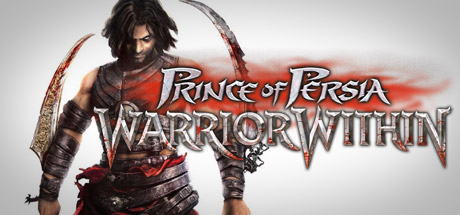
Prince of Persia: Warrior Within
Enter the dark underworld of Prince of Persia Warrior Within, the sword-slashing sequel to the critically acclaimed Prince of Persia: The Sands of Time™. Hunted by Dahaka, an immortal incarnation of Fate seeking divine retribution, the Prince embarks upon a path of both carnage and mystery to defy his preordained death.

Prince of Persia
The critically acclaimed Prince of Persia® franchise returns for the first time on next-generation platforms with an all-new epic journey. Built by the same award-winning Ubisoft Montreal studio that created Assassin's Creed™, Prince of Persia has been in development for over three years to deliver a whole new action-adventure gaming...

Horizon Zero Dawn Remastered
Experience the critically acclaimed Horizon Zero Dawn™ with stunning new visuals and upgraded features. In a far future where colossal machines roam the Earth, pockets of humanity survive in unique tribes among the lush, overgrown ruins of our long-lost civilization.

Tomb Raider I-III Remastered Starring Lara Croft
Discover Lara Croft’s Original Adventures, Lovingly Restored – Now with New Challenge Mode
Frequently Asked Questions
MOTORSLICE is currently priced at 15.60€ on Steam.
Yes, MOTORSLICE is currently available at a 20% discount. You can purchase it for 15.60€ on Steam.
Yes, MOTORSLICE received 4,900 positive votes out of a total of 5,735 achieving a rating of 8.28.
😎
MOTORSLICE was developed by Regular Studio and published by Top Hat Studios and Inc..
Yes, MOTORSLICE is playable and fully supported on Windows.
No, MOTORSLICE is not playable on MacOS.
No, MOTORSLICE is not playable on Linux.
Yes, MOTORSLICE is playable and fully supported on Steam Deck.
Yes, MOTORSLICE is playable and fully supported on Steam Machine.
No, MOTORSLICE does not support VR.
MOTORSLICE is a single-player game.
No, MOTORSLICE does not currently offer any DLC.
No, MOTORSLICE does not support mods via Steam Workshop.
No, MOTORSLICE does not support Steam Remote Play.
Yes, MOTORSLICE is enabled for Steam Family Sharing. This means you can share the game with authorized users from your Steam Library, allowing them to play it on their own accounts. For more details on how the feature works, you can read the original Steam Family Sharing announcement or visit the Steam Family Sharing user guide and FAQ page.
You can find solutions or submit a support ticket by visiting the Steam Support page for MOTORSLICE.
Data sources
The information presented on this page is sourced from reliable APIs to ensure accuracy and relevance. We utilize the Steam API to gather data on game details, including titles, descriptions, prices, and user reviews. This allows us to provide you with the most up-to-date information directly from the Steam platform.
Additionally, we incorporate data from the SteamSpy API, which offers insights into game sales and player statistics. This helps us present a comprehensive view of each game's popularity and performance within the gaming community.
Last Updates| Steam data | 15 September 2026 04:21 UTC |
|---|---|
| SteamSpy data | 18 September 2026 17:15 UTC |
| Steam price | 19 September 2026 18:49 UTC |
| Steam reviews | 19 September 2026 13:56 UTC |
If you'd like to dive deeper into the details about MOTORSLICE, we invite you to check out a few dedicated websites that offer extensive information and insights. These platforms provide valuable data, analysis, and user-generated reports to enhance your understanding of the game and its performance.
- SteamDB - A comprehensive database of everything on Steam about MOTORSLICE
- SteamCharts - Analysis of MOTORSLICE concurrent players on Steam
- ProtonDB - Crowdsourced reports on Linux and Steam Deck MOTORSLICE compatibility

Game modes
Features
Online players
60
Developer
Regular Studio
Publisher
Top Hat Studios, Inc.
Release
05 May 2026
Platforms