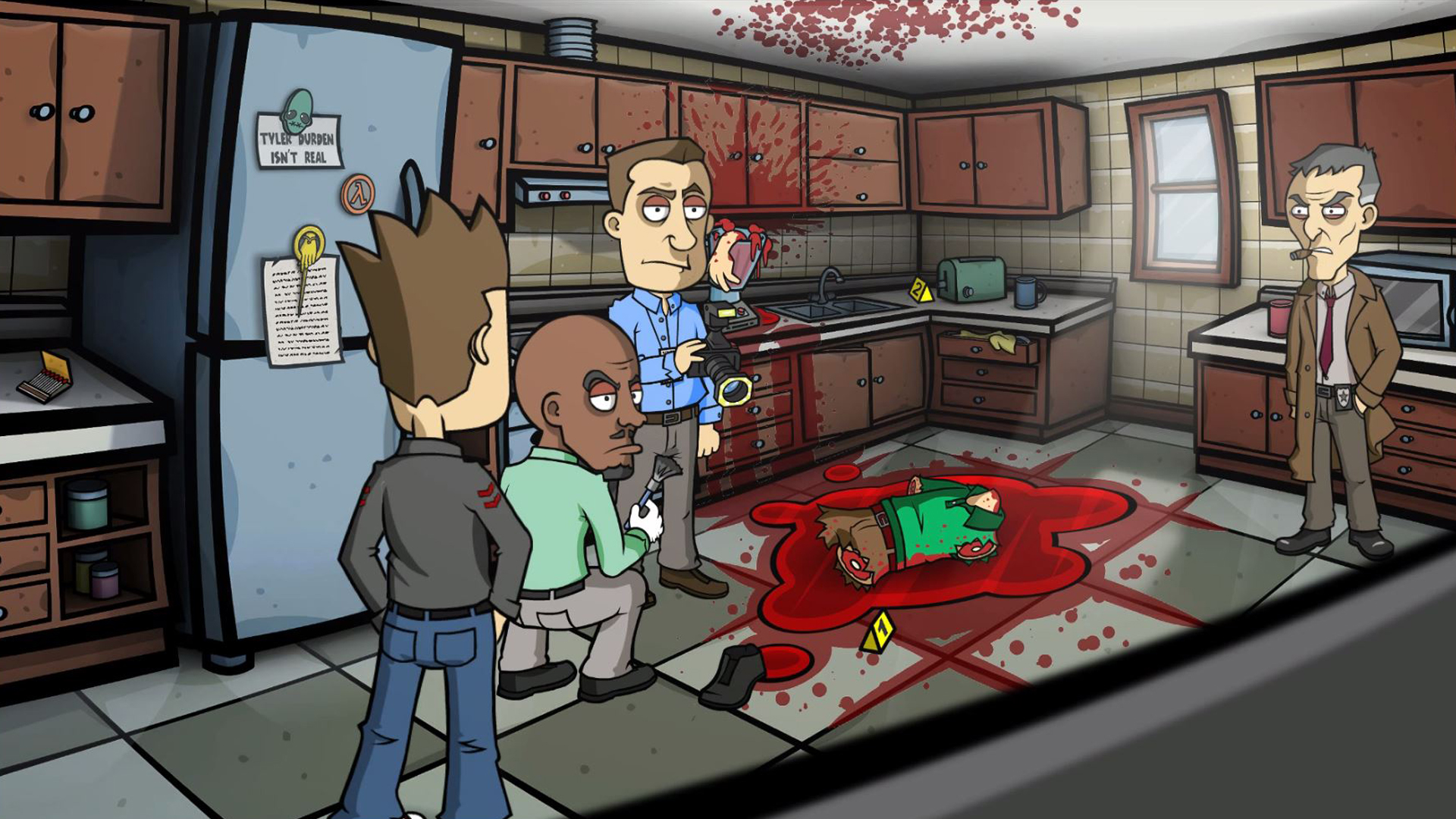
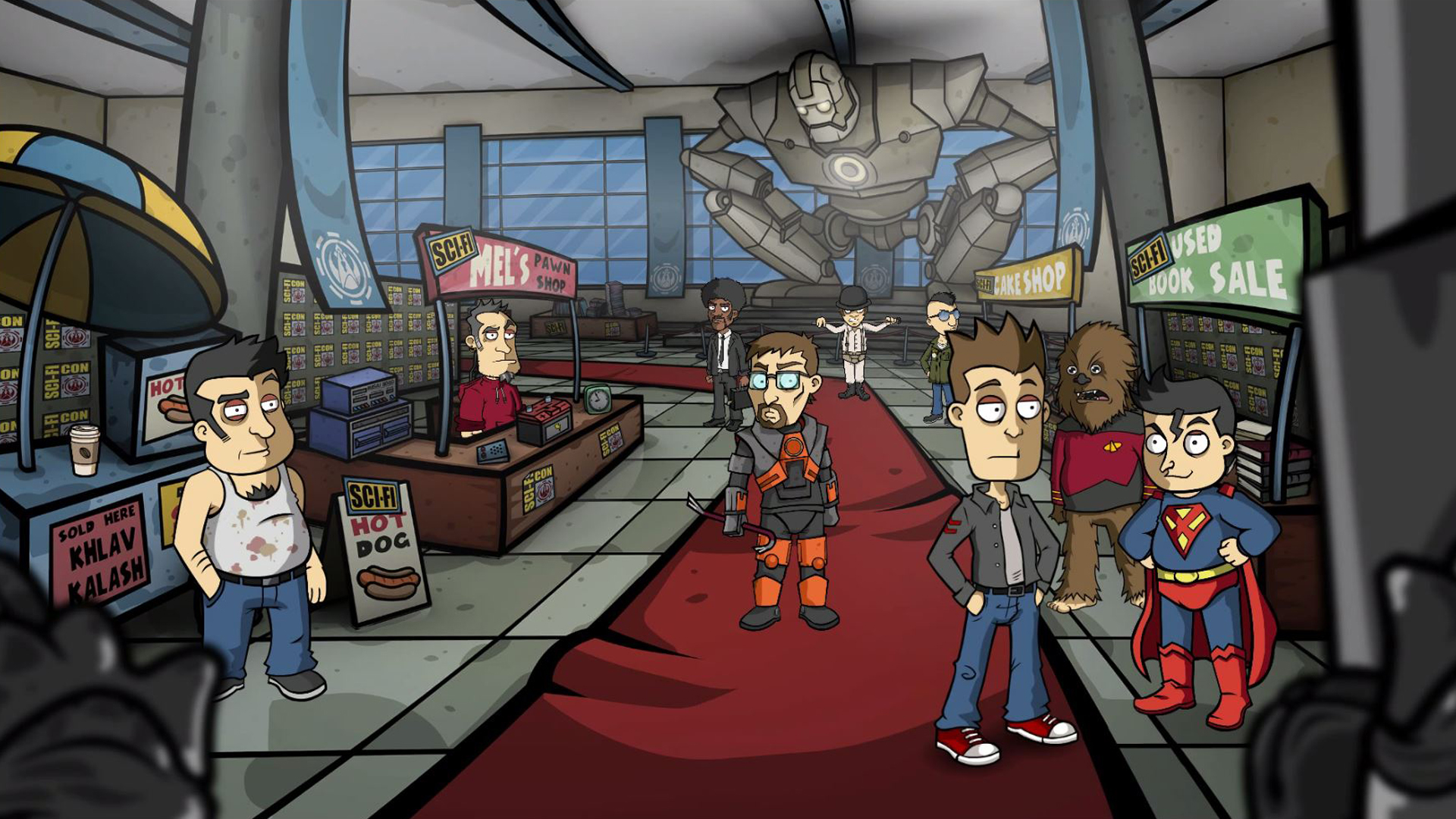
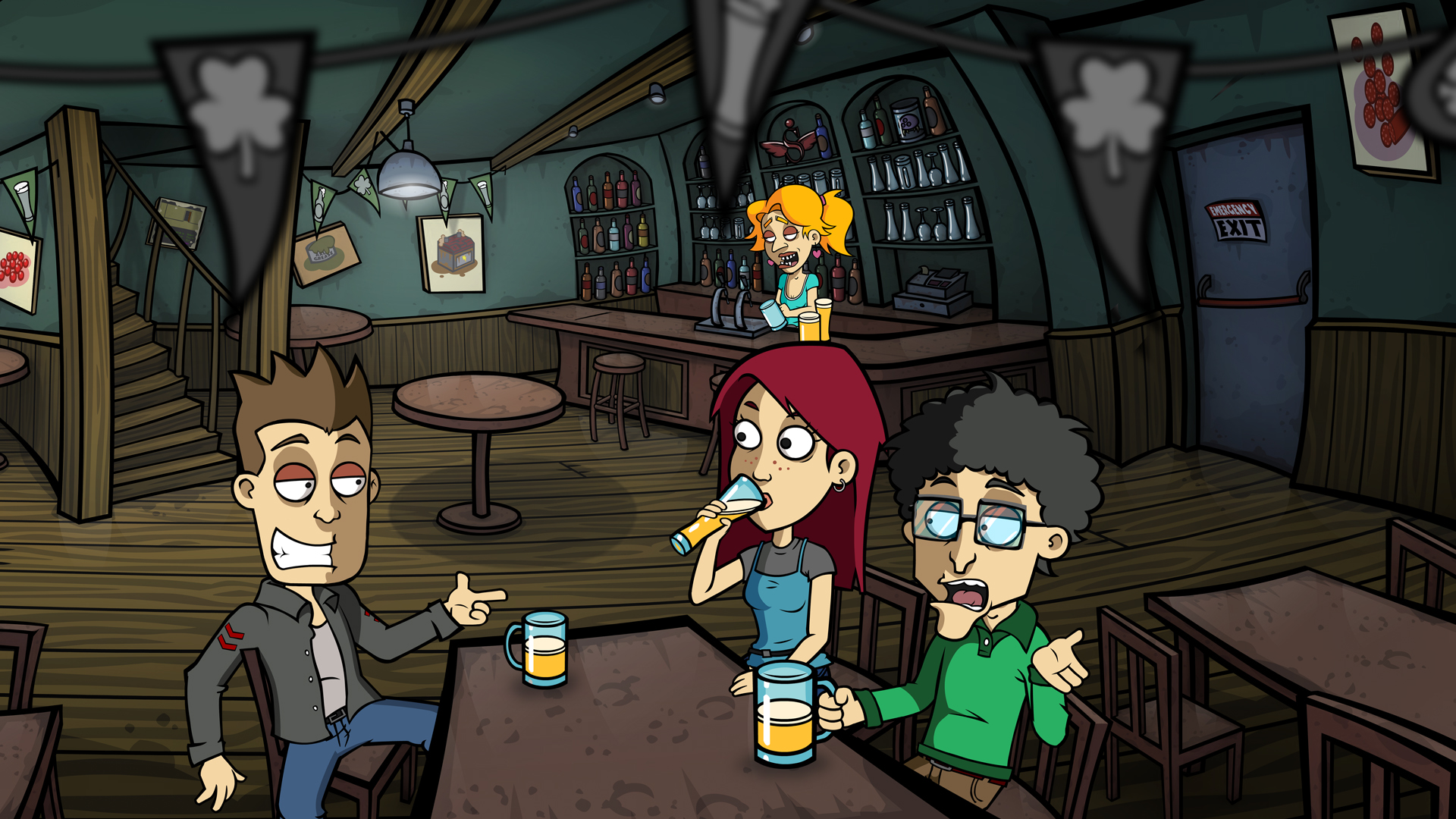
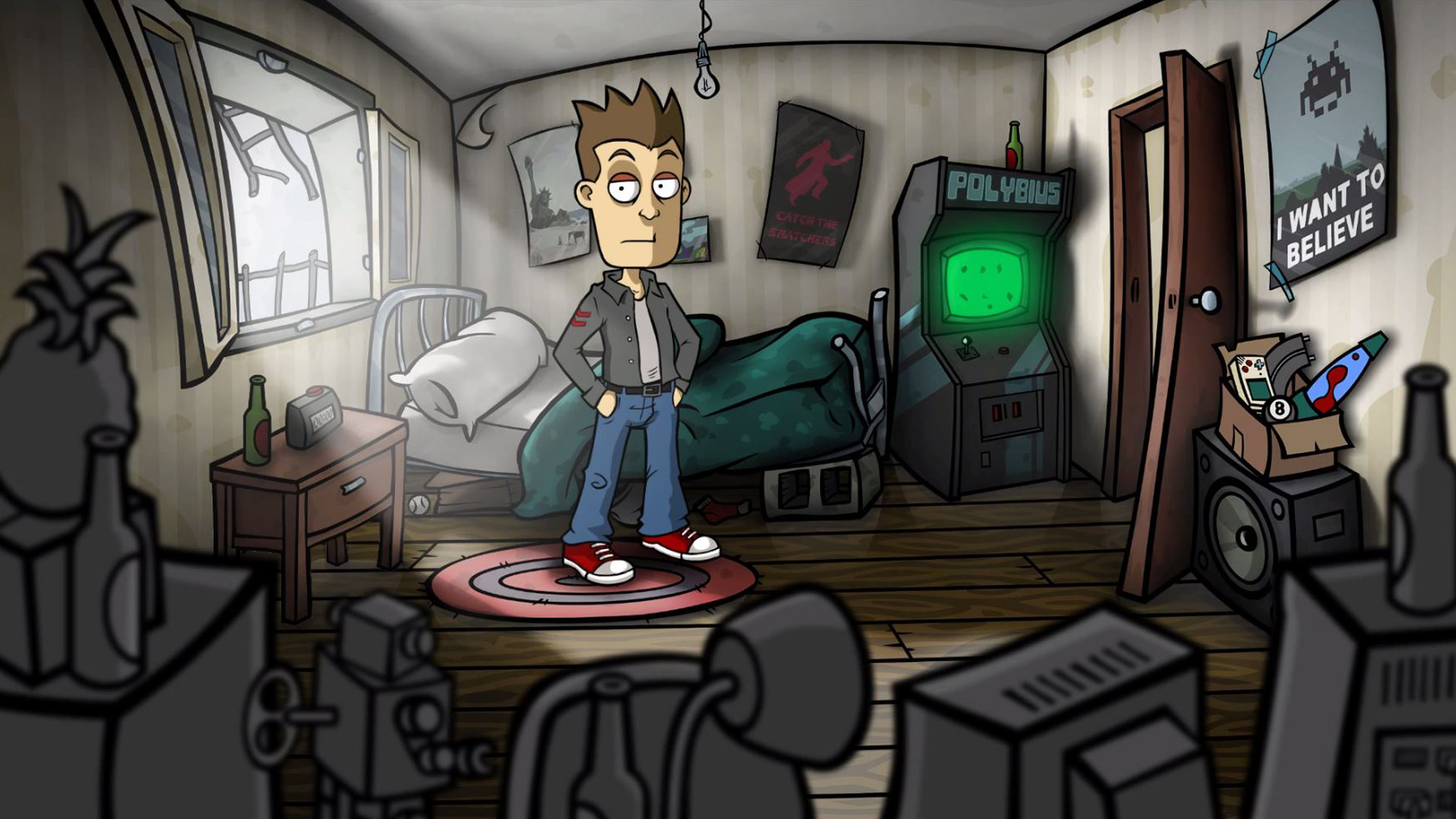
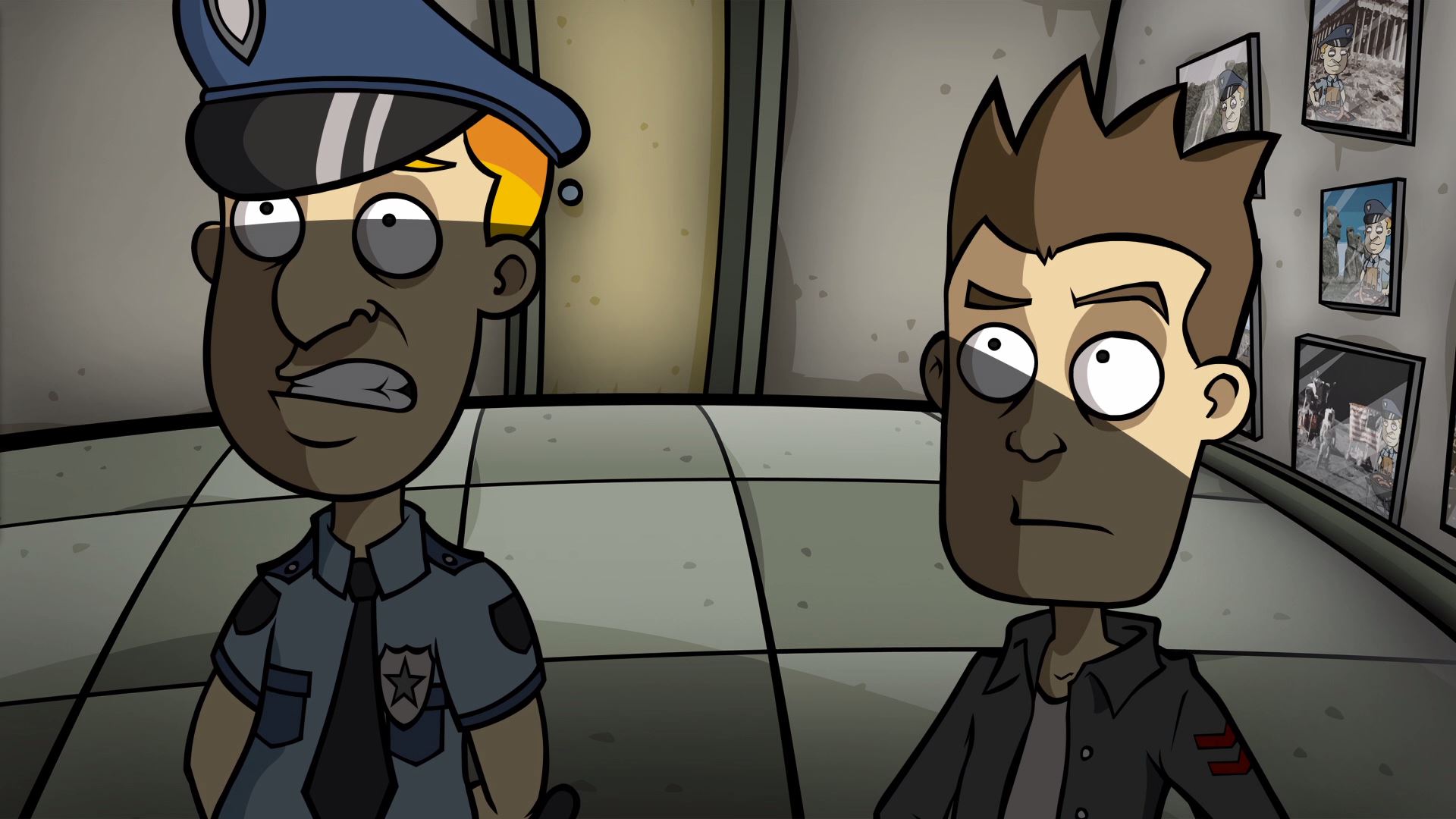
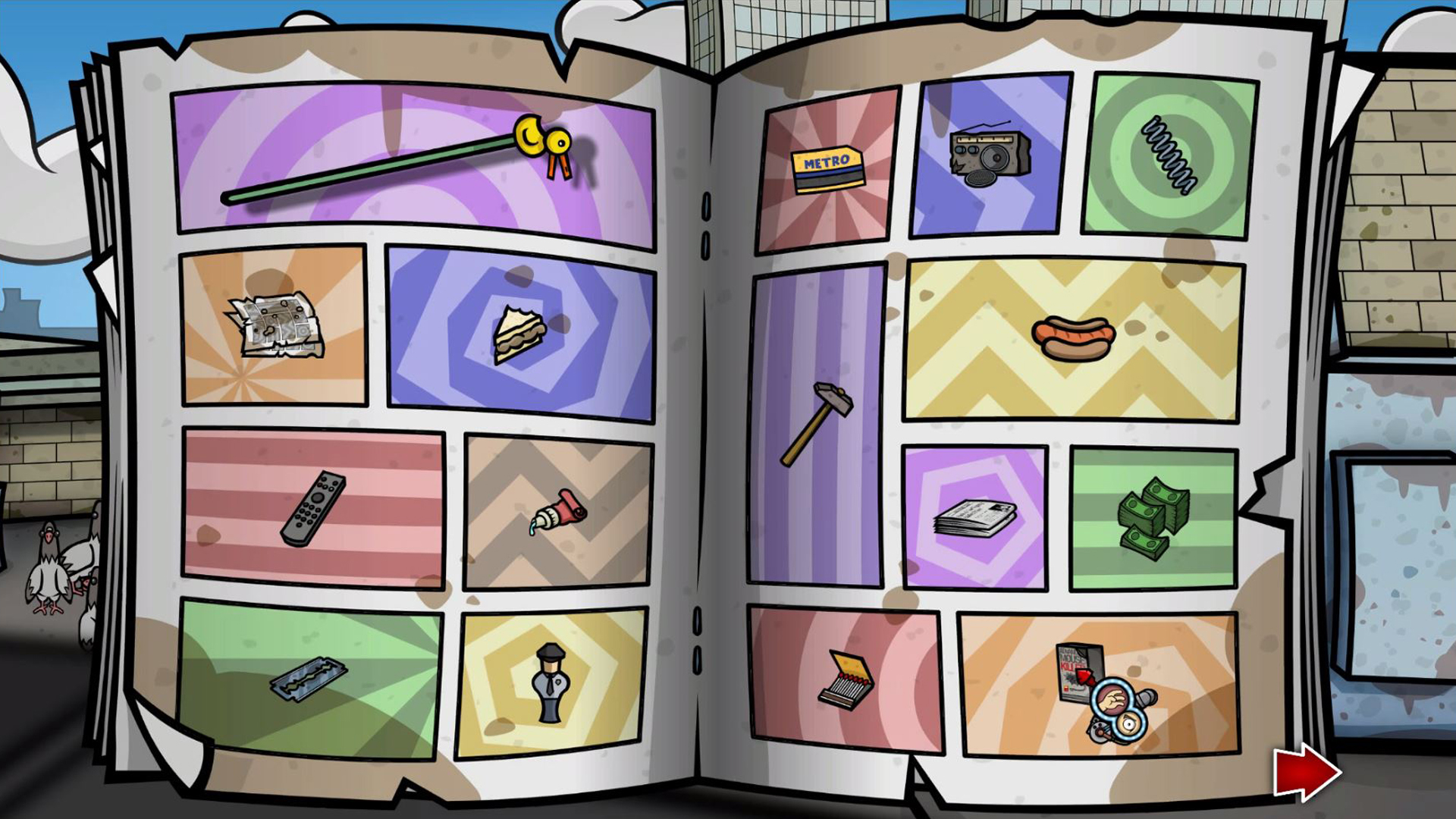
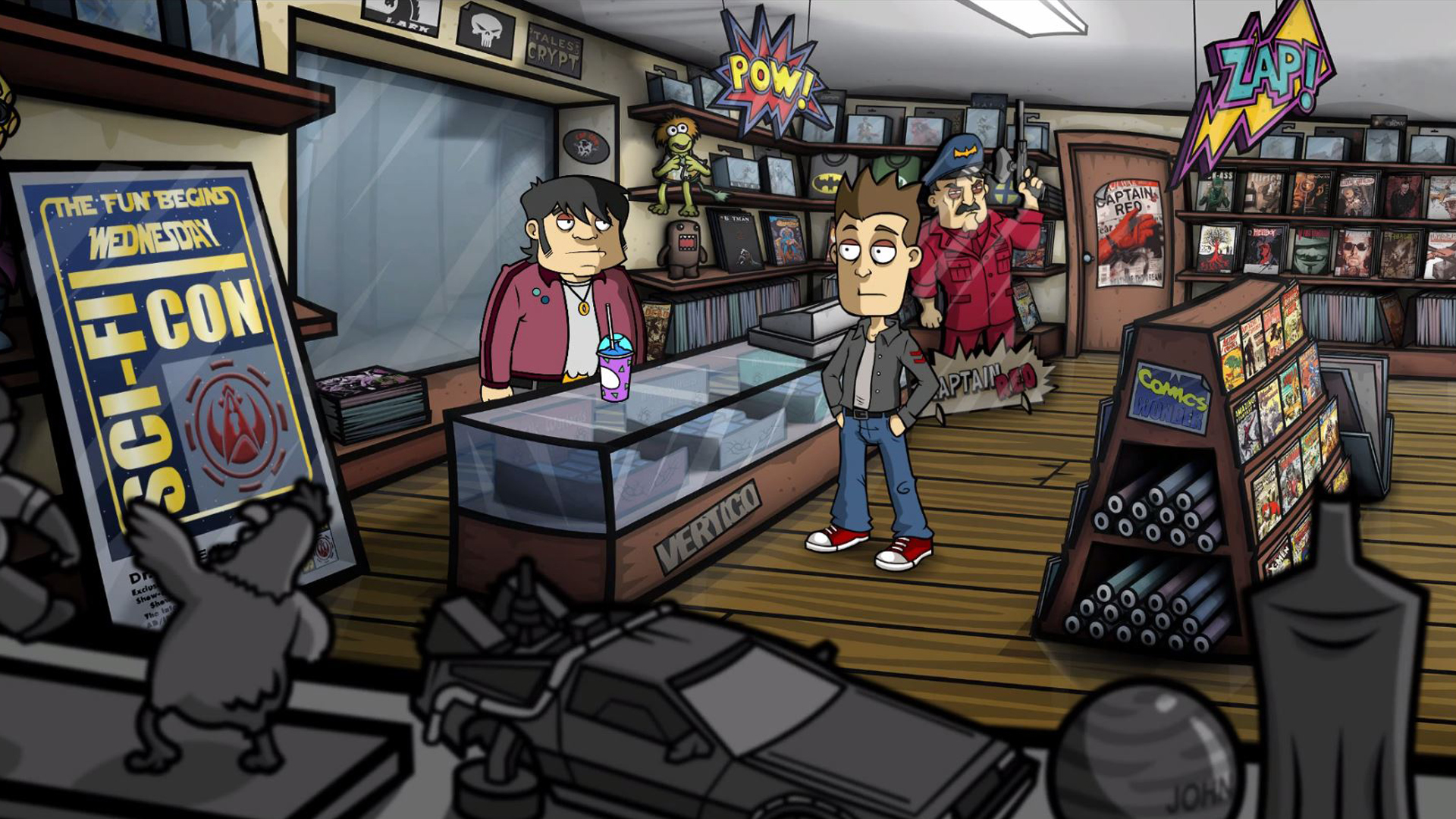
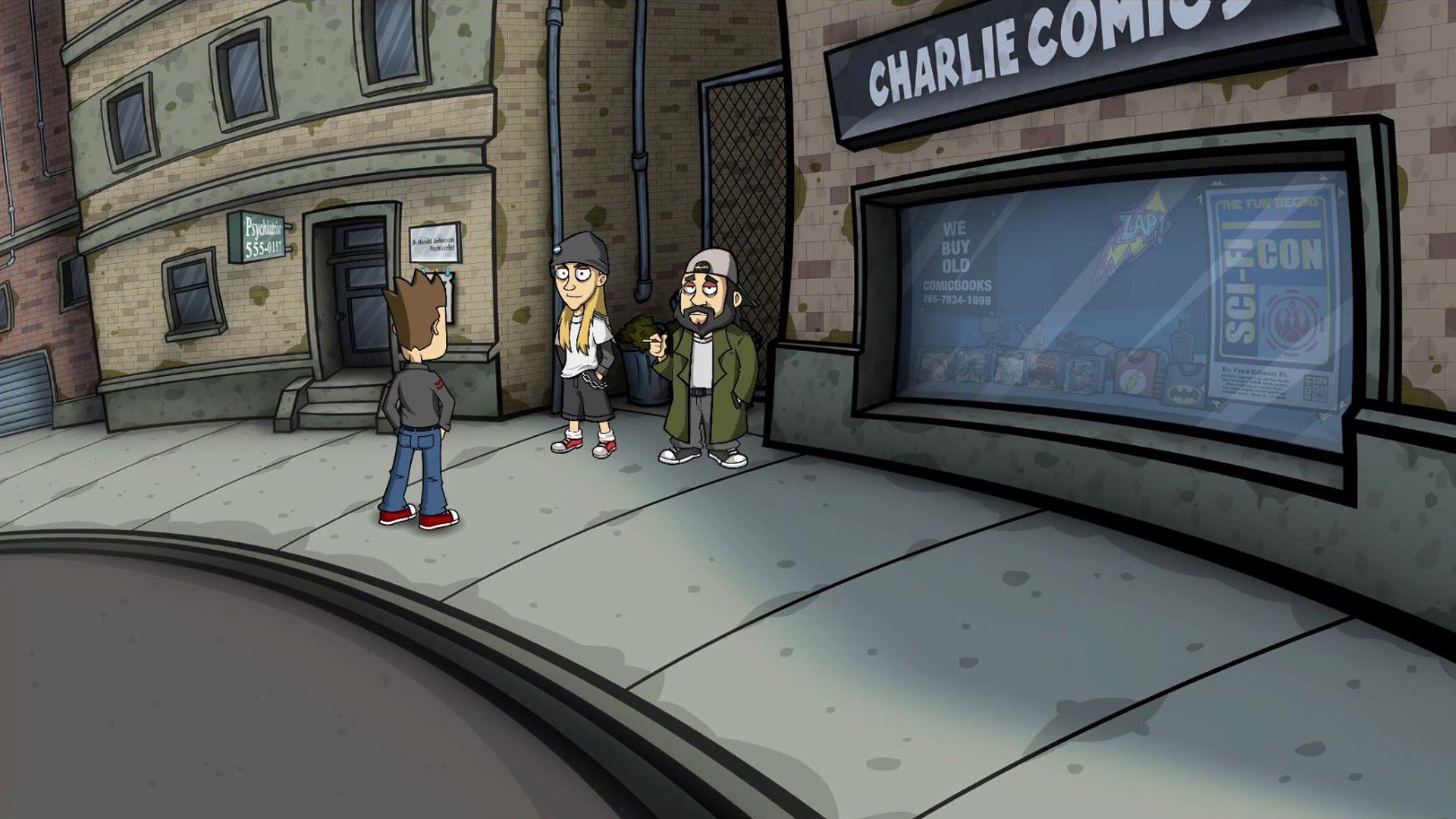
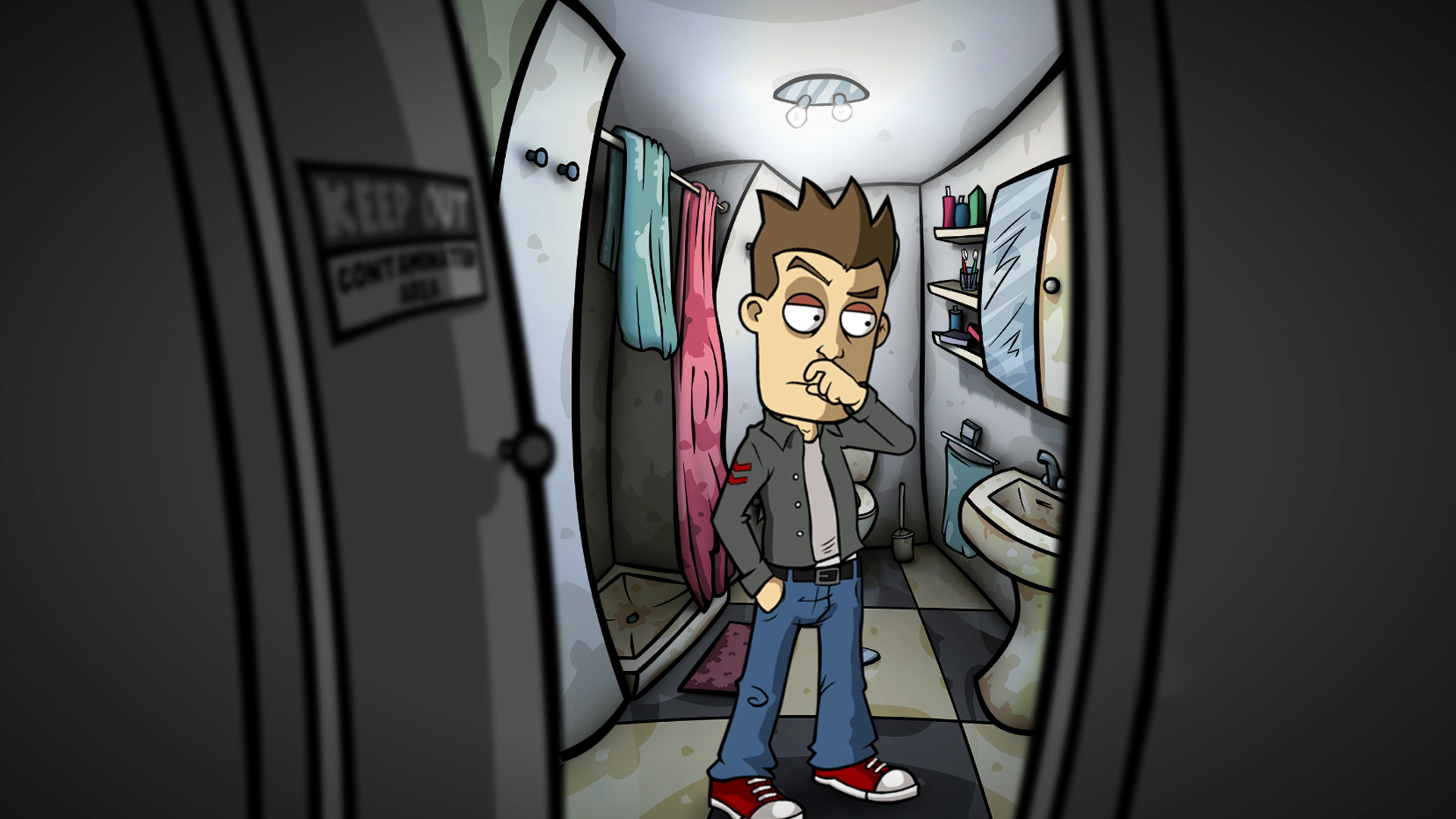
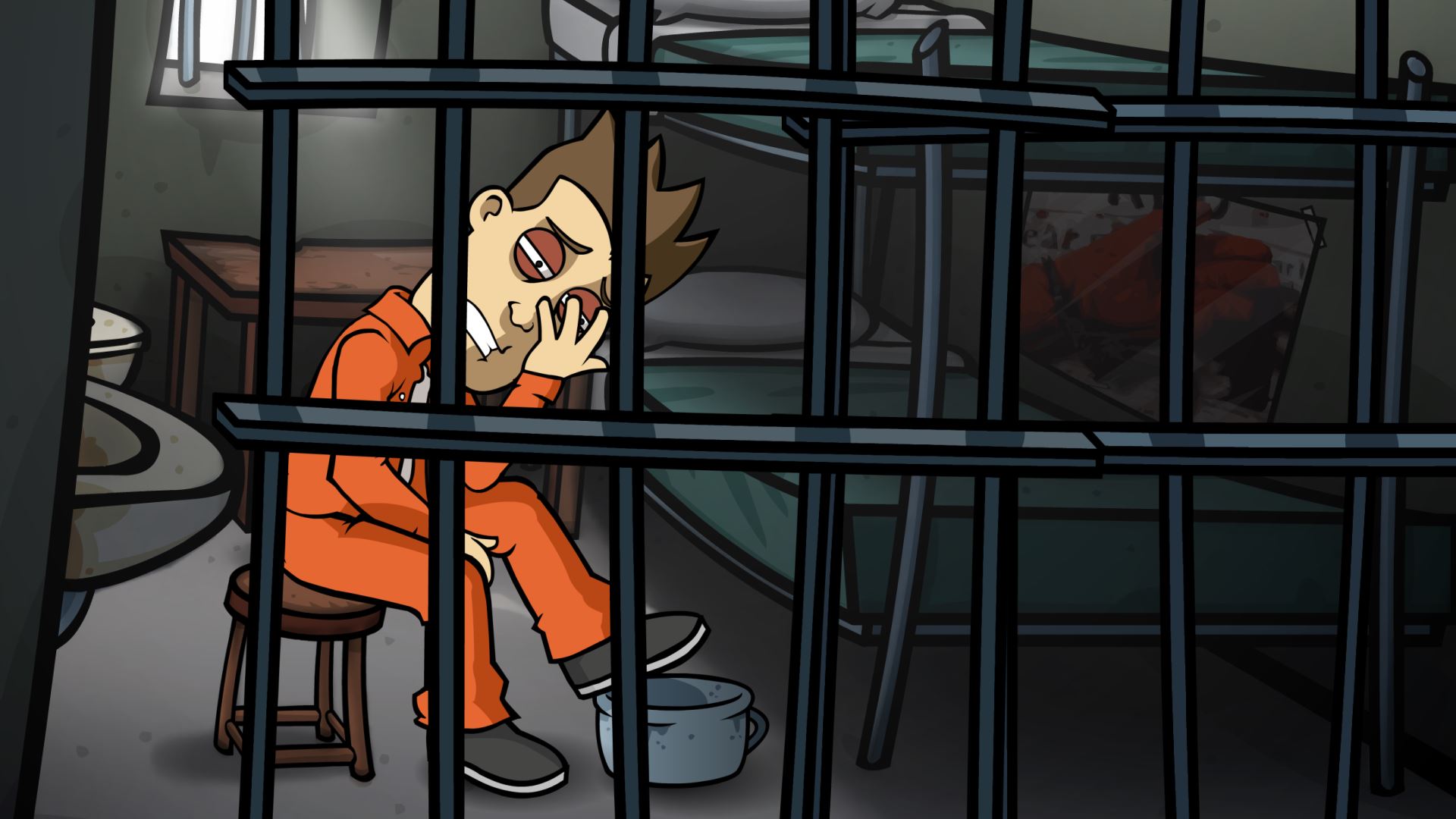
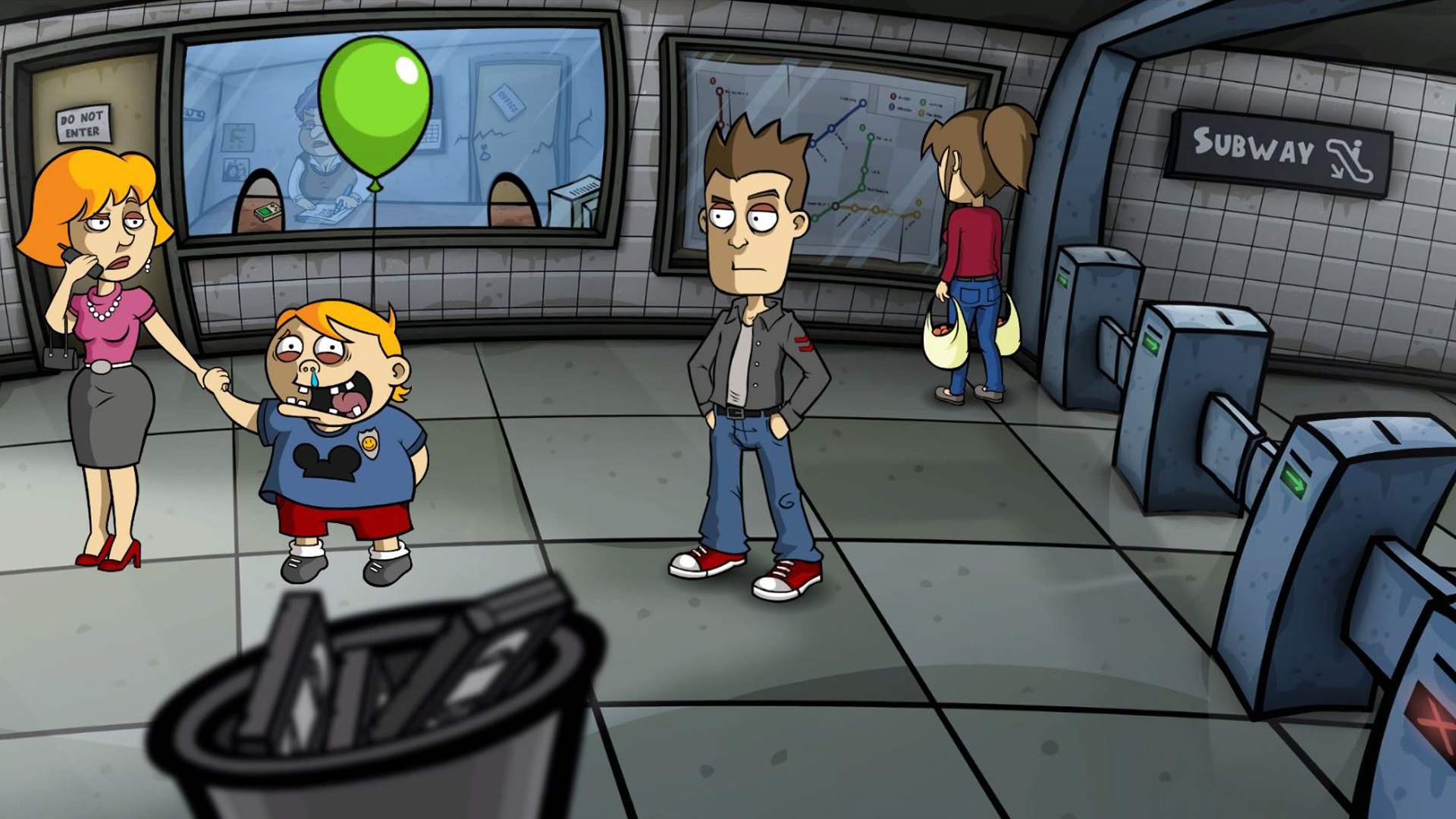
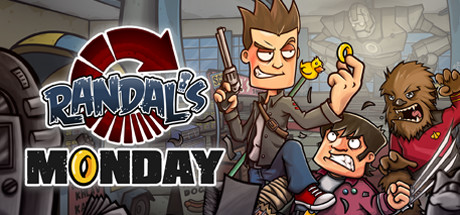
Randal’s Monday, developed by Nexus Game Studios and published by Daedalic Entertainment, is a point-and-click adventure that revels in its love for classic 1990s adventure games while drenching itself in dark humor, irreverence, and an overwhelming amount of pop culture references. The game follows Randal Hicks, an unscrupulous slacker and kleptomaniac whose life spirals into chaos after he steals his best friend’s engagement ring and inadvertently becomes trapped in a time loop. Each morning he wakes up to the same Monday, forced to relive the events of that day while trying to undo the damage he’s caused—or at least survive the absurd consequences of his own actions. The premise immediately recalls films like *Groundhog Day*, but Randal’s Monday puts its own spin on the concept, using the repeating-day structure as a vehicle for both cynical comedy and intricate puzzle-solving across a universe filled with strange characters and bizarre logic. The game’s narrative leans heavily into its central gimmick. Every time Randal wakes up, subtle and not-so-subtle changes occur in the world around him, creating a sense of progression within repetition. As the story unfolds, the web of his mistakes becomes increasingly tangled, and each new Monday introduces more chaotic consequences. Randal himself is a deliberately unlikable protagonist—selfish, sarcastic, and morally questionable—but his abrasive personality is a large part of what defines the game’s tone. His interactions with the cast of oddball supporting characters, from neurotic landlords to deranged ex-girlfriends, serve as opportunities for both storytelling and comedic banter. The writing is sharp and fast-paced, filled with references to video games, movies, comics, and TV shows that serve as a constant wink to genre veterans. The humor walks a fine line between self-aware parody and outright absurdity, and while it occasionally overindulges in cynicism, it succeeds in painting a vivid portrait of a man whose life is collapsing in on itself, one sarcastic remark at a time. Visually, Randal’s Monday adopts a colorful, hand-drawn art style that channels the cartoon aesthetic of older LucasArts and Sierra titles. The environments are cluttered with detail, and nearly every screen hides nods to pop culture, Easter eggs, or small jokes waiting to be discovered. This density gives the world a sense of personality and charm even when the story itself delves into bleak or nihilistic humor. The animation work is expressive enough to give each character a distinct presence, while the voice acting—particularly Jeff Anderson, best known for his role as Randal Graves in *Clerks*, voicing the titular character—adds credibility and energy to the dialogue. The production quality is solid for an indie project, and Daedalic’s influence can be seen in the game’s interface polish and fluid scene transitions. The soundtrack complements the action with upbeat yet understated tunes, maintaining a light-hearted rhythm amid the sarcasm and chaos. When it comes to gameplay, Randal’s Monday is firmly rooted in traditional point-and-click design. Players navigate through various environments, collecting items, combining them, and using them in creative (and sometimes illogical) ways to progress through the story. Each puzzle contributes to Randal’s attempt to break the curse and make it through a Monday that doesn’t reset. Unfortunately, this is where the game’s old-school devotion becomes its greatest weakness. The puzzles often rely on obscure connections and leaps of logic that make little sense without resorting to exhaustive trial and error. Some require combining items in bizarre ways that would be impossible to deduce organically, which can leave players feeling more frustrated than clever. While the game does include a hint system, it rarely alleviates the sense that many of the puzzles are built more around arbitrary design than intuitive reasoning. The structure, though nostalgic for veterans of the genre, lacks the refinement of modern adventure design, where clues tend to flow more naturally from dialogue and environment. The writing, though ambitious, is equally polarizing. On one hand, it’s loaded with references and meta-commentary that will delight anyone with a fondness for pop culture trivia. Nearly every line seems to pay homage to something—classic sci-fi, fantasy, sitcoms, comic books, even other adventure games. On the other hand, this constant barrage of in-jokes can feel overwhelming and self-indulgent, occasionally drowning out the narrative’s emotional beats. The humor is unapologetically crude and self-aware, embracing an adult tone filled with sarcasm, profanity, and nihilistic undertones. At times, this approach works wonderfully, especially when the writing mocks the genre itself or subverts expectations in creative ways. But the relentless snark can also make Randal difficult to root for, as his personality oscillates between funny and insufferable. What ultimately saves the experience from collapsing under its cynicism is the clever way the time-loop structure allows for reflection: as Randal replays the same day, the player begins to see how his selfishness traps him in an endless cycle of failure, creating a surprisingly thematic link between character and gameplay. The length of the adventure is substantial, often stretching beyond ten hours depending on how quickly players can solve its more convoluted puzzles. This gives it a scope that many modern point-and-click titles lack, but the pacing can suffer as a result. There are moments when the repetition inherent to the story concept—combined with the backtracking and re-used environments—makes progress feel tedious. Still, the developers inject enough variety through dialogue changes, new character behaviors, and evolving scenarios to keep each “Monday” slightly different. For players who appreciate exploration, the amount of interactive content is generous, with dozens of humorous item descriptions and hidden details that reward curiosity. Randal’s Monday stands as both a tribute to and a critique of the genre it inhabits. It’s a game that clearly loves its source material—the LucasArts and Sierra classics—but it also inherits their flaws, sometimes intentionally, sometimes not. The combination of nostalgic design, irreverent humor, and strong visual identity makes it memorable, even when it tests the player’s patience. It is, in many ways, a game made for a specific kind of audience: those who grew up on *Monkey Island* or *Day of the Tentacle* and can appreciate both the homage and the satire. For others, it may feel too self-indulgent or obtuse to fully enjoy. Regardless, it’s hard to deny that Randal’s Monday has personality—it’s crude, chaotic, and occasionally brilliant, but it never feels hollow. Like its antihero, it stumbles often, but its willingness to lean into its flaws gives it a strange charm. It’s a flawed but fascinating adventure, one that embraces the spirit of its predecessors while daring to laugh at itself all the way through another miserable Monday. Rating: 7/10
Expand the review