
Stray Blade on Steam - User reviews, Price & Information
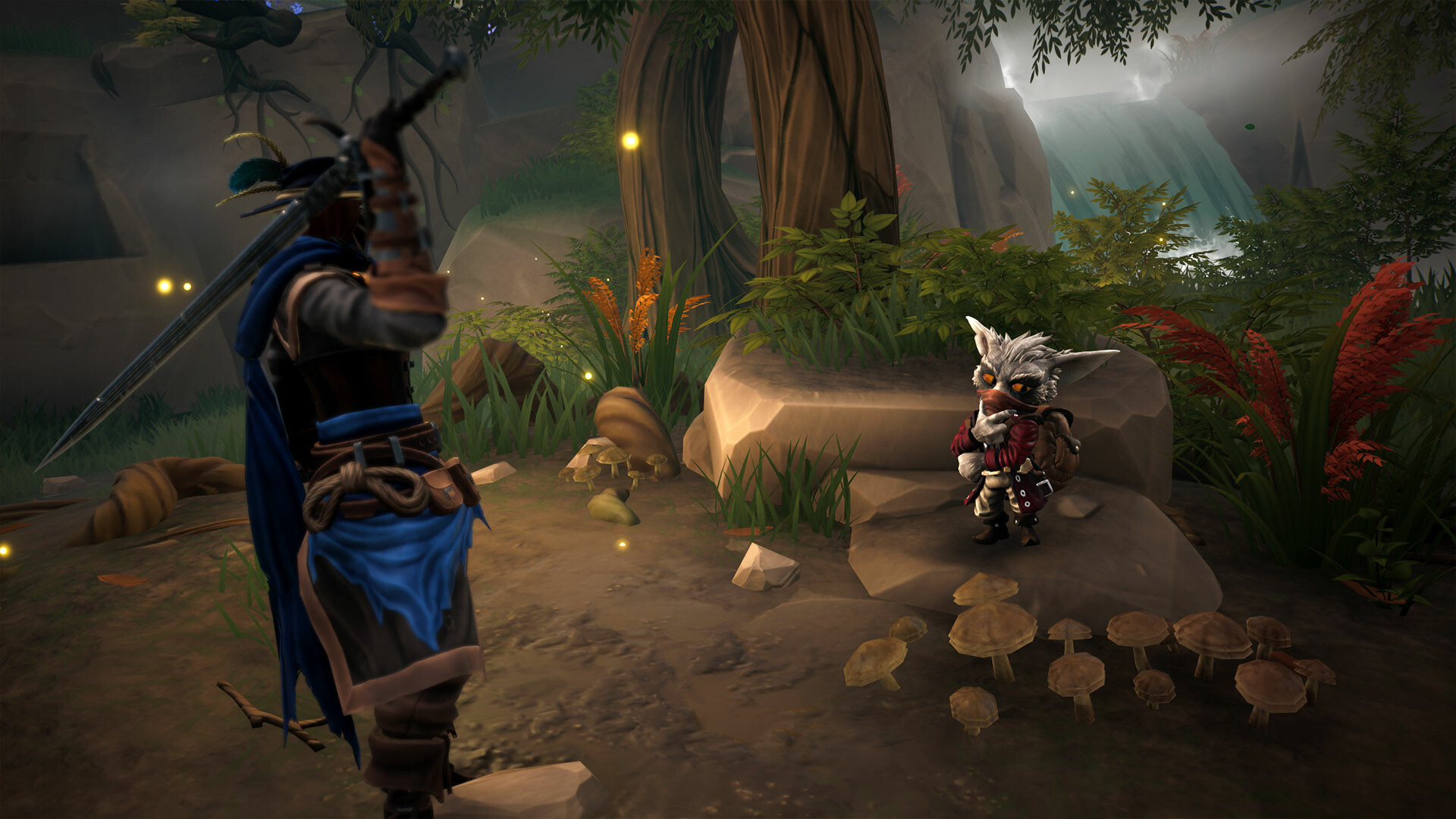
Stray Blade is an action-adventure where you play a rogue Adventurer exploring the ancient Valley of Acrea with your companion, the Xhinnon wolf Boji. Unveil the history of the forgotten valley and master the powers of the three Acrean Metals to restore balance to this war-torn land.
Stray Blade is a combat, action-adventure and exploration game
developed by Point Blank Games
and published by 505 Games.
Released on April 20th 2023 is available only on Windows
in 11 languages: English, French, Italian, German, Spanish - Spain, Japanese, Korean, Portuguese - Brazil, Russian, Simplified Chinese and Traditional Chinese.
It has received 486 reviews of which 358 were positive and 128 were negative resulting in a rating of 7 out of 10. 😊
The game is currently priced at 19.99€ on Steam, but you can find it for 1.96€ on Gamivo.
The Steam community has classified Stray Blade into these genres:
Media & Screenshots
Get an in-depth look at Stray Blade through various videos and screenshots.







System requirements
These are the minimum specifications needed to play the game. For the best experience, we recommend that you verify them.
- Requires a 64-bit processor and operating system
- OS: 64-bit Windows 10
- Processor: AMD FX-9590 (8 * 4700) or equivalent or Intel Core i7-6700 (4 * 3400)
- Memory: 8 GB RAM
- Graphics: Radeon RX 480 (8192 MB) or GeForce GTX 1050 Ti (4096 MB)
- DirectX: Version 12
- Storage: 30 GB available space
- Sound Card: Any
- VR Support: N/A
User reviews & Ratings
Explore reviews from Steam users sharing their experiences and what they love about the game.
Similar games
View all











Frequently Asked Questions
Data sources
The information presented on this page is sourced from reliable APIs to ensure accuracy and relevance. We utilize the Steam API to gather data on game details, including titles, descriptions, prices, and user reviews. This allows us to provide you with the most up-to-date information directly from the Steam platform.
Additionally, we incorporate data from the SteamSpy API, which offers insights into game sales and player statistics. This helps us present a comprehensive view of each game's popularity and performance within the gaming community.
Last Updates| Steam data | 09 March 2026 11:29 |
|---|---|
| SteamSpy data | 13 March 2026 06:54 |
| Steam price | 15 March 2026 04:31 |
| Steam reviews | 13 March 2026 05:50 |
If you'd like to dive deeper into the details about Stray Blade, we invite you to check out a few dedicated websites that offer extensive information and insights. These platforms provide valuable data, analysis, and user-generated reports to enhance your understanding of the game and its performance.
- SteamDB - A comprehensive database of everything on Steam about Stray Blade
- SteamCharts - Analysis of Stray Blade concurrent players on Steam
- ProtonDB - Crowdsourced reports on Linux and Steam Deck Stray Blade compatibility

 19.99€
Visit Store
19.99€
Visit Store
 🔥 Deal
-91%
19.99€
1.96€
Buy Now
🔥 Deal
-91%
19.99€
1.96€
Buy Now
 -84%
19.99€
3.27€
Visit Store
-84%
19.99€
3.27€
Visit Store
 -83%
19.99€
3.56€
Visit Store
-83%
19.99€
3.56€
Visit Store