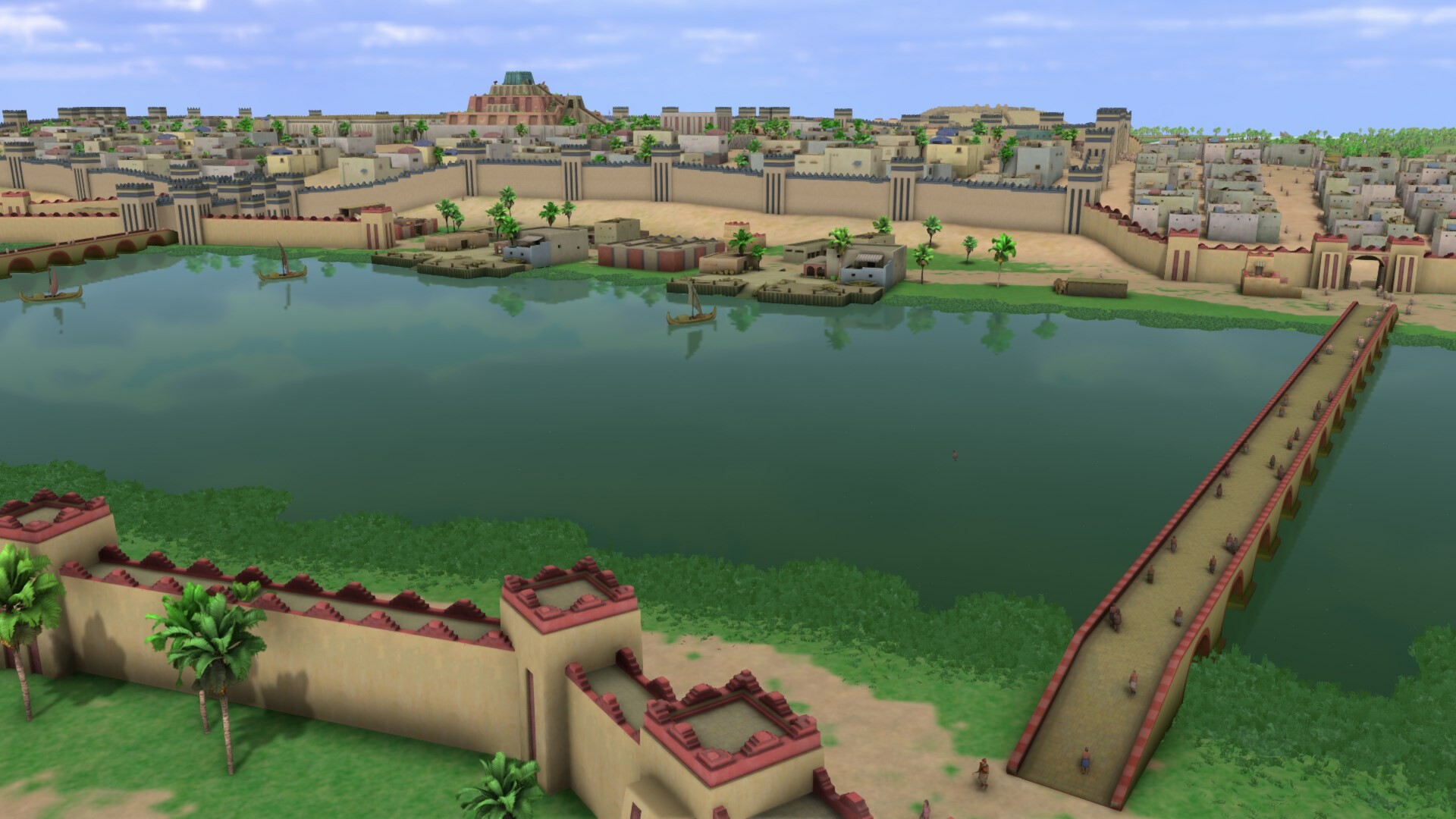
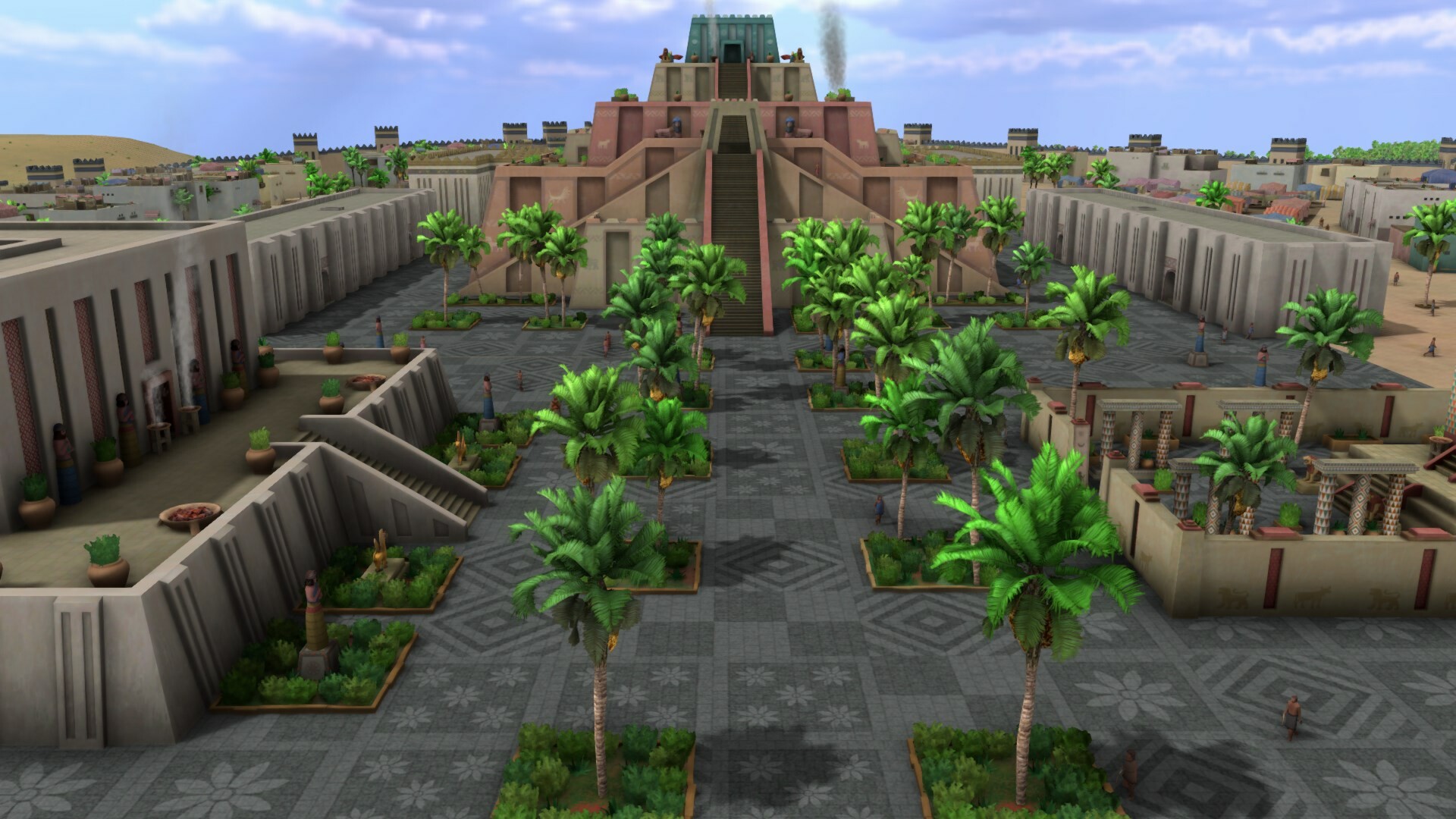
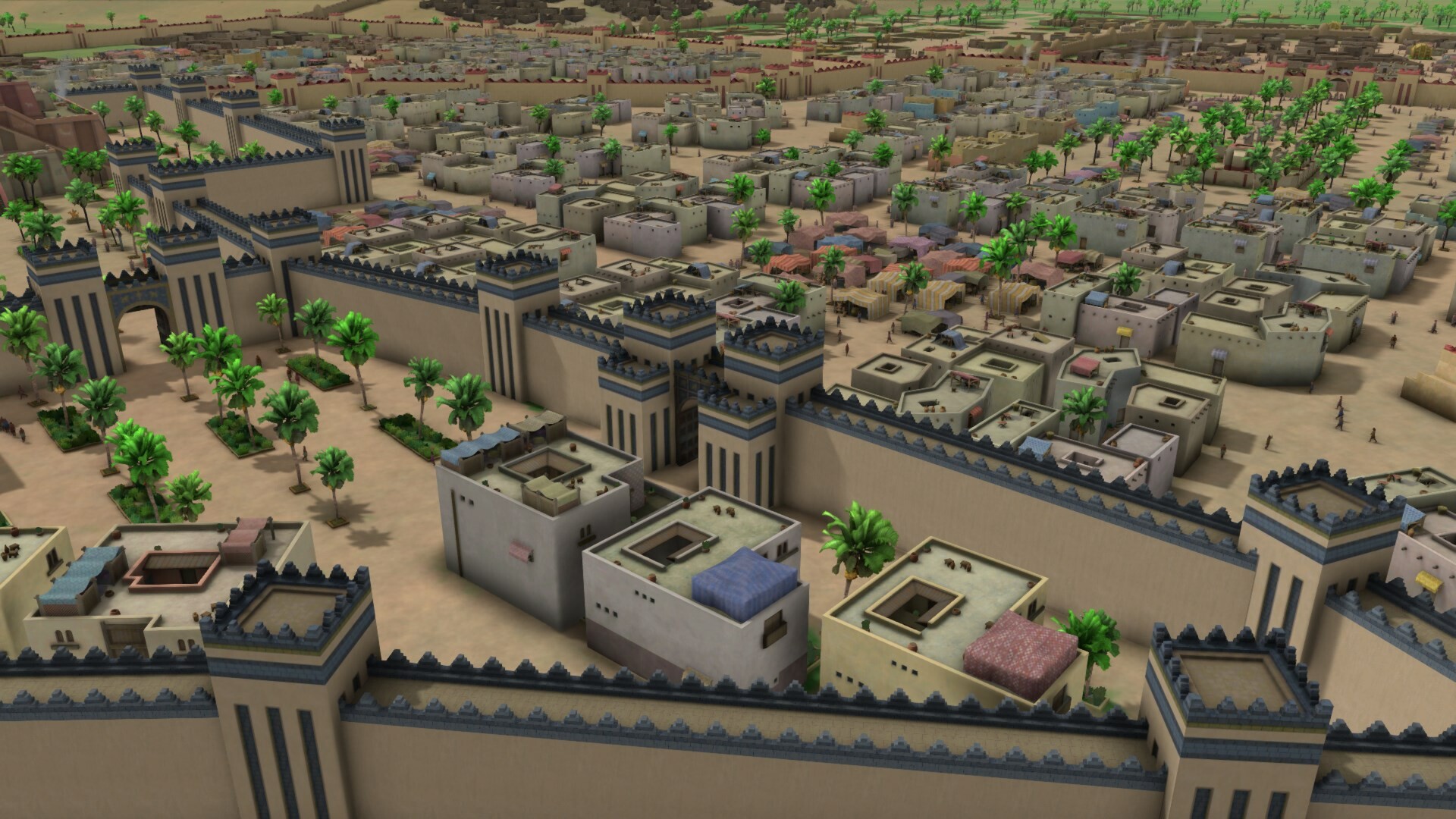
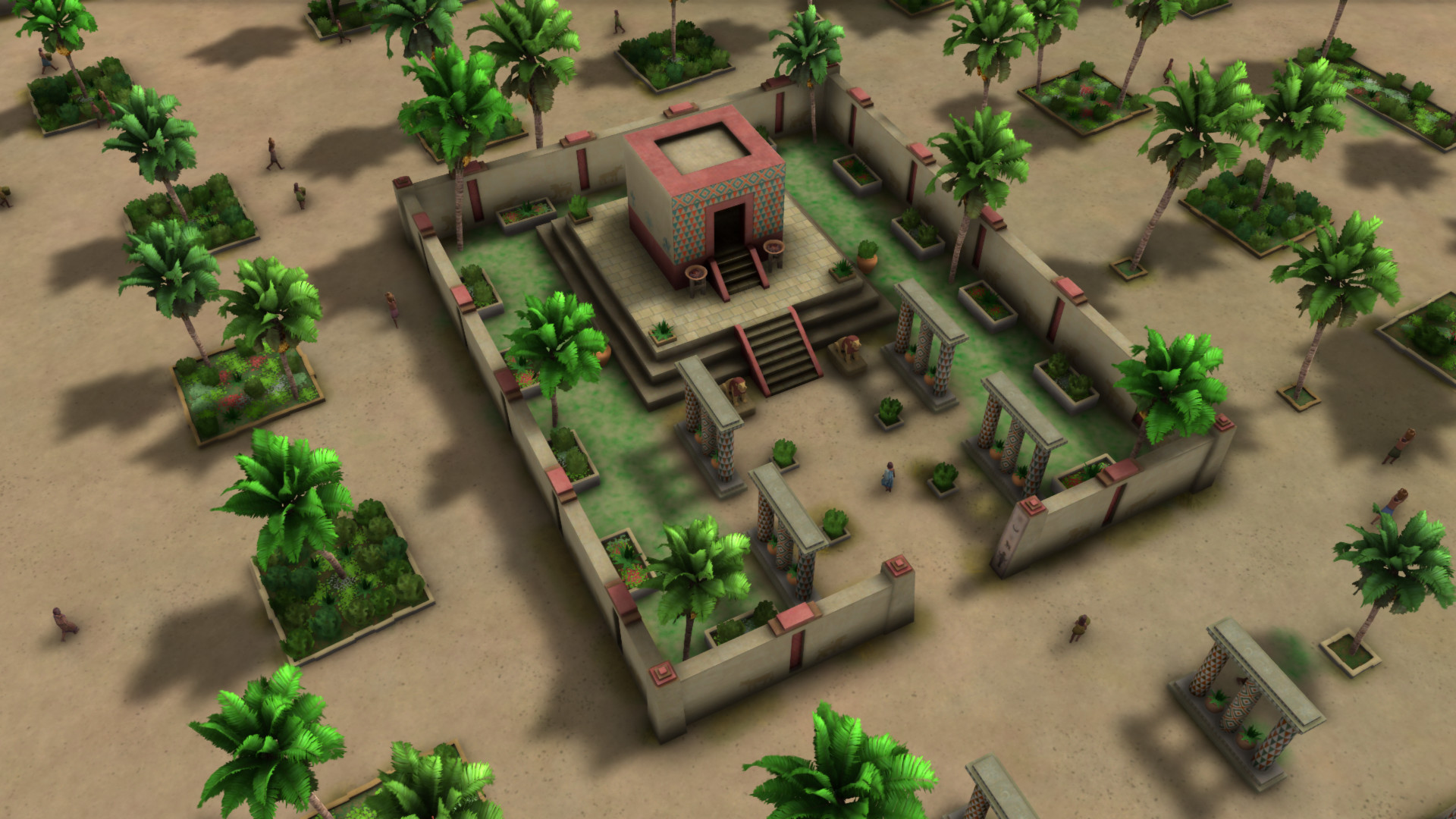
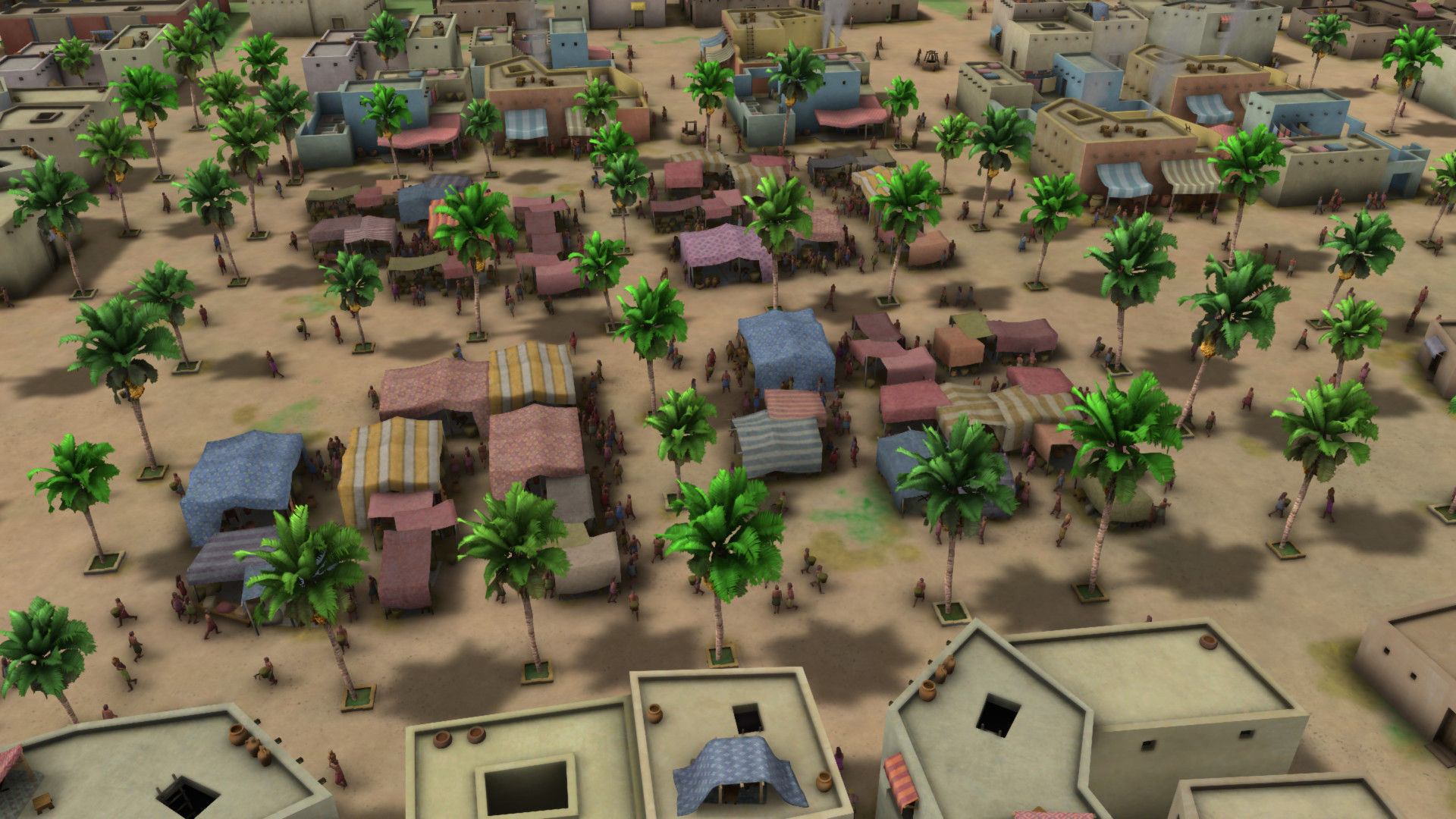
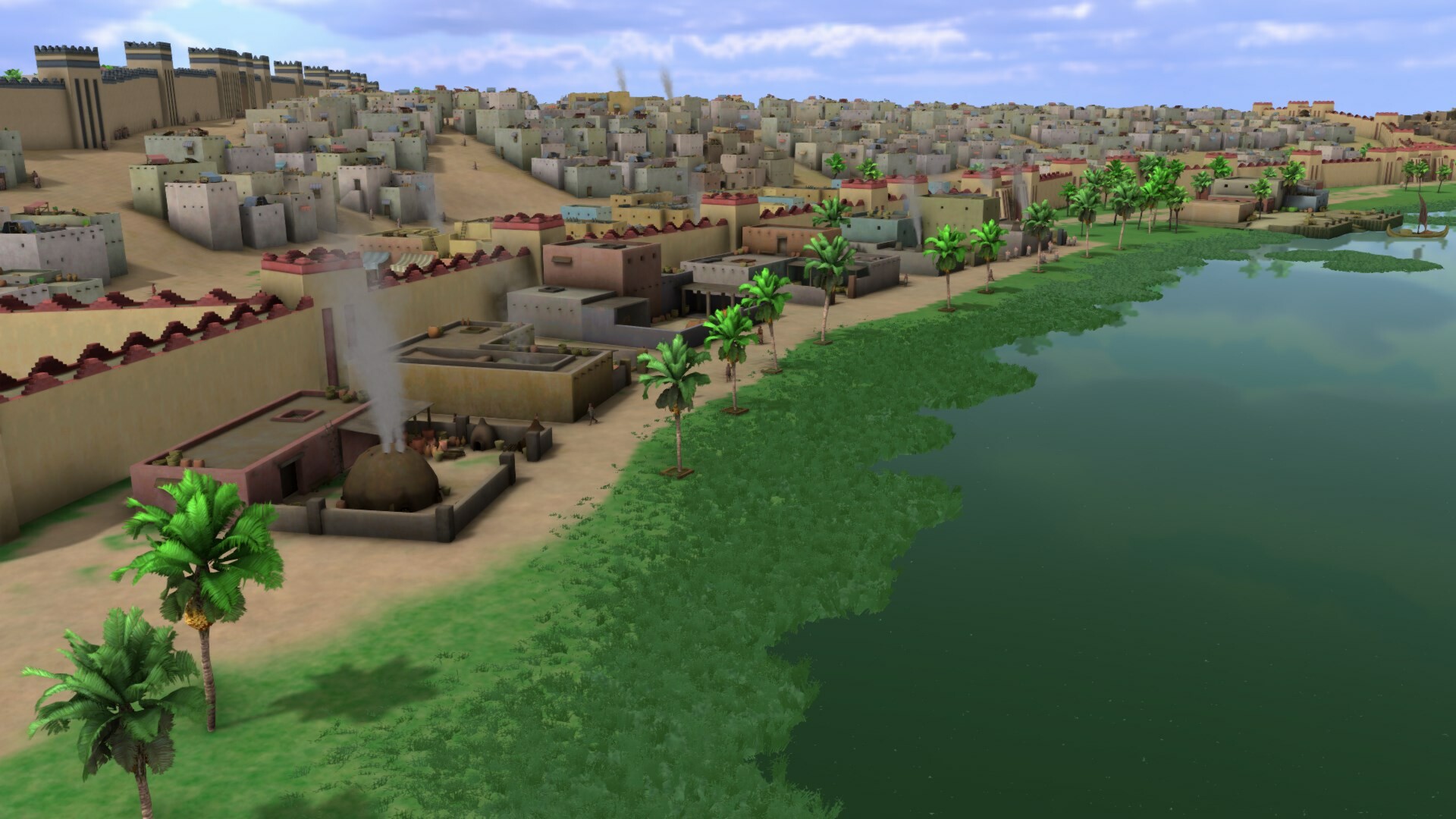
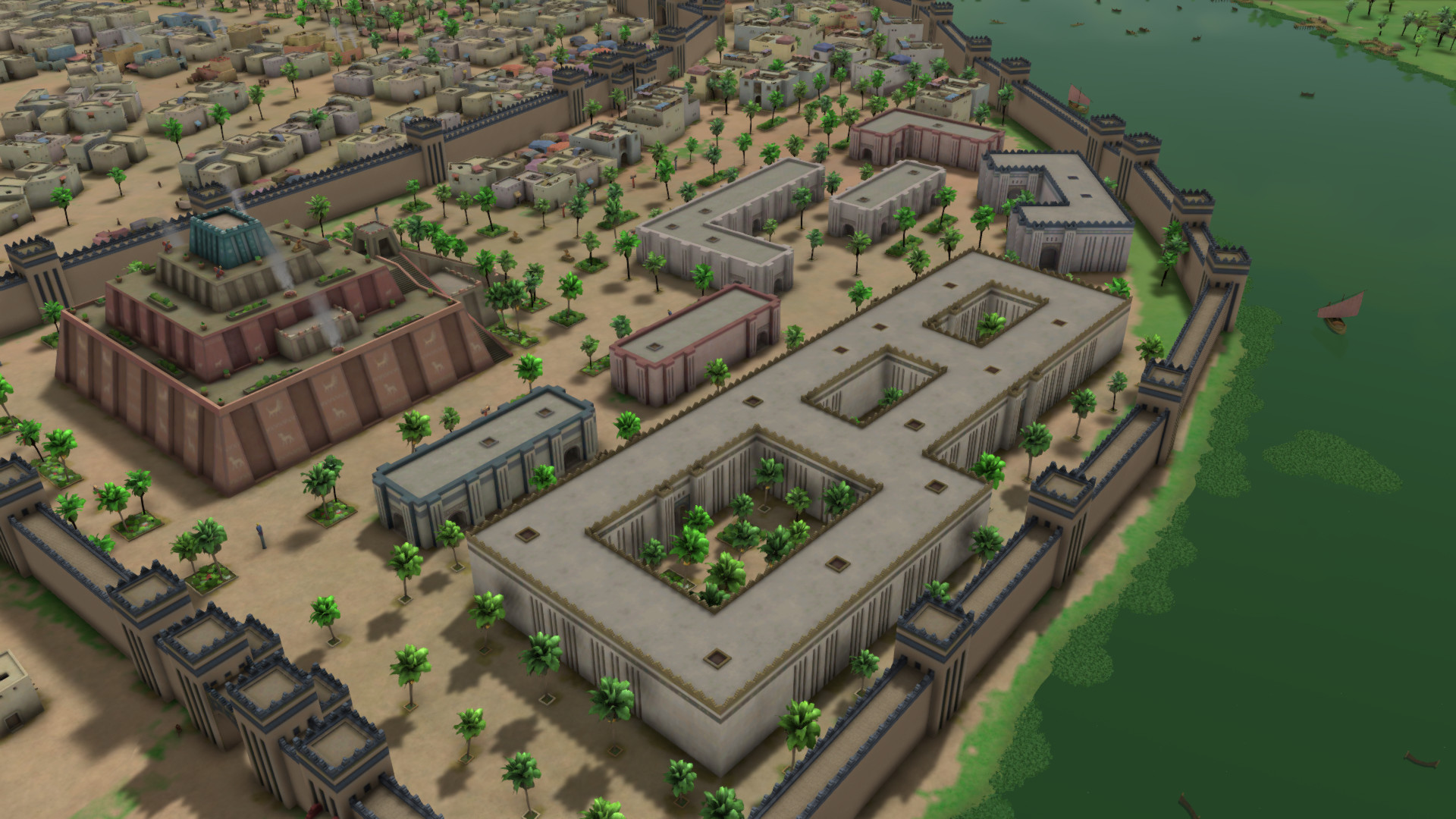
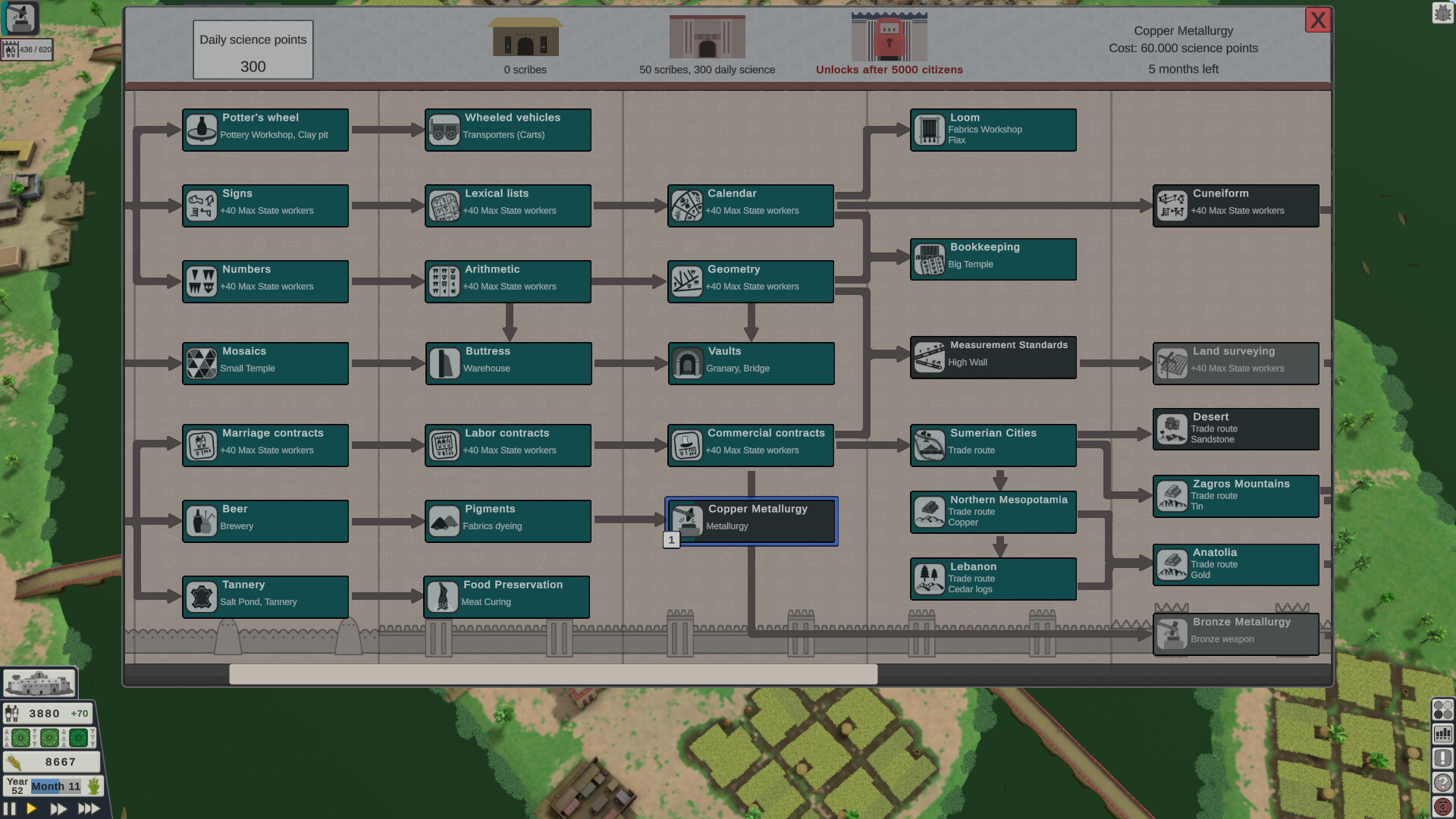
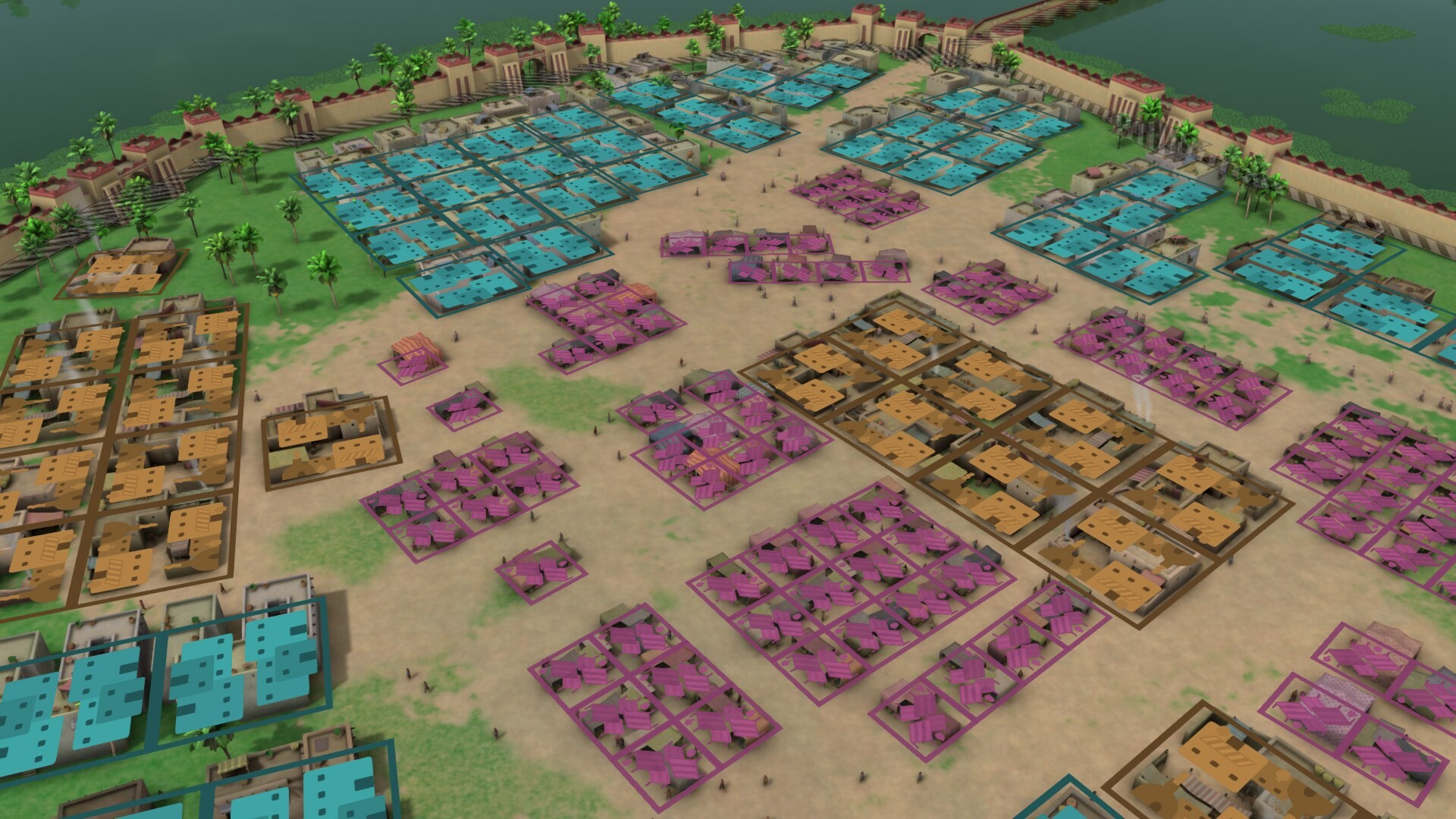
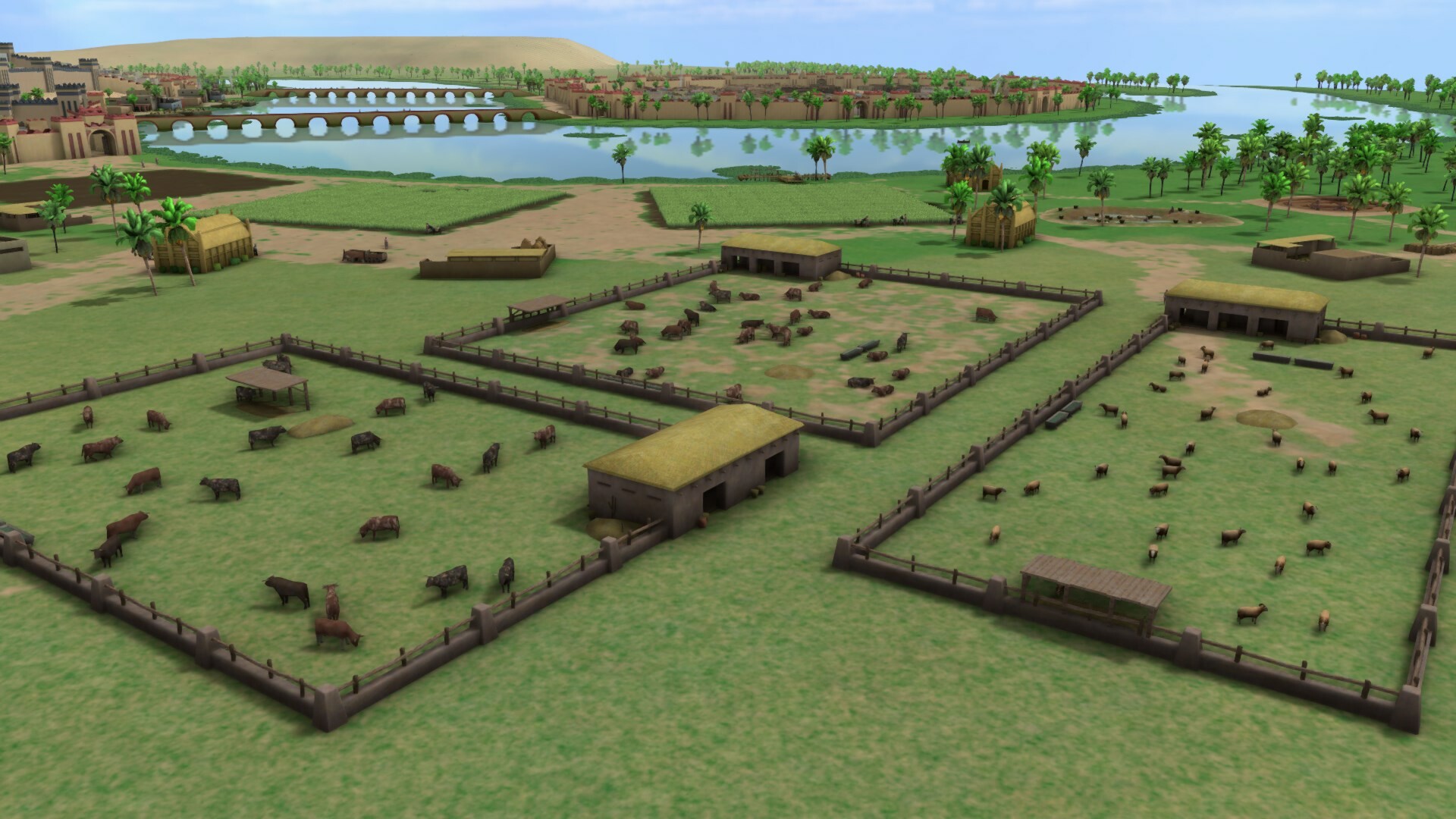
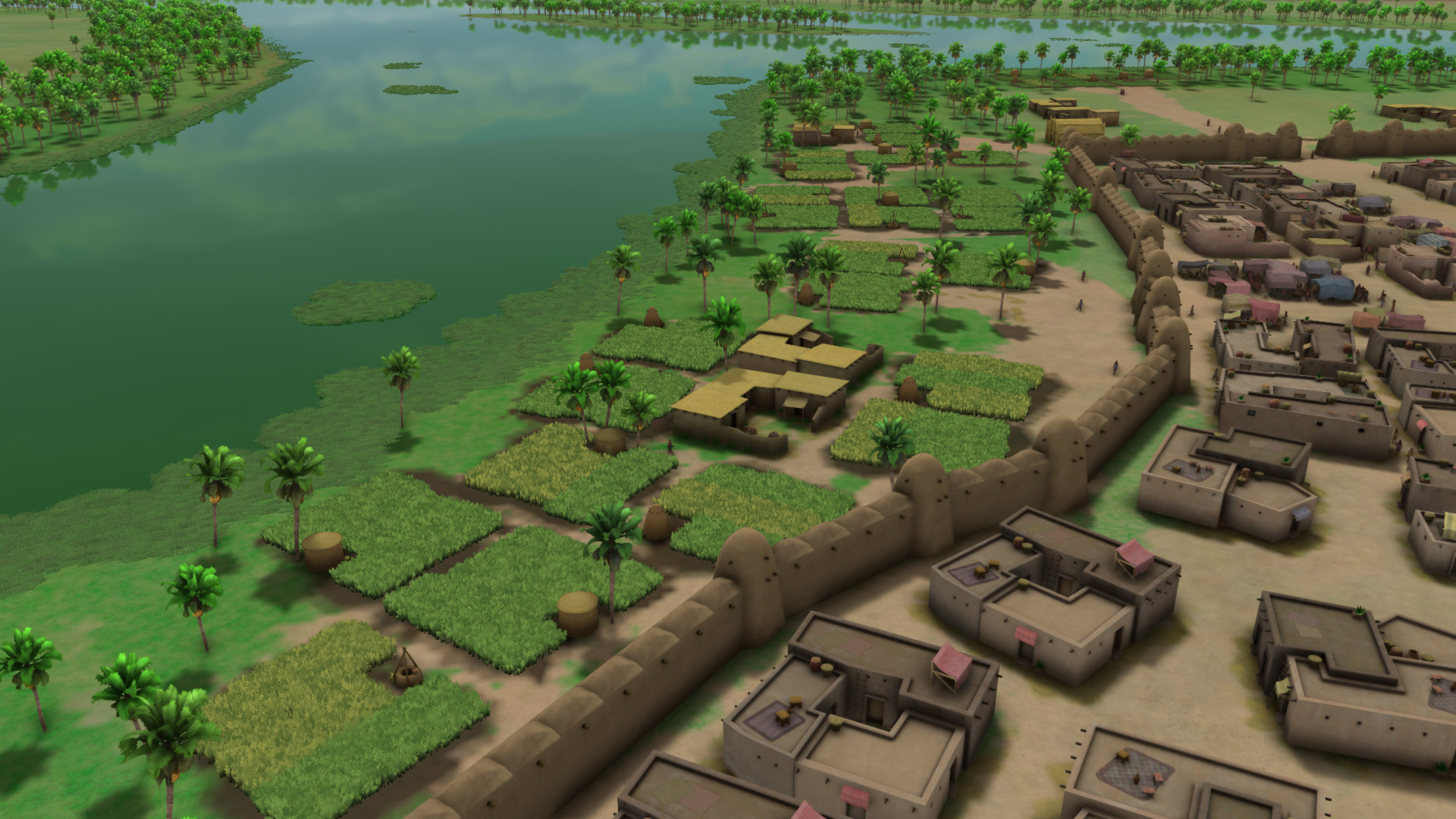
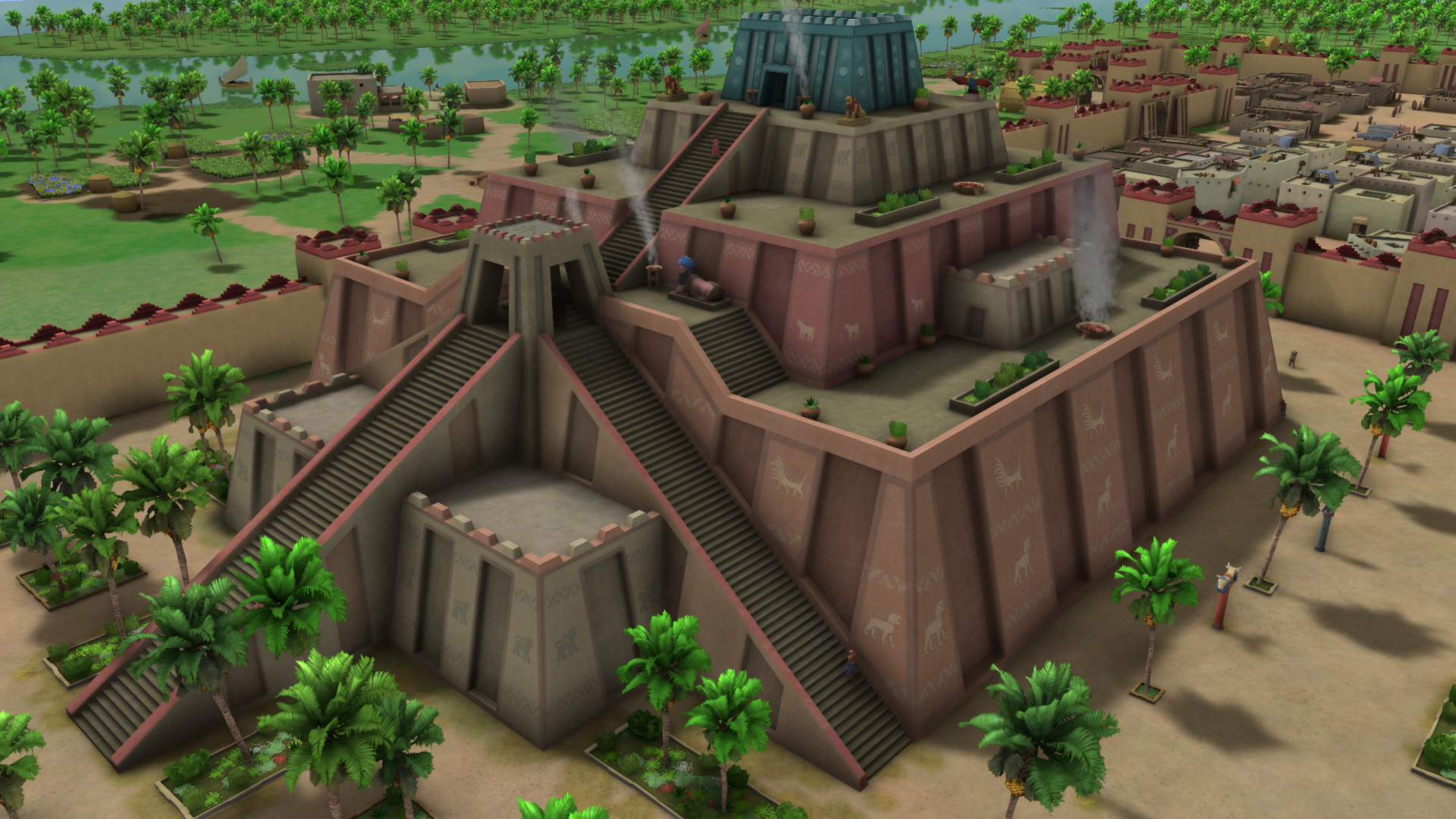
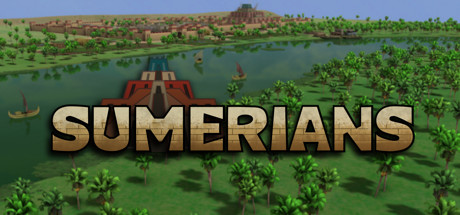
Sumerians, developed and published by Decumanus Games, is a city-building simulation that transports players to the dawn of civilization in ancient Mesopotamia. It distinguishes itself from modern city builders by focusing on the earliest stages of organized society, where irrigation, agriculture, and communal development formed the backbone of progress. Rather than leaning on conflict or conquest, the game emphasizes growth, balance, and careful resource management. The player’s journey begins beside a river, with a small group of settlers and a patch of fertile land. From this humble start, a sprawling city can emerge—one shaped by deliberate planning and the fragile equilibrium between water, land, and human labor. Sumerians takes its name seriously; it is less about spectacle and more about the slow, deliberate evolution of human society, evoking the spirit of early urban life where every decision carried long-term consequences. At its heart, the game is a study of systems. The foundation lies in the management of agriculture and irrigation—concepts that defined real Mesopotamian life. Building canals, distributing farmland, and ensuring that fields receive adequate water are key early-game challenges. Food production and stability determine how fast your population grows, and with growth comes complexity. The player gradually unlocks more advanced buildings and crafts, from pottery and weaving to temples and schools. Each development builds upon the previous, transforming a cluster of huts into a thriving settlement. The pacing is intentionally slow, rewarding players who appreciate incremental progress and methodical design. There is no warfare, no natural disasters, and no political crises to derail your plans; instead, Sumerians presents a quiet, introspective experience that demands patience and strategic thinking. The absence of combat may deter players accustomed to the drama of rival factions, but for those drawn to the pure art of creation and management, it offers a refreshing sense of calm focus. What makes Sumerians compelling is its approach to economic and social systems. The game introduces a distinction between state-controlled and private property, reflecting the evolving relationship between rulers, workers, and common citizens in early civilization. Public works—such as temples, irrigation systems, and administrative buildings—require state resources and centralized labor. Meanwhile, individual citizens manage their own homes and trades, contributing to the city’s overall productivity. This creates a subtle balance between autonomy and governance that feels authentic to the game’s setting. Success depends on understanding how these systems intersect; pushing expansion too fast can lead to labor shortages or food crises, while neglecting spiritual or cultural institutions may stunt population morale. As your city matures, the management of logistics becomes increasingly important. Transporters, storage depots, and workshops must operate efficiently to keep goods moving through production chains. Sumerians thrives on this network-building process, where every improvement to infrastructure ripples through the entire economy. Visually, the game adopts a minimalist but effective art style. The environments are clean, uncluttered, and purposefully stylized to highlight clarity over grandeur. Buildings are simple geometric structures rendered in soft earth tones that evoke the deserts and plains of Mesopotamia. The color palette is restrained but warm, helping establish a sense of place without overwhelming the player. This simplicity extends to the interface, which, while occasionally sparse, makes the game approachable even for those new to city-building simulations. The sound design reinforces this tone of subtle immersion, with gentle ambient music and environmental effects that underscore the tranquility of city life. The result is a meditative atmosphere where growth feels organic rather than forced. Despite the game’s historical setting, Sumerians feels timeless, its systems rooted in human ingenuity rather than in spectacle or fantasy. Where Sumerians sometimes falters is in its opacity. The game does not always explain its mechanics clearly, leaving players to discover many of its systems through experimentation. Production rates, resource throughput, and labor assignments can be difficult to interpret, and the in-game encyclopedia lacks the depth to provide consistent guidance. For some, this ambiguity adds to the charm—it evokes the trial and error of early settlers discovering what works—but for others, it may lead to frustration, particularly when complex production chains stall without obvious cause. The user interface, while functional, can feel underdeveloped in later stages when cities grow large and management becomes intricate. Players must rely heavily on intuition and observation to keep their city functioning smoothly. Yet despite these shortcomings, the process of learning and adapting is deeply satisfying. Every mistake becomes a lesson, and each new discovery reinforces the sense that you are truly mastering the ancient art of civilization-building. The lack of combat or external threats also shapes the game’s pacing and tone. Sumerians is about internal tension—the quiet struggle to balance expansion and stability. You’re not defending borders or conquering enemies; instead, you’re defending against inefficiency and imbalance. The game’s challenge emerges from your own ambition: how far can you push your city before it collapses under its own weight? This introspective design choice makes the game feel personal, almost meditative. For players accustomed to crisis-driven city builders, the absence of overt danger might feel strange, but for others, it provides space to experiment, to plan without fear, and to appreciate the beauty of steady progress. It’s a game that rewards observation more than reaction, making each milestone—be it a new temple, a bustling market, or a thriving irrigation network—feel genuinely earned. Sumerians ultimately succeeds as a thoughtful and historically grounded simulation that prioritizes systems over spectacle. It captures the essence of what it must have felt like to guide humanity’s first steps toward organized society: the reliance on rivers, the construction of temples, the birth of trade and bureaucracy. Its simplicity hides surprising depth, and its deliberate pace invites reflection. Though the game still shows signs of its indie roots—occasional rough edges in design, limited documentation, and a restrained presentation—it stands out for its authenticity and elegance. It’s not about building empires or fighting wars; it’s about nurturing life from the soil and watching civilization take form piece by piece. For players seeking a slow, immersive, and intellectually satisfying city builder, Sumerians offers a rare and rewarding experience that reminds us that sometimes the greatest stories are not about conquest, but about creation. Rating: 8/10
Expand the review