

Xuan-Yuan Sword VII
Xuan-Yuan Sword VII is an ARPG rooted in Chinese history and mythology. Players take on the role of Taishi Zhao, a calm and reliable swordsman who was accidentally involved in a tragic fate. To protect his beloved family, he starts a journey in this chaotic realm to find the truth.
Sync your Steam wishlist to find the lowest game prices instantly. No login required, just paste your Steam profile URL!
⚡ Try Wishlist Radar!
Sync your Steam wishlist to find the lowest game prices instantly. No login required!
⚡ Try Wishlist Radar!
Close

Sword and Fairy 7 on Steam
Quick menu
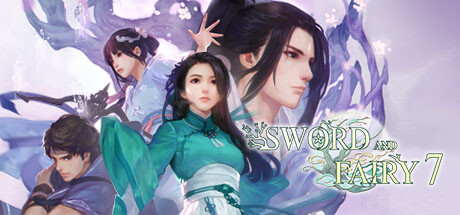
An action RPG based on Chinese art style, as the 7th lineal sequel of this series, it earns a lot of anicipations. Better gaming experience than any of its previous episode will be brought to all the players.
Sword and Fairy 7 is a rpg, singleplayer and martial arts game
developed by 软星科技(SoftStarlight)
and published by 软星科技(SoftStarlight) and 方块游戏(CubeGame).
Released on October 21st 2021 is available on Windows, Steam Deck and Steam Machine.
It has received 18,354 reviews of which 13,296 were positive and 5,058 were negative resulting in a rating of 7.1 out of 10. 😊
The game is currently priced at 24.99€ on Steam, but you can find it for 15.28€ on G2A.
The Steam community has classified Sword and Fairy 7 into these genres:
Media & Screenshots
Get an in-depth look at Sword and Fairy 7 through various videos and screenshots.


Load More


System requirements
These are the minimum specifications needed to play the game. For the best experience, we recommend that you verify them.
Windows
- OS: Windowns 10 - 64bit
- Processor: Intel Core i5/AMD Ryzen5
- Memory: 8 GB RAM
- Graphics: NVIDIA GTX 960 4G
- DirectX: Version 11
- Storage: 30 GB available space
- Sound Card: Direct Sound Card
- Additional Notes: Screen resolution:1920*1080
Steam Price & Best Deals
User reviews & Ratings
Explore reviews from Steam users sharing their experiences and what they love about the game.
Sword and Fairy surprised me in the best way possible. The first thing that stood out was how beautiful the game is. The environments, character designs, and cutscenes are all incredibly well done and give the world a magical, fantasy atmosphere that feels easy to get lost in. The story and characters kept me invested throughout the entire experience. There are plenty of emotional moments, but also a lot of charm and humor. Some of the English translations can be a little awkward at times, but honestly, that ended up being part of the fun. There were several moments that made me laugh simply because of how certain lines were translated. The combat is enjoyable and strikes a nice balance between being accessible and engaging. It never felt like it got in the way of the story, which is important in a game so focused on its characters and world. I also really appreciated the side activities and mini-games. They help break up the adventure and give you more reasons to spend time in the world beyond simply progressing through the main story. One of the biggest highlights for me was the puzzles. They're interesting enough to make you think without becoming frustrating, which is something a lot of games struggle to get right. Between the beautiful visuals, memorable characters, fun combat, entertaining side content, and surprisingly good puzzles, Sword and Fairy ended up being a game I enjoyed far more than I expected. If you're looking for a fantasy RPG with heart, gorgeous presentation, and a world that's fun to explore, this is an easy recommendation. The romance was one of the biggest highlights for me. I loved watching the characters slowly fall in love and seeing how their strengths and weaknesses complemented each other. They felt like they genuinely made each other better people, which made it easy to root for them. By the end, I was almost as invested in their relationship as I was in the main story.
Sword and fairy 7 is an RPG, with a lot of storytelling. It is a sorta-kinda Chinese take on the final fantasy series, but heavily rooted in the Chinese mythology. There will be only a low amount of open word fighting, but there will be several boss fights. Generally you will have to keep dodging the boss attacks, and hopefully release large amount of damage during small windows of opportunities. Also there will be a lot of puzzles to solve - even the boss fights might be considered puzzles of a kind. Most puzzle type will be situational, they won’t repeat. I had to look up the solution for the heaven gate puzzle online, couldn’t figure out by myself. The game difficulty cannot be changed mid-game, and some of the boss fights were very tedious for me on normal, needing a lot of tries. Thankfully, there is a prompt to retry them right away after a failure. The bulk of the game is the storytelling, so opting for an easier mode right from the start won’t detract much from the enjoyment. In a hindsight I should have played it just on easy, but of course there was no way for me to know that at the start. The official version is a graphically somewhat scaled back one. I’m not sure in which way, as I couldn’t find comparison images. Still, based on comments, I reverted to the 1.1.7 version. I did that by checking out that earlier version, then overwriting the Steam game folder with that. It was around 60Gb vs. the default 40 Gb. Steam didn’t overwrite it with the normal version on game start. I didn’t touch the DLC folder. The graphics of the game was quite good. I just turned up all the effects, on my 4070 that didn’t cause slowdowns, even in the 1.1.7 version. The characters are well detailed, and there were a lot of little clutter. Maybe it was just my imagination, but the DLC graphics level seemed a bit less detailed, and perhaps the lightning was a bit duller. The game has a lot of collectible background lore. Unfortunately, virtually all of that is translated very literally, keeping a very Chinese way of thinking / expressions, making most of the lore hard to comprehend – as in barely legible at times. It is clearly visible that some core Chinese expressions couldn’t be well translated to English, leaving very strange choice of words, like “cultivation” for dedicated training. Speaking of translation, apart from these lore issues, there is the miss-translation of the character names. They perhaps used some official scholar way of translation. For example, the protagonists name is written as Qingshu, but pronunced as Chinshu. They wrote Xiu Wu, but is pronounced more like Shiu Wu. Then, there is Yo, who is frequently called as A-Yo. I guess it is a honorific form, like the japanese Yo-kun, but it is never written out as pronounced. A lot of the times characters are referred by descriptions, like shochou, but that is translated as the characters name, like Moqing (Mochin’). But apart from these annoyances, the dialog translation is quite easy to comprehend, way better than the lore translation. The voice acting is Chinese only, but is of a surprisingly high quality. All the major characters are fully voice acted, and their voice actors do a great job. The music of the game is based on traditional Chinese motives. All in all I found it appropriate. Most zones have their own theme. You can talk to most characters, they will have a short text reply. The game has main and side quests. The main quest is always marked by a big M in the minimap. That will unlock the new zones. The side quest givers can be seen on the map, though the quest destinations will be generally on a different map. The destination markers will show up only when you are on the given map. Only one side quest can be tracked, you should check the map and switch to a map relevant one. You are free to save most of the times, when you are able to move around with your characters. There are plenty of slots to save to, though I generally recycled only the first three. A strange bug is that you cannot save when in interaction distance with an NPC. Step away a few steps and you can save. The game has autosave, and is quite generous with it, saving frequently at various points in the storyline. The game has a few minigames, like a card game, jumping puzzle, rhythm game. The card game was too confusing for me, I just gave up after I managed to win the first time – even that took me a lot of tries. There will be also a few timed jumping puzzles, I gave up only on one of those. The rewards were unique, chapter level relevant equipment. The game can be played with controllers, and with keyboard and mouse. I started playing with the controller, but a few parts of the game were impossible with the controller. For the jumping puzzles, and the few shooting parts I had to resort to the keyboard and mouse. No matter how small movements I did with the controller, the target reticle moved several centimeters on the screen, making aiming impossible. With the mouse it was a trivial task. Also I kept overrunning with the controller in the timed jumping puzzles. The only way I could finally complete them was to resort to the keyboard. Speaking of controllers, the game used the Playstation prompts for the quick time events. Except in the rhytm minigame, where it used the Xbox prompts. After learning the hard way where the Playstation buttons were, I just forget where A and B was supposed to be, and kept failing that minigame. Thankfully for the story that made no difference. There are consumables in the game, those are better saved for boss fights. Unfortunately only a fraction of the items can be used during the boss fights, even if you have plenty of them in the inventory. Most of the open field fights can be done with the default attacks, but there are special high hitting abilities. During boss fights those have to be used sparingly, as your mana won’t regenerate in the boss fights, and there is only a limited amount of consumables allowed to be used for that. In the field mana will slowly regenerate between fights. There I just kept rotating among party members, if one had a lot of mana I just fired up a low mana skill. You control only one member of the party, the other ones will be performing automatically. This can be a problem on some boss fights, where they tend to die. The game has stealth parts. I just kept failing at them. If you linger too much on such a level, eventually the game takes pity and offers a skip. You can even just pause the game if you wish for such a time length to achieve this. A nice feature, more games should have similar approach. The DLC took me a bit over 7 hours to complete. That is without figuring out all the possible extra puzzles. It has a very different gameplay compared to the base game. Mostly platforming puzzles, based on using an ever increasing arsenal of traversal skills. Those platforming puzzles were manageable with the controller for me. There will be a boss fight at the end though. It was much easier than the boss fights of the base game, perhaps they took into account feedback from the players. There won’t be side characters or side quests. The DLC has a very different saving system. Since it is quite possible to soft lock yourself into a dead end with a wrongly issued save, the platforming parts instead have save points, from which the level can be continued safely. If you happen to die, lets say by falling down, the game automatically respawns you just before the failed segment. You won’t have to replay the game since the last save point. Unfortunately the game (that is version 1.1.7) was a bit buggy. There was a part where the screen froze, but the on rail events went on (I guess). There was a part where it just froze when browsing the lore menu. I’m not sure how would the official 2+ version fare in this regard. But the DLC was more buggy, during its much shorter period there were several crashes.
Similar games
View all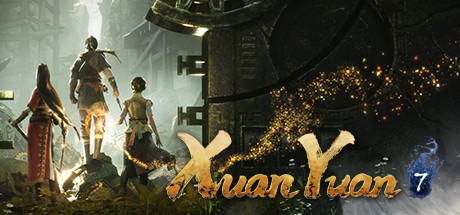
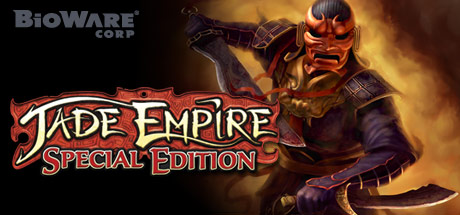
Jade Empire : Special Edition
Step into the role of an aspiring martial-arts master and follow the path of the open palm or the closed fist.
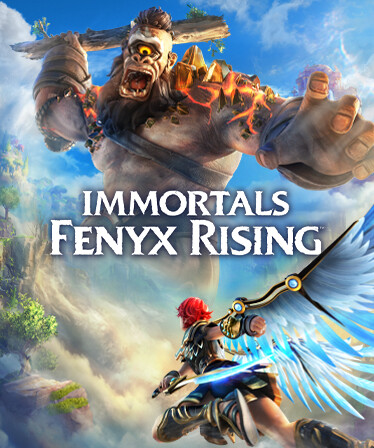
Immortals Fenyx Rising
Immortals Fenyx Rising brings grand mythological adventure to life. Play as Fenyx on a quest to save the Greek gods.
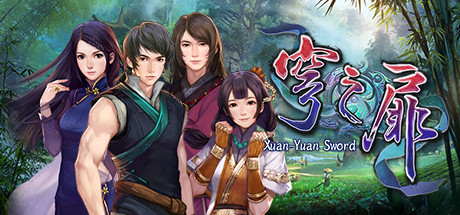
Xuan-Yuan Sword: The Gate of Firmament
The “Xuan-Yuan Sword” is an epic oriental RPG series with 25 years of history.It elaborates on the very heart of this series, the idea of "one, looking at the same thing from different angles, may come to different conclusions. " through a variety of historical incidents in different times.

Fate Seeker II
Following the previous one, “Fate Seeker II” character development, thinking and exploration and other elements. You can experience real-time combat without switching scenes, and feel the delightful martial arts anytime.

VALKYRIE ELYSIUM
Long ago, Ragnarok—the End Times—loomed upon the realms. The All-Father Odin, with the last of his strength, created an emissary of redemption, Valkyrie; her sole task being the salvation of a doomed world.

Black Myth: Wukong
Black Myth: Wukong is an action RPG rooted in Chinese mythology. You shall set out as the Destined One to venture into the challenges and marvels ahead, to uncover the obscured truth beneath the veil of a glorious legend from the past.
FINAL FANTASY VII REBIRTH
The Unknown Journey Continues... After escaping the city of Midgar, Cloud and his friends set out on a journey across the planet. New adventures await in a vibrant, expansive world in this standalone entry of the FFVII remake trilogy.
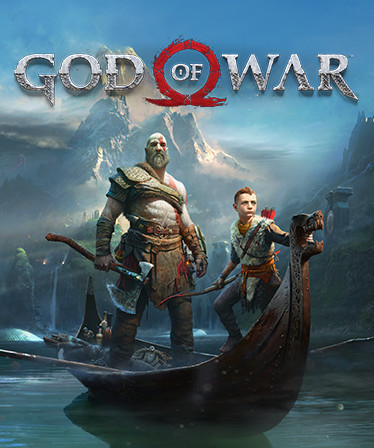
God of War
His vengeance against the Gods of Olympus years behind him, Kratos now lives as a man in the realm of Norse Gods and monsters. It is in this harsh, unforgiving world that he must fight to survive… and teach his son to do the same.
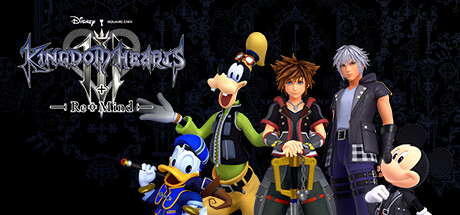
KINGDOM HEARTS III + Re Mind (DLC)
KINGDOM HEARTS III + Re Mind (DLC) brings one chapter of the series to a close. Travel to exciting new Disney and Pixar worlds, and prepare for the final showdown.

Assassin's Creed Odyssey
In this action-adventure game, set sail for Ancient Greece to alter its fate. Fight in visceral battles on land and sea, shape your destiny from outcast to legend, and uncover secrets of your past.

Horizon Forbidden West Complete Edition
Experience the epic Horizon Forbidden West™ in its entirety with bonus content and the Burning Shores expansion included. The Burning Shores add-on contains additional content for Aloy’s adventure, including new storylines, characters, and experiences in a stunning yet hazardous new area.
Frequently Asked Questions
Sword and Fairy 7 is currently priced at 24.99€ on Steam.
No, Sword and Fairy 7 is currently not on sale. You can purchase it for 24.99€ on Steam.
Yes, Sword and Fairy 7 received 13,296 positive votes out of a total of 18,354 achieving a rating of 7.13.
😊
Sword and Fairy 7 was developed by 软星科技(SoftStarlight) and published by 软星科技(SoftStarlight) and 方块游戏(CubeGame).
Yes, Sword and Fairy 7 is playable and fully supported on Windows.
No, Sword and Fairy 7 is not playable on MacOS.
No, Sword and Fairy 7 is not playable on Linux.
Yes, Sword and Fairy 7 is playable on Steam Deck, though it might require a few minor tweaks. Make sure to check the Steam store page and community feedback on ProtonDB for exact compatibility details.
Yes, Sword and Fairy 7 is playable and fully supported on Steam Machine.
No, Sword and Fairy 7 does not support VR.
Sword and Fairy 7 is a single-player game.
Yes, there are 2 DLCs available for Sword and Fairy 7. Explore additional content available for Sword and Fairy 7 on Steam.
No, Sword and Fairy 7 does not support mods via Steam Workshop.
No, Sword and Fairy 7 does not support Steam Remote Play.
Yes, Sword and Fairy 7 is enabled for Steam Family Sharing. This means you can share the game with authorized users from your Steam Library, allowing them to play it on their own accounts. For more details on how the feature works, you can read the original Steam Family Sharing announcement or visit the Steam Family Sharing user guide and FAQ page.
You can find solutions or submit a support ticket by visiting the Steam Support page for Sword and Fairy 7.
Data sources
The information presented on this page is sourced from reliable APIs to ensure accuracy and relevance. We utilize the Steam API to gather data on game details, including titles, descriptions, prices, and user reviews. This allows us to provide you with the most up-to-date information directly from the Steam platform.
Additionally, we incorporate data from the SteamSpy API, which offers insights into game sales and player statistics. This helps us present a comprehensive view of each game's popularity and performance within the gaming community.
Last Updates| Steam data | 03 October 2026 22:04 UTC |
|---|---|
| SteamSpy data | 18 October 2026 07:32 UTC |
| Steam price | 27 October 2026 03:46 UTC |
| Steam reviews | 19 October 2026 21:46 UTC |
If you'd like to dive deeper into the details about Sword and Fairy 7, we invite you to check out a few dedicated websites that offer extensive information and insights. These platforms provide valuable data, analysis, and user-generated reports to enhance your understanding of the game and its performance.
- SteamDB - A comprehensive database of everything on Steam about Sword and Fairy 7
- SteamCharts - Analysis of Sword and Fairy 7 concurrent players on Steam
- ProtonDB - Crowdsourced reports on Linux and Steam Deck Sword and Fairy 7 compatibility

Game modes
Features
Online players
4
Developer
软星科技(SoftStarlight)
Publisher
软星科技(SoftStarlight),
方块游戏(CubeGame)
Release
21 Oct 2021
Platforms
Clicking and buying through these links helps us earn a commission to maintain our services.