

The Matchless Kungfu
The Matchless Kungfu is an open world sandbox RPG game based on a WuXia background. You can play any martial arts role you imagine in this wild world. Travel through the great wilderness, or be the leader of the group. The most important thing is, build your own story and live the experience!
Sync your Steam wishlist to track the lowest game prices instantly. No login required, just paste your Steam profile URL!
⚡ Try Wishlist Radar!
Sync your Steam wishlist to track the lowest game prices instantly. No login required!
⚡ Try Wishlist Radar!
Close

The Scroll of Taiwu : Beyond The Dome on Steam - User reviews, Price & Information
Quick menu
"The Scroll of Taiwu" is an indie game themed around Chinese mythology and wuxia. Players assume the role of the mysterious "heir of the Taiwu clan" in an alternate ancient China, working through generations of heirs to defeat a powerful hereditary enemy and shape the fate of the human world.
The Scroll of Taiwu : Beyond The Dome is a rpg, martial arts and sandbox game
developed and published by ConchShip Games.
Released on June 16th 2026 is available only on Windows
in 4 languages: Simplified Chinese, English, Traditional Chinese and Korean.
It has received 60,637 reviews of which 42,350 were positive and 18,287 were negative resulting in a rating of 6.9 out of 10. 😐
The game is currently priced at 30.49€ on Steam, but you can find it for 14.62€ on K4G.
The Steam community has classified The Scroll of Taiwu : Beyond The Dome into these genres:
Media & Screenshots
Get an in-depth look at The Scroll of Taiwu : Beyond The Dome through various videos and screenshots.


Load More


System requirements
These are the minimum specifications needed to play the game. For the best experience, we recommend that you verify them.
Windows
- Requires a 64-bit processor and operating system
- OS: Windows 10 64-bit
- Processor: Intel Core i3-6100 / AMD FX-6300
- Memory: 8 GB RAM
- Graphics: Intel HD 530 / NVIDIA GTX 750 Ti
- DirectX: Version 11
- Storage: 25 GB available space
Steam Price & Best Deals
User reviews & Ratings
Explore reviews from Steam users sharing their experiences and what they love about the game.
A Warning for English Players — From a Chinese Player If you've played Taiwu in English and felt like you were missing something you couldn't name — you were. This review is an attempt to name it. # Part I — On Emptiness, Meditation, and a General Who Achieved Enlightenment in Battle ## The Structural Problem Precise translation of classical Chinese is nearly impossible — not a matter of effort, but of structure. Chinese is a uniquely dense logographic language where a single character compresses millennia of layered meaning. Add classical literature, Taoist/Confucian/Buddhist philosophy, folklore, and ancient medical concepts, and accurate translation becomes structurally impossible. Historical attempts to render the *Zhuangzi* or *Dao De Jing* into English have always fallen short — not from lack of skill, but because the target language lacks the equipment to receive what the source is transmitting. A game localization team under commercial deadlines never stood a chance. This gap has deep roots. Western engagement with Chinese thought has historically followed material interest, not intellectual curiosity — from the silk trade to Marco Polo to Enlightenment philosophers like Voltaire and Leibniz, who idealized China as a rational meritocracy. Then the 19th century arrived: industrial power, colonial expansion. The admiration collapsed. Western perception has always swung like a pendulum between romanticization, arrogance, and strategic wariness — and the translations that survived each swing reflect that. ## 虚室生白 — The Emptied Vessel Zhuangzi gives us the most precise description of what meditation preparation feels like in four characters: **虚室生白** (*xū shì shēng bái*) — *empty, room, generate, white/brightness.* The "room" is the mind. "Emptied" is an active discipline — deliberate subtraction, the clearing of mental clutter. "White" is not brightness but clarity: the quality of awareness that arises when you stop filling the space with noise. My translation: ***"The emptied vessel illuminates."*** *Vessel* earns its place because the Western tradition carries the same intuition from the opposite direction. Paul's "earthen vessels" (*2 Corinthians 4:7*) hold divine light precisely *because* they are hollow. The theological concept of *kenosis* — God self-emptying to take human form — runs on identical logic: reduction enables illumination. Two traditions, thousands of miles apart, arriving at the same paradox. This is not poetry. It is a description of a preparatory state — the condition you enter before meditation begins. ## Qi Arts: You Already Know This Practice Qi Arts (气功/内功) is the internal cultivation underlying every impossible feat in the game. What the localization never tells you: **it is meditation.** Literally. The same practice appears across every major civilization under different names. The *hesychasm* of Orthodox monks, the *contemplatio* of Catholic mystics, Sufi breathwork, Buddhist *samatha* and *vipassana*, Confucian *jìngzuò* (静坐, quiet sitting), Taoist *zuòwàng* (坐忘, sitting in forgetting). Every traditional Chinese medical student still receives formal meditation training in college — the practitioner's inner stillness is a clinical instrument, not a spiritual hobby. The 20th century repackaged it commercially: Mindfulness, MBSR, Google's Search Inside Yourself, Flow State coaching, the Wim Hof Method. The branding changed. The mechanism did not. ## Wang Yangming and the Battlefield Test **Wang Yangming (王阳明, 1472–1529)** — neo-Confucian philosopher, military strategist, battlefield commander — pushed this tradition to its operational limit. He argued, and *proved under fire*, that the highest internal stillness is not achieved in a quiet room. It emerges when the inner mind is completely calm while the outer world is in absolute chaos. Later, people called this 心学 (*Xinxue*, Heart-and-Mind Learning). Psychologists today call it **Flow State**. Mihaly Csikszentmihalyi arrived there through decades of research with rock climbers and chess grandmasters. Wang Yangming arrived there in the 15th century through philosophy and battlefield command. Same phenomenon. Five centuries apart. The chain runs from 虚室生白 — empty the vessel — through every monastery, medical college, and corporate mindfulness retreat in history, to a general who used the resulting stillness as a military asset. When your character sits cross-legged in Taiwu to cultivate Qi, they are participating in something humans across every culture have practiced for thousands of years. The English translation gives you a fantasy mechanic. The Chinese original is pointing at something real. --- # Part II — The Game Review ## Depth — ★★★★☆ **Pro:** Exceptional systemic complexity — martial arts, relationships, cultivation, craftsmanship, medicine, and time, all layered and genuinely interactive. **Con:** Scope creep produces decision fatigue. True freedom requires mods. Hunyuan Qi builds are frustratingly difficult to maintain. ## Freedom — ★★★☆☆ **Pro:** Genuinely permissive — bandit roleplay, NPC murder, polyamory, high-tier crafting at low cultivation. The simulation lets you become who you choose. **Con:** A rigid ceiling hides beneath the freedom. High-tier martial arts require massive grinding or cooking mastery (which requires its own grind). Combat is hard-capped by cultivation level. Primary attributes cannot be trained organically. Seriously — give the character a pair of dumbbells and enough protein. ## Cultural Depth — ★★★★★ (Chinese) / ★★☆☆☆ (English) **Pro:** For native Chinese speakers, the game is intuitively legible and deeply rewarding. Everything hums at the right frequency. **Con:** The localization frequently undermines the experience. Three specific failures: **奇门武器** → "Exotic Weapons." Should be "Unconventional" or "Unorthodox Weapons." The point is tactical heterodoxy, not cultural foreignness. **鸳鸯连环脚** → "Feet of the Mandarin Duck." In Chinese, mandarin ducks symbolize perfect pairing — elegant. In English, it sounds like a menu item. "Linked Double Kick" or "Swan Double Kick" (swans also mate for life) would land far better. **元山弹腿** → "Yuanshan Tan Tui," untranslated and unexplained. "Tan Tui" (弹腿) is a real, historically documented Springing Leg system — foundational northern Chinese martial arts. Without context, it reads as a random placeholder. ## Combat — ★★★☆☆ **Pro:** Tactical dungeon crawler with genuine micro-decision density. Qi functions like mana — the genre conventions work within their own logic. **Con:** Strictly 1v1, making teammates ornamental. Instrument-based martial arts are overpowered — they should fail against anyone deaf or wearing ear protection. More broadly: Chinese armies used firearms from the 10th century. If martial arts fail, bullets finish the job. At minimum, add crossbows. In a pure 1v1 meta, a bandit with a pouch of quicklime defeats every grandmaster in the game. --- ## Final Verdict Accept the design loopholes (shared by most wuxia games) and tolerate the translation failures with enough patience to puzzle through the gaps — this is a genuinely excellent game. Otherwise: **keep your money for extra chicken wings and soda water.** --- *— A Chinese player who has spent too long thinking about four-character phrases*
If you're struggling to find the translation (as it starts in chinese), either click the dropdown box in the top left (marked by an icon with a circle) or select the third box down in the menu to access settings and change it in the dropdown there. With the official english translation the game is more accessible than ever, but english speakers will likely still run into a bit of cross-cultural barrier as far as the actual contents of the text still. There is however very little like Scroll of Taiwu that's accessible to an english audience, so if you're willing to bear with the confusion of stepping into Wuxia/Xianxia stuff, I fully recommend it, as it's worth the time and is quite deep with a lot of moving systems. It is still a very complex game, so you will need to be patient, do the tutorial/look up information like you would stepping into a game like Crusader Kings for the first time. There's a couple pieces that they seem to have missed in the translation, but nothing that impedes understanding so far.
FOR THOSE ARGUING "NO ENGLISH IN-GAME, NEEDS TO EDIT STEAM PAGE!". You guys are a 1-2 days early. This game will officially release version 1 (out of early access) in 06/17/2026. They have prepped things for the release, so just wait. If you can't, there's still an English mod for this game that you can use. Thanks! p.s. : Grinding for cuteness (/// ▲ //)~
Where to begin....... I've played this game for 1700 hours and I'll likely play it for 10,000 more. I've played this game since the characters were jank and looked like they were drawn by 10 year olds. I've played this game since before the moves had animations and you had to imagine what the attack effects would look like. I've played this game since the dark ages. My childrens children will likely play this game. With all that said, if you love Wuxia sims, this is THE game to play. THAT BEING SAID: the following is also true..... The game was made primarily for the chinese audience, therefore there's no official english translation. The devs have been saying the English translation is coming, however the release has a history of getting pushed back. The English Mod DOES exist and it's come a LONG way through the efforts of Li Wei and the gang of the discord. That being said, it's still very much imperfect. A small unofficial (unpaid) mod team with personal lives can only do so much. IF the current English Mod is too abrasive for you, you will not like this game. If you can accept the English Mod as it is, this is objectively one of THE BEST GAMES OUT PERIOD. I would pay $60 for this game. Let alone $20. I have games that I've paid more for that give SIGNIFICANTLY less content than this game does. Not to mention, despite their flaws, the devs do constantly update and upgrade the game. You can tell the game itself is a labor of love. They want to build something fun, even if some understandably don't agree with how they're building it.
Similar games
View all
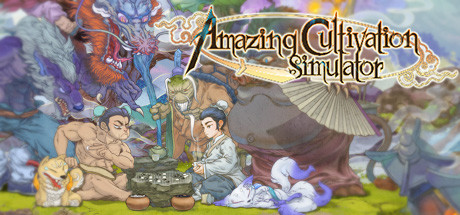
Amazing Cultivation Simulator
Rise up in a search for immortality in this strategy sim and management game based on Chinese mythology. Rebuild your sect and train new disciples through the path of cultivation. Research magic and gather mystical artifacts, face ancient dangers and other sects in your path to spiritual ascension.
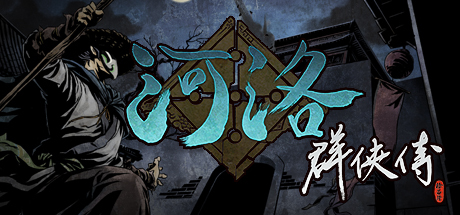
河洛群俠傳 (Ho Tu Lo Shu : The Books of Dragon)
Ho Tu Lo Shu: The Books of Dragon offers a highly freedom to play in an wuxia style open world. With realistic art style and rich character development, you can explore a vast wuxia world and create your own adventure with the company of various memorable characters.

Hero's Adventure: Road to Passion
Hero's Adventure:Road to Passion is a wuxia open-world RPG. You will commence your journey as an underdog in the tumultuous Martial World and will be met with a wide array of choices as you navigate your own heroic saga.

Sands of Salzaar
Bringing you to an exotic desert where you’ll recruit, train, and guide your troops into battle against rival cities and factions. Embark on an adventure that’s uniquely yours; Customizable characters, professions, and factions. The land is filled with a variety of hidden secrets.
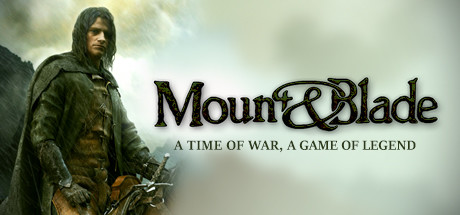
Mount & Blade
Calradia is a land at war, offering great riches and even greater dangers to adventurers and mercenaries that flock to shed their blood on its soil. With courage and a strong sword, an unknown stranger can make a name as a warrior. Free-form sand-box gameplay.
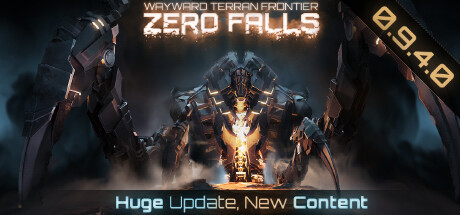
Wayward Terran Frontier: Zero Falls
2d space combat like no other. From the perspective of a single crew member, explore the fully destructible interior of any ship in a massive living world. Engage in space combat with no hitpoints where you know your enemy is dead when you see them fall out of their ship into the cold dark of space.

Yaoling: Mythical Journey
Yaoling: Mythical Journey is a creature collecting Eastern fantasy RPG featuring an world filled with rich stories and unique Yaolings. Tasked to uncover a mysterious evil, you embark on a journey with your Yaolings, forming new friendships, engage in intense battles, and face countless challenges!

Kenshi
A free-roaming squad based RPG. Focusing on open-ended sandbox gameplay features rather than a linear story. Be a trader, a thief, a rebel, a warlord, an adventurer, a farmer, a slave, or just food for the cannibals. Train your men up from puny victims to master warriors.

Path of Kung Fu
Path of Kung Fu is a Wuxia RPG that blends classic martial arts storytelling with open-world freedom. Master kung fu, navigate the Jianghu's bloody conflicts, and rise from a novice to a legendary hero. Subscribe to top-rated Workshop MODs to elevate your experience to the next level!

NITRO GEN OMEGA
A sandbox tactical RPG of steel, fire, friendship, and shonen anime. Assemble your crew, customize your Mech, and lead them in cinematic turn-based battles through a world ruled by rogue AI. The bonds you forge will decide who survives!

Spirit Realm
English version not ready
Frequently Asked Questions
The Scroll of Taiwu : Beyond The Dome is currently priced at 30.49€ on Steam.
No, The Scroll of Taiwu : Beyond The Dome is currently not on sale. You can purchase it for 30.49€ on Steam.
Yes, The Scroll of Taiwu : Beyond The Dome received 42,350 positive votes out of a total of 60,637 achieving a rating of 6.91.
😐
The Scroll of Taiwu : Beyond The Dome was developed and published by ConchShip Games.
Yes, The Scroll of Taiwu : Beyond The Dome is playable and fully supported on Windows.
No, The Scroll of Taiwu : Beyond The Dome is not playable on MacOS.
No, The Scroll of Taiwu : Beyond The Dome is not playable on Linux.
This information about The Scroll of Taiwu : Beyond The Dome is not available yet.
This information about The Scroll of Taiwu : Beyond The Dome is not available yet.
No, The Scroll of Taiwu : Beyond The Dome does not support VR.
The Scroll of Taiwu : Beyond The Dome is a single-player game.
Yes, there are 11 DLCs available for The Scroll of Taiwu : Beyond The Dome. Explore additional content available for The Scroll of Taiwu : Beyond The Dome on Steam.
Yes, The Scroll of Taiwu : Beyond The Dome is fully integrated with Steam Workshop. Visit Steam Workshop.
Yes, The Scroll of Taiwu : Beyond The Dome supports Remote Play on Tablet. Discover more about Steam Remote Play.
Yes, The Scroll of Taiwu : Beyond The Dome is enabled for Steam Family Sharing. This means you can share the game with authorized users from your Steam Library, allowing them to play it on their own accounts. For more details on how the feature works, you can read the original Steam Family Sharing announcement or visit the Steam Family Sharing user guide and FAQ page.
You can find solutions or submit a support ticket by visiting the Steam Support page for The Scroll of Taiwu : Beyond The Dome.
Data sources
The information presented on this page is sourced from reliable APIs to ensure accuracy and relevance. We utilize the Steam API to gather data on game details, including titles, descriptions, prices, and user reviews. This allows us to provide you with the most up-to-date information directly from the Steam platform.
Additionally, we incorporate data from the SteamSpy API, which offers insights into game sales and player statistics. This helps us present a comprehensive view of each game's popularity and performance within the gaming community.
Last Updates| Steam data | 05 September 2026 17:03 UTC |
|---|---|
| SteamSpy data | 04 September 2026 16:11 UTC |
| Steam price | 15 September 2026 10:47 UTC |
| Steam reviews | 12 September 2026 10:00 UTC |
If you'd like to dive deeper into the details about The Scroll of Taiwu : Beyond The Dome, we invite you to check out a few dedicated websites that offer extensive information and insights. These platforms provide valuable data, analysis, and user-generated reports to enhance your understanding of the game and its performance.
- SteamDB - A comprehensive database of everything on Steam about The Scroll of Taiwu : Beyond The Dome
- SteamCharts - Analysis of The Scroll of Taiwu : Beyond The Dome concurrent players on Steam
- ProtonDB - Crowdsourced reports on Linux and Steam Deck The Scroll of Taiwu : Beyond The Dome compatibility

Game modes
Features
Online players
324
Developer
ConchShip Games
Publisher
ConchShip Games
Release
16 Jun 2026
Platforms
Remote Play
Clicking and buying through these links helps us earn a commission to maintain our services.