
Barro F
Faster and funnier!
Sync your Steam wishlist to find the lowest game prices instantly. No login required, just paste your Steam profile URL!
⚡ Try Wishlist Radar!
Sync your Steam wishlist to find the lowest game prices instantly. No login required!
⚡ Try Wishlist Radar!
Close

Barro 2020 on Steam
Quick menu
Try not to fall!
Barro 2020 is a indie, racing and sports game
developed and published by SC Jogos.
Released on November 01st 2019 is available on Windows, Steam Deck and Steam Machine.
It has received 1,812 reviews of which 1,552 were positive and 260 were negative resulting in a rating of 8.2 out of 10. 😎
The game is currently priced at 4.90€ on Steam.
The Steam community has classified Barro 2020 into these genres:
Media & Screenshots
Get an in-depth look at Barro 2020 through various videos and screenshots.


Load More


System requirements
These are the minimum specifications needed to play the game. For the best experience, we recommend that you verify them.
Windows
- OS *: Windows 7 SP1+
- Processor: SSE2 instruction set support
- Memory: 2 GB RAM
- Graphics: Graphics card with DX10 (shader model 4.0) capabilities
- Storage: 2 GB available space
Steam Price & Best Deals
User reviews & Ratings
Explore reviews from Steam users sharing their experiences and what they love about the game.
"Picked this up expecting a quick, mindless arcade racer to burn some time, but honestly? It turned out to be way more addicting than I expected. The tracks are short, sharp, and surprisingly challenging if you're aiming for clean runs without sliding off the edges. It’s got that simple 'just one more try' loop, especially when you're testing your limits in Time Trial mode or playing with friends on split-screen. It’s not trying to be a ultra-realistic simulator, and that’s its charm. Perfect little game to kick back, listen to some music, and chill for an hour or two. Totally worth it for the price."
Similar games
View all



Barro Racing
Jump!


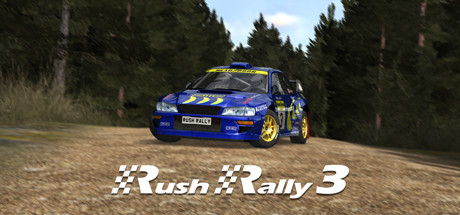
Rush Rally 3
Indie smash hit Rush Rally 3 is a Simulation-style rally driving game created by just one person. Take on the challenge of rallies, rallycross and hill climbs, across 11 countries, with over 20 different cars. All of which can all be upgraded, tuned and customised to your liking.



New Star GP
New Star™ GP is a fast and exciting arcade motorsport game with crisp retro visuals. Play career mode and work your way through decades of racing while upgrading your car and your support team... or chase high scores in championship mode on your own or in split-screen with up to three friends!

Drift Streets Japan
Racing Game about Illegal Night Street Racing. Nice Cars and Advanced Engine Tuning. Most Realistic and Best Physics. Most Quality Graphics. Drive the Large Japan Highway with traffic. Feel the Real experience, try to drift with car cockpit camera.

RACE 07
UpdateSimBin Studios expands the hit racing game, RACE 07 with the Andy Priaulx Crowne Plaza Raceway free add-on. Free for owners of RACE 07, this add-on features a brand new island track and new cars from triple World Champion Andy Priaulx in his BMW 320si WTCC and Fabrizio Giovanardi in his Vauxhall Vectra VXR.Real Cars, Real Racing...
Frequently Asked Questions
Barro 2020 is currently priced at 4.90€ on Steam.
No, Barro 2020 is currently not on sale. You can purchase it for 4.90€ on Steam.
Yes, Barro 2020 received 1,552 positive votes out of a total of 1,812 achieving a rating of 8.19.
😎
Barro 2020 was developed and published by SC Jogos.
Yes, Barro 2020 is playable and fully supported on Windows.
No, Barro 2020 is not playable on MacOS.
No, Barro 2020 is not playable on Linux.
Yes, Barro 2020 is playable and fully supported on Steam Deck.
Yes, Barro 2020 is playable and fully supported on Steam Machine.
No, Barro 2020 does not support VR.
Barro 2020 offers both single-player and multi-player modes.
Barro 2020 offers both Co-op and PvP modes.
No, Barro 2020 does not currently offer any DLC.
No, Barro 2020 does not support mods via Steam Workshop.
Yes, Barro 2020 supports Remote Play Together. Discover more about Steam Remote Play.
Yes, Barro 2020 is enabled for Steam Family Sharing. This means you can share the game with authorized users from your Steam Library, allowing them to play it on their own accounts. For more details on how the feature works, you can read the original Steam Family Sharing announcement or visit the Steam Family Sharing user guide and FAQ page.
You can find solutions or submit a support ticket by visiting the Steam Support page for Barro 2020.
Data sources
The information presented on this page is sourced from reliable APIs to ensure accuracy and relevance. We utilize the Steam API to gather data on game details, including titles, descriptions, prices, and user reviews. This allows us to provide you with the most up-to-date information directly from the Steam platform.
Additionally, we incorporate data from the SteamSpy API, which offers insights into game sales and player statistics. This helps us present a comprehensive view of each game's popularity and performance within the gaming community.
Last Updates| Steam data | 04 October 2026 21:06 UTC |
|---|---|
| SteamSpy data | 24 October 2026 09:32 UTC |
| Steam price | 27 October 2026 19:33 UTC |
| Steam reviews | 19 October 2026 07:57 UTC |
If you'd like to dive deeper into the details about Barro 2020, we invite you to check out a few dedicated websites that offer extensive information and insights. These platforms provide valuable data, analysis, and user-generated reports to enhance your understanding of the game and its performance.
- SteamDB - A comprehensive database of everything on Steam about Barro 2020
- SteamCharts - Analysis of Barro 2020 concurrent players on Steam
- ProtonDB - Crowdsourced reports on Linux and Steam Deck Barro 2020 compatibility

Game modes
Multiplayer
Features
Online players
3
Developer
SC Jogos
Publisher
SC Jogos
Release
01 Nov 2019
Platforms
Remote Play