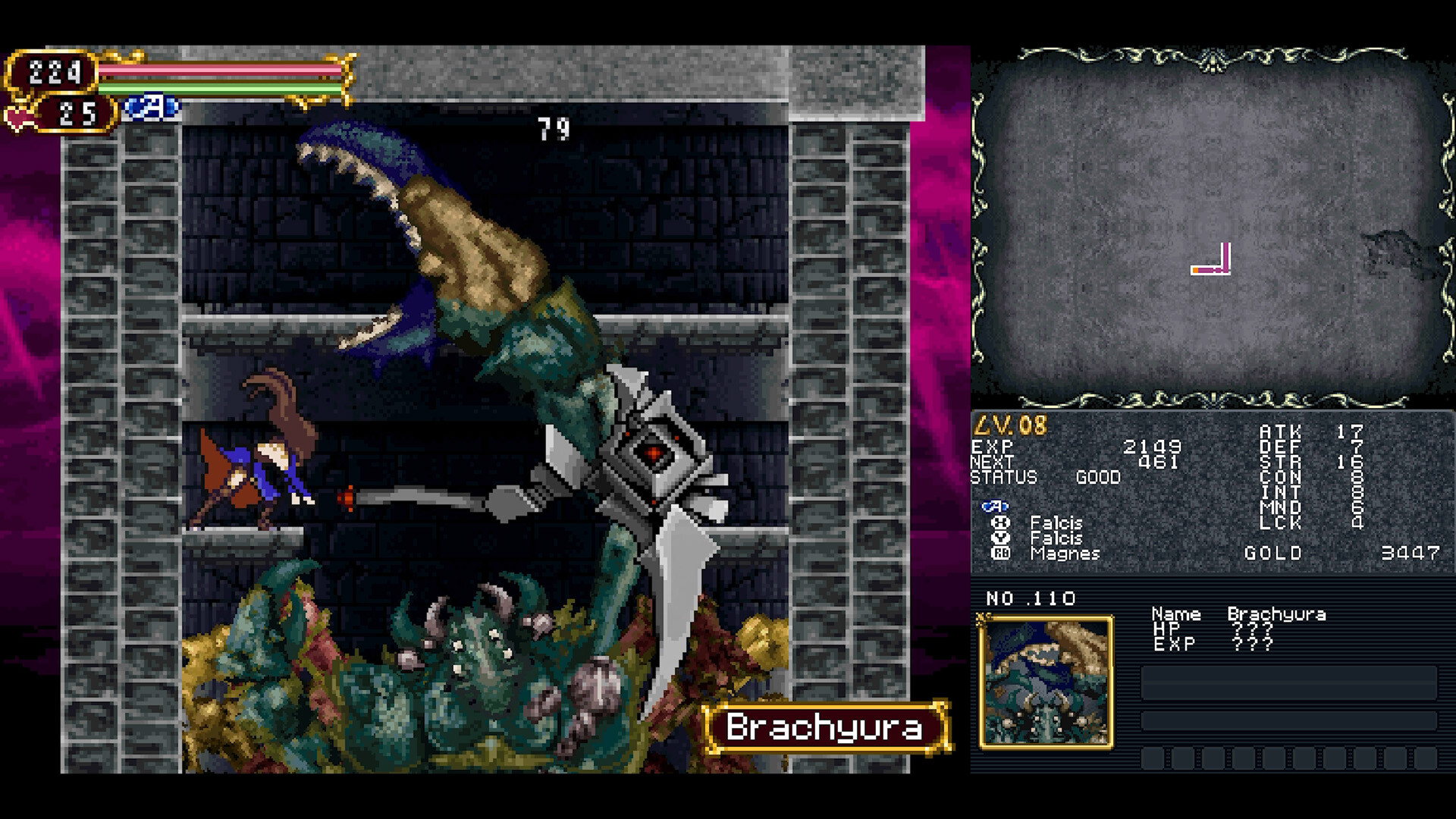
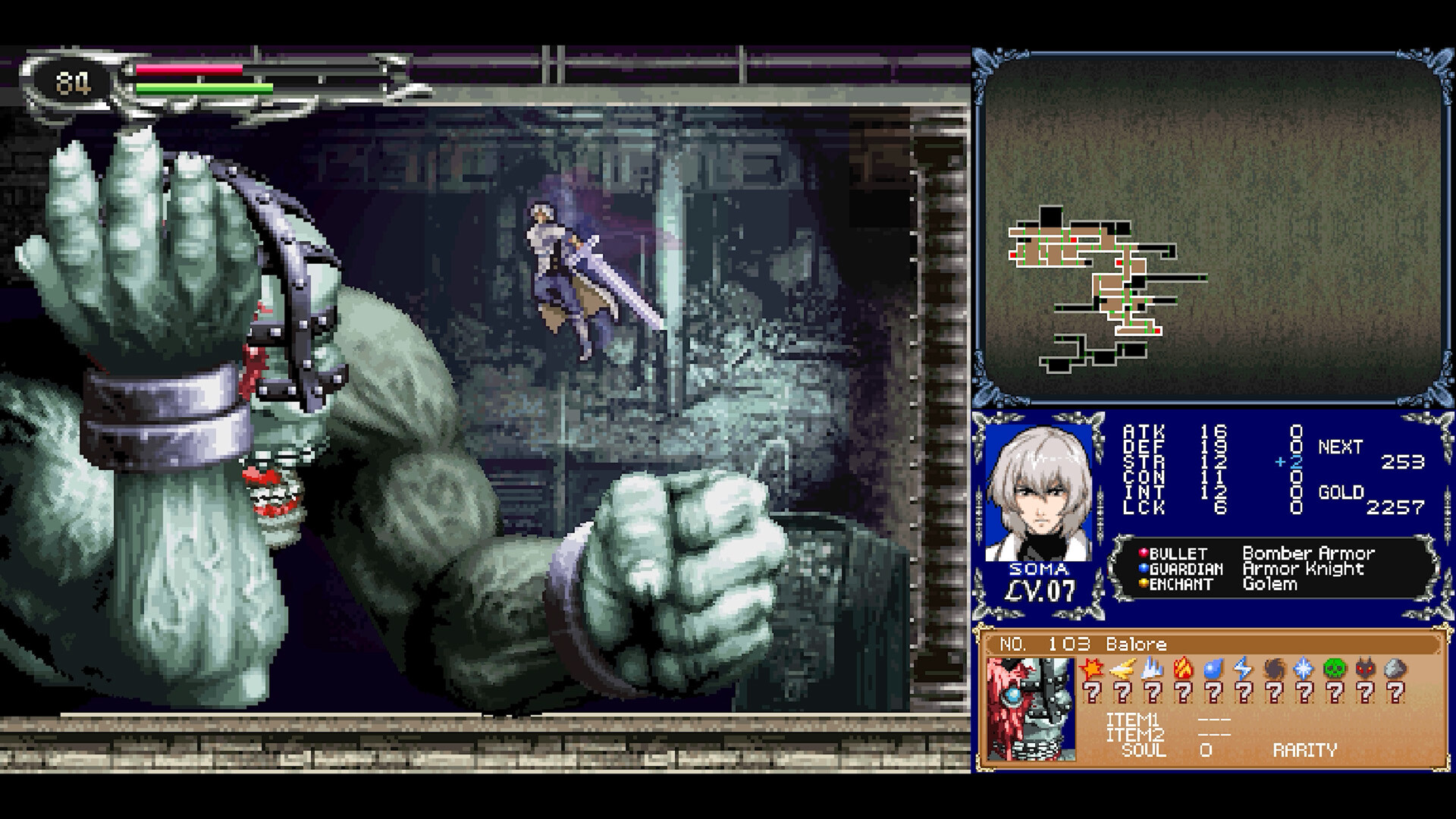
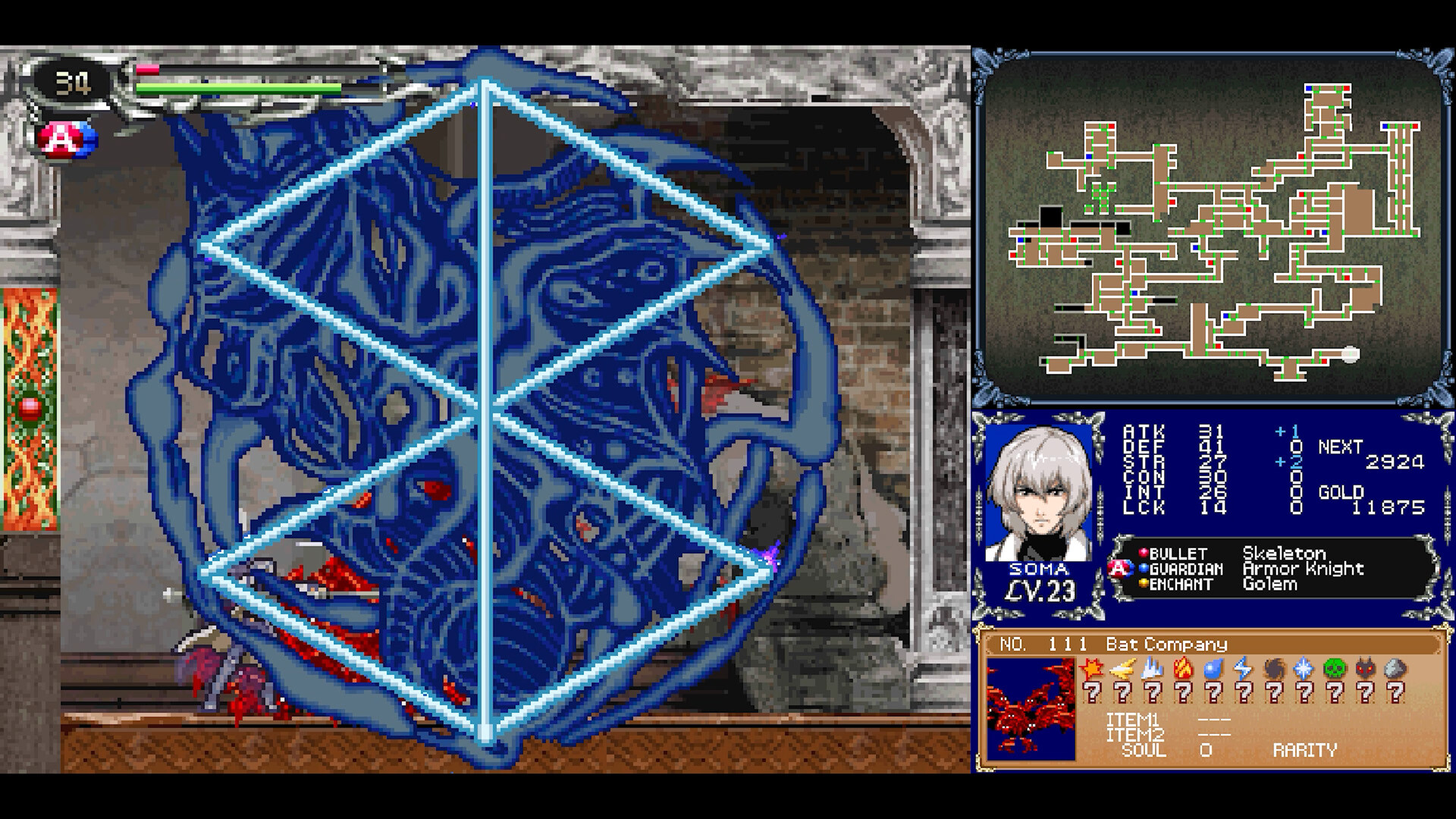
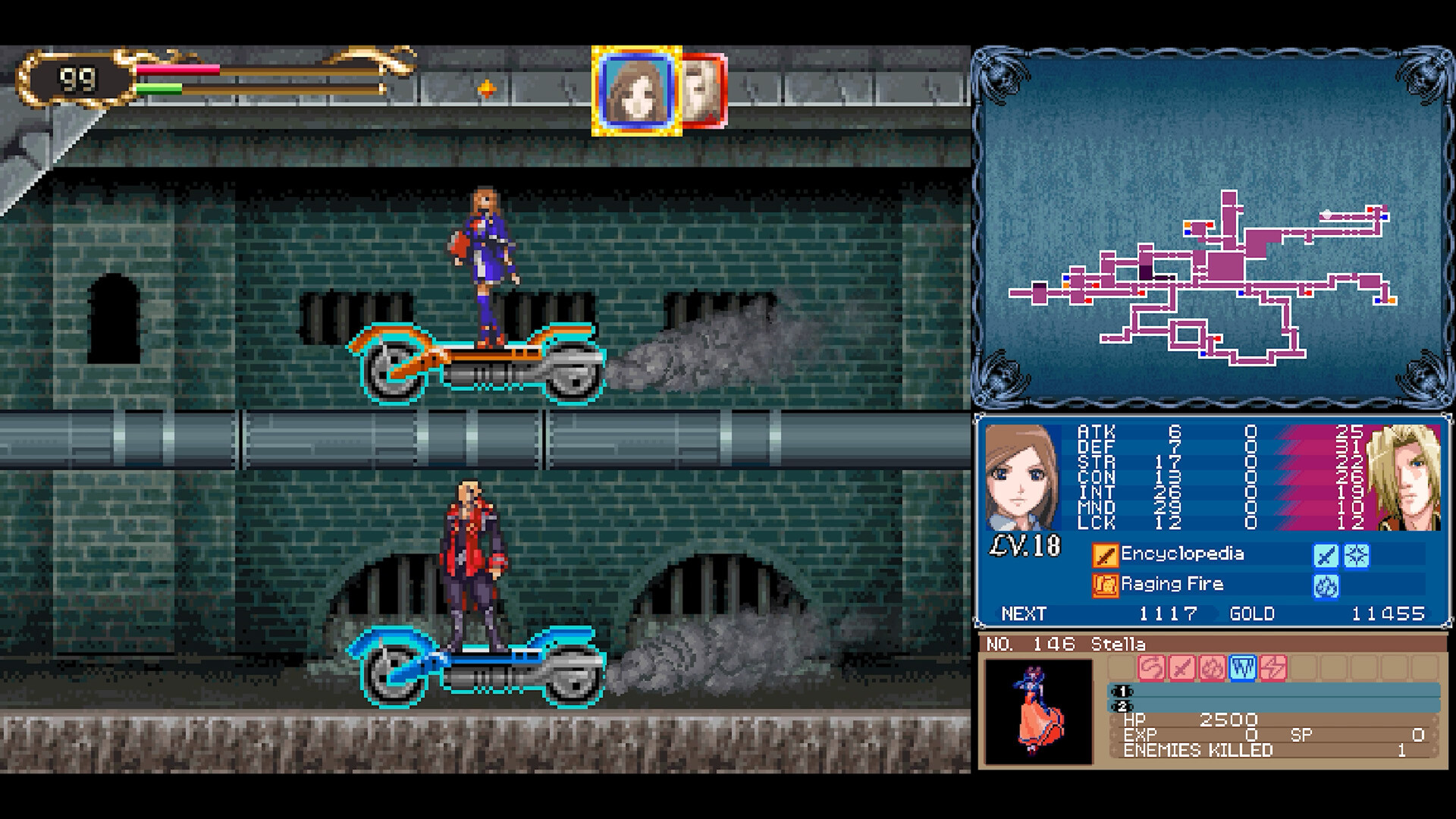
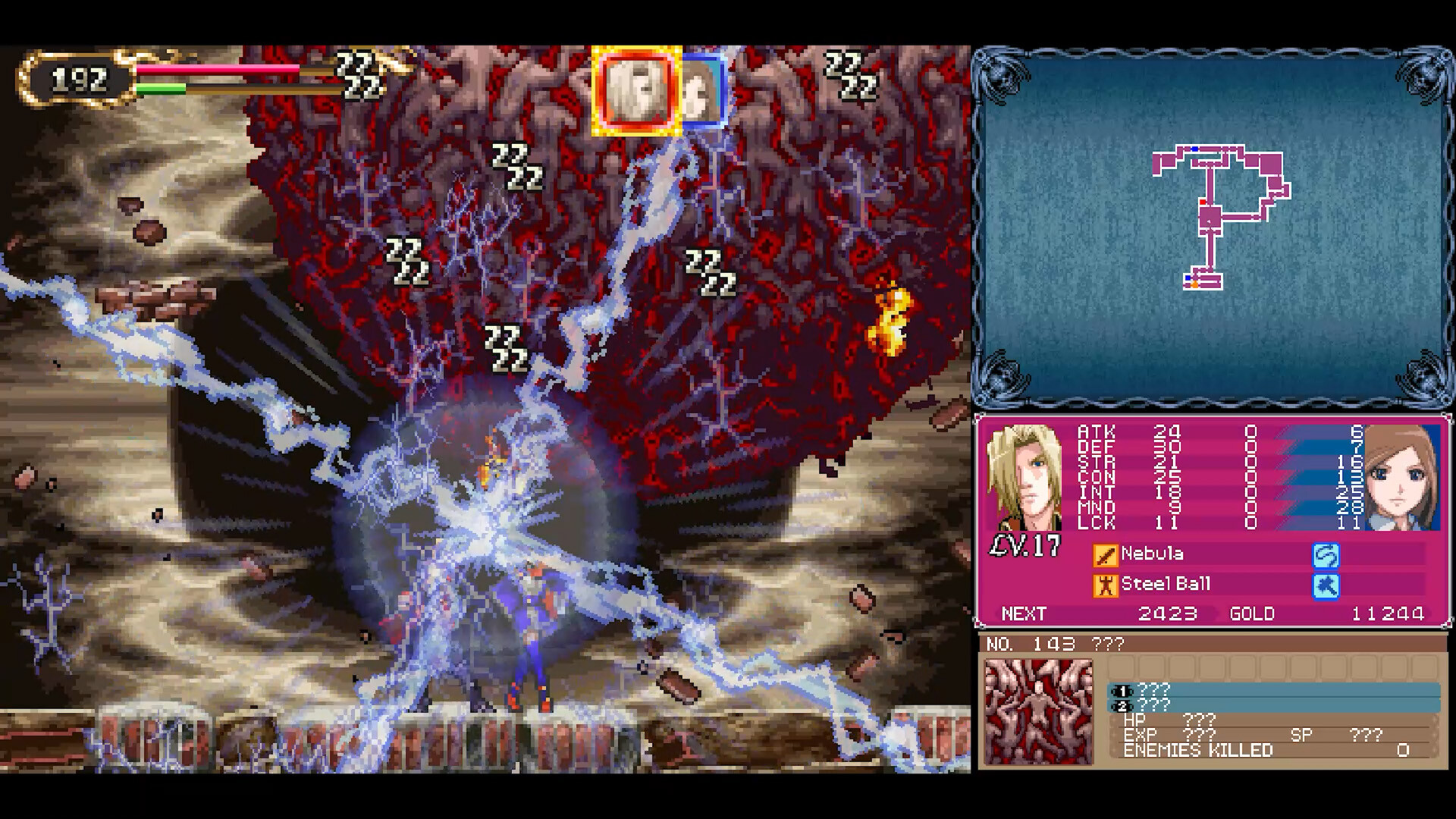
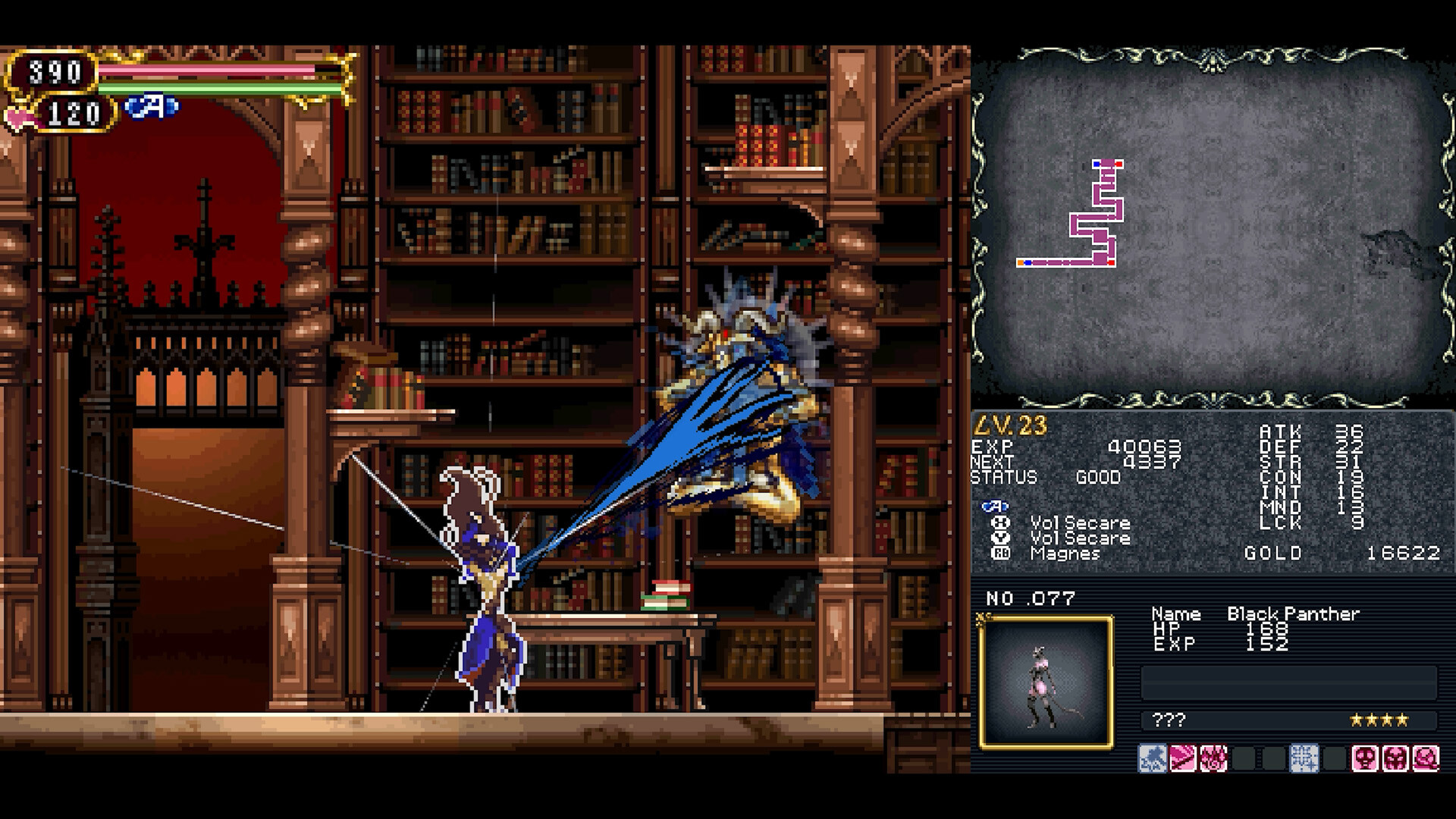
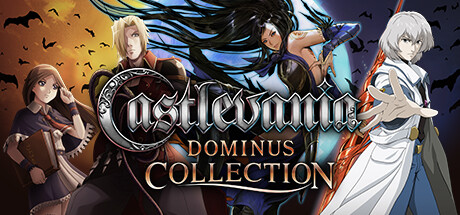
Masterful trilogy. Now I'm begging for a release with Lament of Innocence + Curse of Darkness + Symphony of the Night Ok, these are the three Castlevania DS games. Not wildly different from each other, but there's still a huge ground to cover, so I'll try to be as brief and effective as possible. I played the games in chronological order, starting from Castlevania DoS (which reads like "Castlevania DS") and ending with OoE. Before delving into each one, I'll say upfront what would normally be the conclusion. This is just a fantastic experience if you like the franchise. A must-buy for anyone who likes the metroidvania formula and wants to experiece it straight from the source. Final Score : 9/10 I won't be repeating myself over and over listing "pros", as these games have shared strengths: Pros: [*] Highly inspired scenarios/levels [*] Good music (unsurprising, since Michiru Yamane is behind most of the compositions) [*] Overall good game/level design, varied enemies and equipment [*] (mostly) Very well designed boss fights [*] Exploration and backtracking are staples and executed more or less always by the book So I'll just be listing each game's "cons" to say what they could've done better (which, admittedly, is not much) EDIT: the only (nitpicky) "con" I'd give to the collection itself is the inability to adjust the general volume. The result, is having to keep hearing the sound of the external menus at full blast despite having lowered the sound of each game. Dawn of Sorrow Straight-up sequel to GBA's Aria of Sorrow, the story picks up exactly where it left off, with protagonist Soma Cruz, and other returning characters such as Julius, Yoko, Hammer and Mina. As a fun fact, I'll say that this is still as of today the last game of the series chronologically. Konami really went with the "if it ain't broke, don't fix it" approach and created a sequel that plays very similarly to AoS... only slightly worse. This is not a bad thing at all, since AoS is arguably the best (or among the best) Castlevania titles, and something slightly below it is still extremely solid. As a post-game reward you can play as Julius and this time Yoko's with him. It's a nice touch, which maybe gave inspiration for the following game Cons: [*] Definitely the grindiest of the bunch if you wanna see what the game has to offer. Unfortunately the luck stat has never been fixed and doesn't influence the chance of soul drops, with some being extremely rare. In this game souls can be used to upgrade weapons, which on paper is good, but combined with drop rates, the process becomes grindy. The true ending itself requires some grinding to obtain the correct souls to use, but I wouldn't necessarily list it as a negative because this time they made it easier than in AoS [*] The story is very similar to AoS but slightly blander and more predictable. [*] Arguably the shortest game of the three (if you just want to go straight to the ending) [*] The artwork of the characters looks like it came out of a mediocre mid-2000s anime. Not terrible, but sub-par compared to what the series had offered until then. Portrait of Ruin For the first time, we play as two characters, Jonathan and Charlotte (you'll hear these names plenty of times if you play the game, trust me). They can be used interchangeably, but each has their own quirks. A big highlight is the possibility of going inside the paintings à-la Mario 64, which function as added levels within the castle. The contemporary setting (the game takes place during WW2) allows to explore different locations compared to your standard castlevania: from an early '900s English neighborhood to an apocalyptic war-devastated circus, the game has a lot of variety. Though they are somewhat recycled, the true ending allows you to explore 4 more stages, which is nice . Also among the three games this one has the best Death boss battle and alternative characters, letting you play as Richter and Maria . Cons: [*]Wasted potential: there's just a single puzzle in the game where it is required to use both characters strategically. I can imagine the game having a lot more clever puzzles that use this feature [*]A couple (maybe literally two) of bossfights feel off, as if they weren't fully play-tested [*]The backtracking in this one is quite a bit more obscure. Some of Wind's quests are unintelligible and not really worth doing by the end game. [*]Perhaps has the more obscure and awkward way to get to true ending having Charlotte wait in place as she casts the spell on the two sisters, while making sure she doesn't get hit and she's always in frame is truly a weird ask by the developers Order of Ecclesia Arguably the best game of the collection - and certainly a strong contender for my favorite in the series overall. I daresay this one alone warrants the purchase, if on sale. We play as Shanoa, a girl (who looks suspiciously like the Re-L from Ergo Proxy. Doesn't help they were made around the same period, but I digress, as both characters probably took Amy Lee as inspiration) within the Order of Ecclesia that aims to prevent Dracula's resurrection in the '800s through the use of Dominus, which acts as a receptacle to Glyphs (read as 'weapons', 'souls' or 'abilities') and gives the trilogy its name. The game has some radical departures from the standard metroidvania formula, opting to add a stamina system for attacks and choosing, to my absolute surprise, a more linear Classicvania-like approach, featuring levels you can freely progress in and exit as you please, returning to the village. The village is the game's main hub, where the people you save return to and where you can take quests from those same people. This is the game's biggest strength and offers a breath of fresh air to say the least. Also, every NPC manages to be well-written and characterized despite the few lines of dialogue. It was already my favourite game so far but the finale took it to another level. I stared at the screen blankly for a good minute when I looked at the size of Dracula Castle's map: it was no ordinary level, it was a whole ♥♥♥ metroidvania game within the game hidden behind the true ending. One of the most mind-blowing moments in my recent gaming memory for sure . The game is notoriously hard and hostile. It has the most difficult boss battles and makes you feel under-levelled to the very end, with enemies dealing massive damage even with the best equipment. Fortunately, bossfights are very well made though Dracula's battle is actually brutal - he's by far the hardest boss . I'll also say that I liked this game's story the most and I find it to be one of the more mature ones, alongside with Lament of Innocence. Cons: [*] Can feel a bit frustrating at times due to the intentionally hostile level design (enemy placements, few saving rooms, boss patterns) [*] Quests are actually interesting and fun, and add a lot to the game's depth, but by the end the reward for collecting very rare drops is meagre [*] Reaching the true ending requires going back through levels with a fine tooth comb, though the game does give you hints [*] Though I can't call them "bad levels" in good faith as I enjoyed their contribution to the game's design, I have to admit some levels are objectively very linear, basically a straight corridor, and I realize someone might find them underwhelming or criticize this. Aside from a couple of drops from specific enemies, there's no other reason to come back to them, as some aren't even linked to a NPC quest. Haunted Castle Haven't played it. Thanks for reading!!
Expand the review