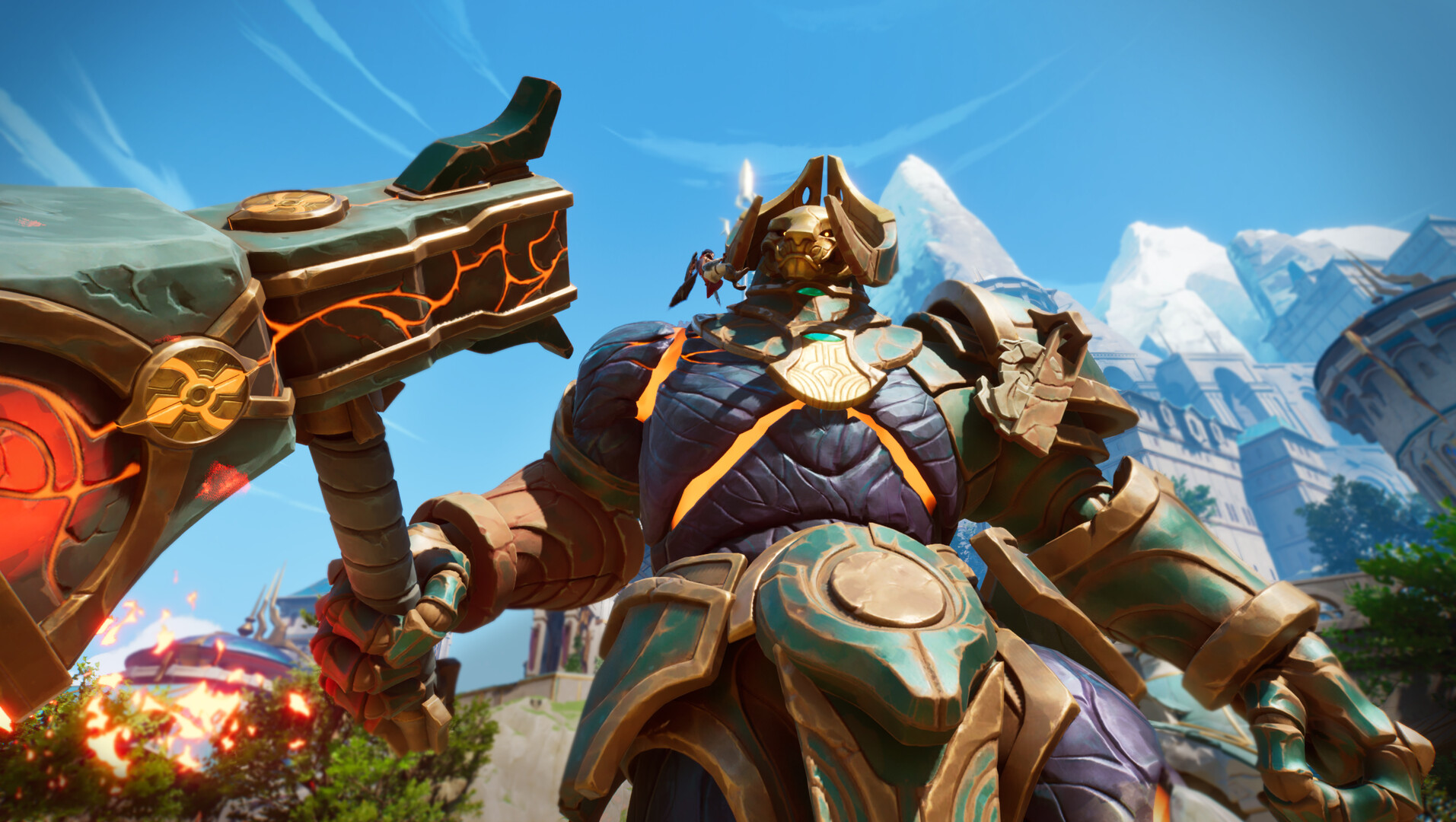
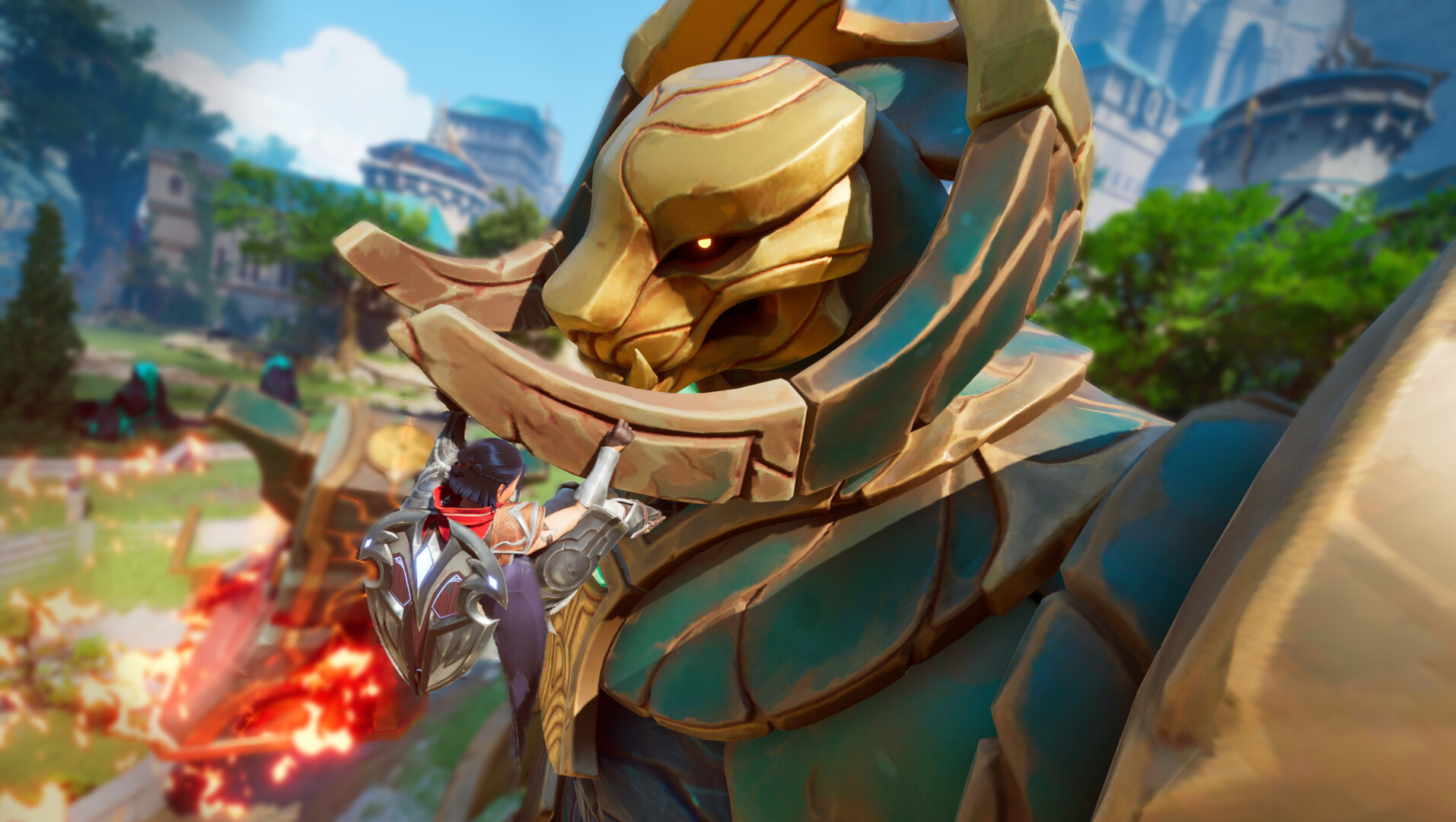
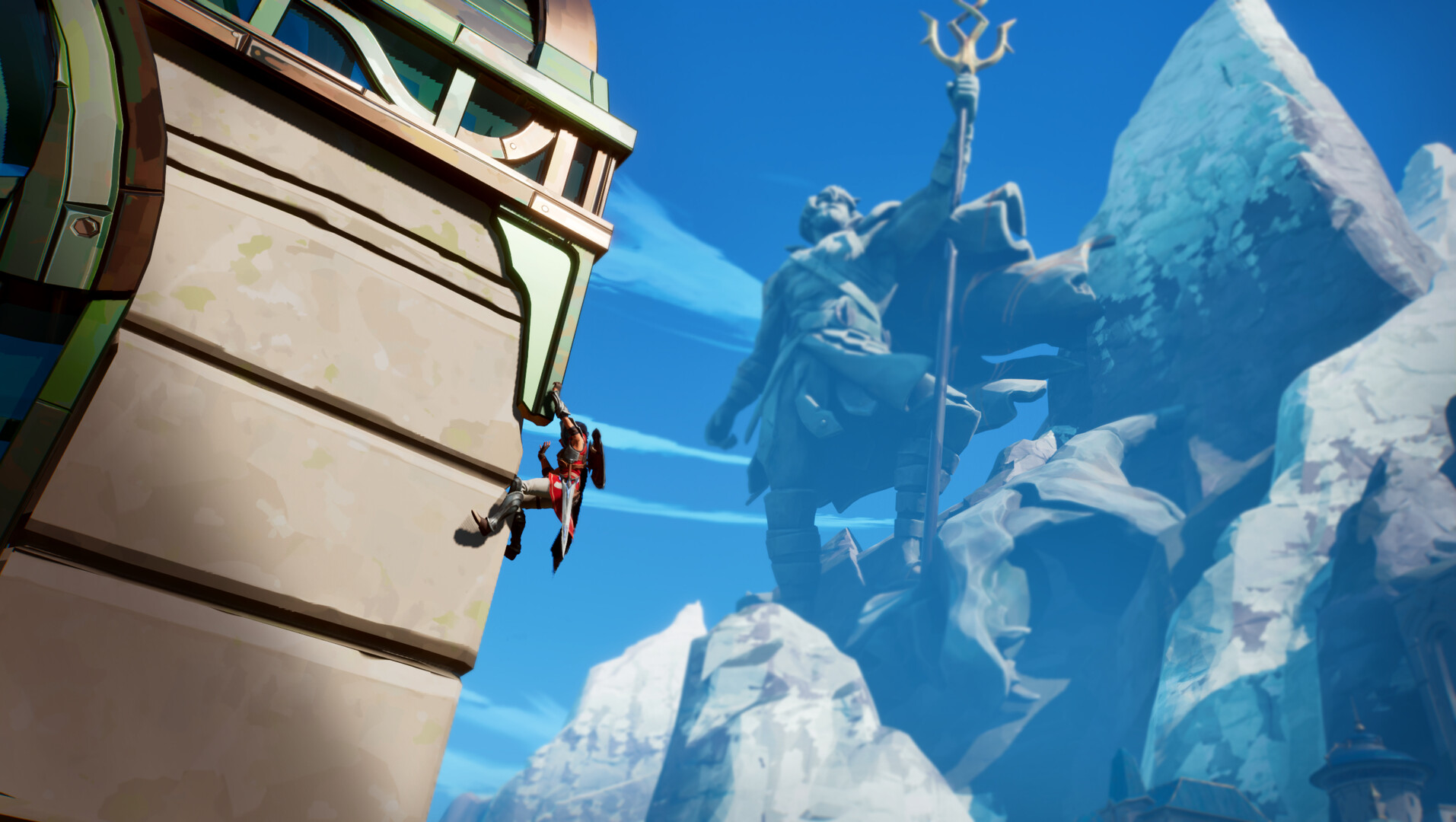
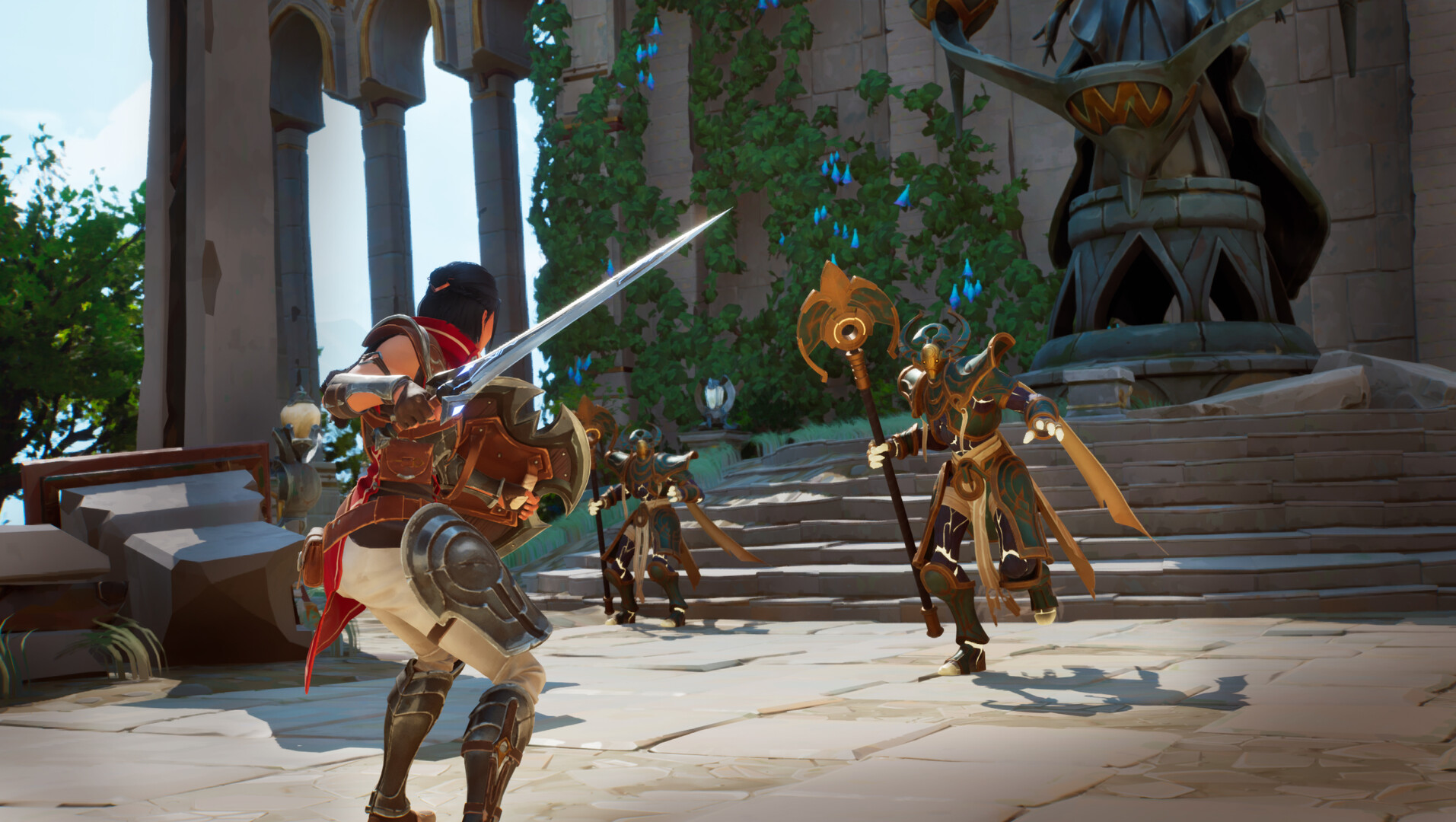
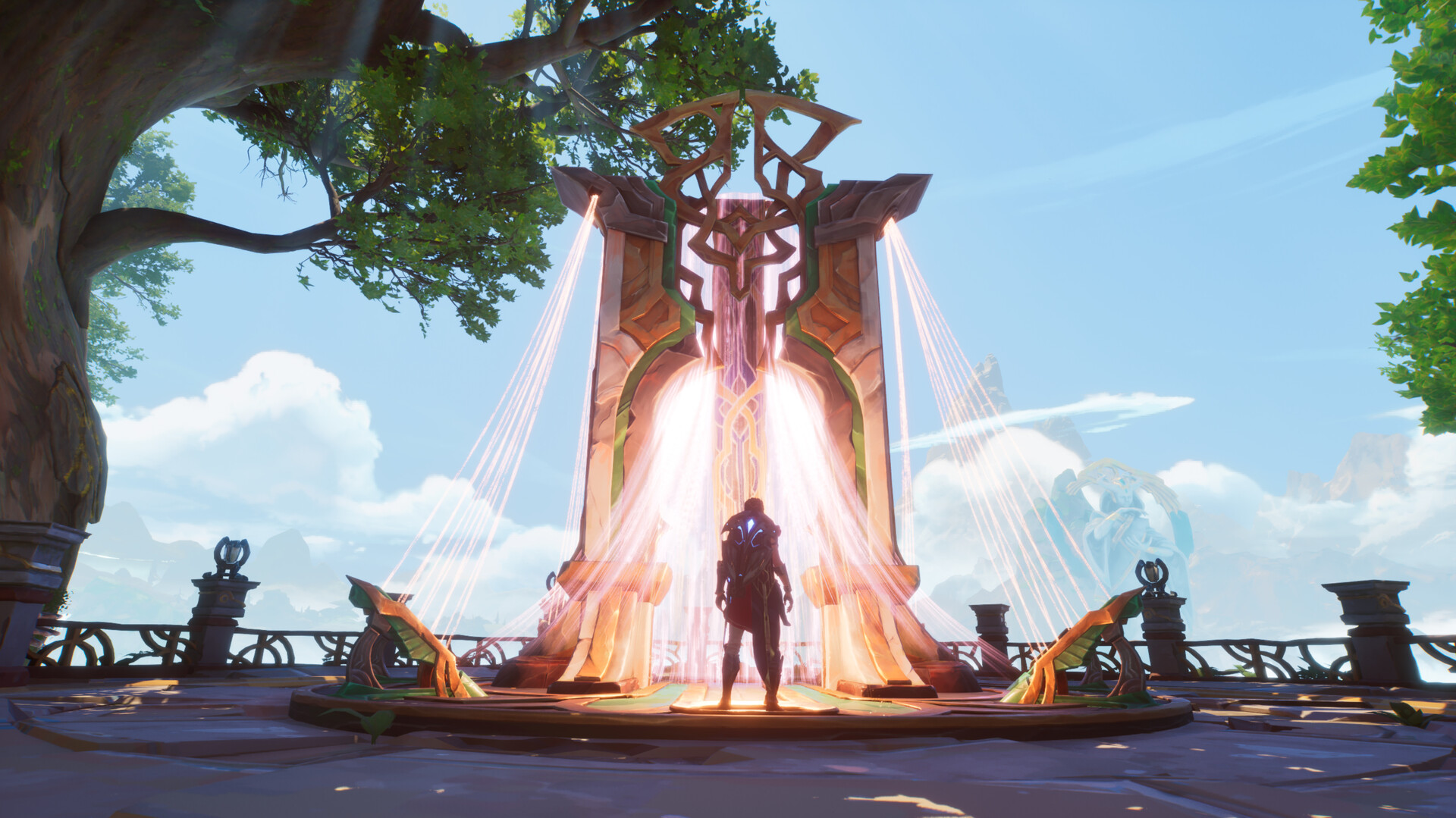
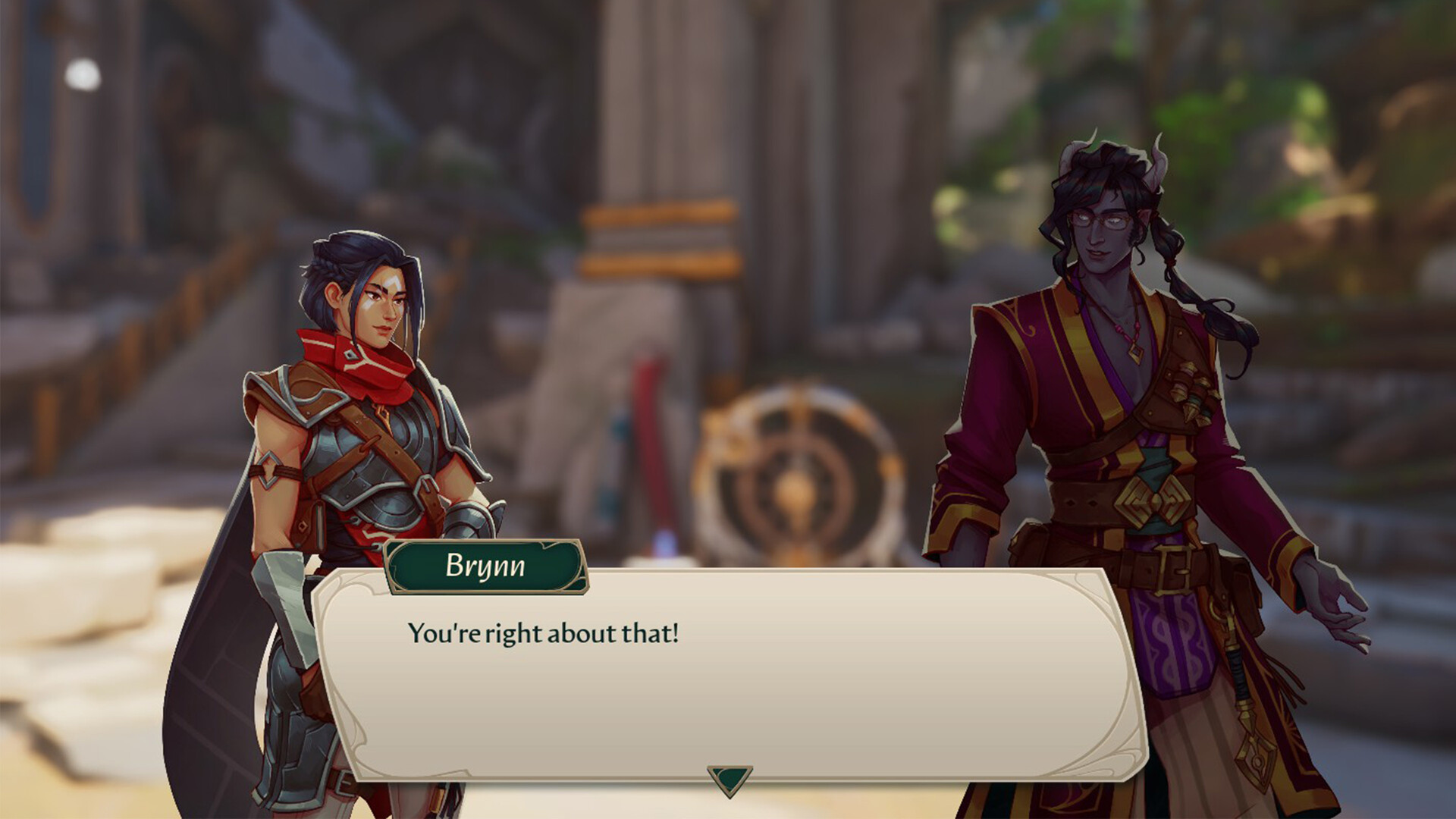
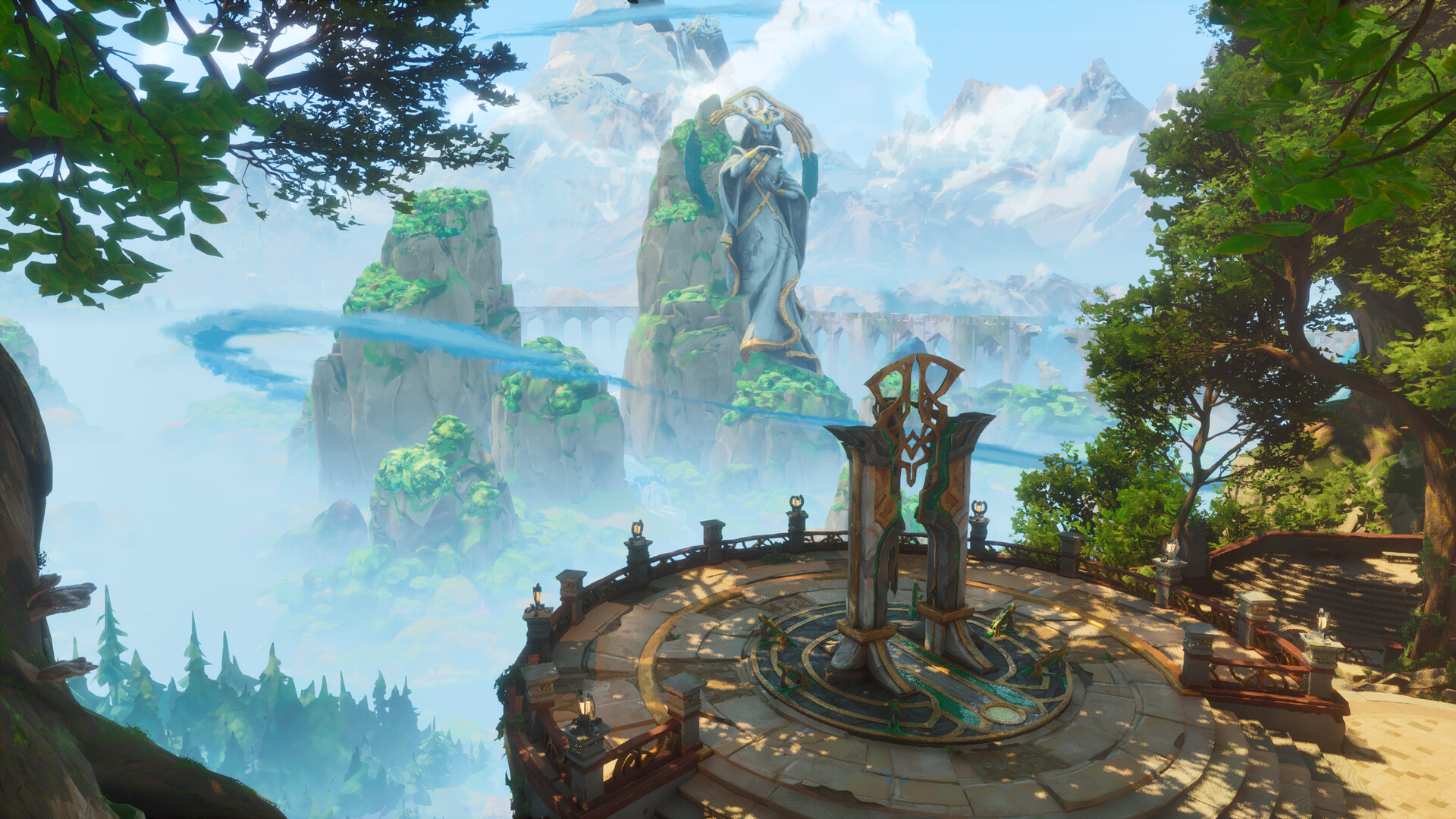
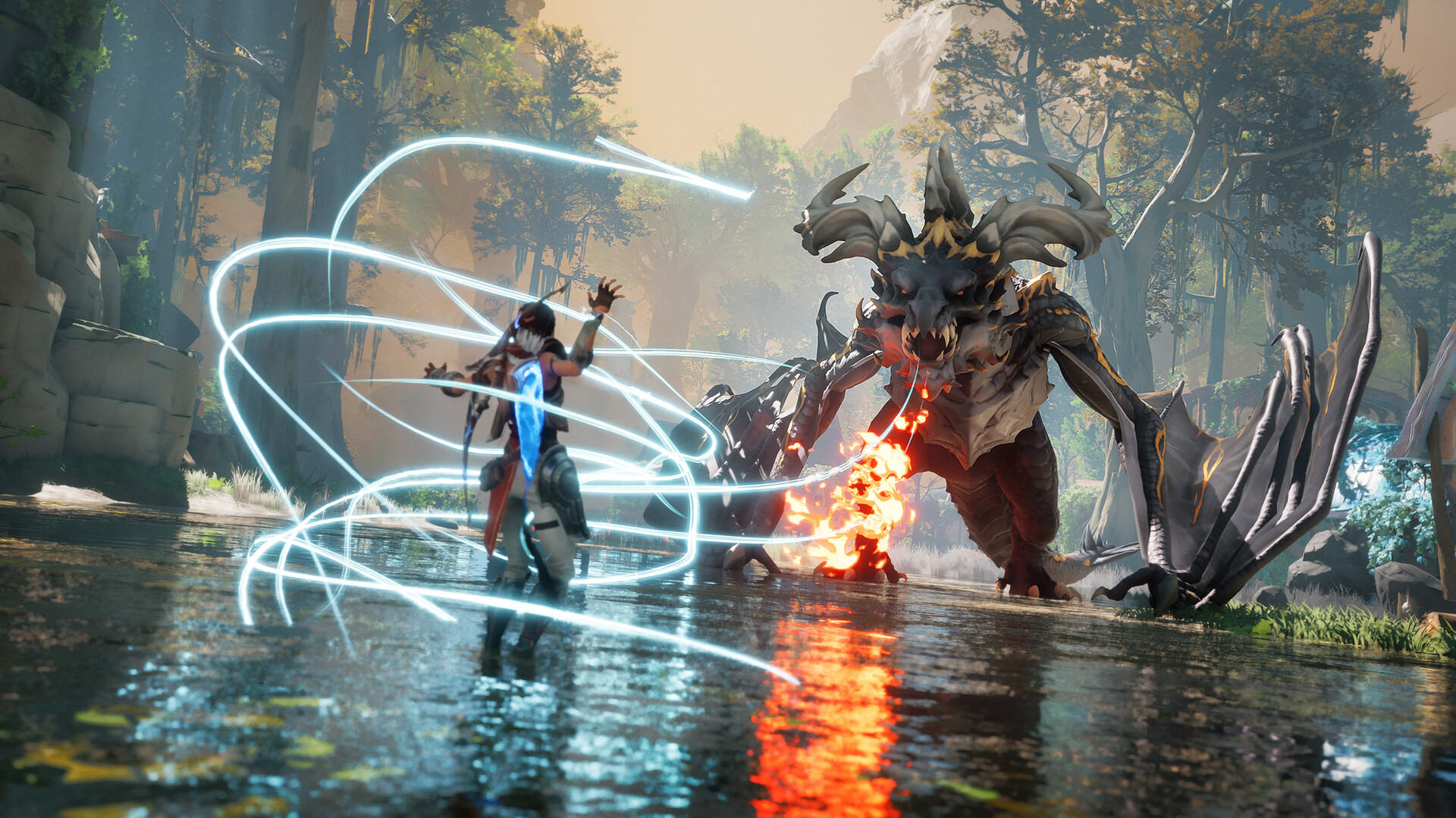
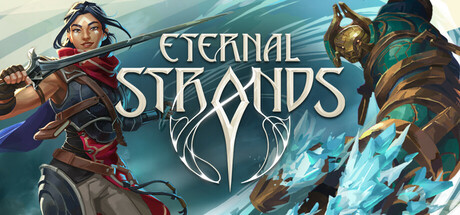
Eternal Strands stands out as a heavily systems-driven action game that offers a great wealth of player expression options for use in its mechanically believable physics-driven world . As far as I’m concerned, that alone already makes Eternal Strands an extremely fun experience —and a pretty bold one at that, considering how many people stand ready to outright dump on this game for daring to try something interesting without managing to avoid having some rough edges here and there . The main selling point of Eternal Strands is its great level of environmental interactivity , as its various medium-sized maps effectively function like little physics sandboxes. You can set fire to pretty much everything with your spells or by destroying flammable objects in the environment, and you can put those fires out again with frost magic. Frost spells also freeze enemies and dynamically create frozen platforms to help you traverse the environment. If you’re not in the mood for platforming over frozen outcrops, you could also use your kinetic powers to catapult yourself across the map, keeping in mind that the weight of your armour determines how far and how fast you’ll move when acted upon by an outside force, in addition to changing your general movement speed and inertia. Meanwhile, climbing in heavy armour has you gasping for stamina quicker, and using heavier, more powerful weapons will help you destroy environmental objects by overcoming the material’s inherent damage resistance more readily than a quicker one-handed weapon would. Eternal Strands is fundamentally built upon systems such as these as well as their interactions with each other; and that’s precisely what makes the gameplay so entertaining. It’s a truly systems-driven action game that rewards players for understanding how the world works and interacting with it through the various weapons and spells available. That’s also why the game’s approach of not offering one huge persistent open sandbox world works so well for Eternal Strands. After any given mission, the map you were just playing on is likely largely destroyed and half burnt, as fire spreads naturally unless you take great care to control it. So it’s a good thing these maps effectively reset when you teleport out. And that’s not the only gameplay element where I feel like Eternal Strands has some extraction shooter DNA in it, since the core gameplay loop consists of entering individual maps to complete quests and gather crafting resources . Notably, there are no experience or skill systems to increase player power over time. Instead, Eternal Strands relies entirely on you upgrading your gear and spells using resources found in the environment or harvested from slain enemies . Personally, I’m not a great fan of pushing crafting systems into every game, but it works remarkably well in Eternal Strands, especially since you can disassemble any piece of equipment to return ALL of the resources used in crafting it. The game can still be a bit grindy, but such clever features ensure you won’t have to endlessly pour resources into the crafting system , since you always retain everything you’ve managed to extract from a map, even if you get rid of a crafted item. And towards the end of the game, you even get the ability to effectively exchange lower-level materials for rare high-tier materials , which further lightens the grind. But like I mentioned above, Eternal Strands does stumble over some problems with implementing its systems, and some of them seem pretty obvious from a player perspective. To give just one example, Eternal Strands allows you to freely climb any surface in the world as well as all of the giant boss enemies . Our main character effectively 'sticks' to every vertical surface and you have to press a button to let go. This works pretty well during exploration; but in boss fights, it more often than not leads to you sticking to surfaces you never intended to climb, forcing you to struggle with the climbing system while also fighting a massive golem with a flaming hammer. The developers addressed this in a patch which now allows you to disable auto-climbing in the menu . If you do that, you now have to press a button when touching vertical surfaces to start climbing. But this now leads to situations where climbing uneven surfaces can sometimes 'detach' you automatically when the climbing surface briefly becomes more horizontal and the game puts you back into 'walking mode'. If you’re unlucky, that horizontal bit may be slanted just enough so that you slide off again. I’m by no means a game design expert, but I look at these two systems and I wonder why the devs didn’t just implement a climbing system where you hold down a button to get into 'climbing mode' and let go of it again to stop climbing. I can only assume they didn’t want to do that so players using controllers wouldn’t have to constantly hold down a button or trigger. But why not make it an in-game toggle? Instead, we can only switch between these two separate climbing systems in the main menu now. Likewise, Eternal Strands’ writing has proven to be very divisive with a lot of people, and I can totally understand why. There’s lots of very linear dialogue in the game, and while the voice acting is very good , all of the dialogue is presented in visual novel style with static character sprites . So there’s really nothing to hold your attention visually, making all of the narrative bits feel like listening to an extensive audio book; which wouldn’t be so bad if not for the fact that the writing can become really grating after a while. While I enjoy a lot of the pretty extensive worldbuilding, the dialogue writing really suffers from its relentlessly positive mood . Yes, I know that sounds weird, but do you remember the [url=https://store.steampowered.com/app/2362420]Mass Effect 2 era, when video game writers suddenly decided all characters had to be morally grey, have dark secrets and constantly fight among each other because 'constant conflict = mature narrative'? Well, Eternal Strands does the same thing, except it goes hard in the opposite direction. I certainly appreciate sensible characters peacefully working together towards a common goal Star Trek: The Next Generation style, but Eternal Strands seriously overdoes it. Its characters constantly have to remind each other about how much they appreciate each other, what valuable party members they are and so on. That might sound refreshingly positive at first, but when a game is so chock-full of dialogue, it can quickly become annoyingly one-note —your mileage may vary, naturally. To me, none of these downsides are enough to overshadow the seriously fun systems-driven gameplay set in an amazingly beautiful world which Eternal Strands offers, though. Would I pay full price again for the game? Yes, I would! Because Eternal Strands may have its weaknesses, but I’d rather enjoy a game that tries bold things and leaves some rough edges, rather than one that plays it safe perfectly . When I’m telekinetically picking up enemies and throwing them into each other [url=https://store.steampowered.com/app/870780]Control style, climbing over the entire map, desperately hanging onto a dragon’s wing in mid-flight, making invisible enemies visible with frost magic or summoning fiery golem companions that end up setting the entire room ablaze, I quickly forget that the climbing can be a bit finicky and the writing is too one-note for my taste. And if you’re in the same boat, then you might just agree with me that for all its faults, Eternal Strands is both a bit of a diamond in the rough and a real hidden gem among action games .
Expand the review